Keep clear of electrical equipment and hot water, and stop the water supply only if the shutoff is accessible without danger. A leak near the bottom may come from a connection, valve or tank; its location alone does not prove the cause. Arrange qualified service, and leave immediately if you suspect a gas leak.
Start with people and safety
Keep children and pets away from the heater and any standing water. Hot water can cause serious burns, and water near electrical equipment can create a shock hazard. Do not touch wet switches, plugs or a wet electrical panel, and do not enter standing water to reach a shutoff.
If you smell gas or suspect a gas leak, leave the building immediately without operating switches, phones or appliances inside. From a safe location, call the gas utility or 911 and follow their instructions. Do not attempt to locate or repair a gas leak yourself.
Stop the water if you can do so safely
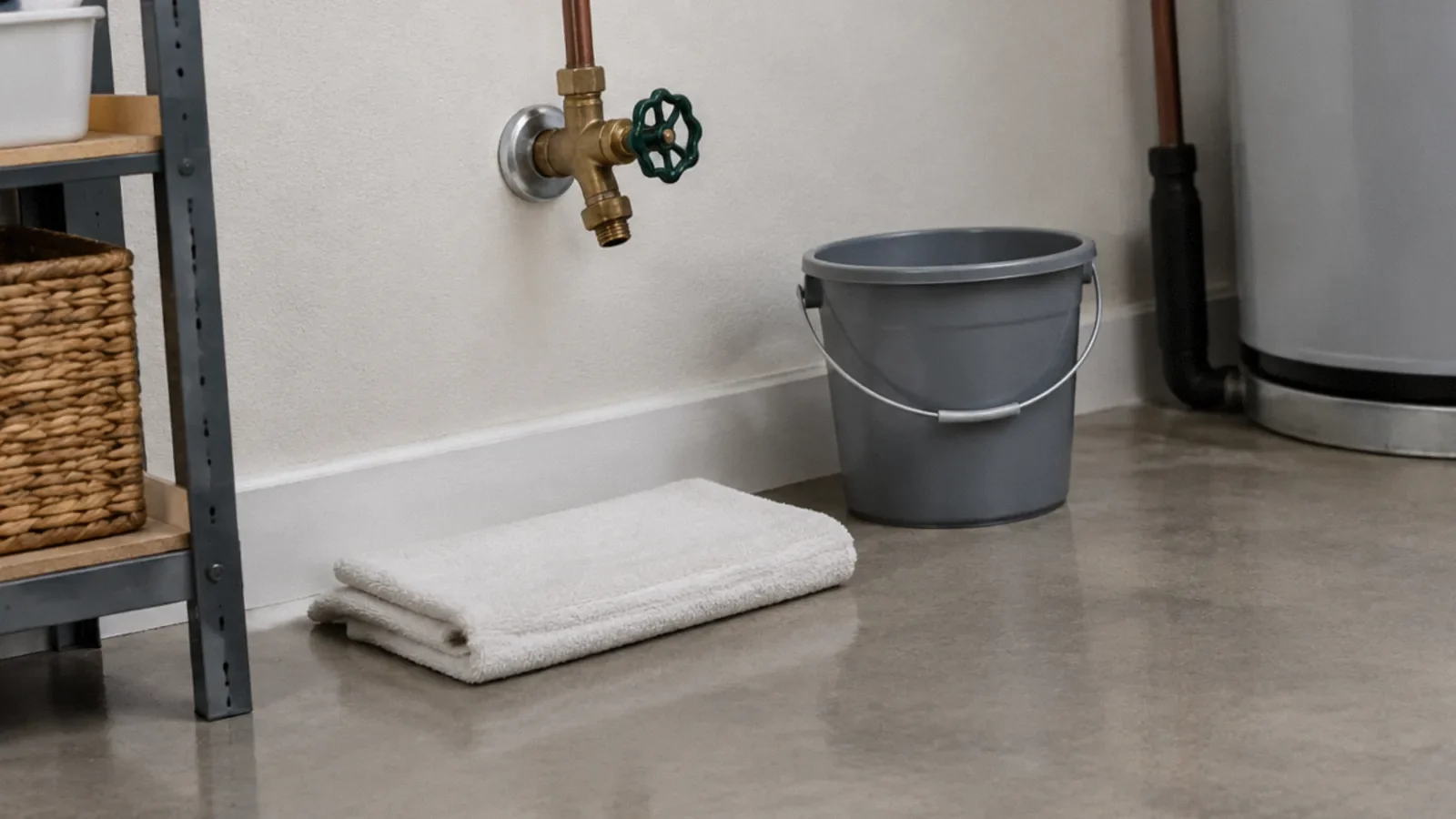
If the cold-water shutoff serving the heater is clearly identified and can be reached safely on dry ground, closing it may reduce the supply to the heater. If you cannot reach it safely or are unsure which valve it is, leave it alone and request professional assistance. A building main shutoff may be an alternative when safely accessible.
Closing a valve does not instantly empty the tank, and water may continue to escape from the heater or connected piping. Do not remove fittings or open a pressure relief valve to test it. A plumber can identify the leak and isolate the system without creating additional hazards.
Power and fuel require care
An electric heater and its supply can be dangerous when water is present. Do not touch wet electrical equipment or attempt to open its cover. A qualified electrician or emergency responder can advise on safe isolation when the panel or access is wet or uncertain.
For a gas heater, do not confuse a water shutoff with a gas control. If gas is suspected, evacuate and call for help from outside. For routine service in a safe area, follow the manufacturer’s instructions and the professional’s guidance rather than guessing at controls.
Why water may appear at the bottom
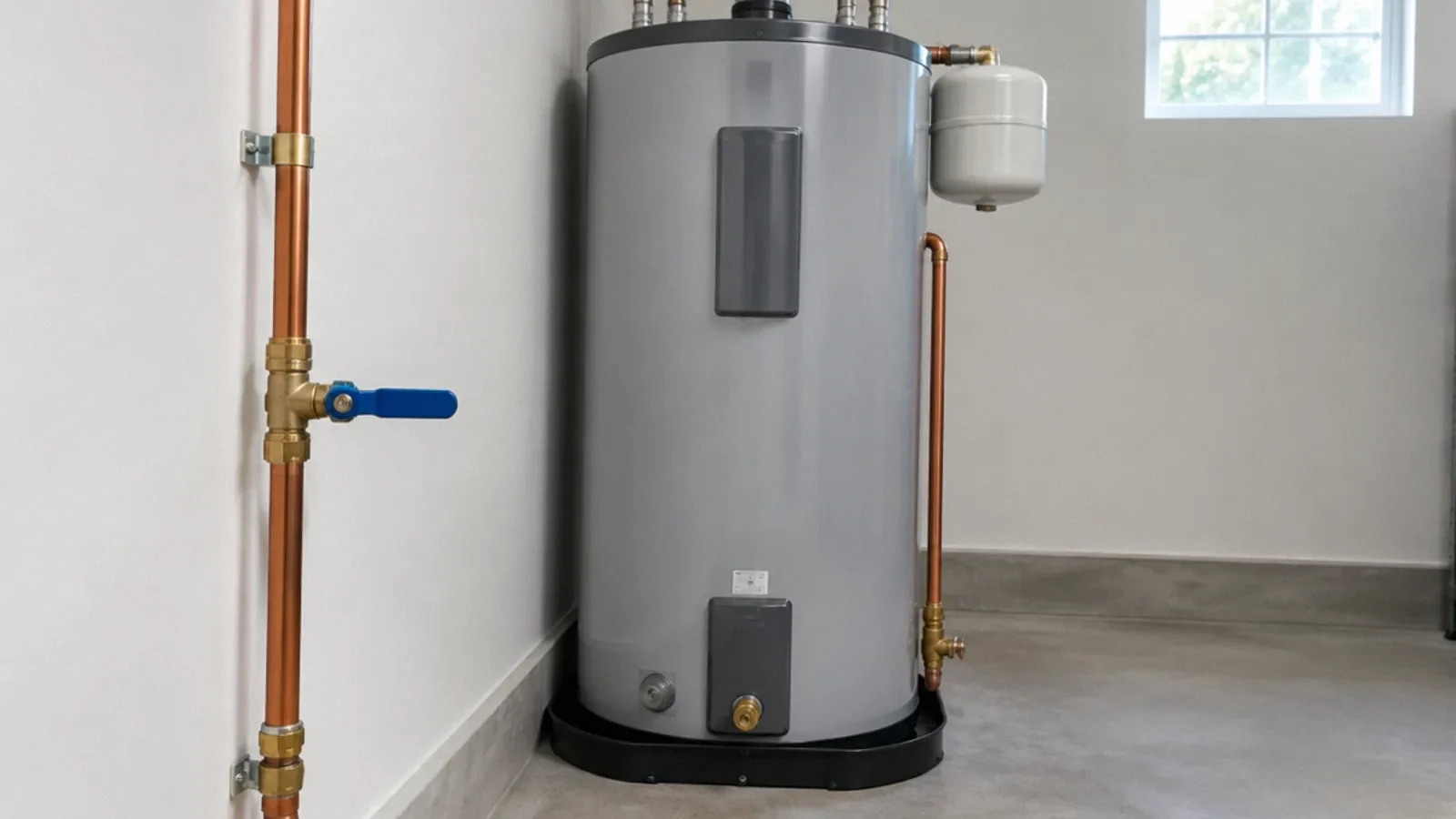
Water seen beneath a heater can originate from a drain valve, a connection higher on the unit, a relief discharge, nearby plumbing or a leaking tank. Condensation or a different appliance can also contribute to moisture in a utility space. Water can travel along a surface before dripping to the floor.
A tank that has failed internally may require replacement rather than an external patch, but a puddle alone cannot confirm that diagnosis. Ask the plumber to show the source and explain whether the affected part is serviceable. Do not apply sealant over an unidentified leak.
Leaks at the top and around valves
Connections or piping above the heater can leak and allow water to run down its side. A temperature and pressure relief valve and its discharge pipe are safety components; dripping from them needs professional evaluation of both the valve and the conditions causing discharge.
Never cap, plug or alter a relief discharge to stop the visible water. Doing so can defeat a safety device. Hot discharge can also scald. Keep away and ask a qualified technician to investigate according to the appliance instructions and applicable requirements.
Repair or replace?
A replaceable connection or valve may have a different remedy from a failed tank, but age alone does not diagnose the leak. Request a written explanation of the source, proposed work, parts, labor, disposal and any additional code or installation work. Ask about warranty terms and model information.
If replacement is recommended, compare the complete scope rather than only the price of the new unit. Depending on the installation, ventilation, earthquake restraints, drainage, electrical supply and permits may need attention. The professional and local authority can explain what applies to your home.
Drying and documenting damage
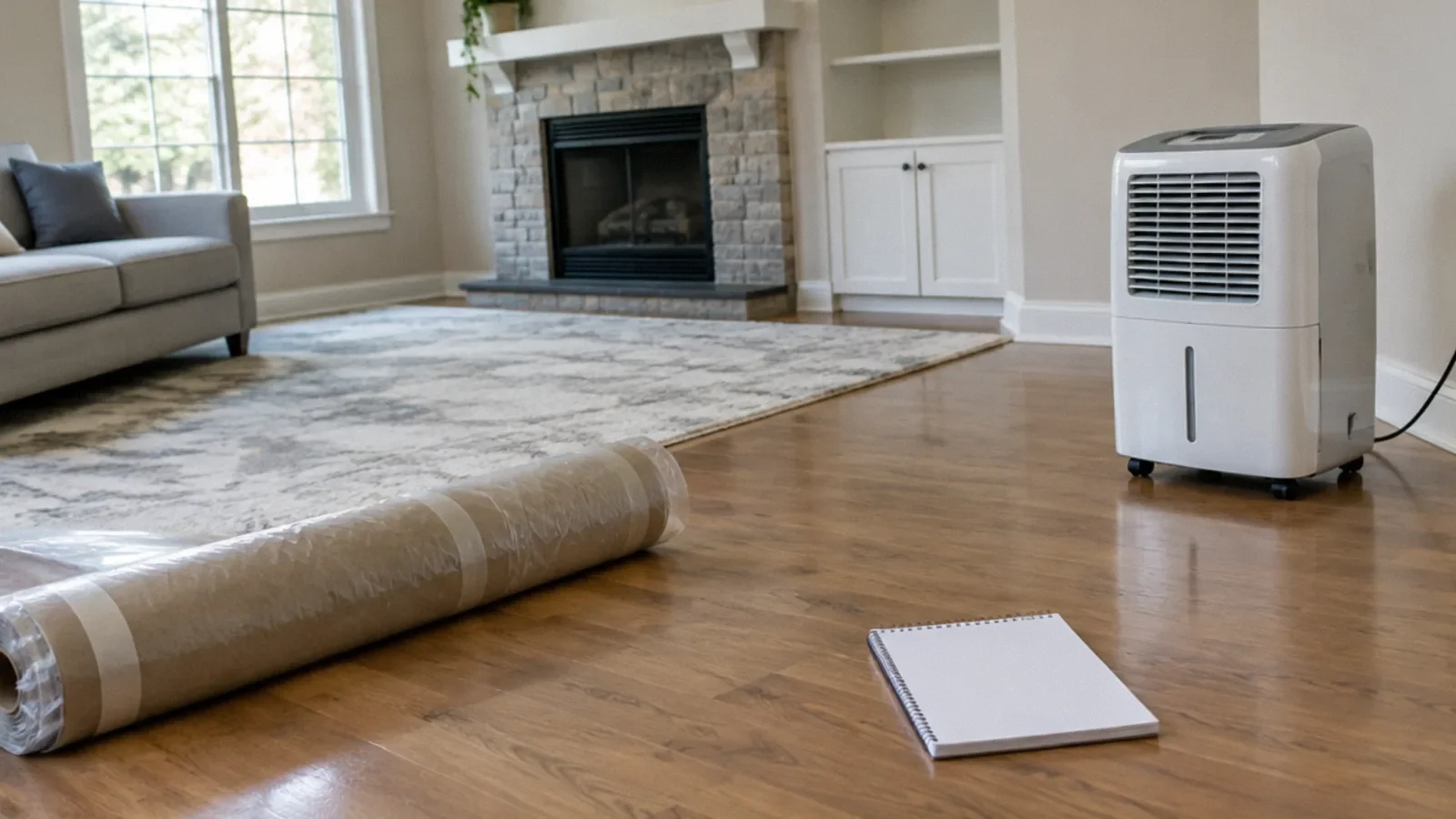
Once utilities and the area are safe, document the heater, affected materials and the time the problem was noticed. Notify the property manager or insurer as appropriate. A leak can reach flooring, wall cavities or adjacent rooms even if a small puddle is all that is visible.
Do not run electrical drying equipment in standing water or use a household vacuum on water unless it is designed and safe for that use. Ask qualified professionals to assess concealed wet materials and contamination. Keep photographs and receipts with the service report.
If you rent or live in an apartment
Tell the landlord or property manager promptly and describe the leak, any lack of hot water and any safety concerns. If water threatens another unit, report that immediately as well. Do not enter a locked utility room or operate shared building controls without authorization and a safe plan.
For urgent electrical hazards, suspected gas or a serious leak, prioritize getting away from the danger and contacting the appropriate emergency service or utility. Local rental rules vary, so keep written records of notices and follow the guidance applicable to your situation.
Hose leaks, tank rupture and basement drying
A visible drip at a flexible supply hose may originate at the hose or either connection. From a safe, dry location note where water first appears; water can travel along the hose. A plumber can assess and repair or replace an external connection, drain valve or relief valve as appropriate. A leaking relief valve also calls for diagnosis of the pressure or temperature cause; never plug it.
A tank rupture may release hot water and flood the room; it is not automatically an explosion. Keep away from hot water and wet electrical equipment, shut water off only when safely reachable and call for help. Hot-water service may be interrupted. Once utilities are safe, photograph the basement and affected contents, report the loss and ask a drying professional to assess flooring, walls and concealed materials before reconstruction.
Your next-step checklist
- Keep away from hot water and wet electrical equipment.
- Leave and call the utility or 911 from outside if gas is suspected.
- Close a clearly identified water shutoff only if safe.
- Do not cap a relief valve or open electrical covers.
- Arrange qualified diagnosis and document damage safely.
Related questions
Does water under a heater mean the tank has failed?
Not necessarily. Water can come from the tank, a valve, a connection or a nearby source. A professional should locate the origin.
Can a leaking water heater be repaired?
Some external components may be repairable; a failed tank often requires replacement. The answer depends on the identified source and the appliance.
Should I cap a dripping relief pipe?
No. The relief system is a safety device. Keep clear of hot discharge and arrange professional evaluation.
What if the heater is leaking near electrical equipment?
Stay out of the wet area and do not touch wet switches or equipment. Request qualified assistance to make the system safe.
What if a water heater bursts or floods the basement?
Stay out of standing water near electrical equipment and away from hot discharge. If a water shutoff is clearly identified and safely accessible, close it; otherwise call a qualified plumber or emergency services for immediate danger. Arrange assessment and drying after the area is safe.
Sources & context
Public guidance supports the principles in this article. The practical questions and examples are editorial interpretation, not a site assessment or a coverage decision. State-specific rules apply only where identified.
- PG&E: Responding to a suspected gas leakutility safety guidance
- U.S. Department of Energy: Operations and maintenance of water equipmentfederal guidance
- U.S. Consumer Product Safety Commission: Flood safetyfederal safety guidance
- U.S. EPA WaterSense: Home maintenanceprimary guidance
- PG&E: Keep yourself safe from a gas leakprimary guidance