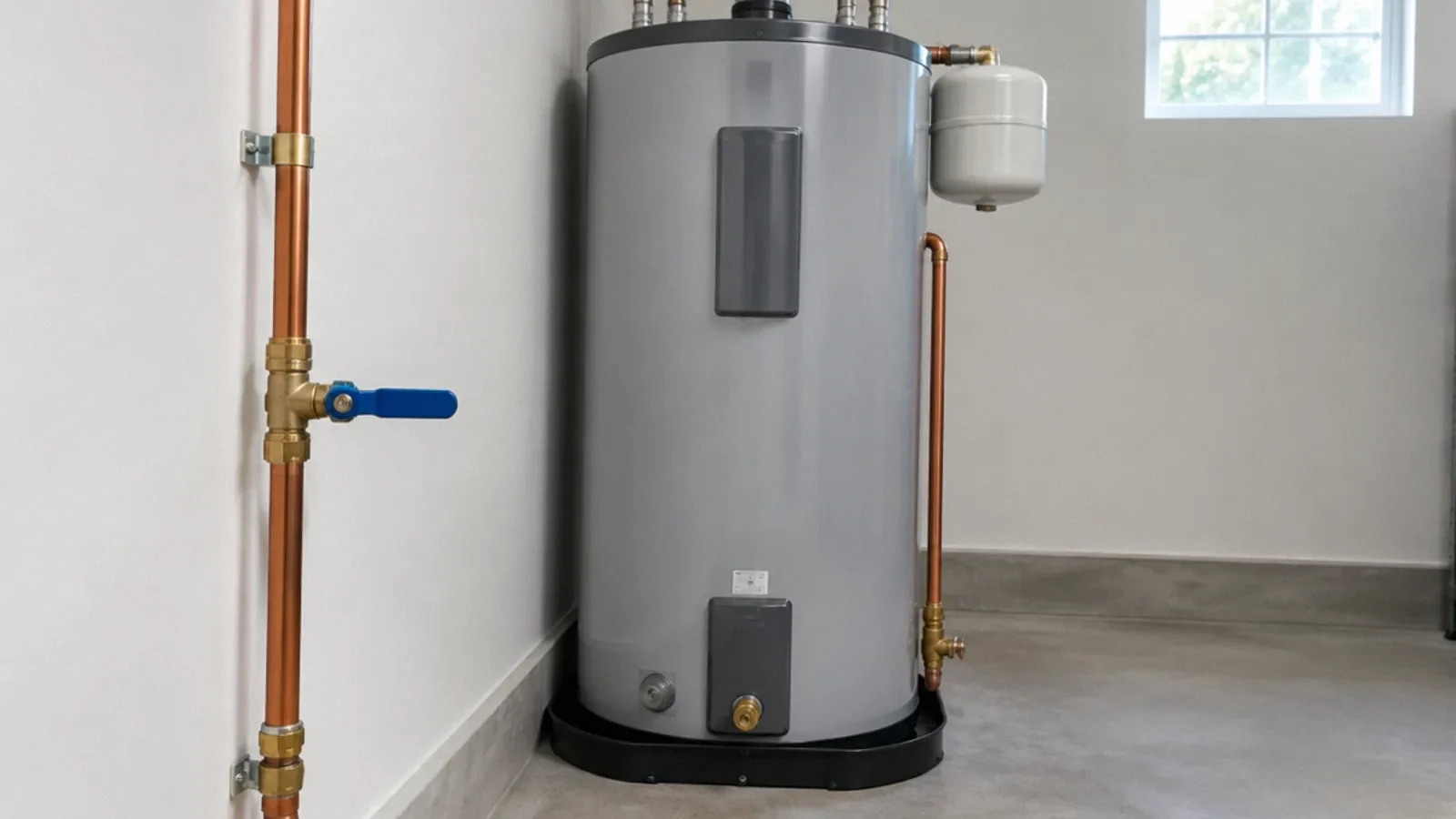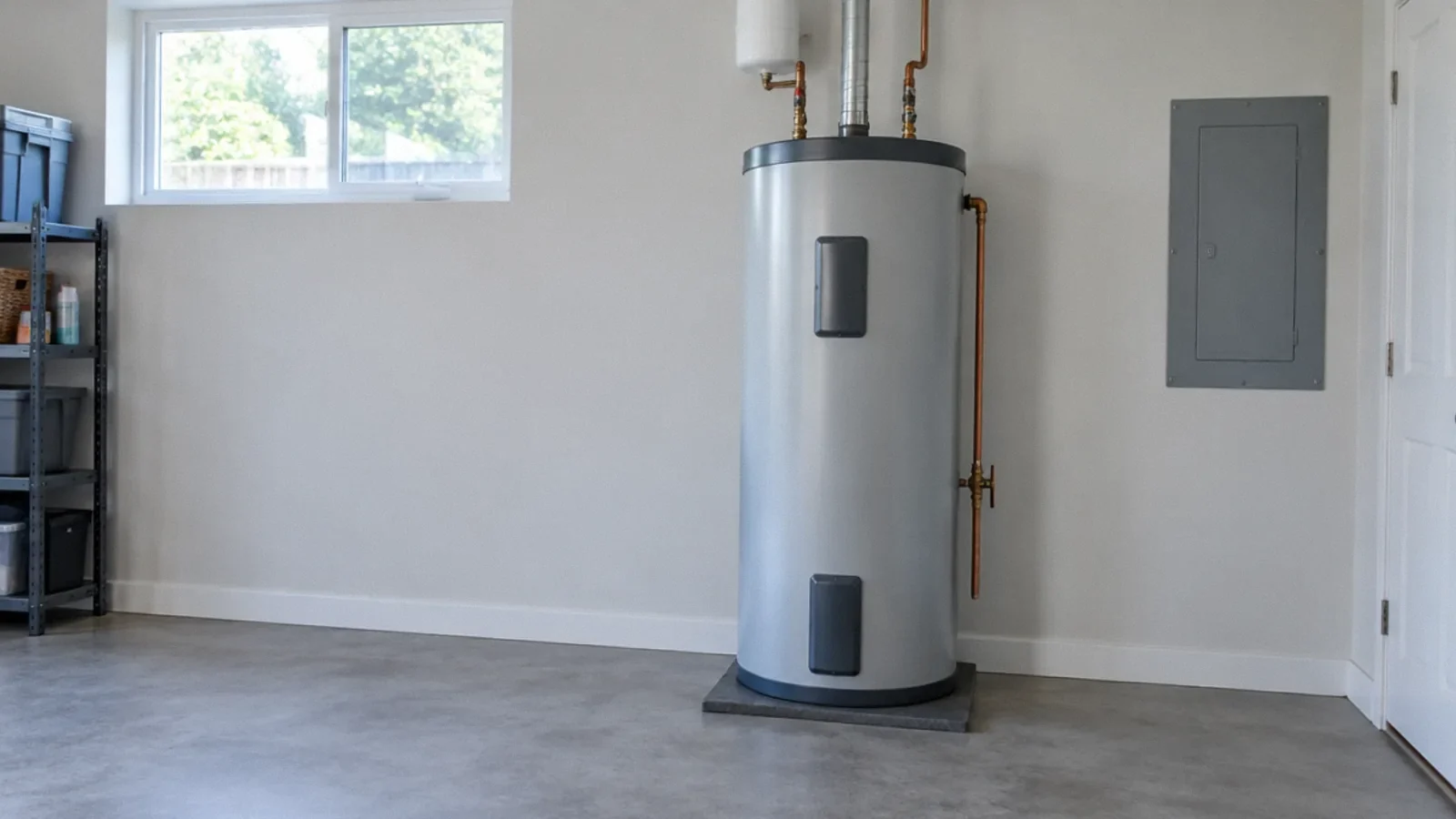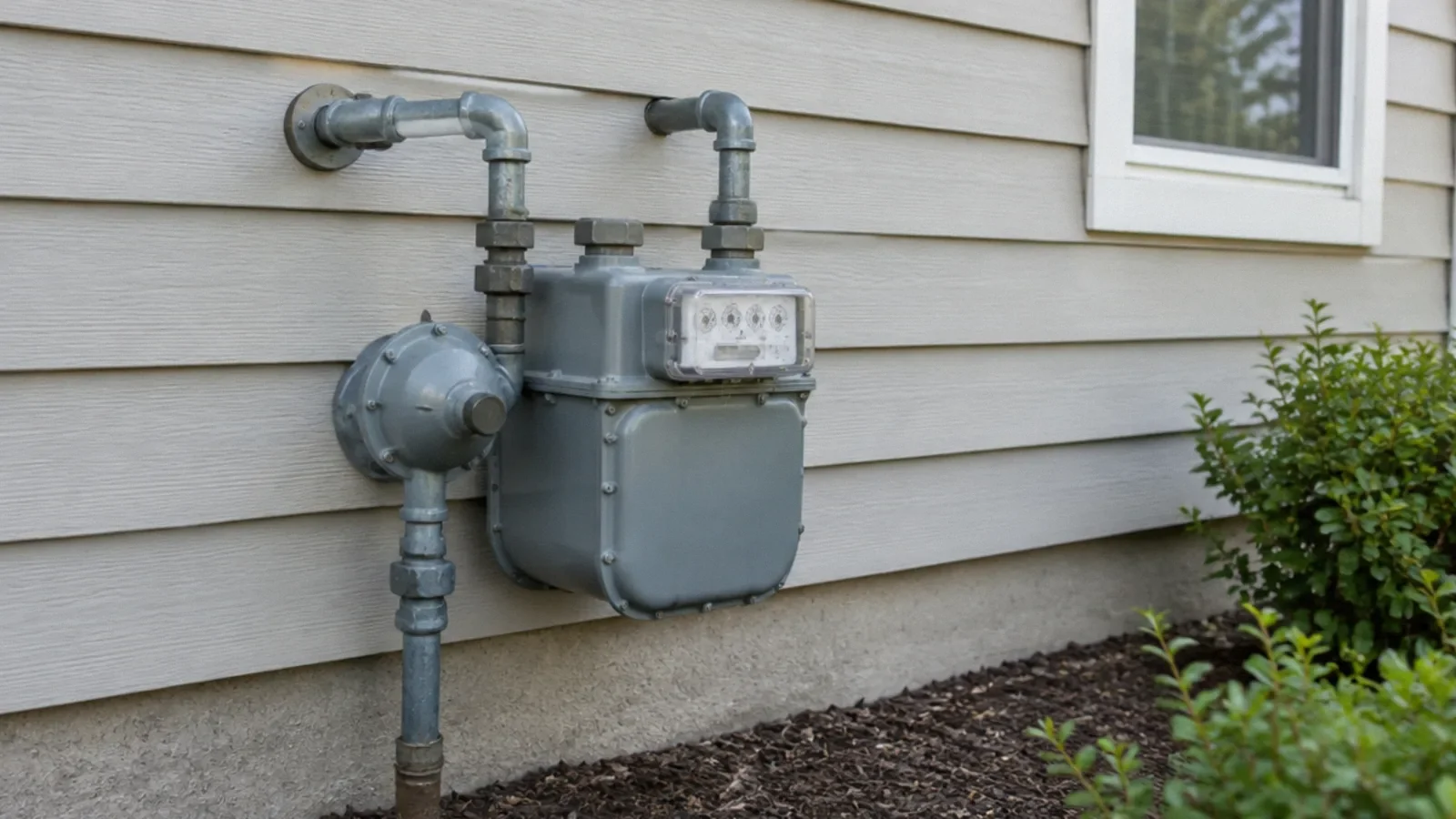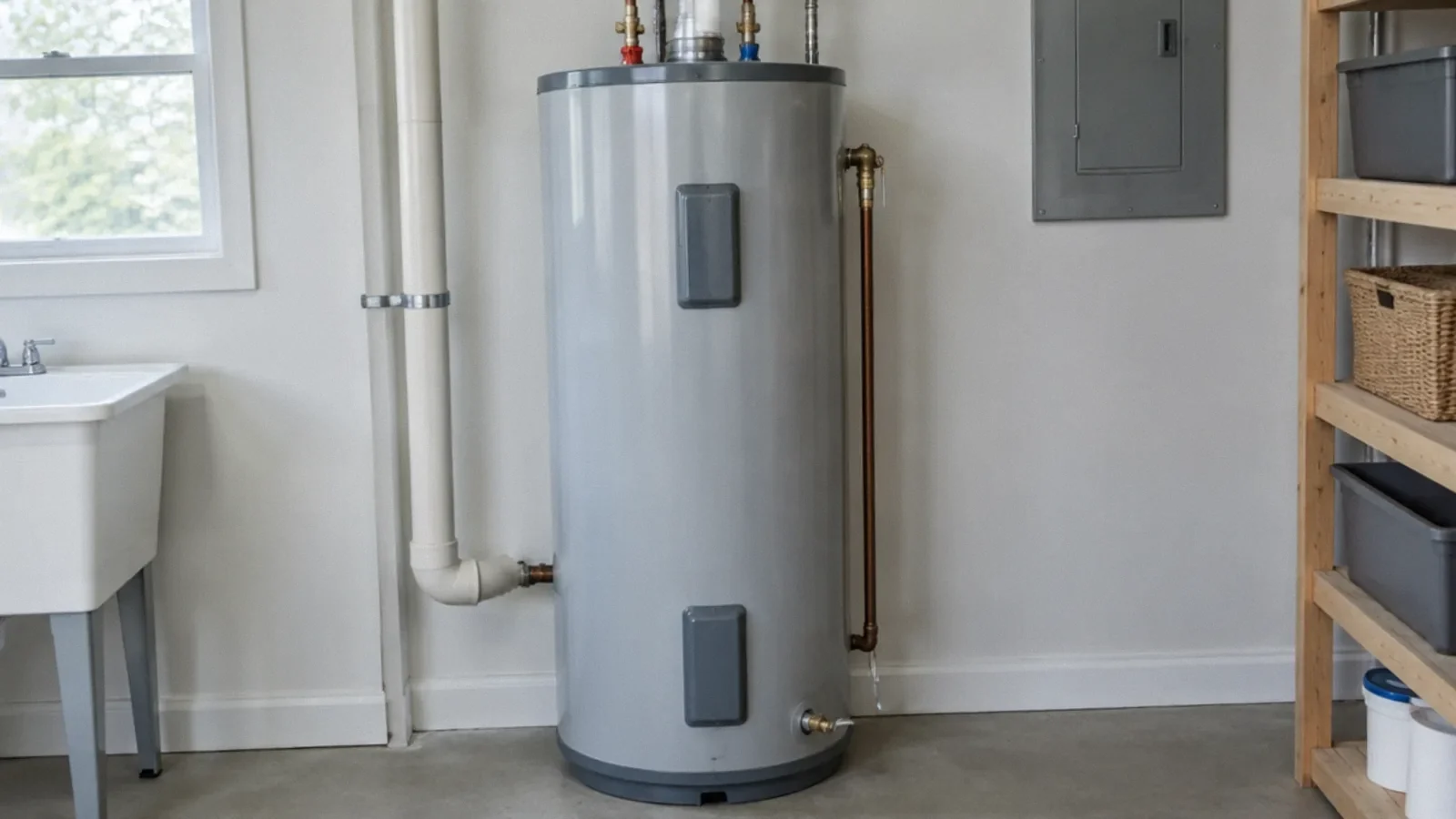
If you smell gas, see smoke or steam, or suspect immediate danger, leave and call emergency services and the utility from a safe location. For a nonemergency problem, note whether there is no hot water, a leak, noise or an error message and contact a qualified plumber or the service provider recommended for the appliance.
Recognize an emergency
A suspected natural gas leak, smoke, fire, escaping steam or a severely damaged heater requires immediate attention. Leave the area, alert others and call 911 and the gas utility from a safe location. Do not operate switches, phones or appliances near a suspected gas leak.
Hot water and steam can cause serious burns, and water near electrical equipment can create a shock hazard. Do not open the heater, touch wet wiring or enter standing water to reach a control. The utility, emergency responders or a qualified professional should determine when the area is safe.
Describe the symptom
A heater may produce no hot water, run out sooner than usual, leak, make an unusual sound or display an error. Note when the problem occurs, whether all fixtures are affected and any recent service. A single symptom can have several causes, so avoid ordering a replacement part before diagnosis.
If only one faucet is affected, the fixture or its plumbing may need attention rather than the heater itself. If the whole home lacks hot water, the heater, power, fuel or controls may be involved. Do not open panels or disassemble equipment to investigate.
Check the manufacturer’s information
From a safe location, read any visible display and consult the manual for the exact model. Record an error code without touching damaged or wet equipment. A code is a clue, not a guarantee of a particular failed part; follow the manual’s safety instructions and contact service if the cause is unclear.
Avoid repeatedly resetting a protective control or breaker. A device that trips again can indicate a fault. Do not alter the temperature or pressure relief system or block its discharge; a qualified professional should evaluate unusual discharge or a safety-device problem.
No hot water or not enough hot water
A loss of supply, a control or component fault, unusually high demand or a plumbing issue can affect hot water. The U.S. Department of Energy publishes a model-specific troubleshooting example that lists several different possible causes. Those entries do not diagnose another heater.
Tell the service provider whether the issue is continuous or only occurs at certain times and whether any recent plumbing or electrical work preceded it. Do not attempt to test a gas burner, heating element or live circuit without the necessary qualifications.
Water around the heater
A puddle can come from a pipe, valve, relief discharge, condensation or the tank itself. Keep clear of hot water and electrical hazards. If a known water shutoff can be reached safely from a dry location, closing it may limit a nonemergency supply leak. Do not approach a steaming or unstable heater.
Ask a plumber to locate the source and assess affected floors and walls. Do not cap a dripping temperature-and-pressure relief discharge. The correct repair depends on why water is escaping, and a towel cannot resolve a leak inside a wall or beneath a floor.
Who should you call?
A qualified plumber or water-heater service technician commonly assesses the tank, water connections and plumbing. An electrician may be needed for the electrical circuit or supply, and the gas utility or a qualified gas professional is appropriate for a suspected fuel problem. In an emergency, leave and call emergency services first.
For a rental or shared building, notify the property manager as well. Provide the appliance make and model only if available without entering a hazardous area, along with the symptom and any error code. Ask whether the provider services the specific heater type and whether a permit or inspection may apply.
Repair or replacement
The decision depends on the identified fault, equipment condition, replacement parts, warranty and local installation requirements. A service provider should explain the diagnosis, the proposed repair, price and any remaining uncertainty. Age alone does not prove that a particular heater is unsafe or beyond repair.
Compare a written repair estimate with a replacement proposal when appropriate. Ask what is included for removal, code-related work and disposal. A home warranty and homeowners insurance are different agreements; check each contract rather than assuming either will pay.
After service
Ask the provider to explain what was repaired, what operating checks were completed and when the heater can be used. Keep invoices and model information. If steam, gas odor, smoke or another emergency sign appears, leave and call for help rather than repeating a reset.
Maintain the heater according to its manufacturer’s instructions and use qualified personnel for work involving fuel, electricity or safety devices. Check periodically for visible leaks from a safe location and report a new puddle promptly.
Electric heater: symptoms and the right service call
No visible display or indication can mean an interruption in supply or a control issue, but some heaters have no display in normal operation. From a dry, safe place note whether other appliances are affected and whether the heater normally has an indicator. Do not remove covers or touch a wet panel. A qualified electrician can investigate a circuit or supply fault; a heater technician can assess the appliance.
If the unit appears to operate but water remains cold, demand, settings, a plumbing mixing issue or an internal component may be involved. A plumber or heater technician can distinguish them. If a breaker or protective control trips again, leave it alone and arrange service rather than repeatedly resetting it. An error code and timing help the technician but do not establish a diagnosis.
Your next-step checklist
- Leave and call 911 for gas, smoke, fire or an immediate hazard.
- Do not touch wet electrical equipment or open service panels.
- Record the symptom or display only from a safe location.
- Use a qualified plumber, electrician or utility as appropriate.
- Do not block a relief discharge.
Related questions
Who do I call for a water heater problem?
A qualified plumber or water-heater technician can assess many appliance and plumbing faults. Call an electrician for an electrical issue and the utility or emergency services for a suspected gas emergency.
Why is there no hot water?
Possible causes include a supply, control, component, demand or plumbing issue. A qualified professional can diagnose the actual heater.
Should I reset a water heater repeatedly?
No. Repeated trips or faults need professional diagnosis; do not bypass a safety control.
What if I smell gas near the heater?
Leave immediately without operating devices or switches nearby, then call 911 and the gas utility from a safe location.
What can I safely check on an electric water heater that is not working?
From a safe, dry location, note the symptoms and any visible error code and check the model’s instructions. Do not open electrical panels or repeatedly reset a tripping breaker. Contact a qualified service professional.
Sources & context
Public guidance supports the principles in this article. The practical questions and examples are editorial interpretation, not a site assessment or a coverage decision. State-specific rules apply only where identified.
- U.S. Department of Energy: Water heater troubleshooting examplefederal technical example
- PG&E: Gas leak safetyutility safety guidance
- Electrical Safety Foundation: Water-damaged electrical equipmentelectrical safety guidance