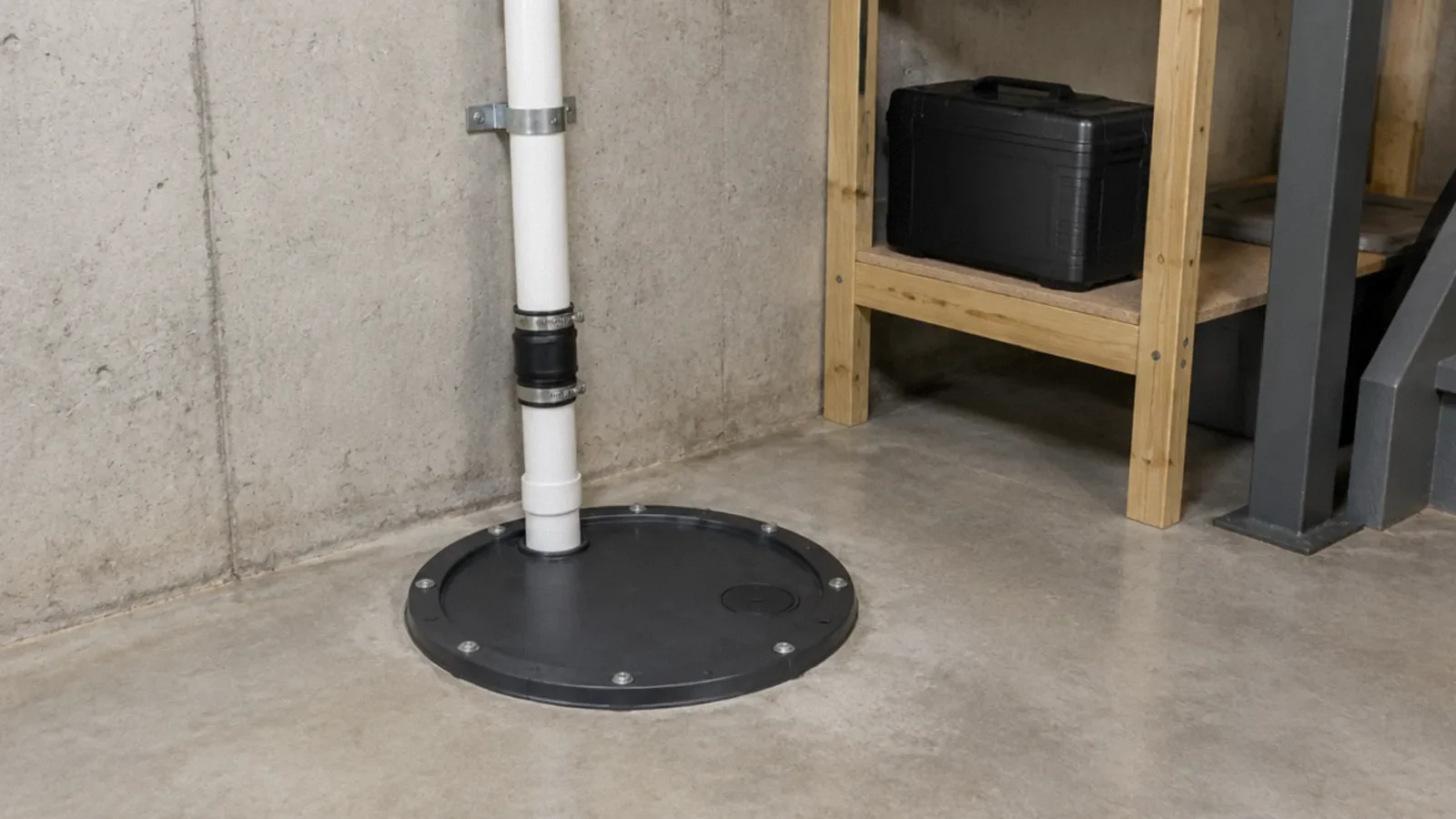
A water-powered backup pump connects a drinking-water supply to equipment that handles sump water. The applicable water utility and plumbing authority should determine the required protection for the actual arrangement; a qualified professional should install and maintain it.
Start with the two water systems
A water-powered backup sump pump uses pressure from a water supply to help remove water from a sump when the backup operates. It is different from a backup pump powered by a battery. The sump may contain groundwater or other non-drinking water, while the supply line may provide water intended for drinking and household use. These two sides need to be evaluated together.
A backup can be useful when electrical power is unavailable, but it is not independent of the water supply: its ability to work depends on available supply pressure, flow and the installation. Confirm the equipment requirements and local utility conditions with qualified professionals. A power outage, a disruption of the water supply and a blocked discharge are different failure modes.
What backflow and a cross-connection mean
EPA defines a cross-connection as an actual or potential connection between drinking water and a non-drinking-water source that can allow contamination to enter the supply. Backflow is an unwanted reversal of flow through such a connection. Pressure changes can draw or push water the wrong way when a connection lacks appropriate functioning protection.
This is a public-health issue, not simply a question of whether the pump empties the pit. A backflow incident can affect the property’s plumbing or the distribution system. The specific hazard depends on how the supply, pump and discharge are arranged. A professional and the local authority should evaluate that actual arrangement rather than relying on a generic picture or product name.
Built-in parts are not proof of approval
A manufacturer may describe a pump as having an internal check valve or other protective feature. Ask the water utility and plumbing authority whether the proposed arrangement and each protective component are accepted for this application. Do not assume that an internal check valve, a sticker or a previous installation satisfies current local requirements.
Requirements differ by jurisdiction and installation. For example, a 2020 City of Milwaukee cross-connection manual describes Wisconsin-specific protection approaches for water-powered sump pumps and states that Wisconsin did not recognize the pump’s factory-installed protection as the required protection in the described setting. That document is an example, not a nationwide rule or a substitute for checking current local requirements.
Ask which protection is required and who may install it
Different backflow protection methods have different conditions for use. The local authority and the qualified plumbing professional should identify the hazard classification, permitted assembly or method, placement, access and any permit. A device acceptable for one piping arrangement or jurisdiction may not be acceptable for another. Do not select an assembly solely from an online list or treat a check valve as interchangeable with a tested backflow prevention assembly.
Provide the professional with the pump model, water source, proposed supply connection and a diagram of the discharge route. Explain whether the backup and primary pump share discharge piping or use separate routes. Ask how the protection will be installed and maintained and what documentation the utility requires. If a local utility has stricter requirements, those applicable rules must be assessed directly.
Testing and service are part of the decision
A backflow assembly is useful only when it is suitable, correctly installed and maintained. Ask whether the authority requires initial inspection, periodic testing by an approved tester, reporting or repairs after a failed test. Keep the test and service records with the pump documentation. The schedule and authorized tester requirements are local; a generic annual interval should not be assumed for every installation.
The backup pump itself also needs an equipment-specific inspection and test plan. Ask how to test safely under controlled conditions without risking a flood, wasting unnecessary water or bypassing the protective assembly. Follow the manufacturer’s instructions and local requirements, and have a professional resolve uncertainty. Never enter standing water to reach electrical equipment or disable protection to make a test easier.
Plan for discharge and response to a suspected problem
The backup still needs a suitable outlet. Ask where the combined discharge goes, whether the arrangement can freeze or block, and whether it complies with local discharge and property requirements. Consider water use and operating costs as well as the incoming supply’s pressure and flow; a supply interruption may make the backup unavailable when needed. Do not assume any pump can handle every inflow rate.
If you suspect a cross-connection or drinking-water contamination, avoid using the water until you have contacted the water utility and followed its directions. Ask the utility about immediate steps and any applicable notice. Do not open piping, remove a backflow assembly or attempt a repair yourself. Preserve the model, installation and test records for the qualified professional who assesses the problem.
Your next-step checklist
- Identify the pump model, incoming water source and primary and backup discharge paths.
- Ask the water utility and local plumbing authority how this installation is classified.
- Confirm approved backflow protection, permits, location and installation responsibilities.
- Arrange any required inspection and testing with an authorized qualified professional.
- Keep the test reports, equipment instructions and maintenance records.
- Plan for water-supply interruption, a blocked discharge and safe response to alarms.
Related questions
Is the check valve inside the pump always enough?
No. Acceptance depends on the actual installation and local authority. Obtain confirmation of the required protection before installation or alteration.
Can any backflow preventer be used for this pump?
No. The appropriate method depends on the hazard, system arrangement and applicable requirements. The authority and qualified professional should identify an acceptable method.
Does a water-powered backup always work during a power outage?
No. It needs an adequate water supply and a functioning pump and discharge route. An outage or another event can also disrupt those conditions.
Sources & context
Public guidance supports the principles in this article. The practical questions and examples are editorial interpretation, not a site assessment or a coverage decision. State-specific rules apply only where identified.