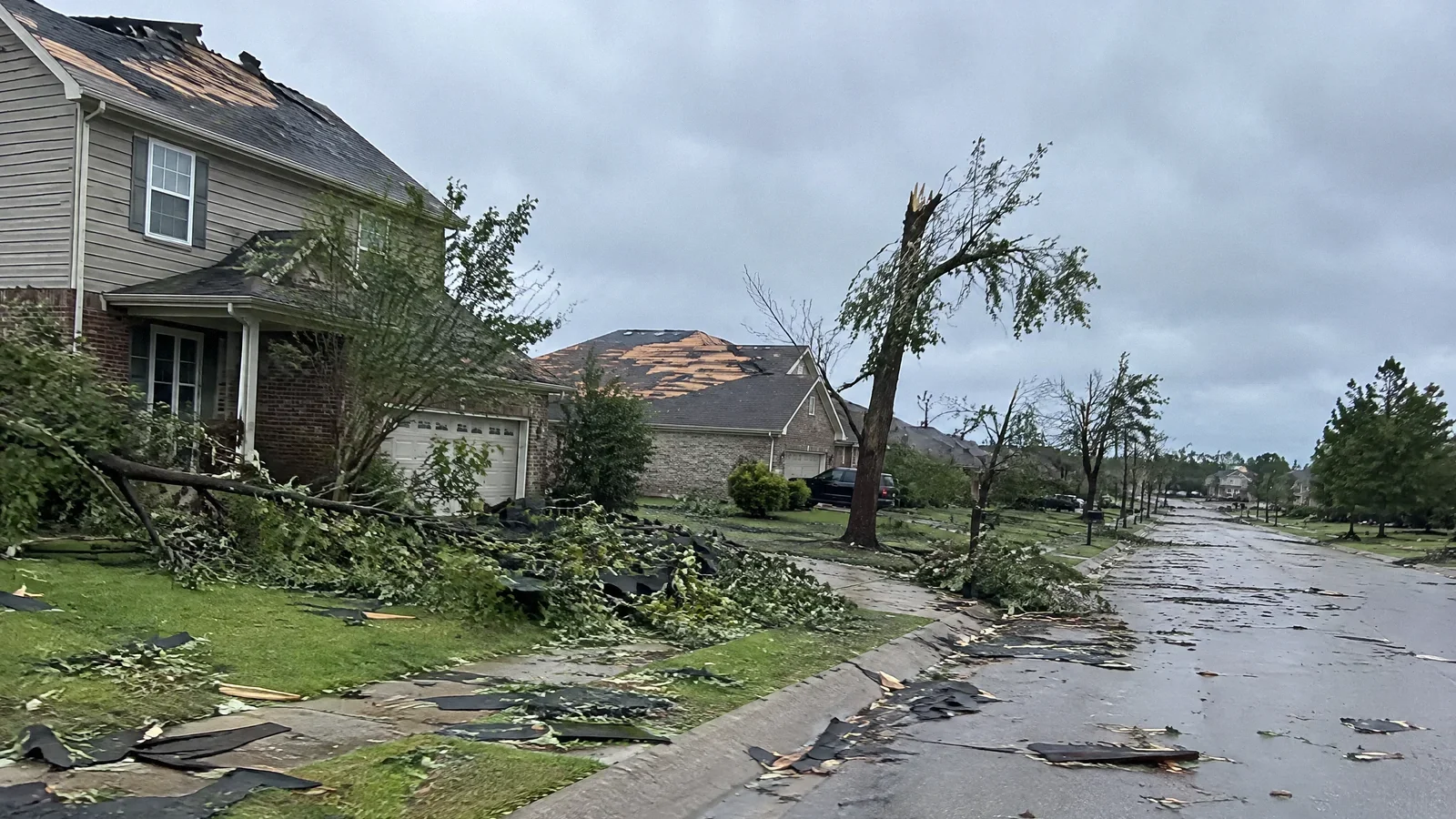
Tornado winds and flying debris can damage roofs, walls, windows, vehicles, trees and utility lines. Damage varies with wind intensity, exposure and construction. Rain entering openings and disrupted services can cause additional harm after the storm.
Wind and debris are the main mechanisms
A tornado is a violently rotating column of air in contact with the ground and usually connected to a thunderstorm. Its strong winds can pull, push and twist exposed objects. The National Weather Service identifies flying and falling debris as a major hazard: pieces of roofing, branches, glass and other objects can strike people and structures. A tornado does not need to look large to be dangerous.
Damage varies widely across a path. Wind intensity, time of exposure, surrounding objects and how a structure was built all matter. A neighboring building that appears less damaged is not proof that a damaged building is safe. Severe thunderstorms can also cause straight-line wind and hail damage, so the appearance of debris alone does not establish which hazard occurred.
Roofs, windows and exterior walls
Wind can lift shingles, damage roof coverings and flashing, break windows or doors, and tear siding from a building. Debris can puncture the roof or walls. Once an opening develops, rain and wind can enter and damage ceilings, insulation, flooring and contents. The immediate visible opening may be smaller than the area affected by water.
In stronger events, roof structures or exterior walls may fail, and portions of a building may collapse. A garage door or large opening can be especially consequential when damaged, but failure cannot be predicted from a single visible symptom. Do not climb onto a damaged roof or enter a building with leaning walls, sagging ceilings or other signs of structural damage. Have qualified professionals assess it after authorities allow access.
Contents, vehicles and outbuildings
Inside a home, broken glass, falling materials, rain and displaced furnishings can damage possessions. Electronics, documents, clothing and furniture may be affected by both debris and water. Small outbuildings, fences and outdoor equipment may be displaced or broken. A shed that remains standing can still contain unstable shelves, sharp fragments or damaged electrical equipment.
Vehicles can be struck by debris or falling trees, have windows broken, or be moved or overturned in severe winds. Parking under a tree does not eliminate risk. After the threat has passed, avoid touching a vehicle in contact with a downed line and call the utility or emergency services. Never assume a fallen wire is de-energized.
Trees, utilities and community services
Trees and large branches may fall onto houses, roads and power lines. Debris can block roads and delay emergency access. Utility lines, poles and distribution equipment can be damaged, resulting in power or communications outages. Damage to gas, water or sewer infrastructure can create hazards that persist after the wind stops. Follow instructions from local authorities and utilities; do not try to repair utility equipment yourself.
Storm impacts extend beyond individual buildings. Schools, businesses, roads and public facilities may be closed while crews clear debris and assess safety. The loss of power can affect refrigeration, medical equipment and communications. Check official alerts for safe routes, shelters and information about drinking water or other services.
Water damage can continue after the storm
An opening in a roof or window can allow rain to enter walls and ceilings. Wet materials may remain hidden behind intact surfaces, and delayed drying can contribute to mold growth. Restoration decisions depend on the water source, duration, materials and extent of wetting. A qualified professional can assess concealed areas once the structure and utilities are safe. Do not enter a damaged building simply to begin drying it.
Temporary protection of an opening may reduce further damage, but roof work after a storm involves fall and structural hazards. Ask a qualified contractor about emergency covering and keep receipts. Contact the insurer promptly and ask how to document damage and arrange temporary repairs. Coverage and payment depend on the policy and circumstances; a photograph or claim submission is not a guarantee of coverage.
Keep a written inventory of affected belongings and preserve relevant receipts. Ask before discarding damaged items when doing so is safe and practical.
What damage ratings can and cannot tell you
After a tornado, trained surveyors use damage indicators and the Enhanced Fujita scale to estimate wind strength. The rating is based on an assessment of damage, rather than a direct measurement of every wind gust at every property. Differences in construction and exposure can influence the observed damage. A rating describes the surveyed tornado; it does not certify the safety of any particular building.
Wait until the warning has ended and officials say it is safe to return. Continue monitoring alerts because additional storms may follow. Stay away from damaged buildings, downed wires and unstable debris; report dangerous conditions to authorities. If you can safely document the exterior from a distance, take photographs and note urgent concerns for your insurer and qualified inspector. Protecting people takes priority over salvaging belongings.
Your next-step checklist
- Take shelter during a tornado warning and protect your head.
- Wait for official clearance before returning to the area.
- Stay away from damaged buildings and downed power lines.
- Report utility hazards and request professional structural assessment.
- Document damage safely and contact your insurer about next steps.
Related questions
Can a tornado damage a home without destroying it?
Yes. Wind and debris may damage roofing, windows, siding or contents without causing total collapse. Hidden structural or water damage can still require assessment.
Can rain cause damage after the tornado passes?
Yes. Rain can enter through damaged roofs, windows or walls and wet materials beyond the visible opening.
Does an EF rating prove my house is safe?
No. The rating estimates tornado wind strength from surveyed damage. A qualified inspection is needed to assess an individual building.
Sources & context
Public guidance supports the principles in this article. The practical questions and examples are editorial interpretation, not a site assessment or a coverage decision. State-specific rules apply only where identified.