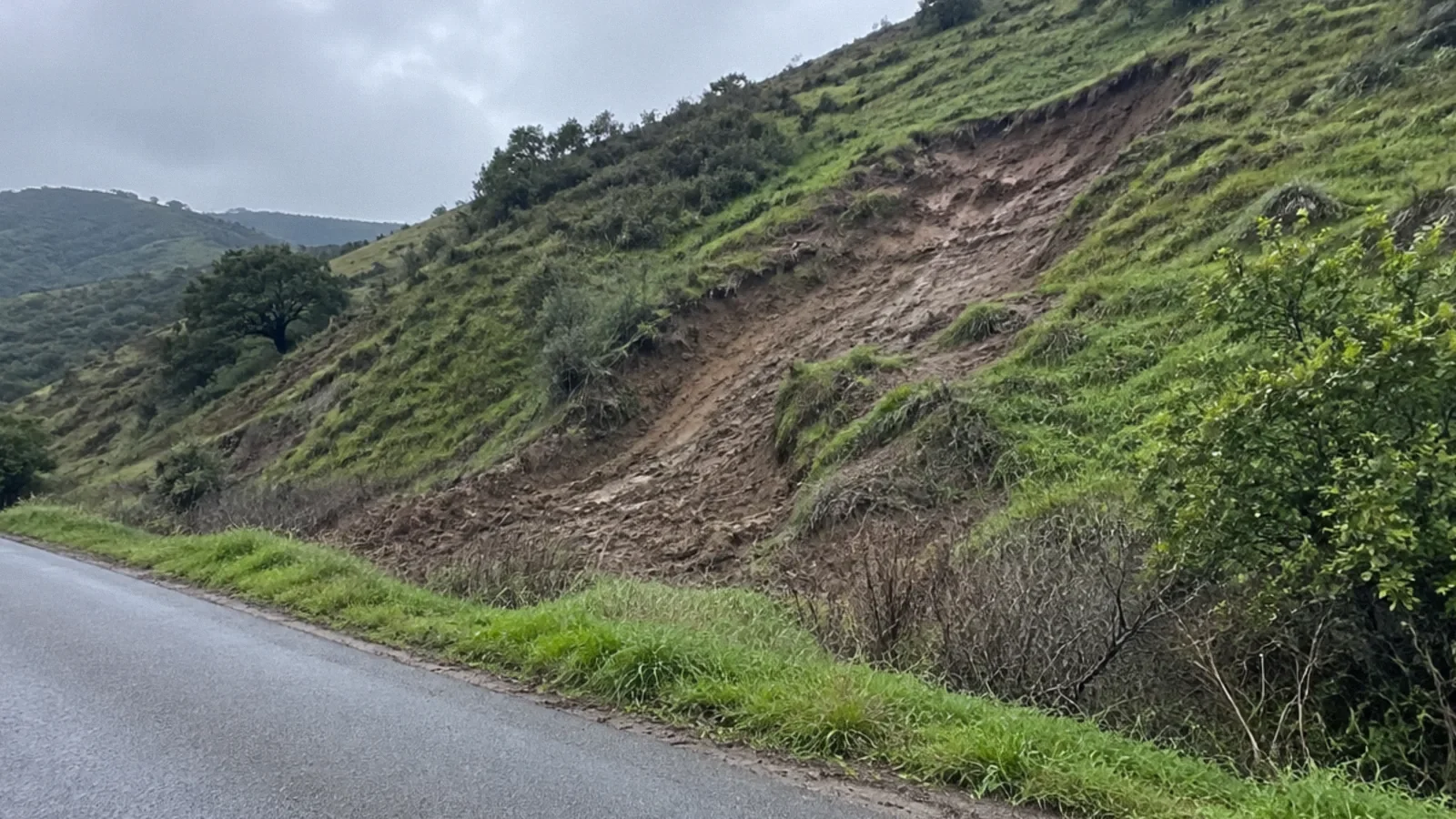
A mudslide commonly refers to a debris flow: a fast-moving mixture of water, soil, rocks and other material traveling downhill. Heavy rain can trigger one, especially on vulnerable slopes or after wildfire. Follow local warnings and evacuation orders; do not wait for visible movement.
Mudslide, mudflow and landslide
Landslide is a broad term for the downslope movement of soil, rock or debris. The U.S. Geological Survey describes debris flows, commonly called mudflows or mudslides, as one kind of landslide. The moving mixture can include water, rocks, trees and other material.
The words people use do not precisely establish the behavior or speed of a particular event. A flow may begin on a slope and travel down a channel beyond the original site. Do not approach moving mud or a damaged hillside to determine its name.
Why slopes move
Rainfall, snowmelt, erosion, earthquakes and changes in groundwater can contribute to slope failure. A slope’s materials, steepness, drainage and previous disturbance affect susceptibility. Several factors may act together, and the cause at a particular property requires site-specific assessment.
Heavy or prolonged rain can saturate a slope or generate runoff that mobilizes loose material. The USGS has documented shallow landslides in the San Francisco Bay Area during atmospheric river storms. That regional history does not predict whether a particular address will be affected.
Wildfire and debris flows
After a wildfire, rainfall can rapidly carry ash, soil, rocks and vegetation down channels. The USGS notes that post-fire debris flows can begin through surface erosion or slope failure. Hazards depend on burn conditions, rainfall and terrain, and may change as the landscape recovers.
Do not assume a small streambed is safe because it is usually dry. Check current local alerts and official hazard information for the area. A home below a burned slope may be affected even when it is outside the visible fire perimeter.
Possible warning signs
USGS describes signs such as unusual cracking or breaking sounds, moving rocks, changes in stream levels or a sudden increase in muddy water. New ground cracks or a change in drainage can justify professional investigation, but each can have other causes.
Some landslides occur without obvious warning. Do not wait for these signs before following an evacuation order. If you hear or see signs of active movement nearby, move away from the hazard when safe and contact emergency services.
Prepare before a storm
Sign up for local emergency alerts, learn the evacuation routes and keep essential medications, identification and supplies ready. Know who in the household may need assistance and make a communication plan. Check local emergency management and weather information before and during a significant storm.
A general regional map cannot establish whether a specific building is safe. If you have concerns about a slope, ask local authorities or a qualified geotechnical professional about site-specific conditions. Do not alter a slope, retaining wall or drainage path based solely on an online guide.
If an evacuation is ordered
Follow the instructions and route provided by local authorities promptly. Tell others only if you can do so without delaying a safe exit. Avoid streams, steep channels and damaged roads; never drive through moving water or debris.
If an emergency develops and no safe route is apparent, contact 911 and follow dispatcher instructions. A landslide can move faster than a person and the path can change. Do not return for belongings while the area remains under threat.
After a flow or landslide
Stay out of the affected area until authorities say entry is safe. Additional movement, unstable soil, buried objects, damaged structures, downed lines and disrupted utilities can create ongoing dangers. Report immediate hazards from a safe location and do not touch damaged electrical equipment.
Do not enter a damaged building or operate utilities until the appropriate authorities or qualified professionals have assessed them. Photograph and document damage only from a safe location after access is allowed. Notify the property manager and insurer as appropriate.
Repair and recovery
A site may need evaluation by a geotechnical engineer, geologist, structural professional or local agency before debris is moved or repairs are designed. The right response depends on the remaining slope, drainage, structure and permits. Removing visible mud alone does not prove the slope has stabilized.
Ask for a written explanation of findings, unresolved risks and repair scope. Coverage for earth movement, flood and related damage varies by policy; request a written coverage explanation rather than assuming a loss is covered. Keep professional reports, receipts and correspondence.
Your next-step checklist
- Follow official warnings and evacuation orders.
- Keep away from channels, steep slopes and moving debris.
- Prepare an accessible evacuation kit and route.
- Stay out until authorities permit safe return.
- Use qualified specialists to assess slope stability.
Related questions
What is a mudslide?
The term commonly describes a debris flow: a fast-moving mixture of water, soil, rocks and other material moving downhill.
Can a mudslide happen after a wildfire?
Yes. Rainfall can mobilize debris in burned areas; local terrain, rainfall and burn conditions affect the hazard.
Will a landslide always give warning?
No. Some have warning signs, but others happen suddenly. Follow official alerts rather than waiting for visible movement.
Can mud travel beyond a hillside?
Yes. A debris flow can travel down a channel beyond the place where it started.
Sources & context
Public guidance supports the principles in this article. The practical questions and examples are editorial interpretation, not a site assessment or a coverage decision. State-specific rules apply only where identified.
- USGS: Landslide causesfederal geological guidance
- USGS: Signs of landslide movementfederal safety guidance
- USGS: Post-fire flooding and debris flowfederal geological guidance
- USGS: Bay Area atmospheric river landslidesfederal research