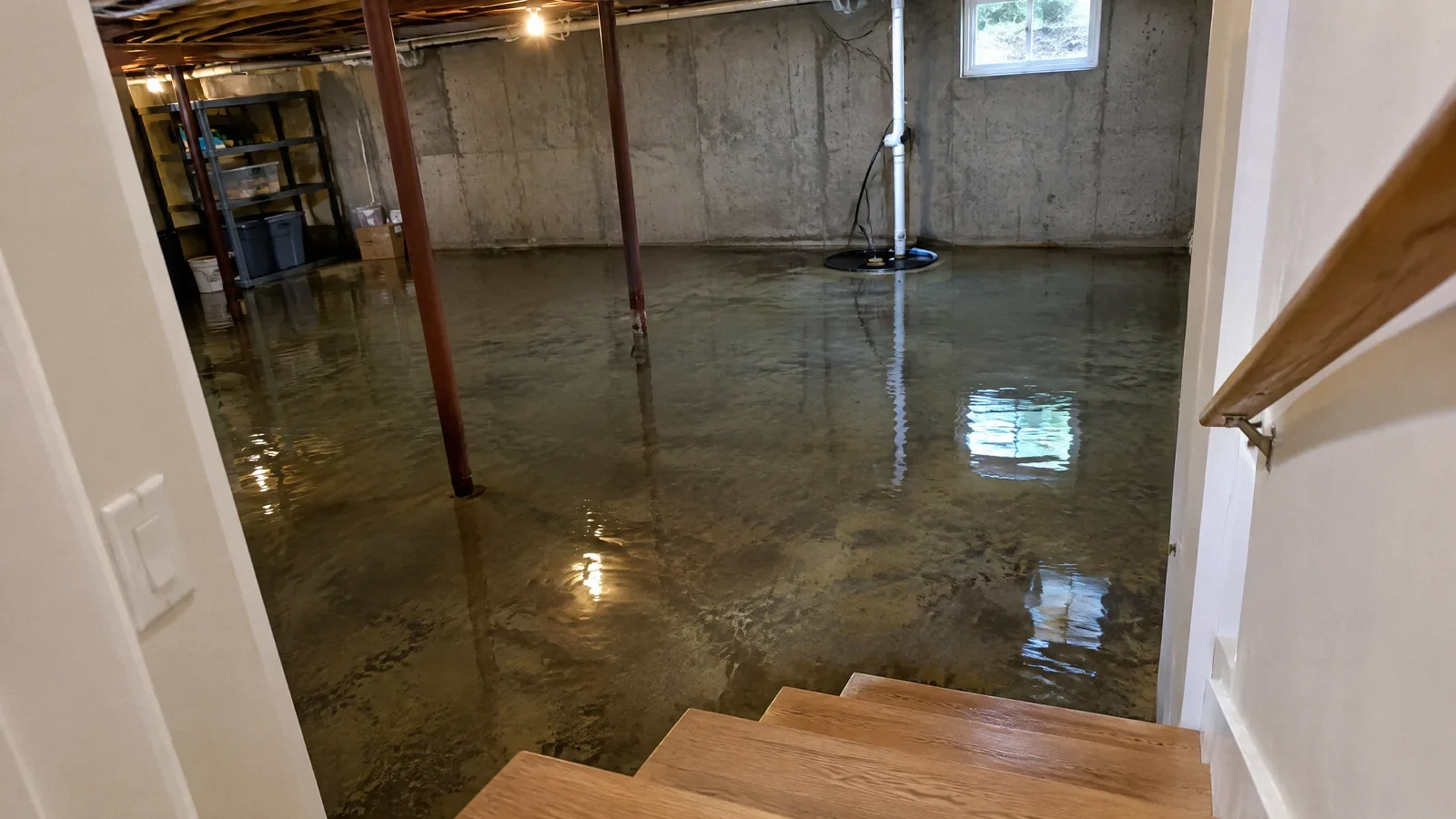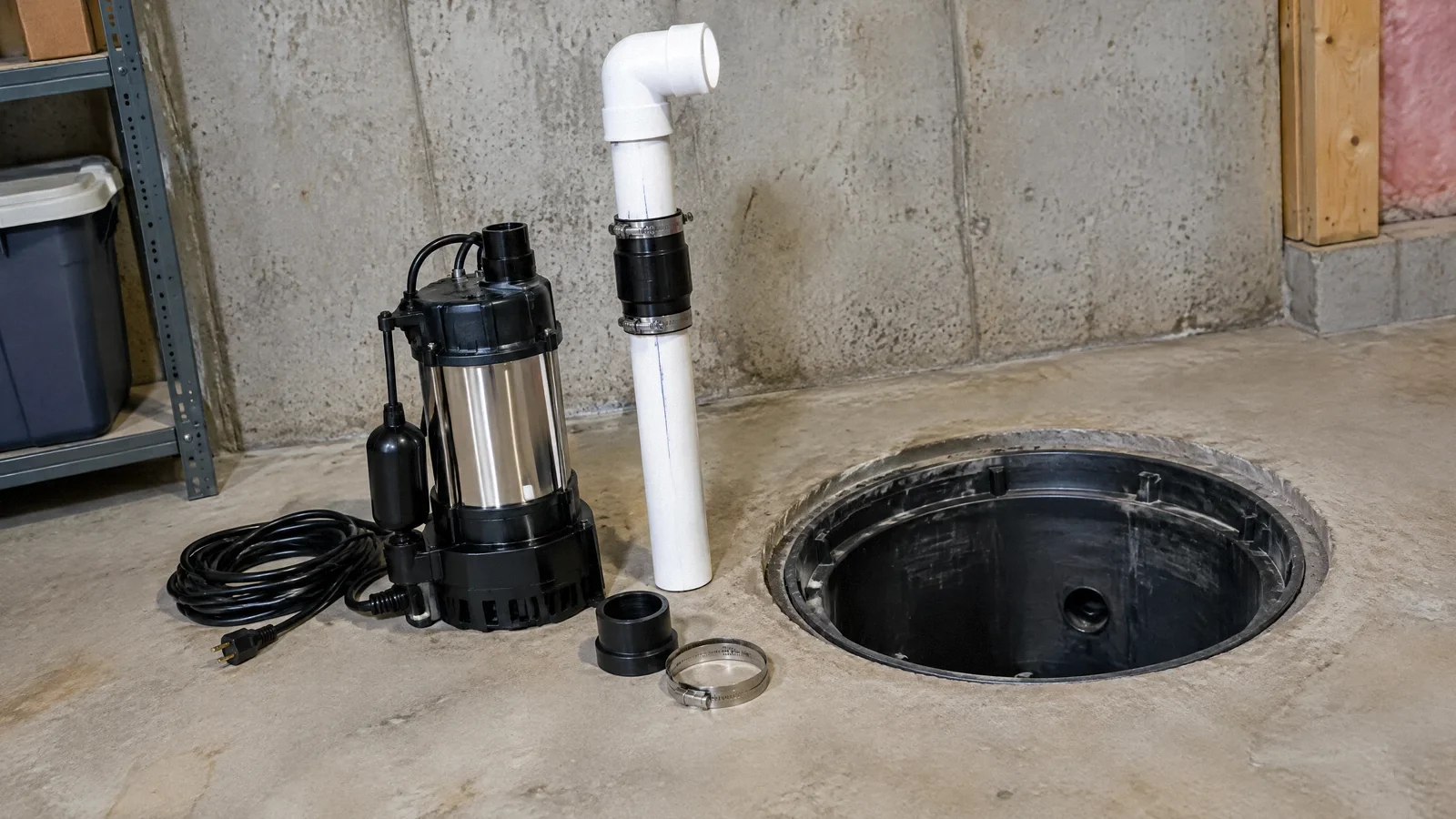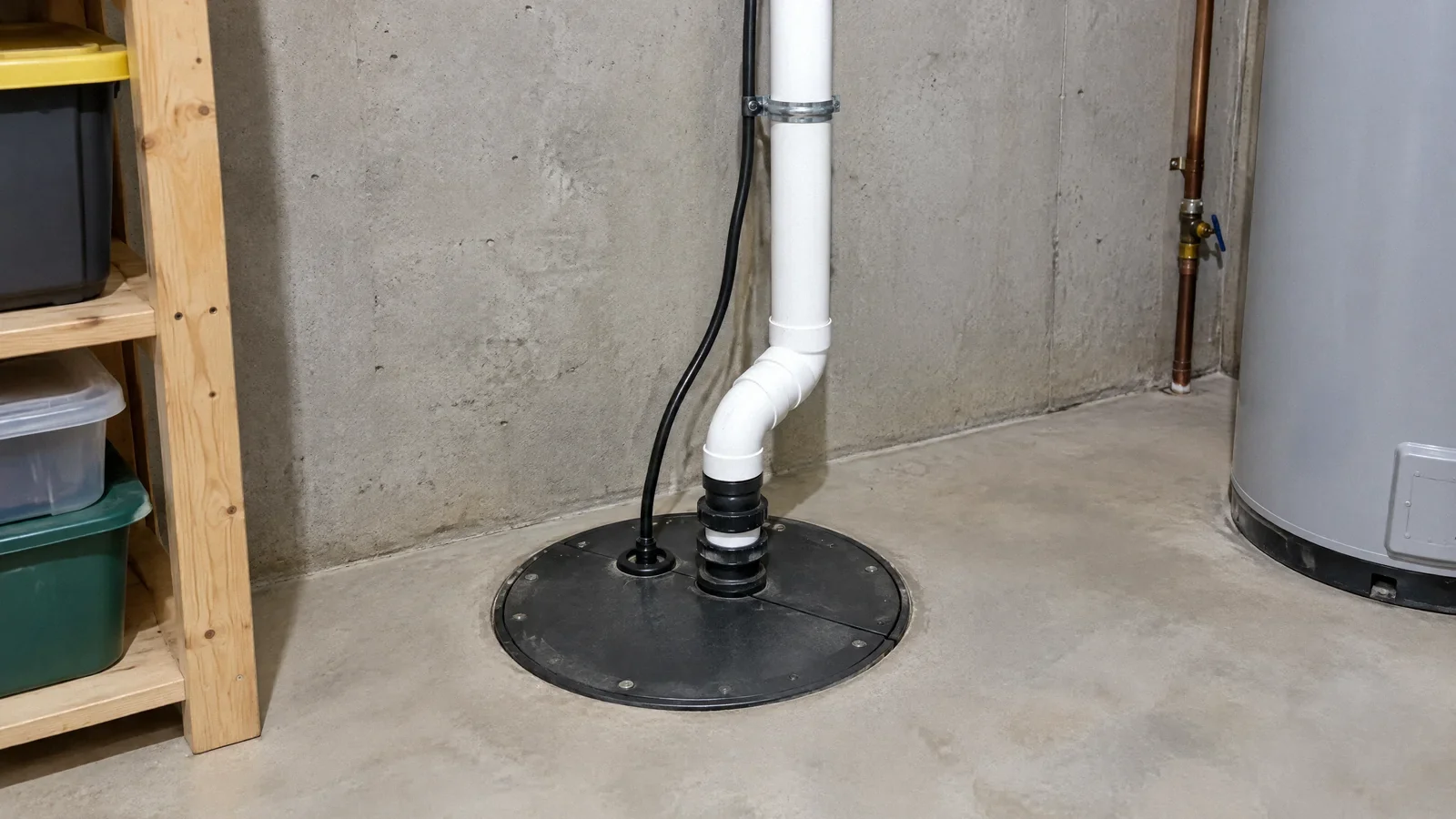
Choose a sump pump for the water flow it must handle at the total dynamic head of the actual discharge system, then check basin, switch, power and discharge requirements. Horsepower alone does not establish delivered capacity.
Start with flow and total head
The correct sump pump can remove expected incoming water at the resistance imposed by the discharge system. Two numbers drive the initial selection: required flow, typically in gallons per minute (GPM), and total dynamic head (TDH), expressed as feet of water. The manufacturer’s performance curve shows the flow a particular model can deliver at different heads. A horsepower label by itself cannot tell you whether a pump will keep up in your installation.
This guide concerns groundwater collected in a sump, not a sewage ejector or a pump for contaminated floodwater. The application, solids-handling requirements and local discharge rules differ. If the source or safe electrical condition is uncertain, ask a qualified pump or plumbing professional to assess the system.
Estimate the incoming water rate
For an existing system, observe its behavior during a substantial rain event from a safe, dry location. A professional can measure the volume entering the basin over time or use the basin dimensions and changing water level to estimate inflow. Divide the measured gallons by minutes to obtain GPM. Repeat observations when conditions are representative, because inflow can change with rainfall, groundwater and season. Do not reach into the basin or touch electrical equipment in wet conditions.
For example, if a measured 30 gallons enters in three minutes, average inflow during that observation is 10 GPM. That is not necessarily the peak rate. Select a pump with a reasonable allowance for higher inflow and uncertainty, based on local conditions and the installer’s judgment. An existing pump that rarely runs in dry weather is not sufficient evidence of the capacity needed during the next major storm.
Calculate the head the pump must overcome
Static lift is the vertical distance the water must be raised from the pumping water level in the basin to the discharge elevation. Total dynamic head also includes friction losses through pipe, fittings, valves and other system components. Longer runs, smaller pipe and additional fittings can increase resistance. Use the manufacturer’s sizing method or have a professional calculate the losses for the actual layout; horizontal distance is not automatically equivalent to the same number of feet of vertical lift.
For illustration, if static lift is 10 feet and calculated friction loss is 3 feet, estimated total dynamic head is 13 feet. This is only an example: it is not a universal allowance for friction. Discharge diameter, pipe material, length and flow rate affect the calculation. Include the intended check valve and all relevant components in the assessment.
Read the pump curve at the working point
Find the calculated head on the pump curve and read the corresponding delivered flow. The model should meet the required flow at that head, with an appropriate margin. For example, a model rated at 45 GPM at zero head might deliver much less at 13 feet; compare its published curve at 13 feet with the estimated peak inflow. Liberty Pumps describes a performance curve as the flow available across a range of total dynamic head values.
Shutoff head is the elevation at which that pump delivers zero flow under the stated conditions. It is not a useful operating target. If your calculated head approaches that point, the pump will not deliver the flow required. Compare specific models and curves rather than assuming two pumps with the same horsepower perform identically.
Check basin, controls and discharge
The pump must physically fit the basin, and its float or other switch must move freely through the full operating range. An oversized pump in a small basin may cycle frequently, so selection involves both capacity and usable basin volume. Follow the manufacturer’s instructions for minimum basin dimensions, switch clearance, discharge piping and maintenance access. A check valve can limit water flowing back into the basin after the pump stops, but its selection and installation should follow the equipment instructions.
The discharge must terminate in a safe, permitted location where it does not return water to the foundation or create a hazard. Local rules may prohibit connection to a sanitary sewer or require a particular discharge arrangement. Freezing, blocked outlets and long discharge runs can defeat an otherwise suitable pump. Confirm local requirements and installation details with the responsible authority and installer.
Plan for power failure and maintenance
A primary electric pump cannot run during a power outage unless an appropriate backup power arrangement is available. Depending on the property and local rules, a battery backup or other professionally selected backup system may reduce risk. A high-water alarm can provide warning, but neither an alarm nor a backup guarantees that a basement will remain dry. Consider what happens if the primary pump, switch, power or discharge line fails.
Test and maintain the system according to the manufacturer’s instructions, including the alarm and backup where fitted. Keep the cover secure and accessible. If a basin is overflowing, water is near outlets or the pump is operating abnormally, avoid contact with the water and electrical equipment and seek qualified help. Keep the selected model number, calculated flow and head, and installer’s instructions for future replacement.
Your next-step checklist
- Estimate peak inflow in gallons per minute.
- Measure vertical lift and calculate friction losses.
- Compare required flow with the model’s curve at total dynamic head.
- Check basin, switch, piping and approved discharge location.
- Plan backup power, alarms and maintenance.
Related questions
Is more horsepower always better?
No. Compare the pump’s actual flow at your system head and check basin and switch compatibility.
What is shutoff head?
It is the head at which a pump delivers zero flow under the stated conditions, not the head at which it can meet a useful flow requirement.
Can a sump pump prevent every flood?
No. Capacity limits, power loss, mechanical failure, blocked discharge or water entering elsewhere can overwhelm the system.
Sources & context
Public guidance supports the principles in this article. The practical questions and examples are editorial interpretation, not a site assessment or a coverage decision. State-specific rules apply only where identified.