White material in pool water cannot be identified or judged safe by appearance. Pause swimming, notify the operator if applicable, and assess cleaning, circulation, filtration and water chemistry before reopening.
What is white water mold?
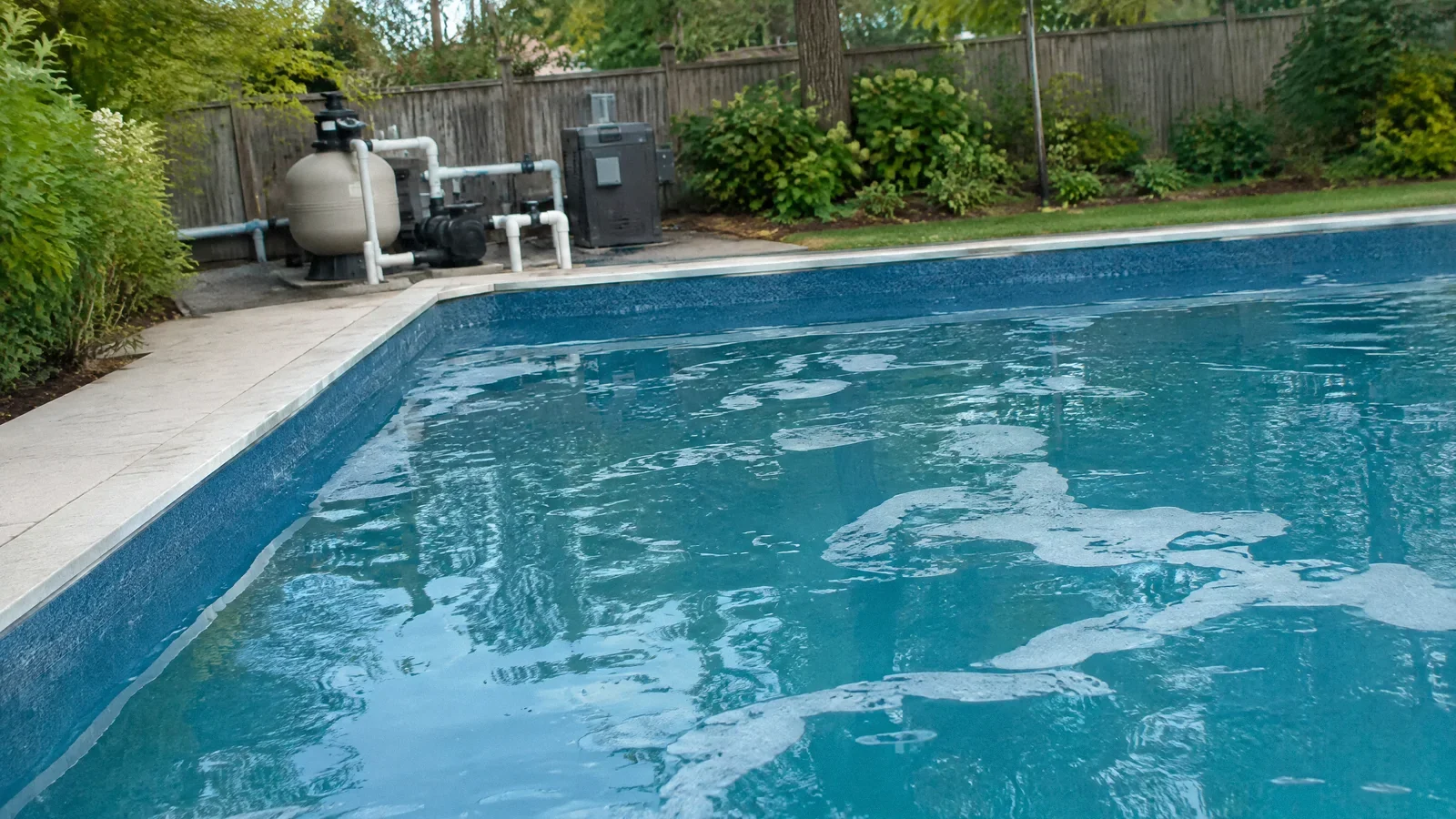
Pool owners sometimes use “white water mold” for pale floating material or a whitish film in a pool or spa. The phrase is not a reliable identification from appearance. Debris, scale, residues and microbial films can look similar, and more than one condition may be present. A photograph cannot establish the organism or whether the water is safe.
Treat an unexplained film as a pool-water and equipment problem. Pause swimming while the cause and water treatment are assessed. A public pool user should notify the operator, who is responsible for inspection and applicable local requirements.
Is it dangerous to swim?
A white appearance alone cannot quantify risk or diagnose an infection. The concern is that visible contamination may accompany inadequate circulation, cleaning or disinfection, and a biofilm can shelter microorganisms. CDC explains that chlorine and pH are a first defense against many swimming-related germs, but some germs survive longer than others.
Do not assume a clear-looking or strongly scented pool is disinfected. Test the water using a suitable kit and follow pool-specific guidance. If anyone has symptoms or a condition that increases vulnerability, contact a clinician for personal advice. A visual description cannot establish why someone became ill.
Where films can collect
A film may occur on submerged surfaces, in skimmers, behind fittings, on pool equipment or in circulation and filtration components. CDC’s aquatic health guidance describes biofilms in recirculation lines, filters and pools. Some can resist disinfectant because the organisms are embedded in a protective matrix.
A floating patch alone does not prove the extent inside the plumbing. Inspect accessible locations as directed by the equipment maker and ask a qualified pool professional about concealed or recurring contamination. Do not open pressurized equipment until it is safely shut down and the manufacturer’s instructions permit access.
Check the water and circulation
Record free chlorine, pH and any other measurements required by the pool system or local rules. CDC recommends pH 7.0–7.8 and at least 1 part per million free chlorine in home pools, or at least 2 parts per million when cyanuric acid or stabilized chlorine is used. These are routine home-pool recommendations, not a complete treatment recipe for an unidentified contamination event. For home hot tubs, CDC recommends at least 3 ppm chlorine and advises against cyanuric acid or stabilized chlorine products; these are routine maintenance recommendations, not a treatment dose for an unknown film.
Check whether the pump and filter are working as intended, whether flow is restricted and whether the filter needs maintenance. A low disinfectant reading can have several causes. A pool professional can assess the actual system, product instructions and measurements before recommending a corrective treatment.
Remove accessible material safely
Physical cleaning matters because a protective film may not be removed by adding disinfectant alone. Follow the pool surface and equipment manufacturer’s instructions for brushing or cleaning accessible areas, skimmer baskets and removable accessories. Avoid damaging liners, coatings or fittings with an unsuitable brush.
Clean filters according to their type and instructions; a cartridge, sand filter and diatomaceous-earth filter are not serviced the same way. Capture and dispose of debris and backwash as required locally. A pool service professional can handle inaccessible plumbing, recurring film or uncertain filter condition.
Use chemicals carefully
Read each product label and follow the pool manufacturer’s instructions. Never mix pool chemicals with one another or add water to concentrated chemicals unless the label directs that specific procedure. Store products separately in a dry, ventilated location out of children’s reach. Avoid breathing fumes.
Do not combine treatment products based on an online “shock” formula. The correct action depends on pool volume, current measurements, sanitizer type and local rules. If treatment creates strong fumes or a dangerous reaction, leave the area and seek emergency assistance.
When can the pool be used again?
Keep swimmers out until the visible problem has been addressed, the system is operating properly and water measurements meet applicable requirements and product-label reentry instructions. For a public facility, the operator and local health authority determine reopening under the rules that apply there.
One acceptable reading does not prove all concealed surfaces are clean. Continue monitoring and inspect for recurrence. A recurring film or readings that cannot be maintained call for a professional assessment of circulation, filter maintenance and sanitizer demand.
Pool film versus household mold
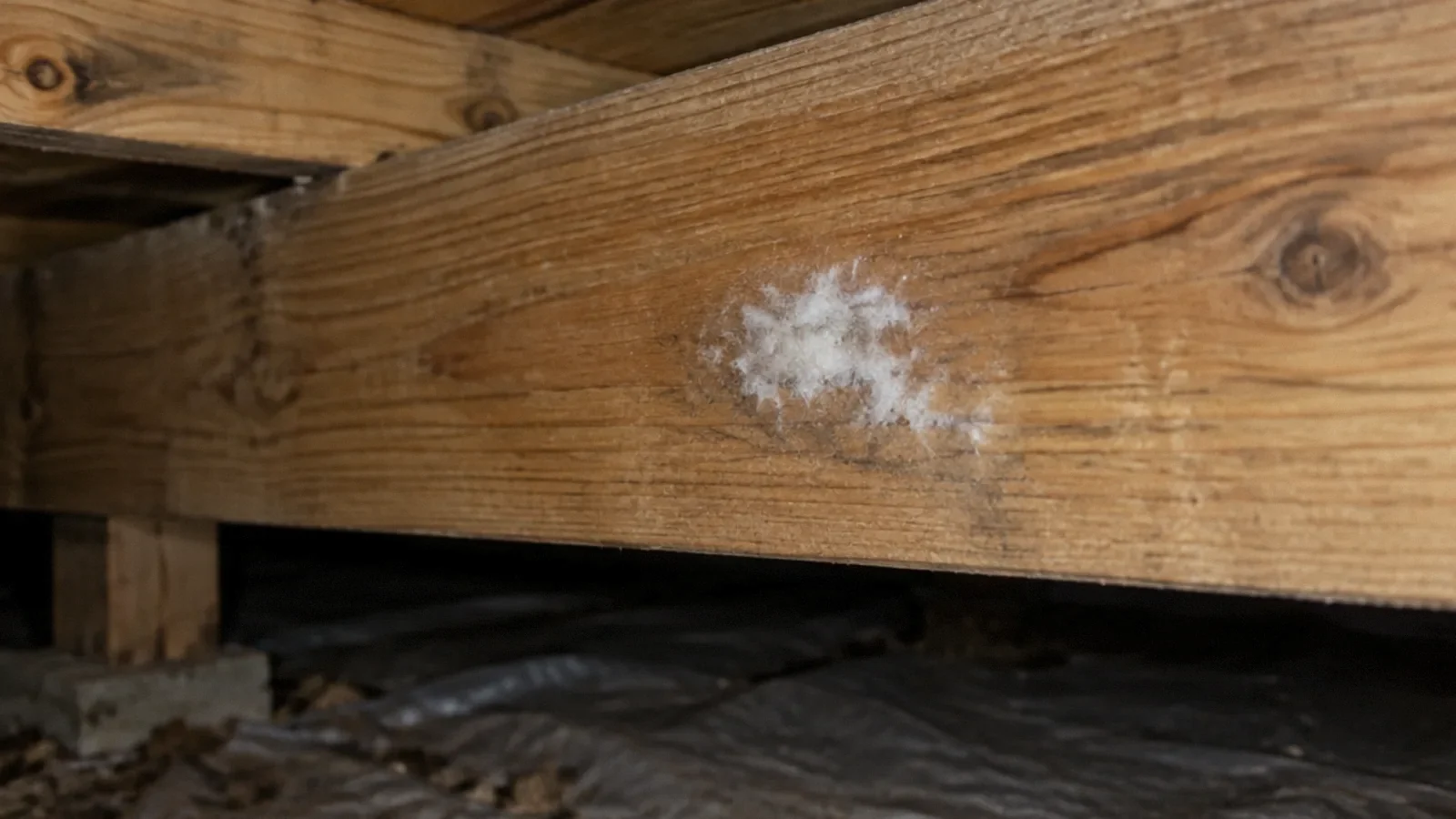
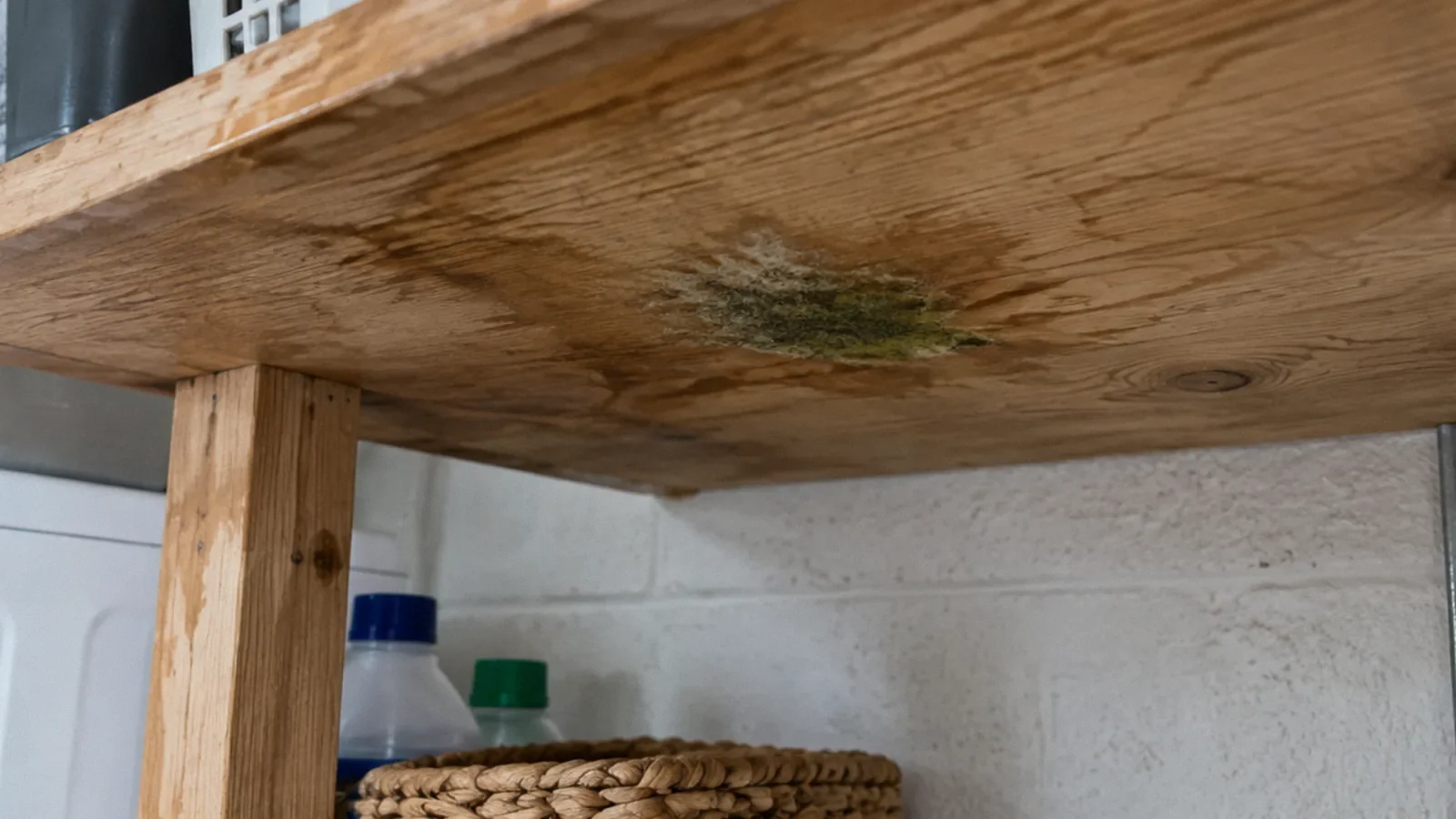
A white deposit on a damp wall is a different investigation from floating material in a treated pool. In a home, the immediate building questions are moisture and affected materials; in a pool, circulation, filtration, cleaning and water chemistry are central. Neither can be identified solely by color.
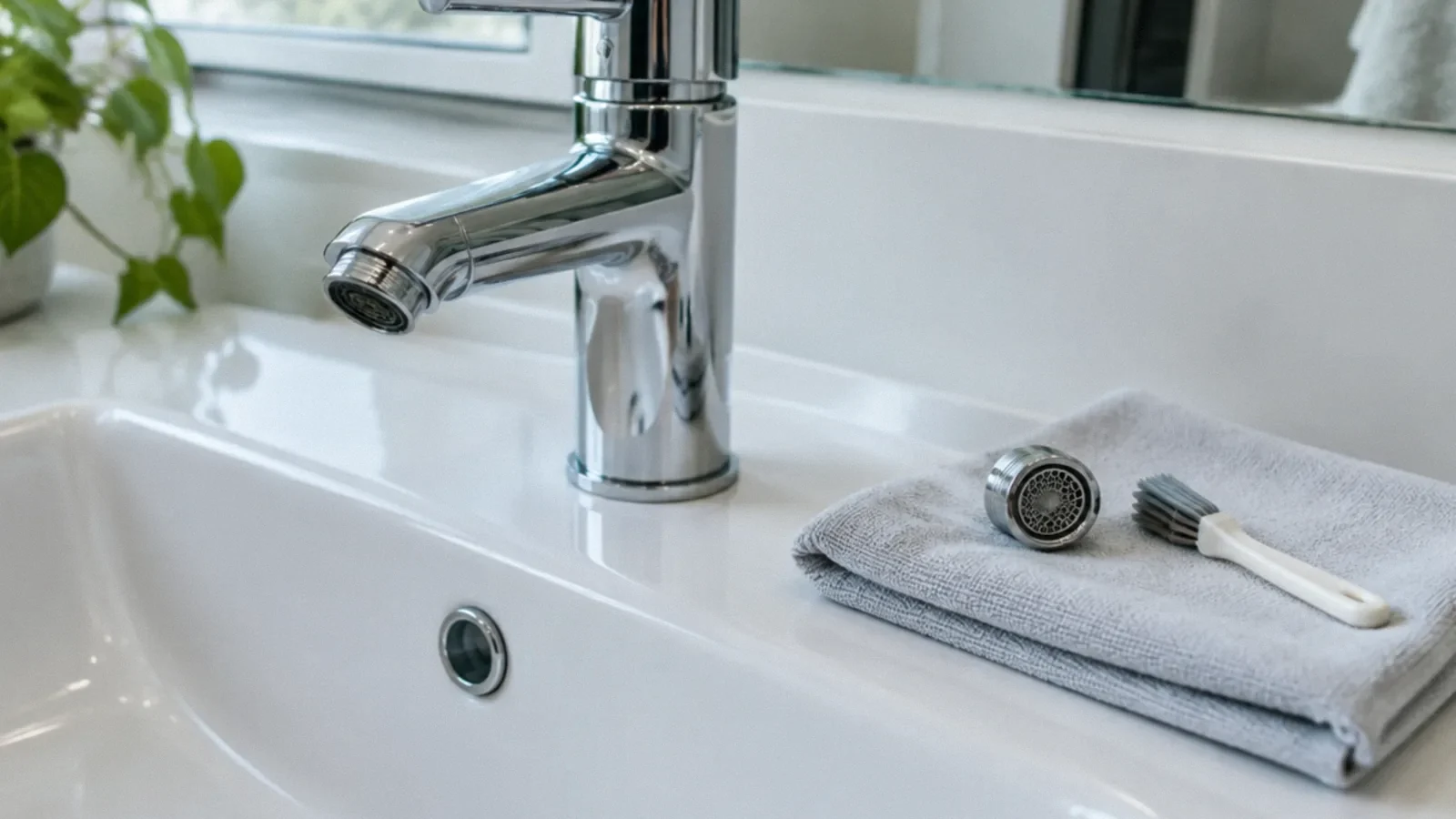
For white material at a faucet or drain, distinguish the drinking-water supply, the drain and the surrounding surface. Contact the provider or a plumber for unusual water quality or a plumbing concern. Do not add pool chemicals to household plumbing.
Your next-step checklist
- Pause swimming while unexplained material is assessed.
- Test free chlorine and pH with a suitable kit.
- Inspect circulation and clean accessible surfaces as directed.
- Never mix pool chemicals.
- Reopen only when applicable requirements and label instructions are met.
Related questions
Is every white film in a pool mold?
No. Several kinds of residue or microbial film can appear white; appearance cannot identify the material.
Can I swim while the water contains an unknown film?
Pause use until the condition is assessed and corrected and applicable water-quality and reentry requirements are met.
Will adding chlorine remove every biofilm?
Not necessarily. Biofilms can protect microorganisms, so physical cleaning and attention to circulation and filtration also matter.
Can I use household mold cleaner in a pool?
Use only products labeled for the intended pool use and follow their directions. Never mix chemicals.
Sources & context
Public guidance supports the principles in this article. The practical questions and examples are editorial interpretation, not a site assessment or a coverage decision. State-specific rules apply only where identified.
- CDC: Home pool and hot tub water treatmentfederal health guidance
- CDC: Model Aquatic Health Code annexfederal technical guidance
- CDC: Operating public pools and splash padsfederal health guidance