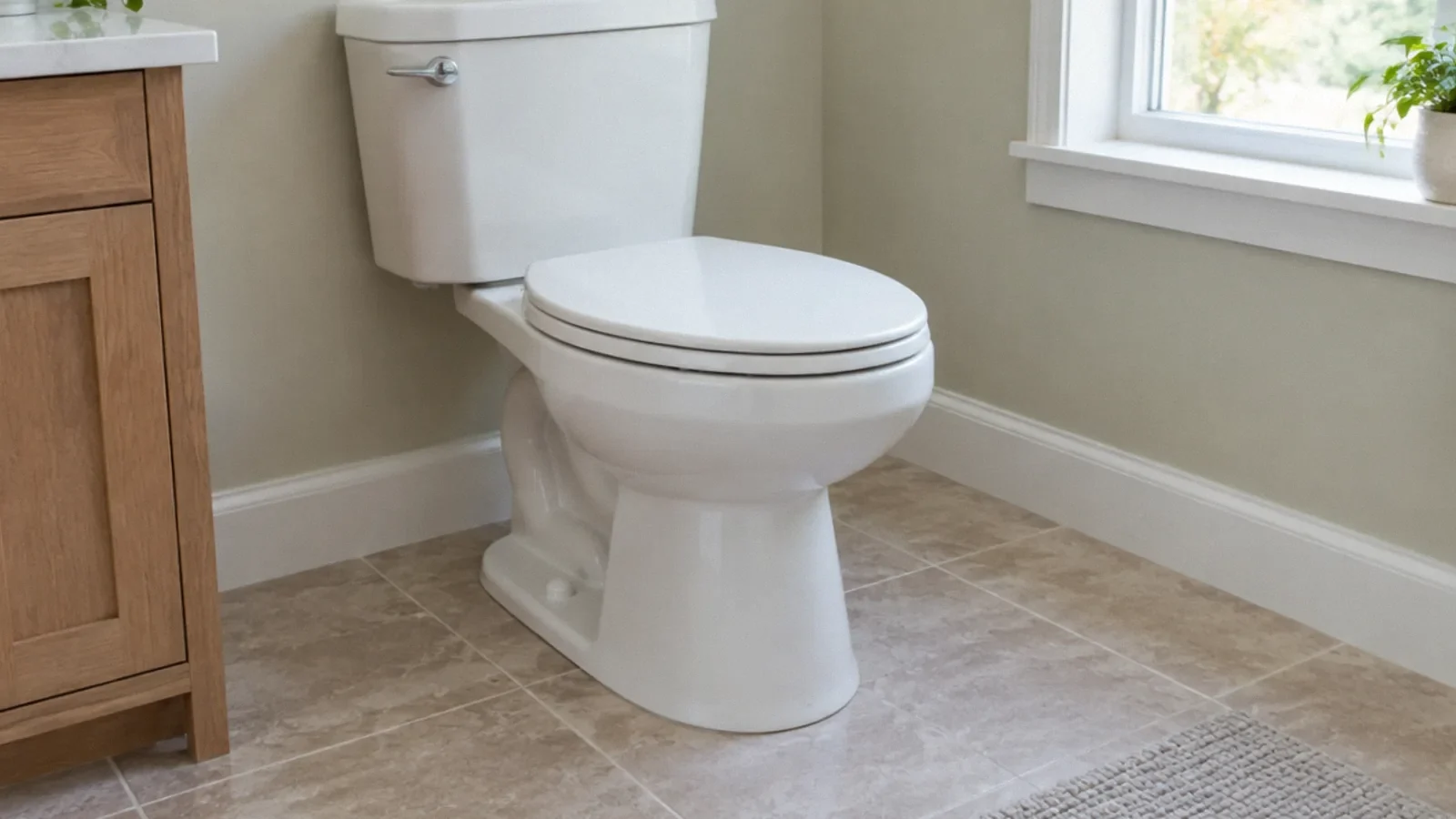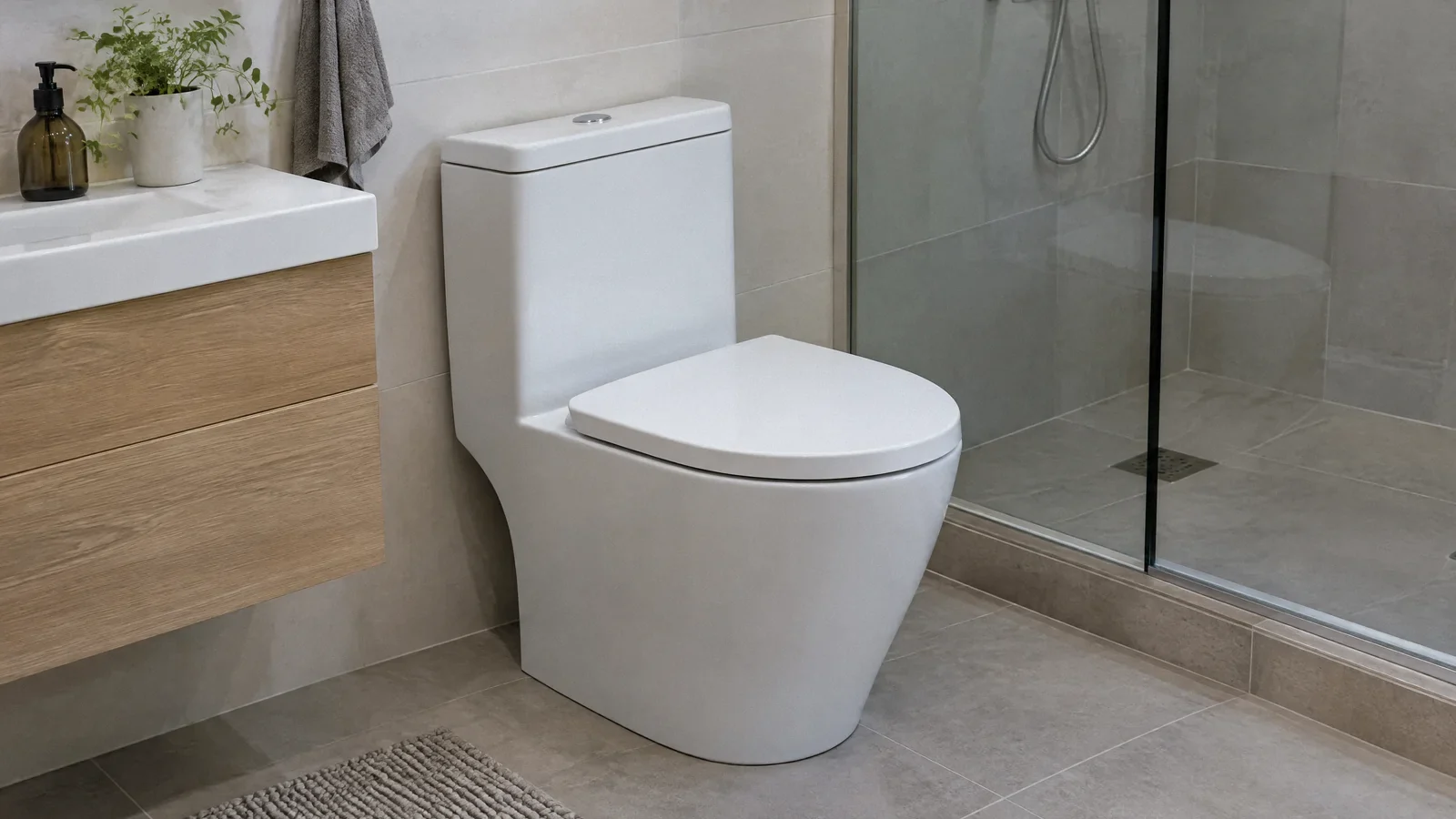
A gravity toilet may flush twice from one press when its flush valve stays open long enough to release too much water. A refill that starts later is a different symptom and can indicate a tank leak. Check the mechanism against the toilet manufacturer’s instructions.
First identify what happens
A true double flush means one brief press produces two separate flush cycles without a second press. Watch the bowl and listen while the tank refills. If the bowl empties twice immediately, note whether the handle returns freely. If you hear water run again minutes later without the bowl performing a normal flush, the tank may be losing water slowly and the fill valve may be topping it up. That is often called ghost flushing, although the sound is a refill rather than a second intentional flush.
Another common complaint is needing to press twice because the first flush does not clear the bowl. That is a weak or incomplete flush, not an automatic double flush. A partial obstruction, inadequate water level, or a model-specific fault may need a different remedy. Do not assume every two-flush complaint has the same cause. A dual-flush toilet also has two selectable flush volumes; the existence of two buttons does not itself mean the toilet is malfunctioning.
Check the flush mechanism
In a conventional gravity tank, pressing the handle lifts a flapper or canister seal and lets tank water enter the bowl. The seal should return as designed so the tank can refill. If it stays open too long, excess water can sustain a second siphon. A sticking handle or an incorrectly adjusted chain may contribute, but valve design and adjustment vary. Remove the lid carefully and place it on a stable towel; porcelain lids are heavy and can break. Observe one brief flush without placing hands near moving parts.
Look for a chain caught under the seal, a lever that does not return, or a part that is visibly disconnected. Kohler advises checking that its trip-lever chain has sufficient slack without excessive loose chain that could catch; use the specific manufacturer’s instructions rather than applying one setting to every design. A replacement flapper must match the toilet. A universal-looking part can have different buoyancy or closure timing, so compare the model number and specified part before buying.
If the toilet is pressure-assisted, concealed, wall-hung, or electronically controlled, its mechanism differs from a simple flapper tank. Do not open a pressure vessel or improvise an adjustment. Use the product manual or contact the manufacturer or a plumber familiar with that model.
Separate an unwanted refill from a double flush
A slow leak from the tank into the bowl can lower the water level until the fill valve opens again. The leak may result from a dirty, worn, or misaligned seal, a chain preventing closure, or an overflow caused by an excessive tank water level. Kohler lists binding linkage, water entering the overflow tube, and a worn flapper or canister seal among possible causes of intermittent running. These possibilities are diagnostic leads, not proof that a particular part has failed.
With the lid off, compare the stationary water level with the fill mark and overflow opening specified for the fixture. If water continues to flow into the overflow, follow the manufacturer’s procedure or ask a plumber to adjust or repair the fill valve. If the mechanism repeatedly refills but no overflow is apparent, a plumber can test the seal and connections. Avoid dropping cleaners or chemicals into the tank; they can interfere with parts and make troubleshooting less reliable.
When the problem is a weak first flush
If you have to flush again yourself, record whether waste remains, water rises unusually high, or other fixtures drain slowly. Stop repeated flushing when the bowl is close to overflowing. Wait for the level to fall and contact a plumber if it does not, if multiple drains back up, or if wastewater appears elsewhere. A local blockage and a main drain problem require different responses.
A low tank level or an incorrectly installed component can also affect the flush, but a second press is not a reliable way to identify the cause. Check the fixture manual and the water-supply valve only if it is accessible and safe to operate. Do not force a stiff or corroded valve. If there is a leak at the base, wet flooring, or a cracked fixture, arrange an inspection rather than continuing to test repeatedly.
After an adjustment
Make one change at a time and test with a normal short press. Allow the tank to refill completely between tests. Check whether the bowl cycles once and whether the tank stops filling. Wait several minutes and listen for another refill. If the symptom remains, return the adjustment to the manufacturer’s specified setting and seek help rather than compensating by reducing water supply pressure or modifying parts.
Document the make, model, approximate age, and whether the extra sound is immediate or delayed. A short video can help a plumber distinguish a second bowl siphon from an intermittent refill. A working repair should restore normal operation without an overflow, continuous running, or a weaker flush.
Your next-step checklist
- Observe whether the second cycle follows immediately or occurs after a delay.
- Identify the toilet model and flush mechanism before adjusting it.
- Check handle movement, chain and seal against the manufacturer’s instructions.
- Stop flushing if the bowl is close to overflowing.
- Call a plumber when the mechanism or cause is unclear.
Related questions
Is a dual-flush toilet supposed to flush twice?
No. Dual flush describes a choice between two flush volumes. One selection should initiate the cycle designed for that button.
Why does the toilet run again long after flushing?
The tank may be losing water and refilling intermittently. A worn seal, linkage issue, or overflow can be responsible; inspect according to the fixture instructions.
Will replacing any flapper fix a double flush?
Not necessarily. The cause may be linkage, an incorrect part, or another mechanism. Use the part specified for the toilet model and diagnose the symptom first.
Sources & context
Public guidance supports the principles in this article. The practical questions and examples are editorial interpretation, not a site assessment or a coverage decision. State-specific rules apply only where identified.
- Toilet Occasionally Leaking or Runningmanufacturer
- Kohler troubleshooting guidemanufacturer