A beep may come from a fireplace receiver, remote, or a nearby smoke or carbon monoxide alarm. Treat a possible safety alarm seriously, then use the specific device manual to interpret any remaining signal.
First make sure the sound is not an alarm
A sound that seems to come from a fireplace may actually come from a smoke alarm or carbon monoxide (CO) alarm on a nearby wall or ceiling. Locate the source without ignoring an emergency. If a smoke alarm sounds or you see smoke or fire, leave and call emergency services. If a CO alarm sounds, move outside to fresh air and call emergency services; do not return until responders say it is safe. CO is colorless and odorless, so a normal-smelling room does not rule it out.
If you suspect gas or smell fuel, leave immediately without operating switches or appliances and contact the gas utility or emergency services from outside. Do not silence or disconnect an alarm as a way to investigate a possible gas or CO hazard. Once any immediate danger has been ruled out, use the alarm manufacturer’s instructions to distinguish an end-of-life or low-battery chirp from its alarm pattern. Patterns vary by device.
Identify the device and the pattern
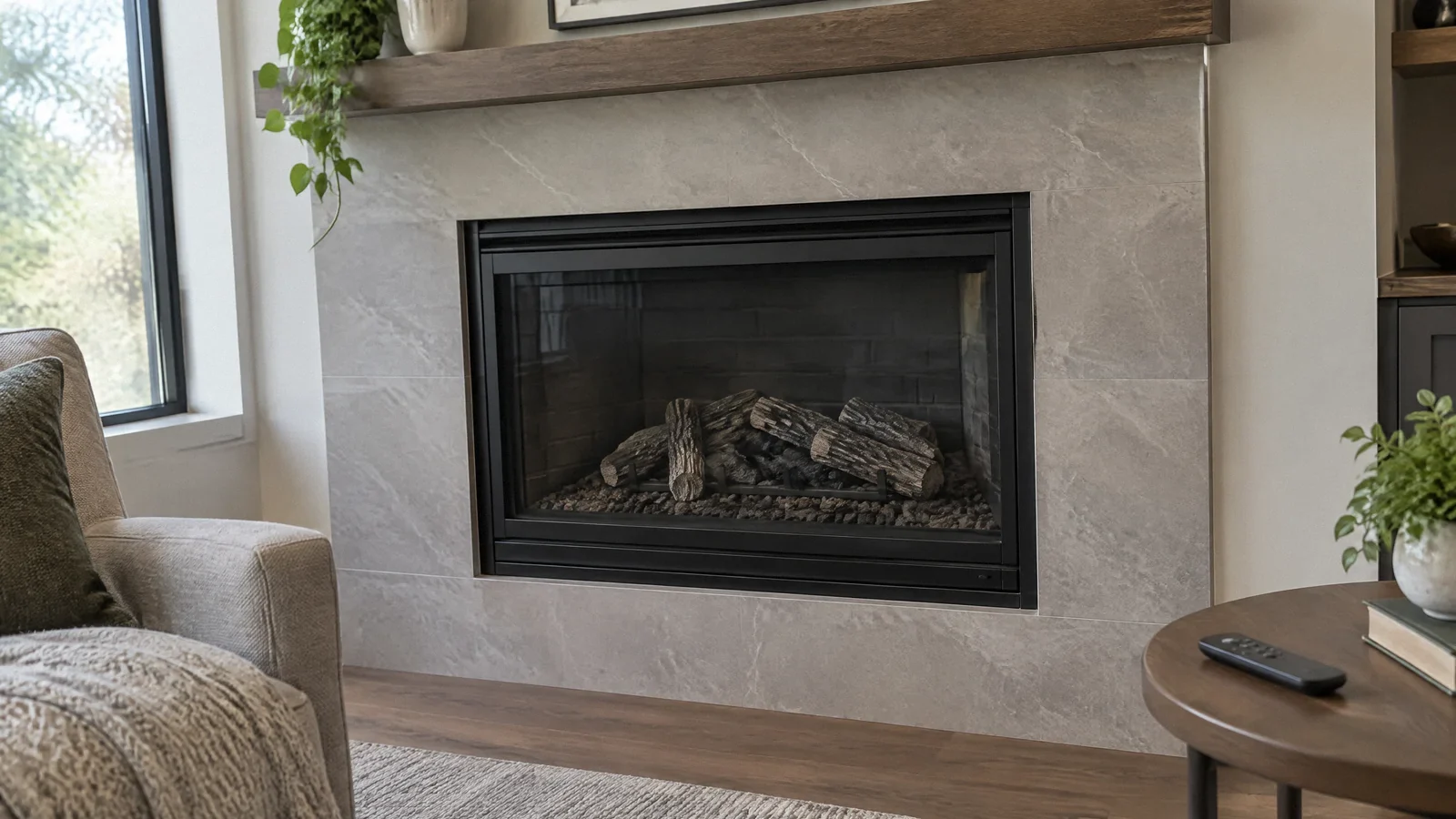
A wood-burning fireplace may have no electronic control at all; the sound could belong to a detector, thermostat, nearby appliance, or accessory. A gas or electric fireplace may have a remote transmitter, a wall control, and a receiver or battery backup. Stand in a safe location and note where the sound is loudest, how many beeps occur, and whether it happens when a button is pressed, during ignition, or at intervals while the unit is off. Do not repeatedly start a malfunctioning appliance just to reproduce the sound.
Find the make and model on the owner’s documentation or on an accessible identification label. The fireplace and the remote control may have different model numbers. Search the manufacturer’s manual for that exact control system. A sound that is normal on one model may indicate a different condition on another; no universal number of beeps means the same thing on every fireplace.
A beep can acknowledge a command
Some receivers beep to confirm that they received a remote command. For example, Regency describes a single receiver beep after pressing the power button on its Proflame 2 control. Another Regency remote manual describes a beep when a receiver accepts its pairing code. These are examples of particular systems, not a promise that any one beep is safe or normal on a different model. If the sound occurs only in response to a normal command and the manual identifies it as confirmation, it may not indicate a fault.
If the fireplace fails to start, shuts down unexpectedly, displays an error, or produces an unusual odor, stop using it and consult the manual or an authorized service provider. Do not bypass safety controls or assume that the beep itself explains a combustion, gas, or venting problem. Keep the model information and a short recording of the sound for the technician.
Battery and receiver checks
A remote and its receiver may use separate batteries. A low battery can cause unreliable operation or a model-specific indication. For example, Regency says that on certain Proflame receiver systems the absence of the usual confirmation beep can indicate low receiver batteries; on other controls the remote may show a battery icon. Conversely, a Maxitrol GV60 guide describes frequent beeps for three seconds when its motor turns as a low-battery indication. These different examples show why guessing from the beep count is unreliable.
Replace batteries only where the owner’s manual permits and only when the appliance and accessible components are cool. Use the specified battery type and orientation. Some battery boxes are in wall-mounted holders, while others are near the appliance; location varies. Do not remove a sealed glass front, reach into a hot firebox, open gas components, or disturb wiring to find a battery holder. If access is unclear, contact the installer or service provider. Dispose of used batteries according to local guidance.
After a permitted battery change, follow the manual’s instructions for any required pairing. If the sound continues or a new error appears, stop and request service instead of repeatedly resetting the control. Replacing a battery is not a remedy for a gas leak, blocked vent, or CO alarm.
When to schedule service
Contact a qualified fireplace technician if the signal is unexplained, the appliance does not respond normally, the receiver is inaccessible, batteries repeatedly fail, or the manual identifies a fault. Provide the fireplace and remote model, exact pattern, timing, recent power interruption, and any error displayed. Mention whether the unit was operating when the sound began.
CPSC recommends annual professional inspection of fuel-burning heating systems, including fireplaces and vents. Regular service can identify issues that a beep cannot reveal. Keep smoke and CO alarms installed and maintained in the locations required by their instructions and local rules. A working fireplace control is not a substitute for a CO alarm.
Your next-step checklist
- Identify whether the sound comes from a safety alarm or fireplace control.
- Leave and call emergency services for an active smoke or CO alarm.
- Record the pattern and appliance and remote model numbers.
- Consult the exact manual before changing accessible batteries.
- Call a qualified technician for unexplained or recurring signals.
Related questions
Does every fireplace beep mean a low battery?
No. Depending on the model, a beep may acknowledge a command, indicate a battery condition, or come from another device entirely.
What if my carbon monoxide alarm is beeping?
Treat a possible active alarm as urgent: move to fresh air and call emergency services. Consult its manual only after immediate danger has been addressed.
Can a fireplace beep even when it is off?
A control or nearby alarm may make a sound while the fireplace is off. Identify the actual device and consult its manual rather than assuming the cause.
Sources & context
Public guidance supports the principles in this article. The practical questions and examples are editorial interpretation, not a site assessment or a coverage decision. State-specific rules apply only where identified.
- Regency Proflame 2 Remote Troubleshootingmanufacturer
- Regency Fireplace Care FAQmanufacturer
- Carbon Monoxide Poisoning Preventiongovernment
- Maxitrol GV60 Quick Start Guidemanufacturer