Wait until officials say it is safe to return, then assess ash and smoke residue without stirring up dust. Protect vulnerable occupants, document affected rooms and materials, and seek professional help for extensive contamination or building damage.
Start with safety and local instructions
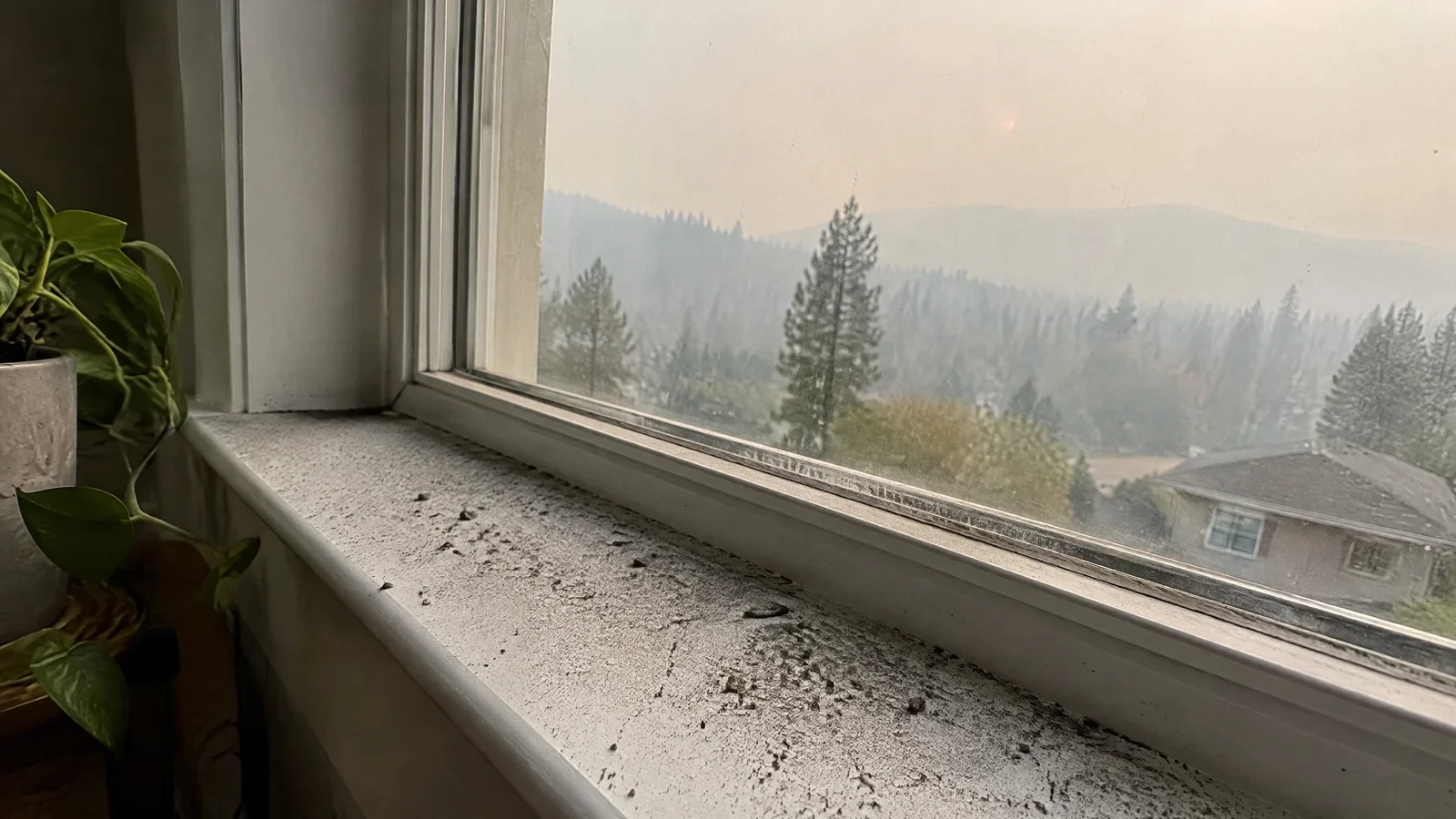
A home can be affected by wildfire smoke even when flames never reach it. Fine particles can enter through openings and ventilation systems, while ash can settle on windowsills, furnishings, and other surfaces. Smoke odor and visible ash are useful clues, but neither alone tells you the full extent or composition of contamination. Ash from burned structures may be more hazardous than ash from vegetation, according to EPA.
Do not return to an evacuated area until officials permit it. If the building has structural damage, a gas odor, damaged electrical equipment, or other immediate hazards, stay away and contact the appropriate utility or emergency service from a safe location. If anyone has breathing difficulty or other concerning symptoms, seek medical advice promptly. A cleanup plan starts only after the site is safe to enter.
Record what you find
Before disturbing residue, photograph rooms, surfaces, contents, and visible damage. Note when the smoke event occurred, whether doors or windows were open, and whether heating or cooling equipment was operating. Save receipts and contact your insurer promptly to ask about documentation, emergency mitigation, adjuster inspection, and policy conditions. Coverage depends on the policy and facts; an odor or ash deposit does not automatically establish coverage.
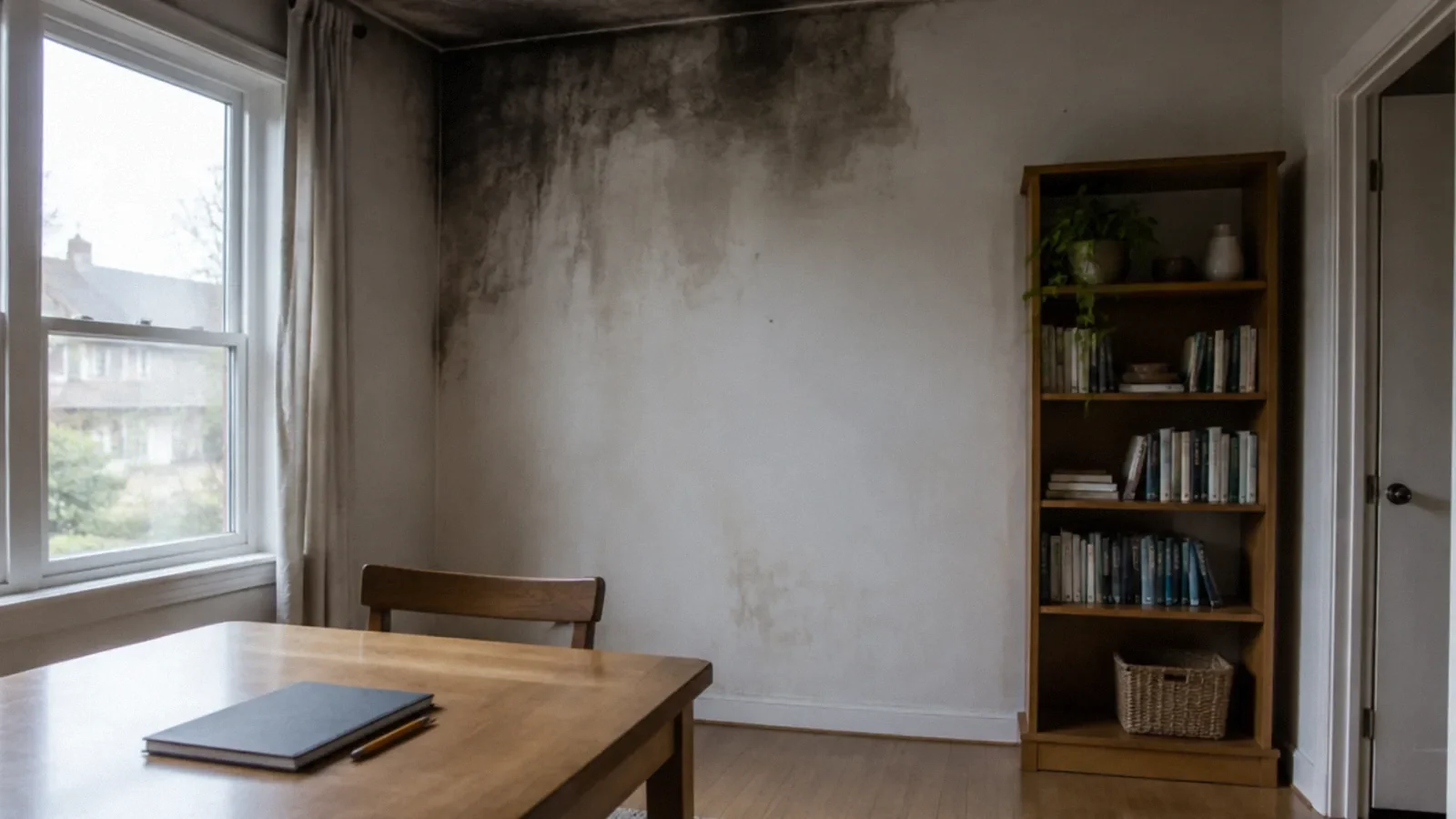
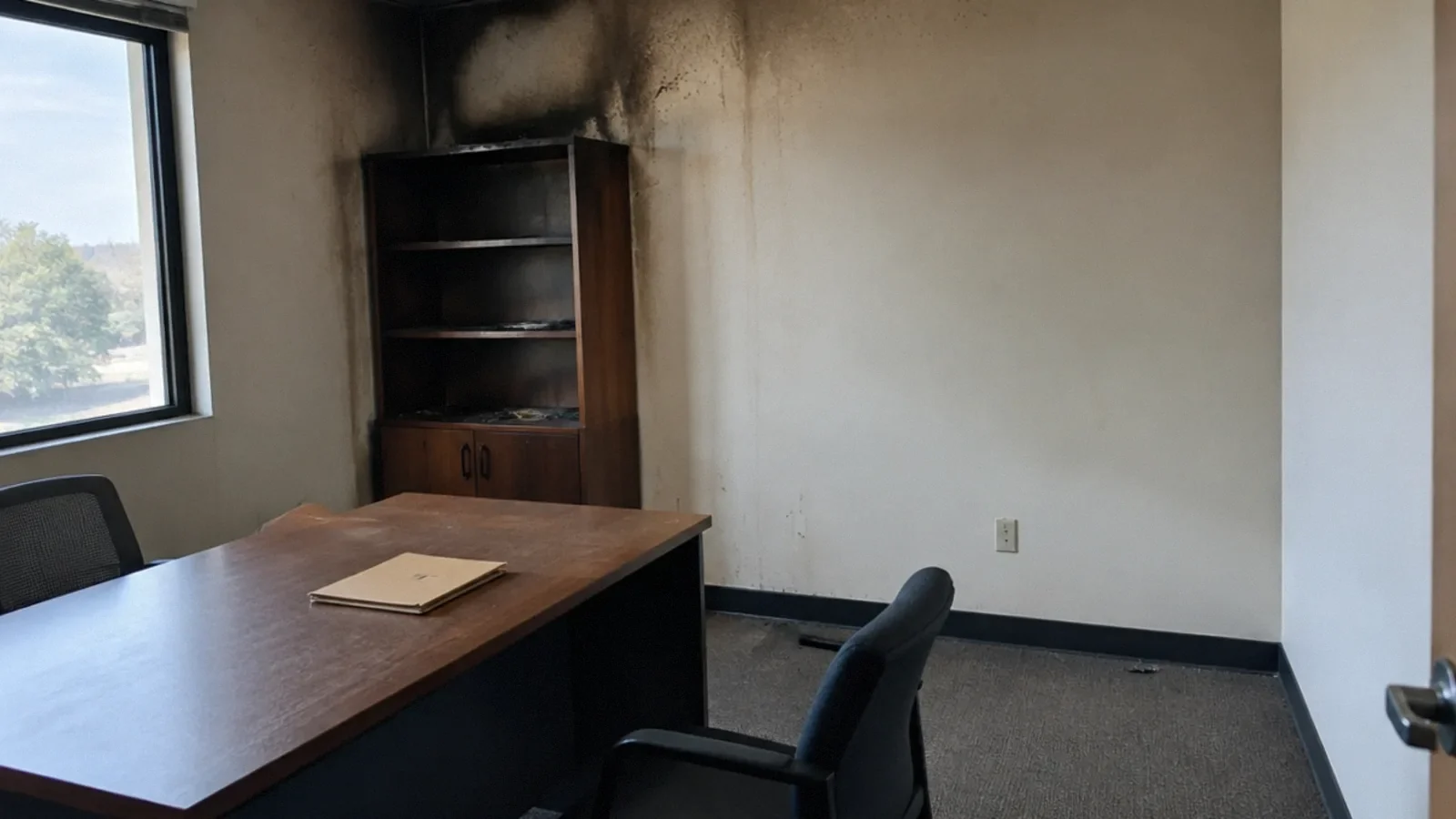
Compare rooms and materials. A light film on a hard windowsill is different from ash throughout ductwork or deeply contaminated upholstery. Check accessible filters and supply registers visually without taking equipment apart. Dark residue may have other causes, so avoid a definite diagnosis from color. Keep damaged belongings until the insurer has explained its documentation requirements, unless keeping them creates a safety problem or local authorities require disposal.
Protect people while cleaning light deposits
EPA advises that children, older adults, and people with heart or lung disease should not participate in ash cleanup. Avoid stirring ash into the air. For light deposits on suitable hard surfaces, EPA recommends a damp cloth or wet mop; use only enough water to control dust. A high-efficiency particulate air (HEPA)-type vacuum can be used on dusty surfaces. A typical household or shop vacuum can send collected ash back into the air. Follow surface and vacuum manufacturer instructions.
For cleanup, EPA recommends a tight-fitting NIOSH-approved N95 or P100 respirator, gloves, long sleeves, long pants, and closed shoes. A respirator must fit properly to filter particles effectively and does not remove all gases. Change contaminated clothing and shoes to avoid carrying ash into clean rooms. Do not dry sweep or use a leaf blower. Where the ash is substantial, its origin is unknown, or a person cannot safely do the work, use an experienced professional instead.
Avoid flooding surfaces with water: added moisture can damage finishes or remain trapped in porous materials. Test a small inconspicuous area before wiping sensitive finishes. Never mix cleaning chemicals. If an item has special value or its care instructions prohibit wet cleaning, consult a conservation or cleaning specialist rather than experimenting.
Consider fabrics, filters, and HVAC separately
Soft furnishings, carpets, insulation, and other porous materials can retain particles and odor. A professional can assess whether cleaning is practical for a particular material and the extent of contamination. Ordinary laundering may be appropriate for some washable textiles according to their care labels, but an expensive or delicate item deserves a specialist assessment. A pleasant scent after deodorizing does not prove that residue has been removed.
Inspect or replace the heating and cooling filter as recommended by the equipment manufacturer when it is safe to access. Ask an HVAC professional to assess the system if there is heavy residue, particles coming from registers, or concern that internal components are contaminated. EPA says ducts should be cleaned as needed rather than automatically after every smoke event. Ask any contractor to identify what is contaminated, how it will be cleaned, and how the work will be verified. Avoid running a system known to spread debris until it has been assessed.
Choose a contractor and verify the result
For widespread ash, soot on many surfaces, persistent odor after cleaning, or smoke that has entered hidden cavities, request an inspection by a restoration professional experienced with wildfire impacts. Ask for a written scope identifying the affected rooms and contents, cleaning method, containment, protection of unaffected areas, and treatment of HVAC equipment. Obtain an explanation of what cannot be restored and how disposal decisions will be made. Compare the proposed work with insurer instructions before authorizing non-emergency services.
After cleaning, inspect accessible surfaces in good light and check for remaining visible residue. Ask the contractor to explain the basis for any clearance or testing recommendation and whether independent assessment is appropriate. Follow local air quality information when deciding when to ventilate: opening windows during a smoke episode can bring more particles indoors. A return of odor or visible dust should trigger a review of the source and remaining materials, not simply another application of fragrance.
Your next-step checklist
- Wait for official permission to return.
- Photograph damage and notify the insurer.
- Keep vulnerable people away from ash cleanup.
- Use damp methods or a HEPA-type vacuum for light dust.
- Request a written assessment for extensive contamination.
Related questions
Can wildfire smoke damage a home without fire reaching it?
Yes. Smoke particles and ash can enter through openings or ventilation systems. The extent depends on the event and the building.
Should every air duct be cleaned after wildfire smoke?
Not automatically. EPA recommends cleaning ducts as needed, for example when excessive debris clogs them or particles are released from registers.
Does a smoke smell prove all contents need replacement?
No. Odor calls for investigation, but material, residue, and the feasibility of cleaning vary. Document and obtain an assessment before discarding valuable items.
Sources & context
Public guidance supports the principles in this article. The practical questions and examples are editorial interpretation, not a site assessment or a coverage decision. State-specific rules apply only where identified.
- Wildfire Smoke: Frequent Questionsgovernment
- Wildfires and Indoor Air Qualitygovernment