Focus winter cleaning on tracked-in moisture, dust, bathrooms, kitchen surfaces, and accessible filters. Use suitable products, ventilate safely, and address leaks or condensation instead of simply wiping them away.
Plan for cold weather and indoor air
Winter cleaning is easier when divided into small tasks that can be completed and dried on the same day. Choose a mild weather window if opening a window is appropriate, but consider outdoor air quality, heating needs, and the instructions on cleaning products. Keep children and pets away from products and wet floors. Start by gathering reusable cloths, a vacuum suitable for the surface, a mop, and the cleaners specified for your finishes.
EPA advises following product labels, ventilating during use, and never mixing cleaning products or adding bleach to other chemicals. Mixing can produce hazardous vapors. More product is not necessarily more effective; use the recommended amount, protect sensitive surfaces, and store chemicals in their original containers out of children’s reach. Cleaning removes dirt; disinfect only where needed and follow the product’s surface and contact-time instructions.
Start at the entrance
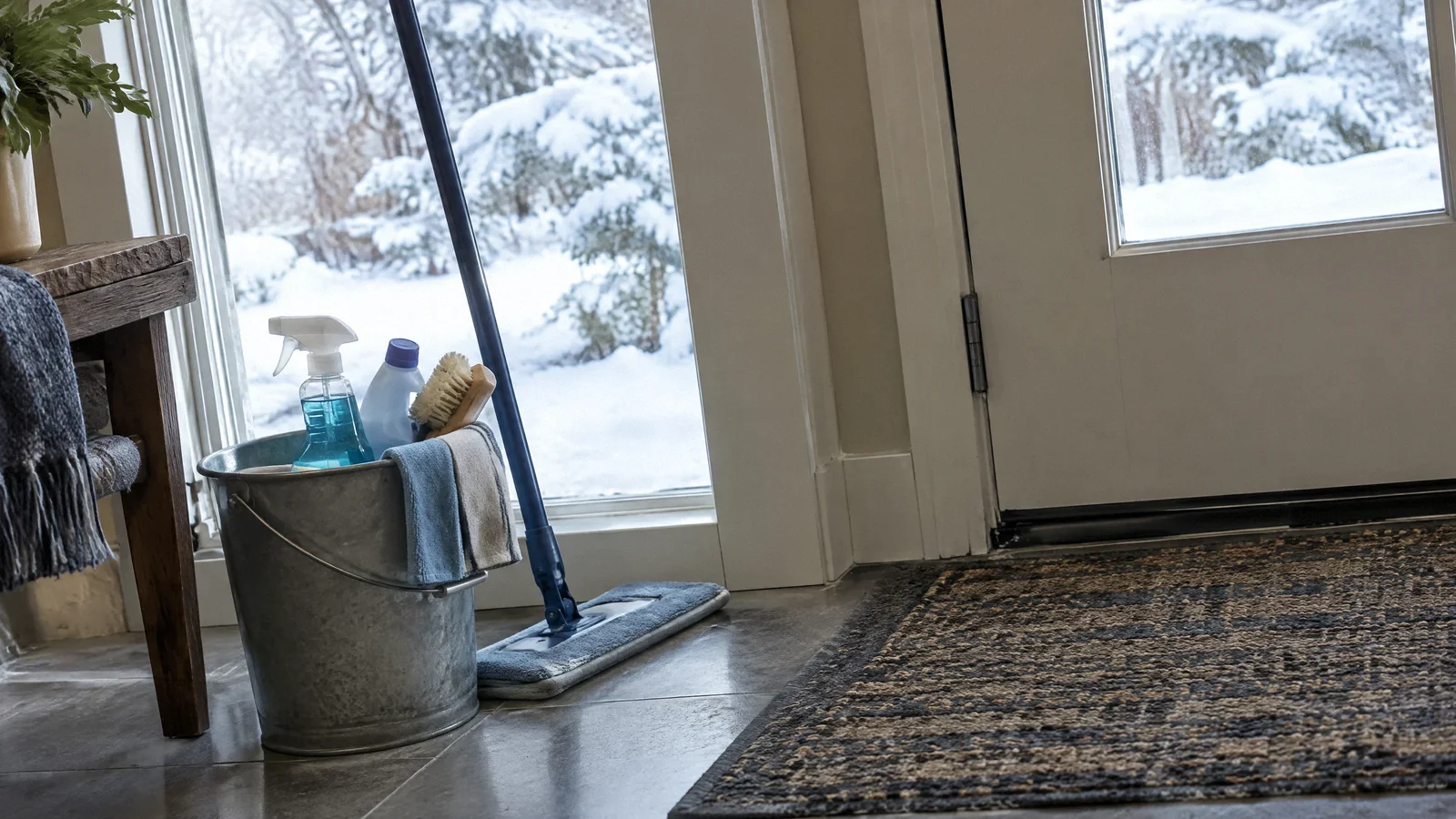
Shake out or clean entry mats according to their care labels and let them dry completely. Remove accumulated grit from the floor before damp mopping so it does not scratch the finish. Wipe up tracked-in snow and water promptly, especially near wood floors and thresholds. A washable mat and a place for wet shoes can reduce repeated cleanup; avoid placing a wet mat over a surface that cannot dry.
Check around exterior doors for persistent dampness, staining, or a draft. A one-time puddle from shoes differs from water appearing after every storm. Record a recurring pattern and arrange repair of the source rather than repeatedly covering it with a mat. Do not use a slippery cleaner on a walking surface, and keep paths clear while floors dry.
Control condensation in bathrooms and kitchen
Wipe water from counters, shower edges, and window sills. Wash removable shower curtains and bath mats as their care labels allow, then dry them thoroughly. Clean sink and faucet surfaces with a product compatible with their finish. Run a bathroom exhaust fan that vents outdoors during and after bathing, as appropriate for the system, to remove excess moisture. A fan that is noisy or ineffective may need service.
In the kitchen, clean food-contact surfaces using the product instructions and rinse where directed. Wash reusable cloths frequently and let them dry between uses. Check under sinks and around the dishwasher for visible drips or swollen cabinet material. Dry a spill promptly, but investigate recurring moisture or a musty smell. Never reach into a wet area containing electrical equipment; arrange qualified help.
Cold windows can collect condensation during the heating season. Dry the visible water and look for its cause. EPA recommends controlling indoor humidity below 60%, ideally 30–50% when possible. A humidity gauge can help, although the appropriate level also depends on the building and weather. Avoid adding more moisture with a humidifier when windows are persistently wet; maintain any humidifier according to its manual.
Dust, textiles, and accessible filters
Dust from higher surfaces down before vacuuming or cleaning floors. Use a damp cloth where suitable so dust is collected rather than scattered, and follow care instructions for electronics and delicate finishes. Wash bedding, blankets, and washable covers according to their labels, allowing them to dry completely before storage or use. Clean frequently touched surfaces as needed without soaking switches or electrical devices.
Check the heating and cooling filter if it is safely accessible. Replace or clean it according to the system manufacturer’s schedule and the filter’s instructions, using the correct size and airflow direction. A dirty filter is a maintenance issue; it does not prove the entire duct system needs cleaning. Do not open equipment panels, alter wiring, or attempt to service combustion components as part of a cleaning routine.
Include heating-season safety without taking equipment apart
Keep furniture, paper, and stored items away from heaters and fireplace openings. CPSC recommends having fuel-burning heating equipment, fireplaces, chimneys, flues, and vents inspected by a professional each year. From the ground, check that exterior appliance vents are not obstructed by snow or debris when it is safe to do so. Do not climb an icy roof or use tools near a live vent.
Test smoke and carbon monoxide alarms according to their manufacturer’s instructions and replace batteries or devices as directed. If a CO alarm sounds, move outside to fresh air and call emergency services. If you suspect gas, leave without operating switches and call the utility or emergency services from outside. Carbon monoxide has no smell, so a clean-smelling room is not proof of safety.
Finish with a short maintenance list
Empty vacuum containers or change bags according to the appliance instructions, rinse and dry reusable tools, and put products away. Make a short list of anything that needs follow-up: a recurrent leak, condensation, damaged flooring, a nonworking fan, or a filter that needs replacement. Photograph a changing stain and note when it appears so a landlord or contractor can investigate.
Schedule a brief weekly entrance and bathroom reset, then tackle less frequent tasks by room. The goal is a clean, dry, usable home throughout the season, not a single day of heavy cleaning. If a problem involves sewage, extensive water damage, suspected hazardous materials, or unstable building components, arrange the appropriate professional assessment instead of treating it as routine housekeeping.
Your next-step checklist
- Clean and dry entry mats and wet footwear areas.
- Remove dust and wash textiles according to care labels.
- Wipe condensation and check for recurring leaks.
- Check accessible filters and test alarms per instructions.
- Keep heaters clear and schedule professional service.
Related questions
Should I open windows while cleaning in winter?
Ventilation can reduce exposure to cleaning products, but consider outdoor air quality and weather and follow product and building instructions.
What should I do about condensation on windows?
Dry the water and investigate humidity, ventilation, and cold surfaces. Persistent condensation or damage deserves further assessment.
Can I mix cleaners for a stronger result?
No. EPA warns that mixing cleaning products can produce hazardous vapors. Follow each product label.
Sources & context
Public guidance supports the principles in this article. The practical questions and examples are editorial interpretation, not a site assessment or a coverage decision. State-specific rules apply only where identified.
- Biological Contaminants and Indoor Air Qualitygovernment
- Improve Indoor Air Quality in Your Homegovernment
- Winter Heating Safetygovernment