Identify vulnerable pipes before cold weather, insulate exposed lines, maintain heat, and know how to shut off the water. If a pipe freezes, act promptly and never use an open flame to thaw it.
Find the pipes most exposed to cold
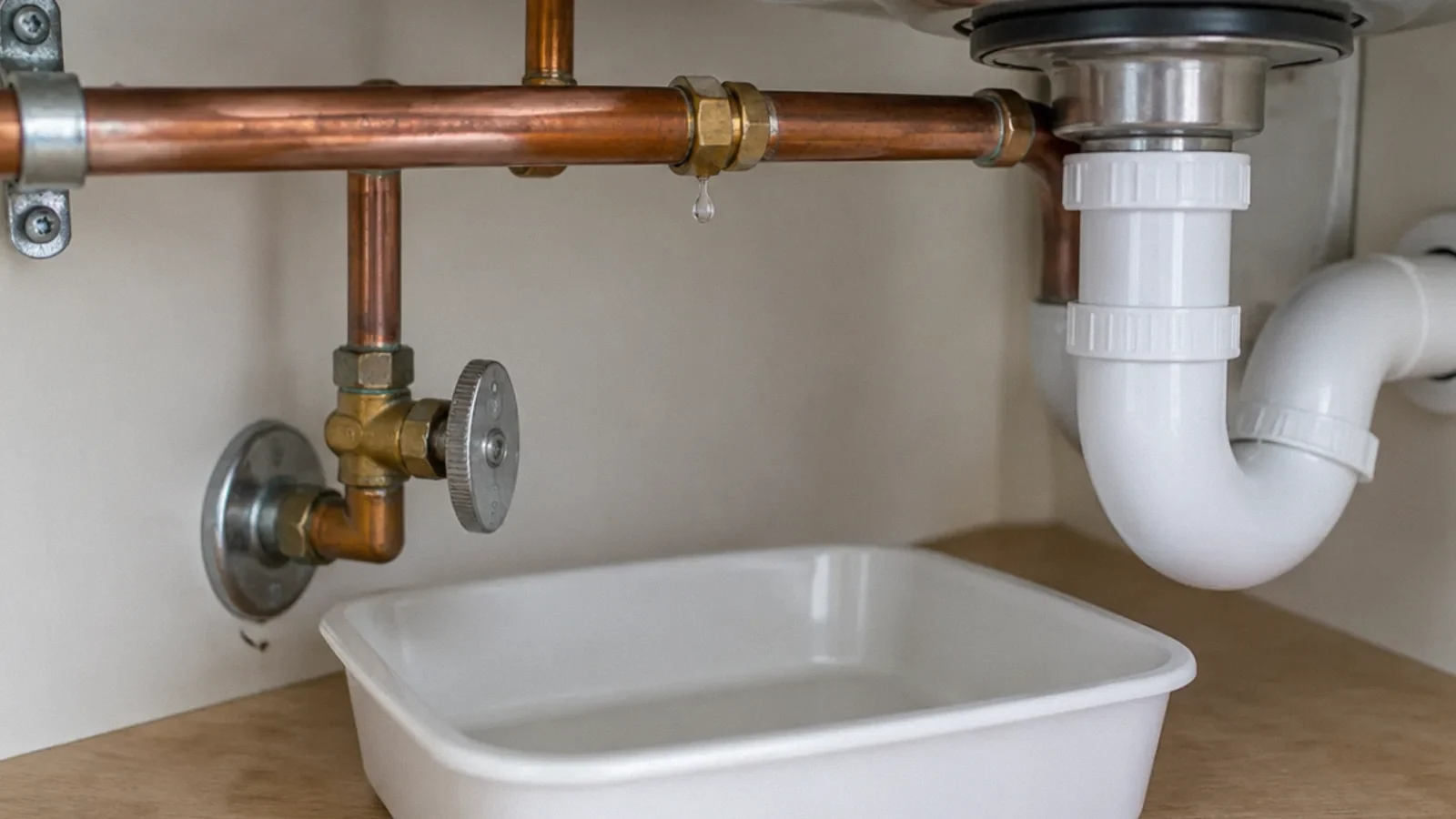
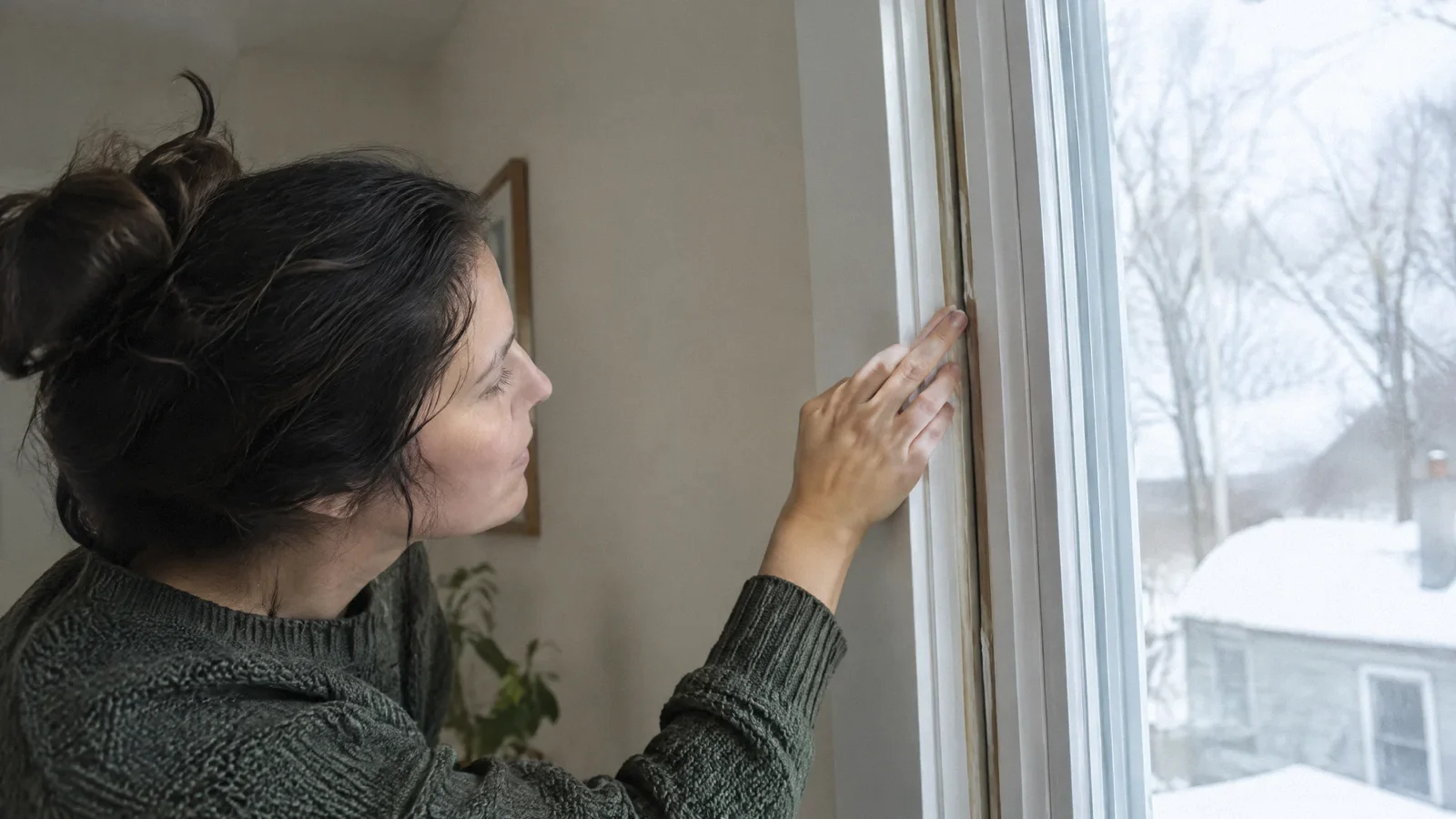
Start before freezing weather arrives. Walk through accessible parts of the house and locate water lines in garages, unheated basements, attics, crawl spaces, cabinets against exterior walls, and near the point where service enters the building. Both hot and cold water pipes can freeze. Pay attention to drafty openings around pipe penetrations, but do not block combustion air or appliance vents. An insulated pipe is still vulnerable during a long power outage because insulation slows heat loss; it does not create heat.
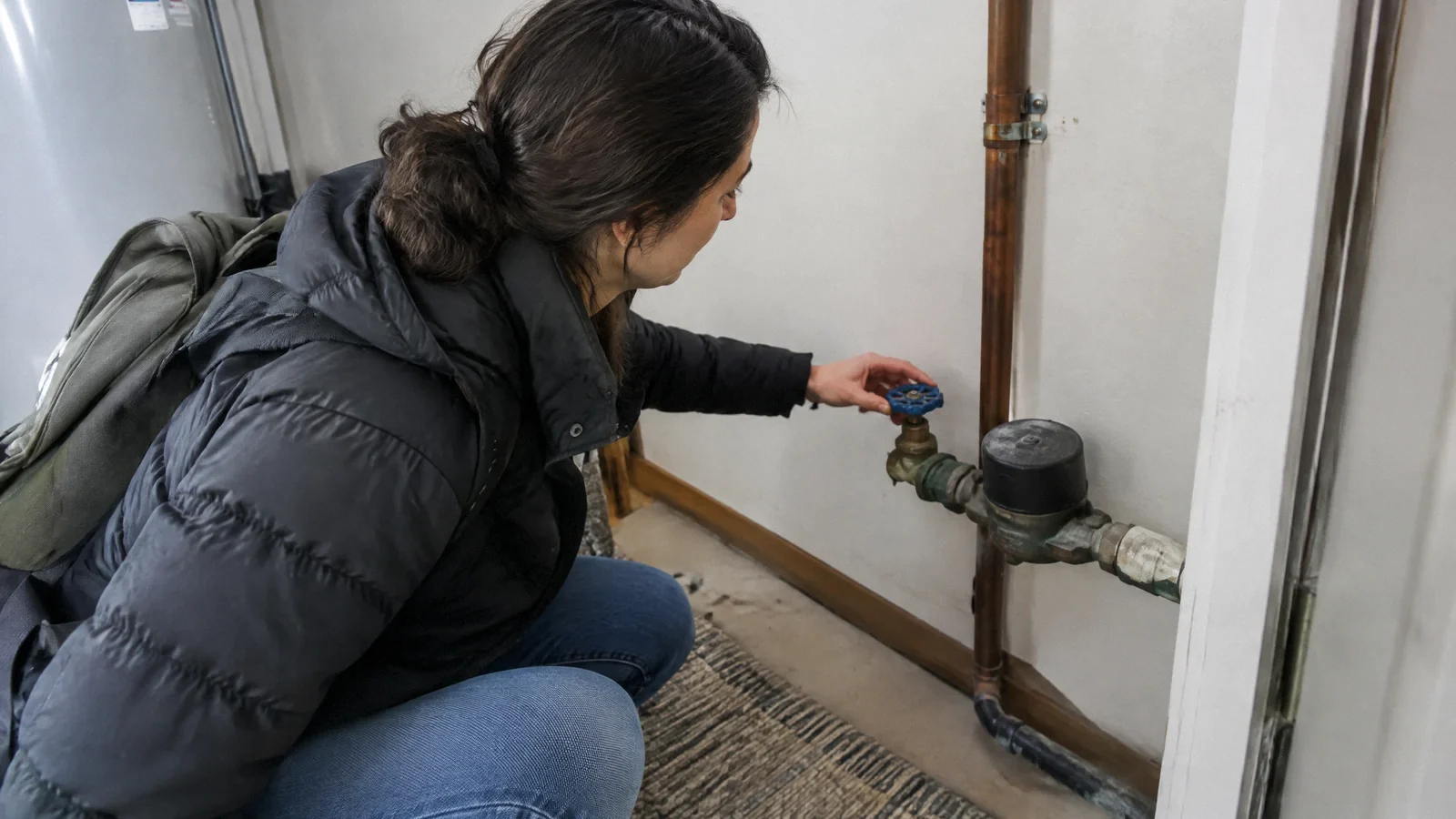
Find the main water shutoff and make sure everyone responsible for the home knows its location. Test only if the valve is accessible and moves normally. A stuck, corroded, or leaking valve should be addressed by a plumber before an emergency. Apartments and condominiums may have shared systems; ask the building manager which valves residents may operate and whom to call after hours.
Prepare outdoor water systems
Disconnect, drain, and store garden hoses. Where the system has an interior shutoff for an outdoor faucet, follow its instructions to close the supply and drain the outdoor section. Some frost-resistant faucets rely on proper installation and drainage, so leaving a hose attached can defeat the intended protection. If you cannot identify the valve or drain arrangement, ask a plumber rather than guessing.
Follow the manufacturer’s or installer’s instructions for draining irrigation and swimming-pool supply lines. The Red Cross cautions against adding antifreeze to these lines unless directed. A system may require professional winterization; do not use compressed air or remove parts unless you know the procedure for that system. Record which valves were closed so you can restore the system carefully in spring.
Keep vulnerable pipes warm
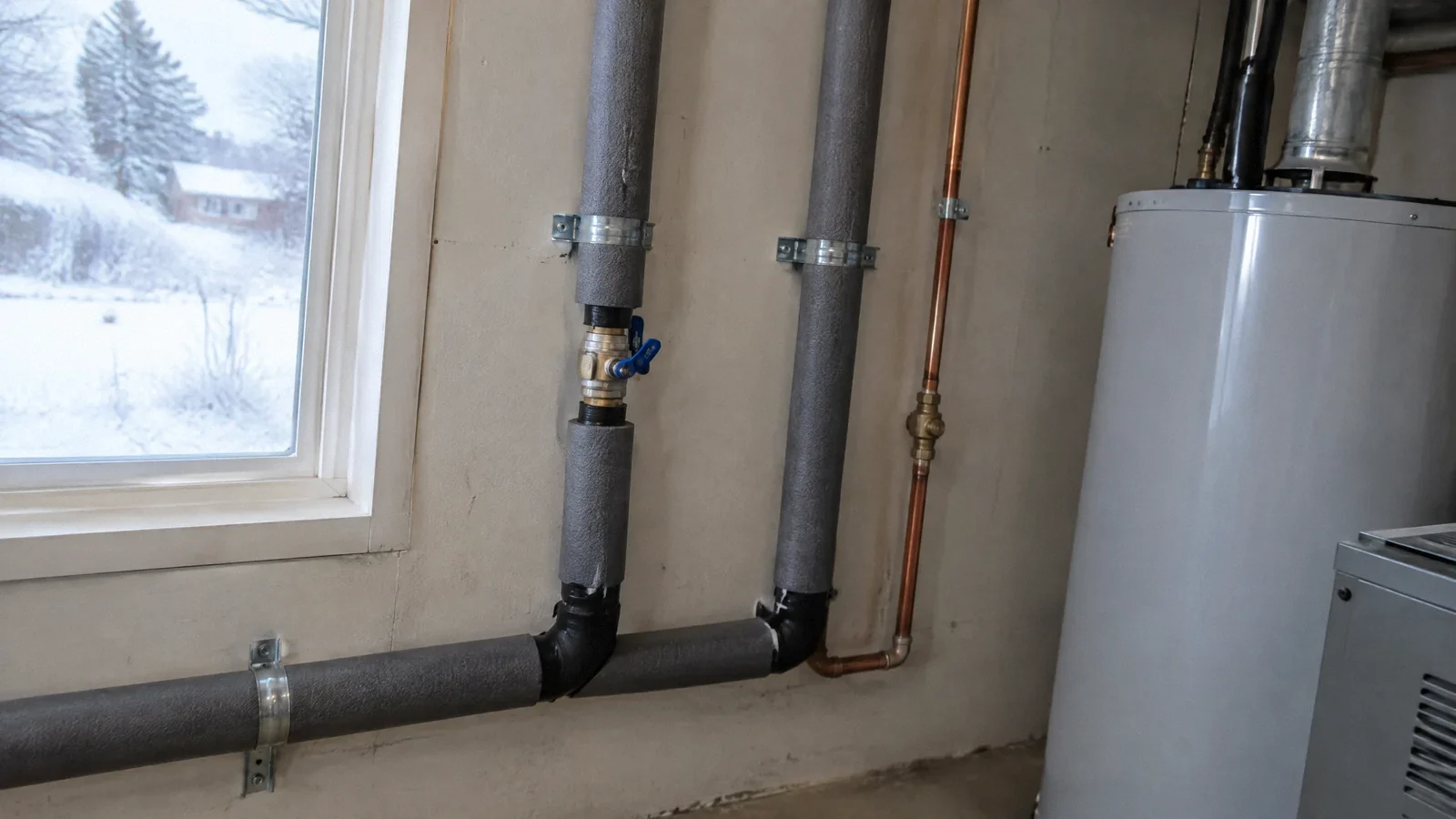
Insulate accessible exposed pipes using products appropriate for the pipe size and location. Add insulation to unheated areas where practical, and seal drafts without interfering with required ventilation. If heat cable is needed, use a listed product intended for the application and follow its installation instructions; incorrect installation can create a fire hazard. Ask a qualified professional when the pipe is inaccessible or the equipment instructions are unclear.
During severe cold, keep garage doors closed when water pipes run through the garage. Opening kitchen or bathroom cabinet doors can allow warmer room air to reach pipes on an exterior wall. Move cleaners and other hazardous products away from children and pets first. The Red Cross also advises allowing a cold-water faucet served by exposed pipes to drip during very cold weather. Choose the faucet connected to the vulnerable line; a drip elsewhere does not necessarily protect it. Follow local water restrictions and building guidance.
Keep the thermostat at a steady temperature during a cold spell. If leaving the home, the Red Cross recommends leaving the heat on at no lower than 55°F. That is a general precaution, not a guarantee that every concealed pipe stays above freezing. A remote temperature alarm, a trusted person checking the property, and a plan for a power outage can provide another layer of protection.
If a faucet produces only a trickle
A sudden reduction to a trickle during freezing weather may mean a pipe is frozen, although a valve, utility interruption, or other fault is also possible. Check other faucets and contact the water supplier or building manager if the pattern suggests a wider outage. Do not repeatedly force a faucet or valve. Locate the main shutoff before attempting anything else, because a frozen pipe may already have cracked and leak when it thaws.
The Red Cross recommends keeping the affected faucet open while thawing an accessible frozen section so water can flow as the ice melts. It lists gentle heat such as towels soaked in hot water for accessible pipe. Never use a blowtorch, charcoal stove, kerosene heater, propane heater, or another open flame. Keep electrical devices away from water and follow their instructions. If the pipe is concealed, inaccessible, damaged, or cannot be thawed safely, call a licensed plumber. Do not open walls or use heat near combustible materials without qualified help.
If a pipe leaks or bursts
If safe and accessible, shut off the main water supply and contact a plumber. Keep people away from standing water near electrical equipment; do not touch switches, outlets, cords, or appliances while standing in water. If electricity may be involved, leave the area and contact the utility or a qualified electrician. Contact the property manager immediately if the shutoff is shared.
Photograph damage when it is safe and notify the insurer or landlord promptly. Move portable belongings away from clean water only when safe; do not enter a sagging or unstable area. Drying the visible floor is not proof that concealed insulation, subfloor, or wall cavities are dry. Arrange a moisture assessment when water has entered building assemblies, the source is uncertain, or drying cannot begin promptly. After repairs, test the shutoff and review what allowed the pipe to freeze so the problem does not recur.
Your next-step checklist
- Locate and identify the main shutoff.
- Disconnect hoses and prepare outdoor systems.
- Insulate exposed lines and maintain indoor heat.
- Know whom to call for frozen pipes or a burst.
- Keep open flames away from frozen plumbing.
Related questions
Can an insulated pipe still freeze?
Yes. Insulation slows heat loss but does not supply heat, especially during an extended cold spell or outage.
Should every faucet drip in winter?
The Red Cross suggests a cold-water drip from a faucet served by exposed pipes during very cold weather. The appropriate response depends on the plumbing layout and local guidance.
What if the frozen section is inside a wall?
Call a licensed plumber rather than applying uncontrolled heat or opening the wall without a plan.
Sources & context
Public guidance supports the principles in this article. The practical questions and examples are editorial interpretation, not a site assessment or a coverage decision. State-specific rules apply only where identified.
- Preventing and Thawing Frozen Pipesorganization
- Winter Weather and Indoor Air Qualitygovernment