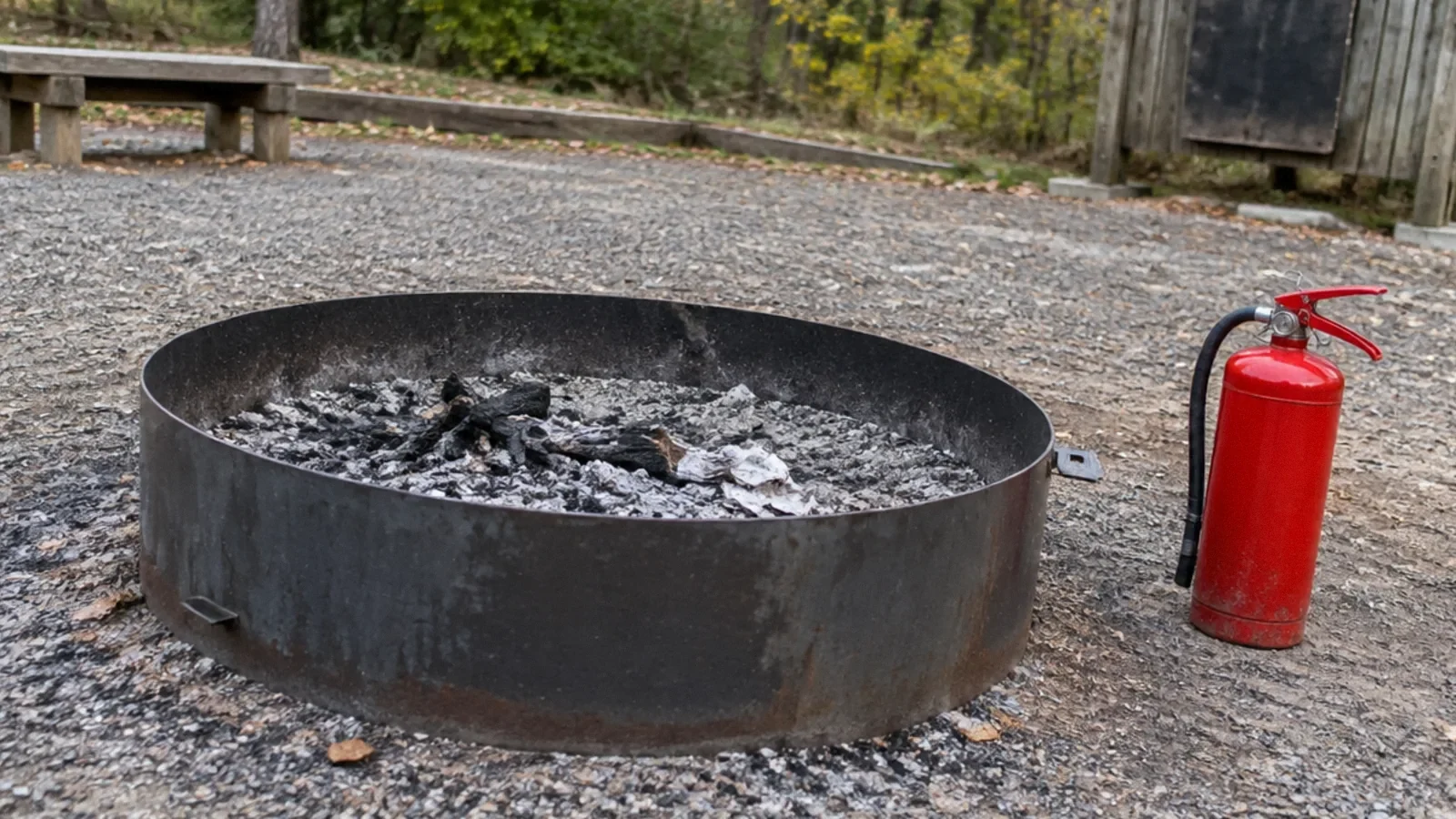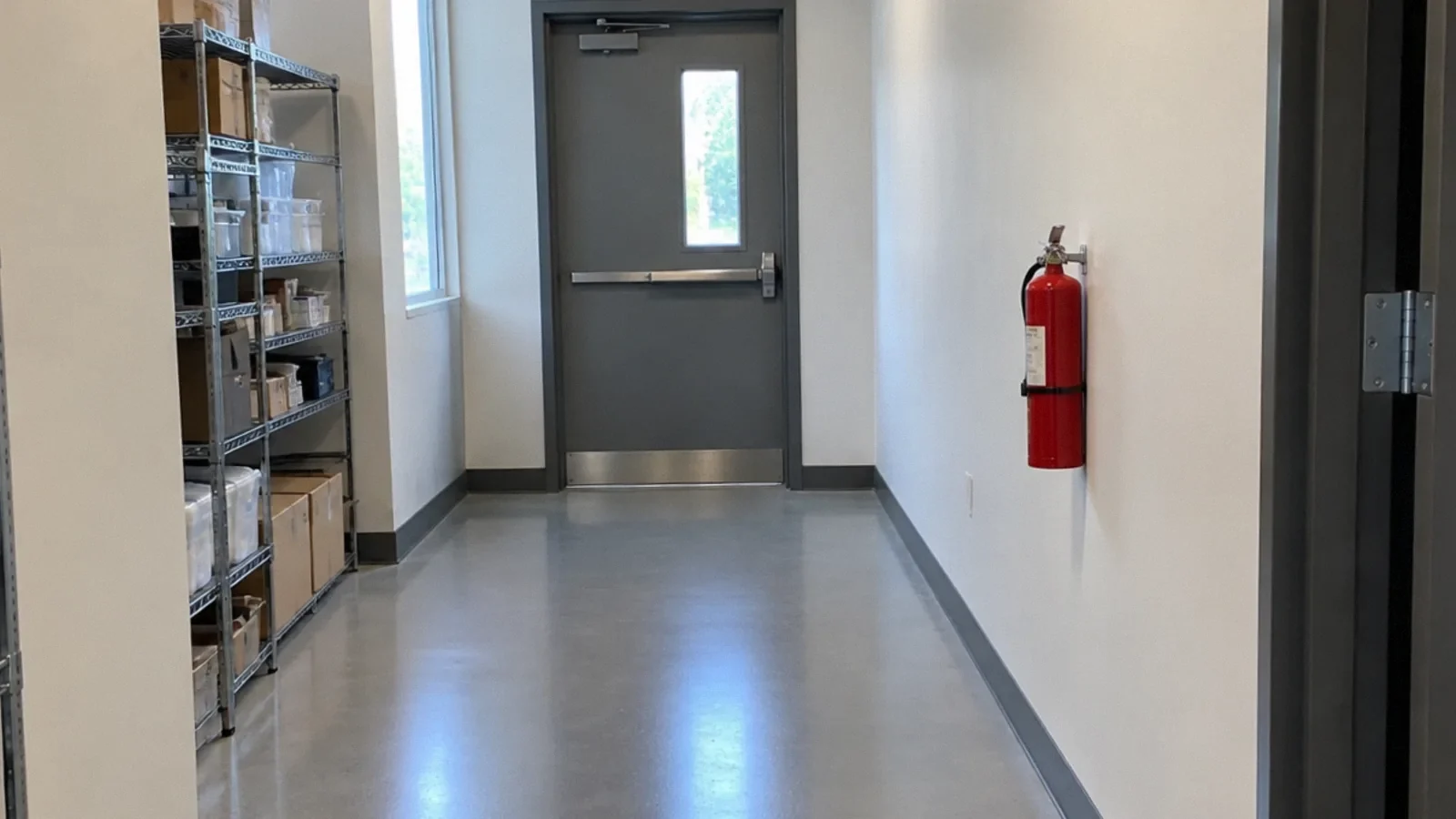
Preventing workplace fires starts with identifying ignition sources and combustible materials, controlling hazards and keeping exits usable. Employees need to know how to report a fire and leave safely. Applicable requirements depend on the workplace, its hazards and the standards governing it.
Start with the actual workplace
A fire hazard can involve an ignition source, combustible material or a condition that helps fire spread. Walk through the real workplace and its tasks: an office, warehouse, commercial kitchen and construction site can have very different risks. Include storage, maintenance, waste and work performed by contractors.
Ask employees about recurring problems, such as damaged cords, blocked access or equipment that overheats. Record who is responsible for correcting each hazard and how completion will be checked. A generic checklist does not replace a site-specific evaluation.
Separate heat and combustible materials
Store combustible and flammable materials according to their labels, applicable rules and the site’s procedures. Keep them away from ignition sources and avoid accumulating combustible waste. The correct storage method depends on the material, quantity and activity.
Do not improvise a storage cabinet or use an electrical device in a hazardous atmosphere unless it is suitable for that use. Where chemicals are involved, consult the safety data sheets and the employer’s hazard communication procedures. Report spills and other unsafe conditions promptly.
Maintain electrical and heating equipment
Take damaged or malfunctioning equipment out of service according to workplace procedures and arrange qualified repair. Do not repeatedly reset a tripped breaker or conceal a hot plug. Use equipment and cords within their intended ratings and avoid makeshift wiring.
Heat-producing equipment may need regular maintenance and safeguards. Assign responsibility and retain inspection or service records appropriate to the site. Employees should not open electrical panels or make repairs unless their role and training authorize the work.
Keep routes and exits usable
Keep exit routes free of storage, waste and other obstructions. Know the designated routes and assembly point, and report doors or alarms that are damaged or difficult to use. The number, marking and arrangement of exits depend on the building and applicable requirements.
OSHA advises employees to know alternate routes from their work area and follow the site’s evacuation plan. Review procedures with new staff and visitors as appropriate. Never assume a posted map remains accurate after construction or a change in layout.
Fire prevention plans
Under federal OSHA 29 CFR 1910.39, an employer must have a fire prevention plan when another applicable standard in that part requires one. The rule describes elements such as major hazards, control of combustible waste and responsibilities. For covered plans, employers with 10 or fewer employees may communicate the plan orally.
This conditional federal rule is not a claim that every workplace is covered in the same way. California employers should also check applicable Cal/OSHA requirements, local fire rules and industry-specific standards. A qualified safety professional can help determine which requirements apply.
Emergency action and training
Prevention and evacuation planning serve different purposes. An emergency action plan describes what people should do when an emergency occurs, including reporting, evacuation and accountability as applicable. OSHA notes that some standards require such a plan; requirements depend on the work and equipment.
Employees should know the alarm, reporting method, exit routes and assembly procedures before an emergency. Review the plan when assignments or conditions change and practice as appropriate. Any employee expected to use firefighting equipment needs the training and procedures required for that role.
What if a fire starts?
Activate the alarm or report the fire according to the site plan, leave by a safe route and call 911 from a safe location. Do not delay evacuation to collect belongings. Never enter smoke or attempt to fight a growing fire.
An extinguisher is appropriate only when workplace procedures, training, equipment and conditions permit its safe use, and a clear escape route remains available. Workers are not expected to put themselves in danger. Follow responders’ instructions and do not reenter until authorized.
After the incident
Keep employees and visitors away from damaged areas until authorities and qualified professionals permit access. Fire, soot, water and damaged utilities can affect concealed areas. Do not energize wet equipment or restart operations solely because visible flames are out.
Document the incident and corrective actions when it is safe, and review why the hazard occurred and whether procedures worked. Preserve inspection and repair records. Restoration and insurance decisions require their own assessment and should not be treated as completed by cleaning visible residue.
Fire causes in healthcare facilities
A U.S. Fire Administration snapshot for 2012–2014 found cooking was the leading reported cause of hospital fires overall, at 68% after adjustment for unknown causes. In the same data, electrical malfunction was the leading cause of nonconfined hospital fires. These are historical hospital-specific figures, not a current rate for every healthcare facility.
Healthcare facilities need an emergency plan appropriate to their operations, occupants, equipment and applicable requirements. Staff should follow the facility’s procedures and local fire authority guidance.
Interpreting healthcare fire statistics
In USFA’s later 2014–2016 medical facility dataset, cooking accounted for 71% of reported fires after adjustment for unknown causes, while appliances led the nonconfined subset. The population includes nursing homes, hospitals and other facilities. This broader historical dataset and the 2012–2014 hospital snapshot have different periods and populations; neither establishes a current rate for every facility.
Your next-step checklist
- Identify site-specific ignition sources and combustibles.
- Correct damaged equipment and blocked exits.
- Know how to report a fire and evacuate.
- Assign prevention and maintenance responsibilities.
- Review applicable OSHA, state and local rules.
Related questions
What is one way to prevent workplace fires?
Identify ignition sources and combustible materials, then separate or control them using procedures appropriate to the workplace.
Does every employer need a federal OSHA fire prevention plan?
Federal 29 CFR 1910.39 applies when another OSHA standard in that part requires a fire prevention plan. Other federal, state and local requirements may also apply.
Is a fire prevention plan the same as an evacuation plan?
No. Prevention addresses hazards before a fire; an emergency action plan addresses actions during an emergency.
Should an employee always use a fire extinguisher?
No. Evacuate according to the site plan. Extinguisher use depends on training, workplace procedures, equipment and safe conditions.
Sources & context
Public guidance supports the principles in this article. The practical questions and examples are editorial interpretation, not a site assessment or a coverage decision. State-specific rules apply only where identified.
- OSHA: Fire prevention plans, 29 CFR 1910.39federal standard
- OSHA: Workplace emergency preparednessfederal guidance
- OSHA: Employee evacuation responsibilitiesfederal guidance
- U.S. Fire Administration: Hospital fires, 2012–2014federal fire statistics
- USFA: Nonresidential building cooking fire trendsfederal fire statistics
- USFA: Medical facility fires, 2014–2016federal fire statistics