Inspect accessible areas for leaks and condensation, monitor humidity, maintain drainage and sump equipment, and investigate changes after storms. Adjust the schedule to the home and seek help for recurrent water or unsafe conditions.
A routine built around your basement
Basement care is a recurring check of water pathways, humidity, equipment and accessible materials. Begin with a safe walk-through and record what is normal: the locations of the sump, plumbing, visible cracks, stored items and any previous water entry. A simple dated note or photograph makes a later change easier to recognize.
A checklist cannot establish that hidden cavities are dry or guarantee that flooding will not occur. Adapt the frequency to the climate, equipment instructions and history of the property. Inspect after unusual rain or a plumbing event as well as on a schedule.
Each month: look and measure
From a safe, dry location check accessible walls, floor edges, pipes and around appliances for fresh stains, condensation, leaks or changes in odor. Look behind movable stored items when safe, without disturbing suspect growth. Keep belongings off a potentially damp floor and allow access to equipment and walls.
Use a hygrometer away from a direct appliance outlet and note temperature as well as relative humidity. EPA recommends indoor relative humidity below 60% if possible, ideally 30%–50%. A comfortable room reading is useful but cannot prove the wall, slab or flooring underneath is dry.
Before the wet season
Inspect gutters and downspouts from the ground where possible. Clear or arrange safe cleaning of obstructions, repair visible disconnections and check that water has an appropriate route away from the foundation. Do not climb a wet roof or use an unsafe ladder. Observe whether the ground or hardscape directs runoff toward the house.
University of Minnesota Extension recommends considering interior moisture sources, gutters, downspouts and grading when investigating basement moisture. Correcting these items may help, but a site with persistent entry may need a more detailed drainage assessment. Do not send water onto a neighbor’s property or into an unapproved connection.
Check the sump system and alarm
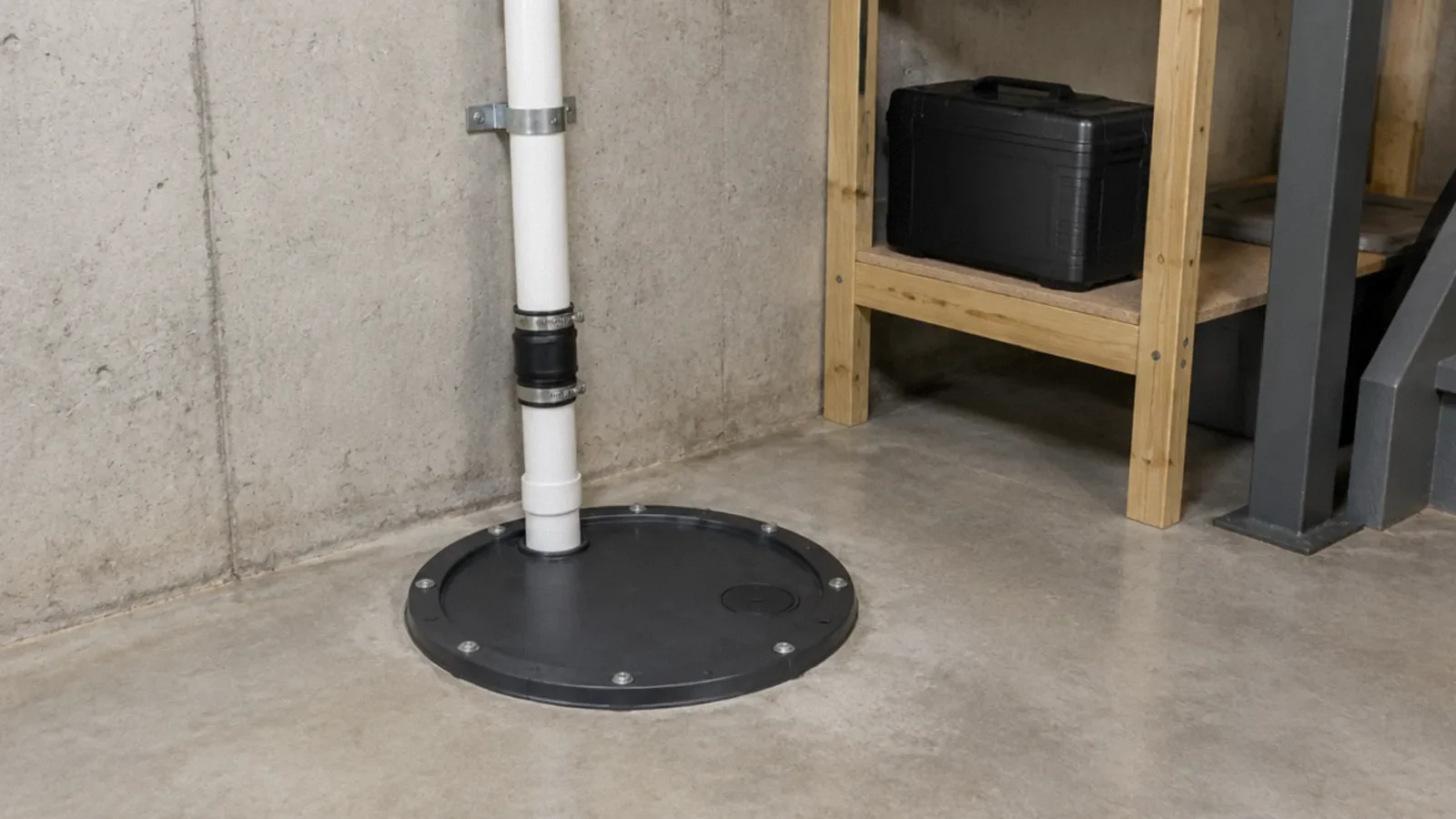
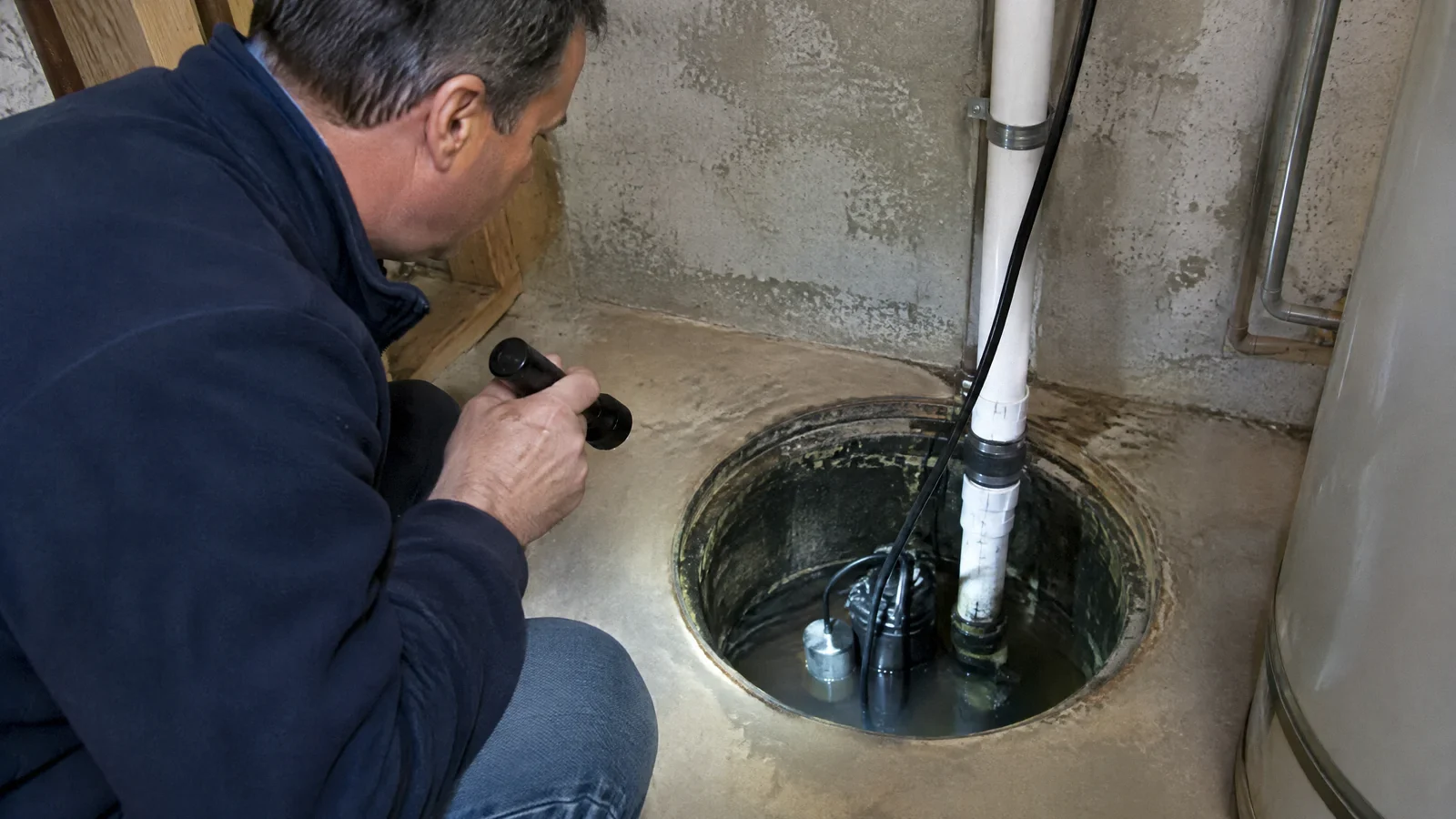
If the home has a sump, find the manual for its pump, float, alarm, backup and discharge. Check them at the manufacturer’s intervals and before a period of expected heavy rain. A pump, backup and alert can fail independently. Follow the maker’s instructions for any supervised test and record the date and result.
From a safe position look for an obstructed accessible discharge or unusual cycling. Do not reach into the pit or handle wet electrical equipment. An alarm, failure to start or stop, blocked outlet or uncertainty about safe testing is a reason to arrange service. A backup battery does not correct a blocked discharge.
During humid weather
Watch for condensation on cold pipes, walls or windows and dry accessible wet surfaces. Reduce avoidable indoor moisture and use a suitable dehumidifier as needed according to its instructions. Maintain its reservoir or drain and place it where air can circulate without creating an electrical hazard.
Opening a window is not always a drying strategy. Warm humid outdoor air entering a cool basement can increase condensation at cold surfaces. Compare conditions and monitor the actual result. A dehumidifier reduces airborne moisture; it does not repair a leak or necessarily dry a concealed wall.
After a storm or plumbing event
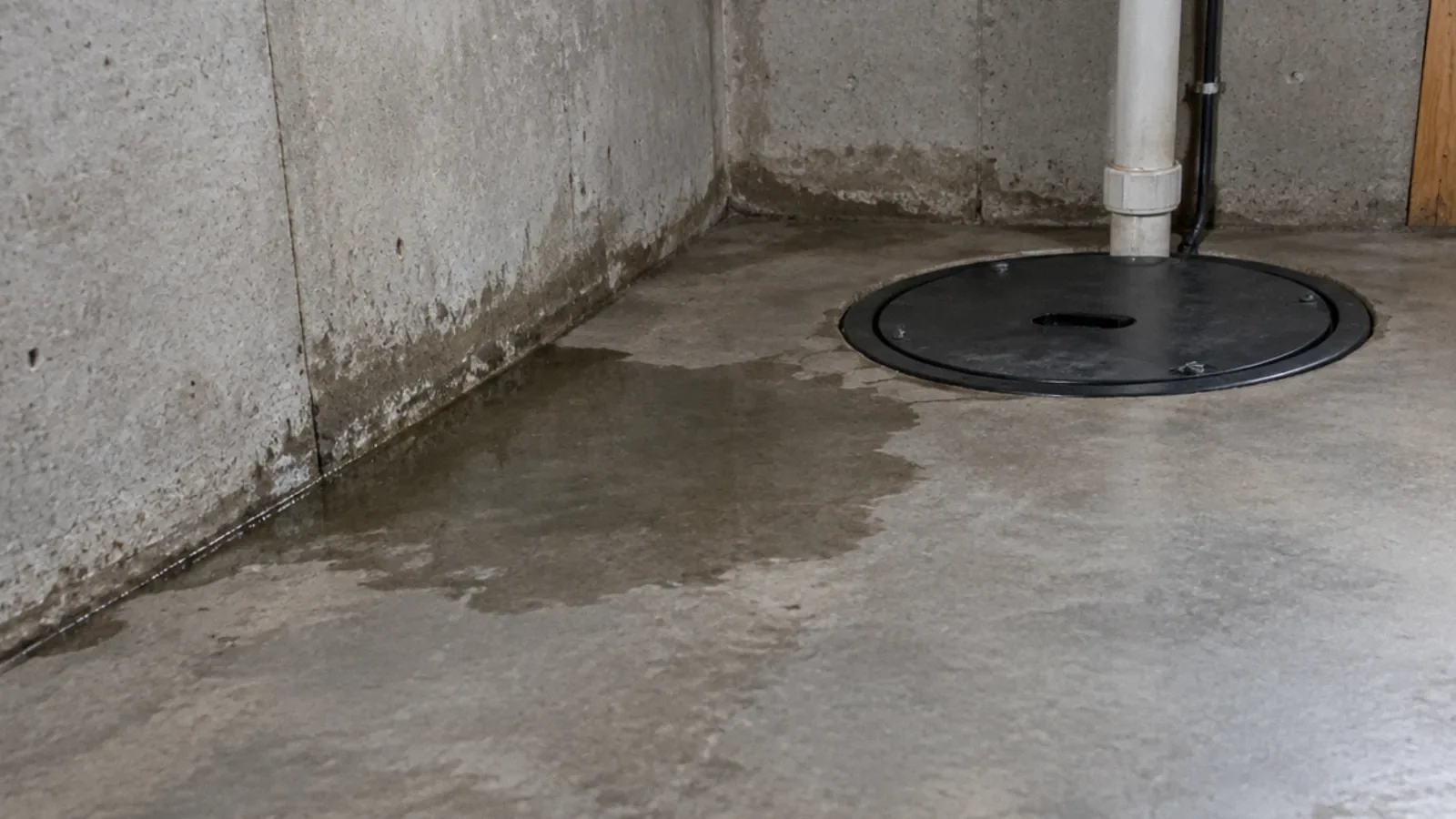
Check for new water, staining, pump alarms and displaced discharge components once access is safe. Record the location and timing: water appearing after rain may have a different pathway from a leak associated with appliance use. These clues are not a diagnosis because water can travel behind finishes.
Stay out of standing water near outlets, cords or electrical equipment. Do not enter sewage-contaminated water. If water is rising, a wall is moving or conditions are unsafe, leave and contact the appropriate emergency service. An electrician, plumber or drainage specialist can investigate the relevant hazard.
Seasonal housekeeping and records
Before storing seasonal items, inspect boxes and fabrics for dampness. Cardboard and other porous materials can retain moisture; move clean belongings to a dry location and replace damaged storage as appropriate. Keep the water shutoff location, equipment manuals and service contacts accessible outside a potentially flooded space.
After work, retain invoices and note which area was inspected or repaired. Compare photographs over time and check after the next relevant weather event. A repaired stain that returns is a reason to reassess the source, not simply repaint it.
When a professional should assess
Seek qualified help for repeated water entry, a pump that runs continuously or fails, visible extensive mold, soft finishes, an inaccessible wet cavity or a musty smell that persists. Ask the professional to explain the observed evidence, suspected pathway, proposed repair and how the result will be checked.
A new or widening crack, bowing wall or movement deserves timely structural assessment; a photograph alone cannot determine structural safety. Before finishing a basement, EPA advises correcting moisture problems. Consider radon testing as recommended for the home and location; finishing work does not by itself resolve either issue.
Your next-step checklist
- Monthly: inspect accessible walls, pipes and stored items.
- Before wet weather: check gutters and discharge routes.
- Test the sump, backup and alarm as directed.
- Monitor humidity and condensation in humid weather.
- After a storm: document new water or changes safely.
Related questions
How often should a basement be checked?
A monthly visual check and seasonal equipment review are a useful starting point; follow equipment instructions and inspect after significant weather or leaks.
Does a dehumidifier prevent basement flooding?
No. It can reduce airborne moisture but does not stop liquid water entering or repair drainage.
Should I test a sump pump before a storm?
Follow its manual and test in safe, supervised conditions before the wet season. Arrange service if access or electrical conditions are uncertain.
What if a basement crack changes?
Document the change and seek a qualified assessment, especially for widening, bowing or movement.
Sources & context
Public guidance supports the principles in this article. The practical questions and examples are editorial interpretation, not a site assessment or a coverage decision. State-specific rules apply only where identified.
- University of Minnesota Extension: Moisture in basementsuniversity extension guidance
- EPA: Mold, moisture and your homefederal guidance
- EPA: Remodeling your home and indoor air qualityfederal guidance