EPA recommends keeping indoor relative humidity below 60% where possible, ideally between 30% and 50%. Use a hygrometer to monitor the basement and living areas, and investigate condensation or leaks. A comfortable room reading does not prove that a wall or floor cavity is dry.
What does relative humidity mean?
Relative humidity describes how much water vapor is in the air compared with the maximum it can hold at the same temperature. The percentage can change when air warms or cools even if the actual amount of water vapor has not changed. A cold surface can therefore reach condensation conditions before the center of a room feels damp.
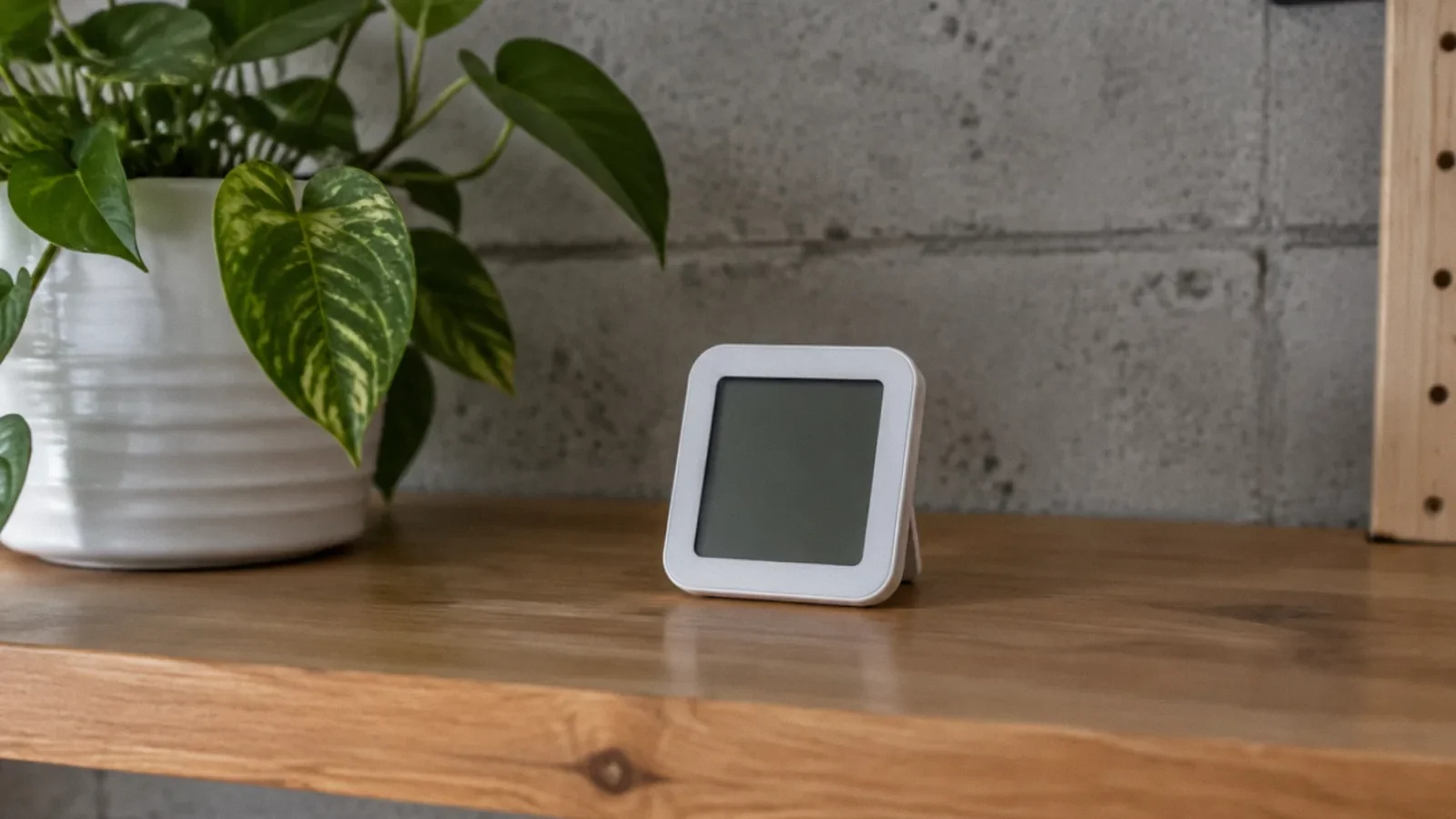
Use a room hygrometer according to its instructions and record both temperature and humidity. Compare readings over time and in different spaces, rather than relying on a single measurement beside an appliance or a cold window. Check the device’s accuracy and placement recommendations.
A practical indoor range
EPA’s home mold guide recommends keeping indoor relative humidity below 60% if possible, ideally between 30% and 50%. This is a general moisture-control guideline, not a guarantee that mold cannot grow at a particular reading. Other EPA programs may use different ranges for their specific building contexts.
Very dry air can also be uncomfortable. Consider the home’s temperature, occupants, local climate and condensation when selecting a setting. Do not add moisture merely to reach a number if windows or other surfaces are already wet. Ask an HVAC professional about persistent or unusual conditions.
What about a basement?
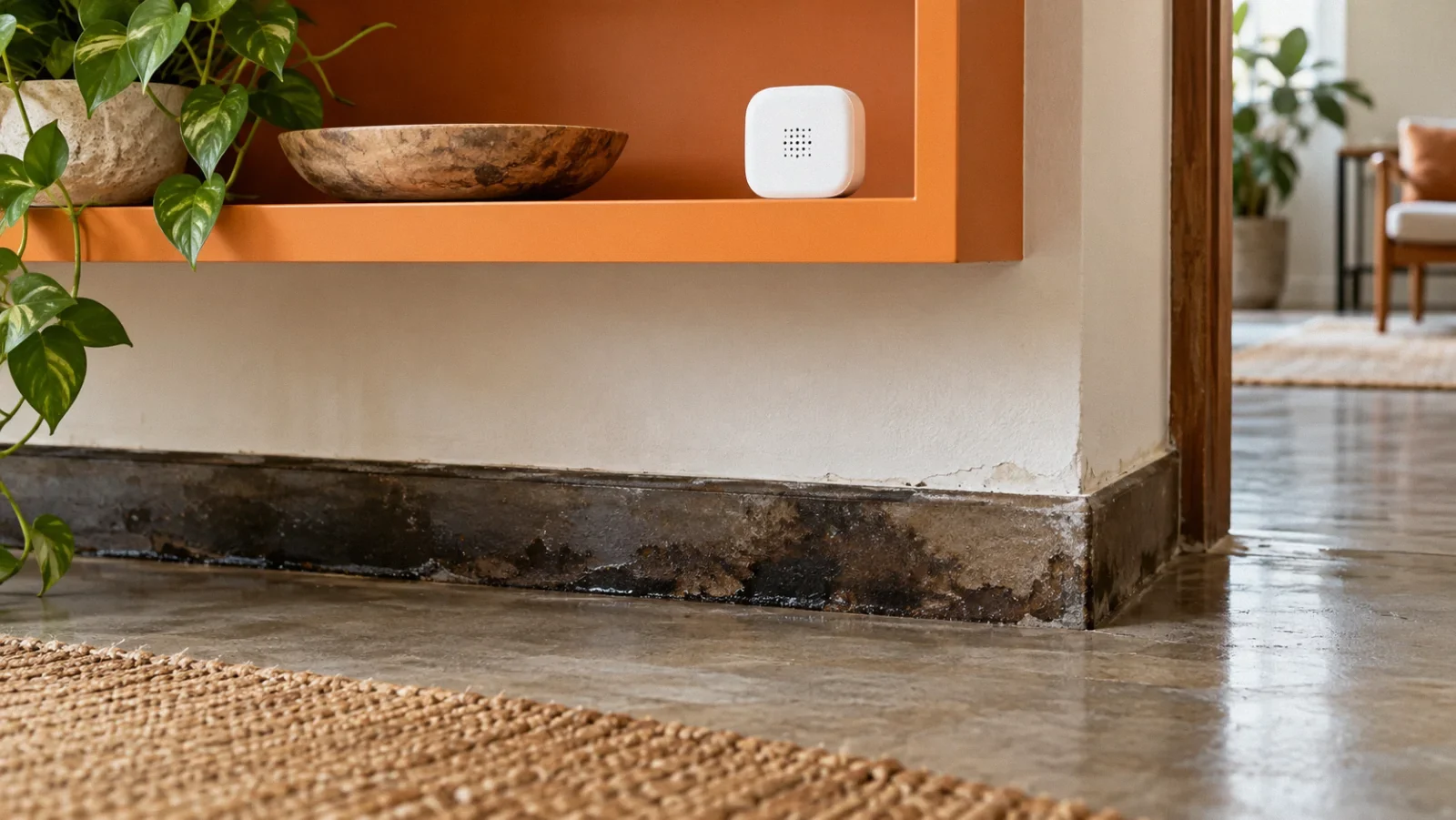
The same EPA guideline is a useful starting point in a basement, but basement conditions may differ from upstairs. Cool walls or floors, groundwater entry, plumbing leaks, a damp slab, stored wet items and outdoor air can all affect moisture. A central room reading may miss a damp surface or cavity.
Check for water entry, staining, condensation and musty odors from safe accessible locations. A musty smell suggests a moisture problem that deserves investigation, but smell does not identify the source or species. Stay out of standing water near electrical equipment and seek qualified help.
Why does humidity rise?
Cooking, showers, laundry, humidifiers and some combustion appliances can add water vapor indoors. Leaks, wet materials, poor drainage or an HVAC problem can add to the moisture load. More than one cause may be present at the same time.
Record whether the reading rises after a shower, during wet weather, when a dryer runs or in an unoccupied basement. These patterns are clues, not a diagnosis. Fix an active water source before relying on equipment to remove the resulting moisture.
Summer, winter and outdoor air
Warm humid outdoor air entering a cool basement can raise moisture at cold surfaces. Opening a window is not automatically a drying strategy: compare the outdoor conditions and indoor temperature, and consider whether bringing that air inside could produce condensation.
In colder climates during heating season, ENERGY STAR discusses 30%–40% as a range that can help limit window condensation. This is not a fixed Bay Area requirement or a substitute for observing the home. If windows or walls condense, investigate the surface temperature, ventilation and moisture sources.
How to reduce excess humidity
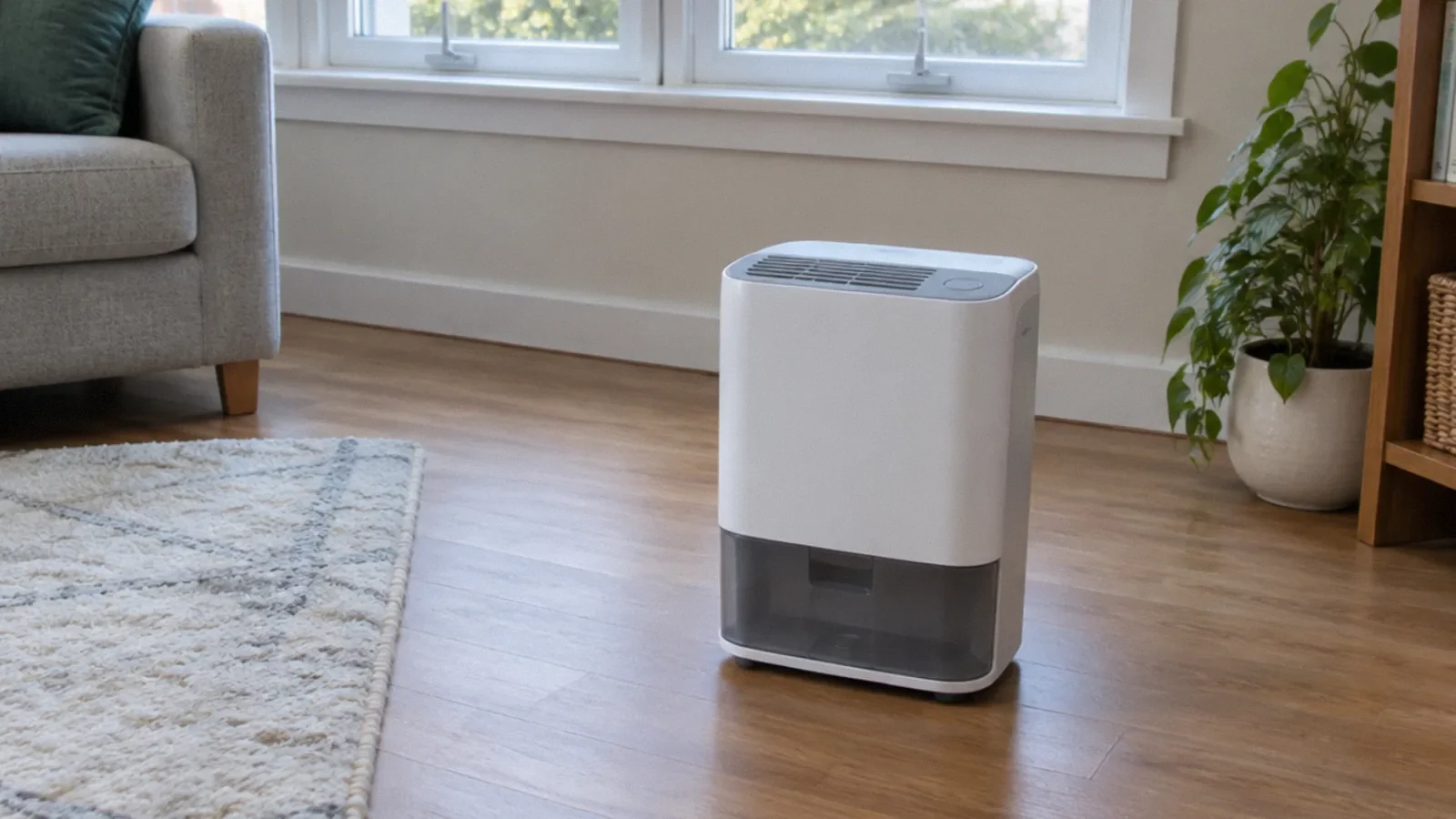
Use properly vented kitchen and bathroom exhaust where appropriate, repair leaks, maintain accessible gutters and direct drainage away from the foundation as permitted locally. A properly sized air conditioner or dehumidifier can help reduce airborne moisture when needed, but neither repairs a leak.
Follow the appliance’s placement and electrical instructions. Keep airflow openings clear, position drainage safely away from electrical connections and empty or maintain the bucket and hose as directed. Never place or operate electrical equipment in standing water or use a wet plug.
A dry room is not necessarily a dry wall
A dehumidifier can lower the relative humidity of room air before moisture has left drywall, wood, insulation or a concealed floor layer. Surface conditions and material readings require their own interpretation. Do not close a wet cavity or reinstall flooring based only on a room hygrometer.
After a leak or flood, a restoration professional can map affected materials and use appropriate instruments and comparison points to assess drying. Contaminated water, hidden damage or suspected mold may require additional measures. A normal-looking display does not establish the condition of every layer.
When to seek help
Seek a qualified assessment for recurring condensation, a musty odor that returns, water entering the basement, persistent high readings despite equipment use, or wet or soft building materials. A plumber, building professional or HVAC technician may be needed depending on the suspected source.
If visible mold is present, follow EPA and CDC cleanup guidance and fix the moisture problem. People with asthma, mold allergy, chronic lung disease or weakened immune systems should avoid cleanup and seek individual medical advice. Document changes and repair work when safe.
Humidity, surfaces and mold: conditions and limits
EPA’s 24–48 hour guidance after a spill is a prompt-action guideline, not a universal deadline or growth threshold. Temperature, duration, material and surface moisture matter together. For the time question see Mold After a Leak: What the 24–48 Hour Guidance Really Means.
| Condition | What it means | Limit or next step |
|---|---|---|
| Room air at 30%–50% RH | EPA preferred general indoor range | Does not prove every surface is dry |
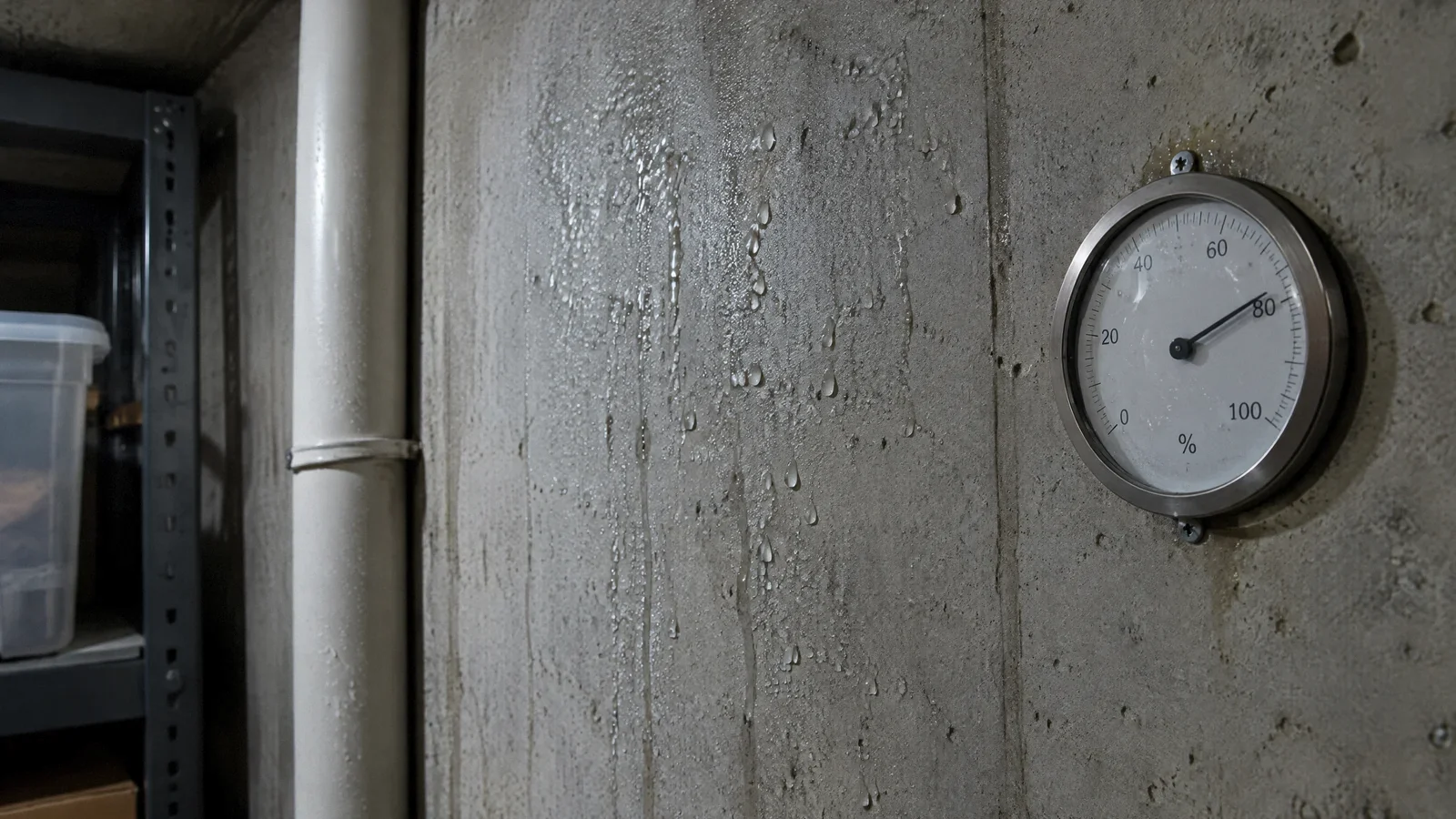
| Condensation on a cold wall | Local surface may be wet despite a room reading in range | Dry and investigate the moisture and cold surface |
| Leak or wet porous material | Room RH cannot measure retained water | Stop source and assess drying or replacement |
Inspect and dry a damp basement
Look for condensation on pipes, staining, musty odor, damp stored goods and repeated wet patches. Note rain, appliance use and the location of each sign, then fix leaks or drainage problems. In a merely damp space without standing water or electrical hazards, use a properly sized dehumidifier as directed, with a safe drain or emptied reservoir; compare readings over time and check accessible materials. Ventilate only when outdoor air will actually help rather than introduce moisture to cool surfaces. Persistent dampness, visible growth, inaccessible wet layers or recurring water calls for a qualified assessment. For sweating walls see the dedicated basement wall guide.
Room readings and seasonal changes
Humidity does not always rise to the ceiling or settle at the floor: convection, temperature differences, sources and ventilation affect readings at each location. Compare measurements at representative positions. In summer the EPA 30%–50% ideal remains a starting point, not a separate guaranteed seasonal target; outdoor humidity, cold surfaces and actual condensation matter more than a fixed seasonal number. For visible mold, address moisture first; a small accessible area may be cleaned according to EPA guidance, while extensive, hidden or sewage-affected areas need qualified help.
Your next-step checklist
- Measure humidity and temperature in more than one location.
- Use EPA’s 30%–50% range as a general starting point.
- Investigate leaks, condensation and persistent odors.
- Place dehumidifiers and drainage safely.
- Assess wet materials separately from room air.
Related questions
What humidity should a basement be?
EPA recommends indoor relative humidity below 60% where possible, ideally 30%–50%. A basement may still have localized damp surfaces even when the room reading is in that range.
What causes high humidity in a house?
Possible sources include cooking, showers, laundry, leaks, damp building materials and HVAC or ventilation conditions. The pattern helps guide an assessment.
Is 50% humidity always safe from mold?
No single room reading guarantees that every material or hidden cavity is dry or free of mold. Investigate visible moisture and correct its source.
What should humidity be in winter?
EPA’s general home guideline is 30%–50%. ENERGY STAR discusses 30%–40% during heating season in colder climates to help limit condensation; actual conditions vary.
Why do basement walls sweat?
Moist indoor air can condense on a cool wall, but liquid water can also enter through a leak or seepage. Check the timing, surface temperature and water pathways; a professional can assess an uncertain source.
Is humidity higher in summer or winter?
Outdoor moisture and indoor relative humidity vary by weather, ventilation, heating and cooling. Warm summer air can hold more water vapor, while heating cold outdoor air can lower indoor relative humidity. Measure the actual indoor conditions rather than assuming a season guarantees a particular level.
What does RH mean on a dehumidifier?
RH means relative humidity: the amount of water vapor in air relative to the amount it could hold at the same temperature. A displayed reading is affected by the device and location. Follow the manufacturer’s instructions and investigate persistent dampness separately.
Does humidity always rise or fall in a room?
No. Relative humidity changes with moisture sources, ventilation and temperature. Heating air without adding moisture can lower relative humidity, while cooling it can raise relative humidity; measure actual conditions.
Sources & context
Public guidance supports the principles in this article. The practical questions and examples are editorial interpretation, not a site assessment or a coverage decision. State-specific rules apply only where identified.
- U.S. EPA: Mold and moisture guidefederal guidance
- ENERGY STAR: Dehumidifier use and relative humidityfederal energy guidance
- U.S. EPA: Indoor moisture controlfederal guidance
- EPA: Biological contaminants and indoor air qualityfederal indoor air guidance