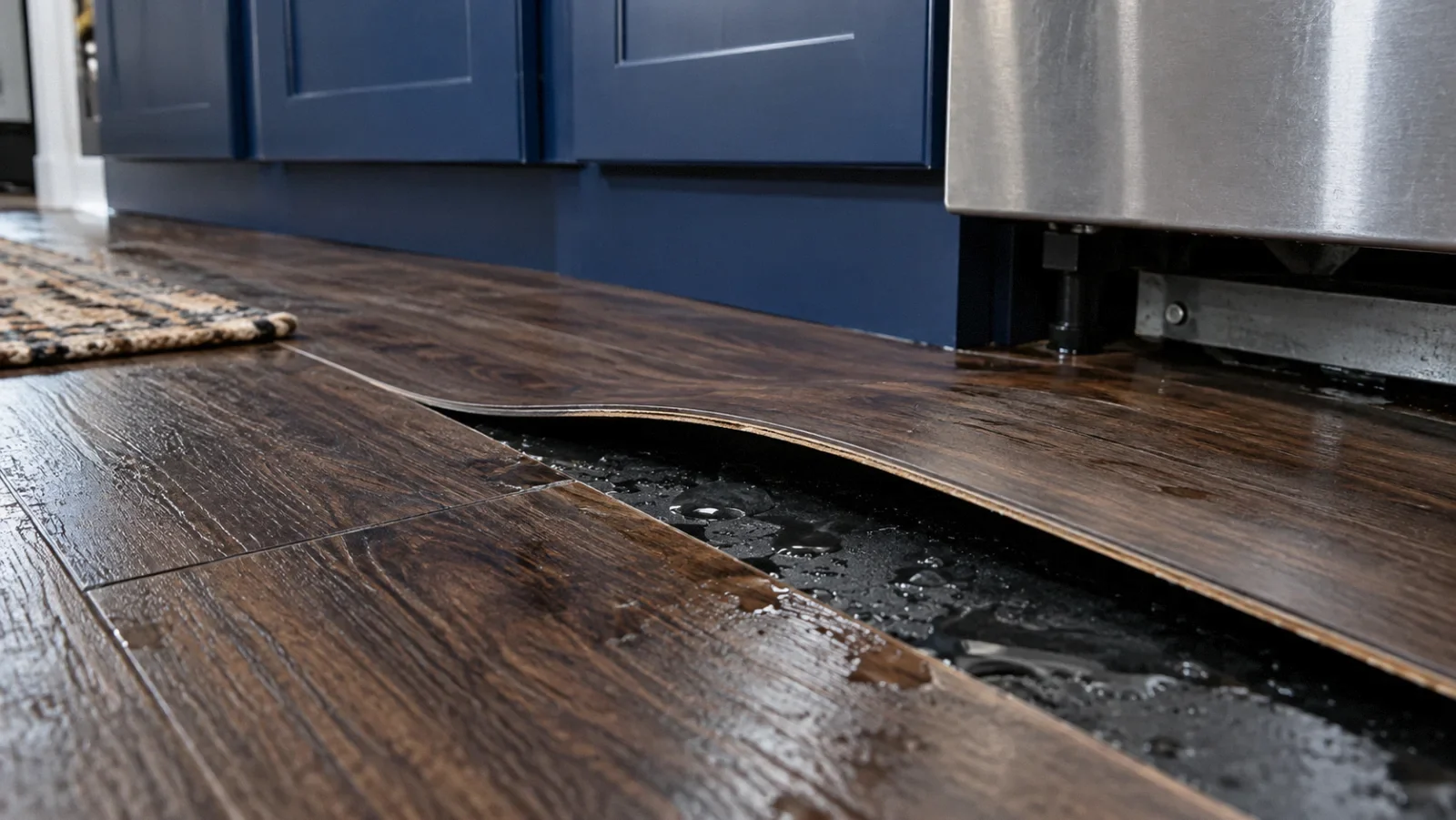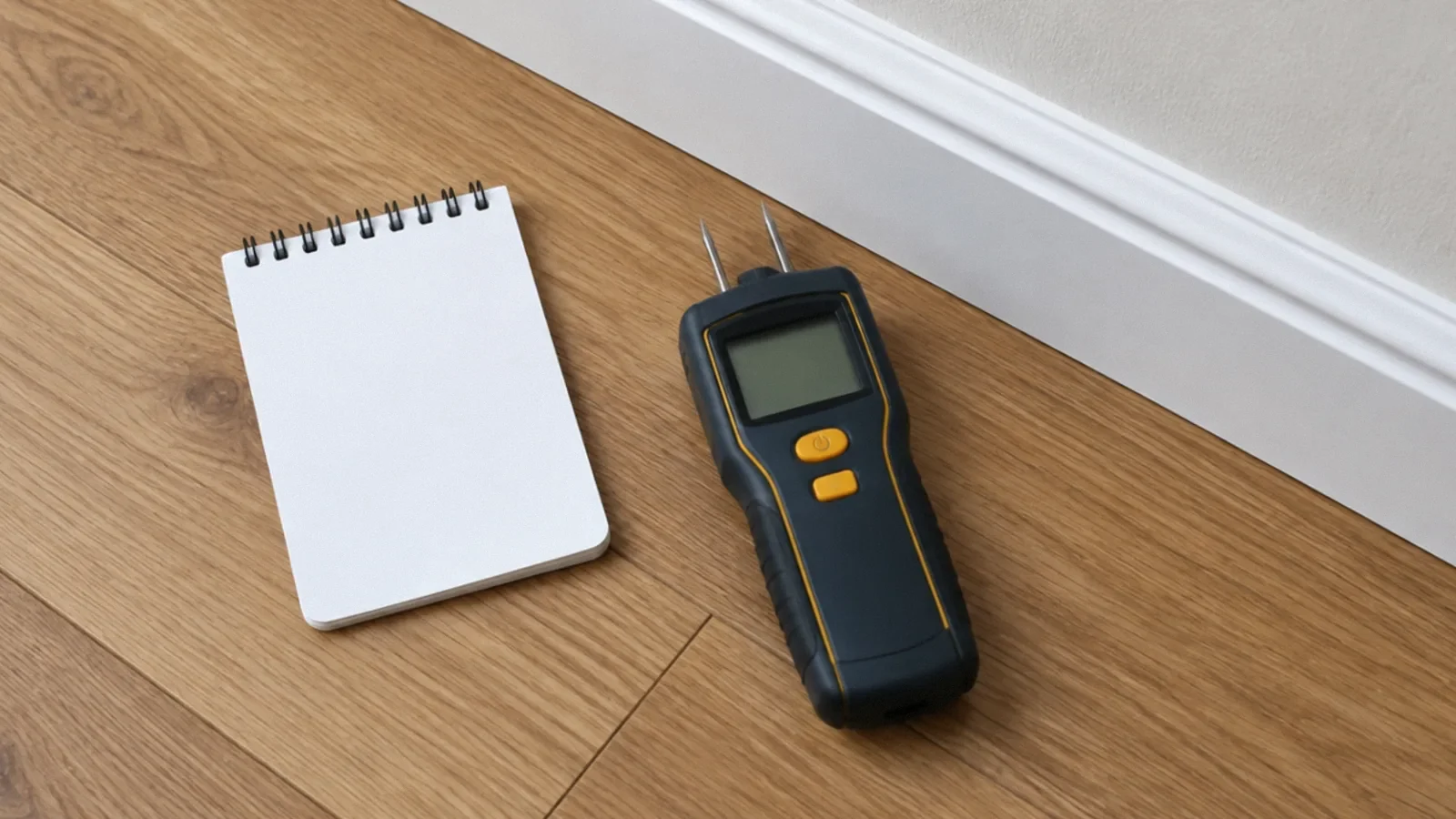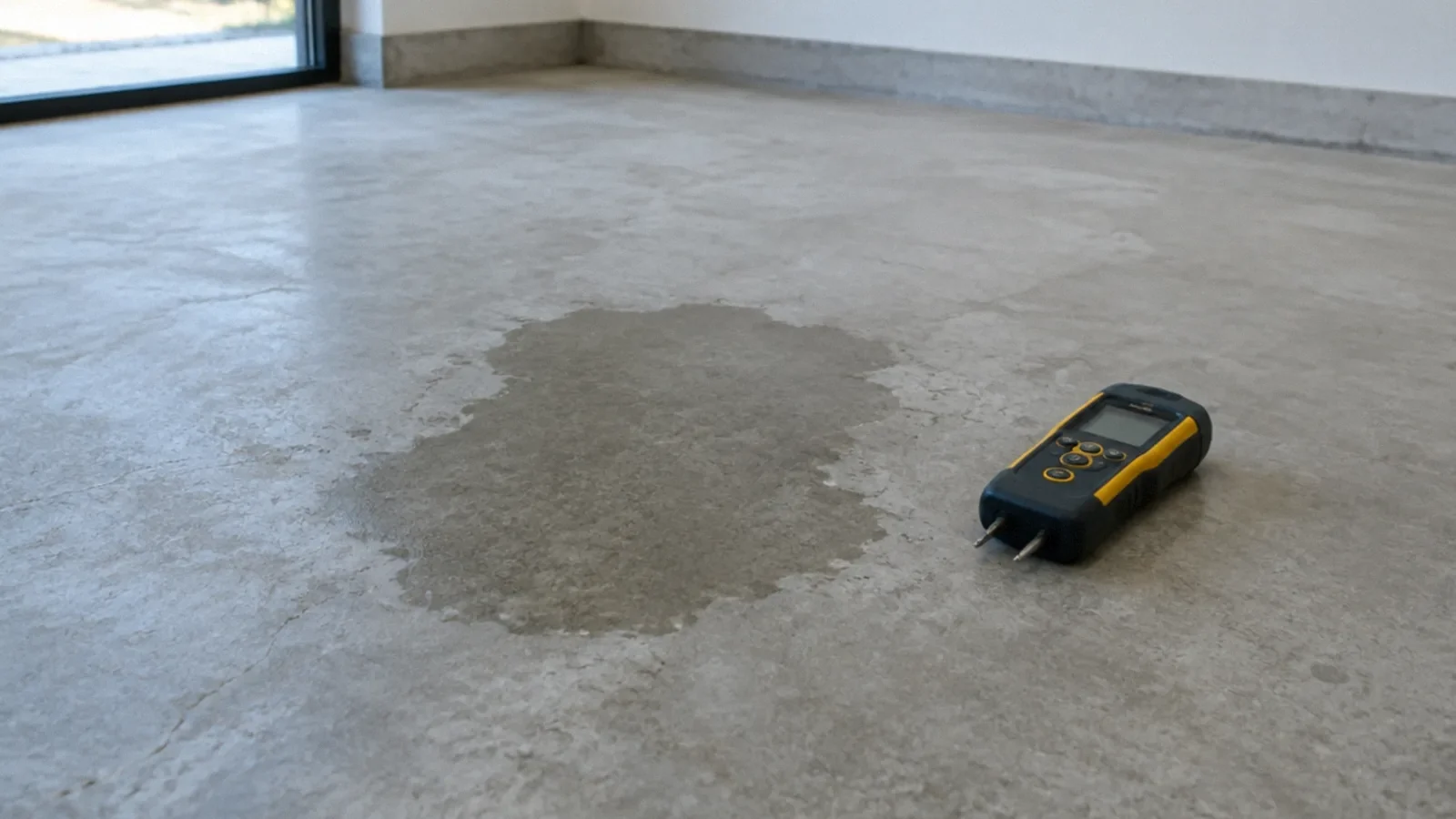
Concrete can look dry while retaining moisture that matters to the next floor covering. Use the test method and acceptance criteria required for the selected flooring and adhesive system. A handheld surface meter or room humidity reading alone should not authorize installation.
Concrete is a reservoir, not just a hard surface
A slab can absorb water and release it gradually. Its exposed surface may change appearance before moisture deeper in the slab reaches suitable conditions for a covering. An intact slab can therefore be structurally serviceable while not yet ready for an adhesive or low-permeance finish.
EPA’s moisture-control guidance discusses moisture testing and vapor movement from concrete as separate concerns for flooring. This distinction matters after a leak: “we dried the room” and “the slab meets the new floor’s requirements” are different conclusions.
Establish whether the leak is the only source
An acute plumbing release may wet the top of a slab, but ongoing ground moisture, drainage problems, or condensation can also affect it. If the slab was already producing moisture symptoms before the event, drying equipment may not address the underlying condition.
Collect the history of previous flooring failures, damp edges, efflorescence, or seasonal changes. These observations do not prove a specific diagnosis, but they help the assessor decide what further testing is appropriate. Do not assume every later high reading comes from the recent leak.
Screening and acceptance tests serve different purposes
A handheld meter can help compare areas and locate patterns. Its reading may be affected by the material, depth of sensing, salts, reinforcement, and device design. A convenient percentage on the screen is not automatically a slab moisture value suitable for a flooring warranty.
The flooring installer should identify the required test method, testing conditions, location and number of tests, and acceptance limits for the actual system. Do not substitute a test used for wood or a plastic-sheet observation for a specified concrete evaluation. Ask for the completed report, not just a verbal pass.
Coordinate cleaning, drying, and surface preparation
After removal of a wet finish, the slab may retain adhesive residue, contamination, or surface damage. These conditions can affect both drying and the new installation. Surface preparation should follow assessment rather than hiding unexplained moisture below a coating.
EPA’s clean-water guidance includes extraction and supported drying for concrete surfaces, but it is not an installation specification for every adhesive. If a moisture-control coating is proposed, ask what problem it is designed to solve, how the substrate is prepared and tested, and whether the full flooring system accepts that application.
A dry-out pass and a flooring pass can differ
Suppose a leak is repaired, the exposed slab no longer looks wet, and nearby wall materials reach their documented goals. The restoration equipment may have completed its practical role. The flooring installer still needs to determine whether the slab meets the chosen adhesive or finish system’s requirements. Those two decisions can occur at different times without either trade being wrong.
Ask the installer to specify the accepted method before comparing bids. A quotation that includes testing, preparation, and a compatible system cannot be fairly compared with one that merely includes laying planks. If the test finds an unsuitable condition, the next action should be an explained drying, diagnostic, or system-design response rather than substitution of an easier test.
A persistent perimeter pattern may point toward a different investigation from a localized wet area beneath the failed appliance. The pattern alone is not a diagnosis, but it helps determine whether the recent leak explains the full result. Record existing cracks, previous coatings, and old adhesive because the proposed preparation must account for the actual surface.
Avoid a coating decision made under schedule pressure
A coating described as a moisture solution should have a documented use within the flooring system. Ask what substrate condition it accepts, how the surface will be prepared, and who verifies compatibility. Do not allow a generic “sealer” line item to substitute for those details.
The installer also needs the intended operating conditions of the building. Testing an unconditioned space and then operating it differently can complicate interpretation, depending on the specified method. Follow the actual test and product instructions rather than inventing a universal conditioning period.
Stop the installation if the required test is missing, the accepted limit is unexplained, or the source remains active. Proceed when the selected system’s documented prerequisites are satisfied. The goal is a floor installed over an evaluated substrate, not an indefinite wait for concrete to contain no moisture at all.
Use a clear installation hold point
Agree in advance that flooring starts only after the source is controlled and the installer accepts the substrate under the selected product requirements. This avoids ordering or scheduling pressures becoming the de facto drying criterion. A date in a work schedule is not evidence that concrete has reached the needed condition.
Retain test locations, dates, ambient conditions, and the product instructions used. If another installer takes over, those records allow a meaningful handoff. Record any unresolved drainage or ground-moisture issue rather than allowing the new finish to create the appearance of closure.
Can water damage concrete?
Concrete can absorb and transmit moisture, and prolonged water exposure can affect the slab, floor coverings, adhesives and adjacent materials. EPA explains that installing moisture-sensitive flooring over a damp slab can lead to adhesive failure and other problems. A surface that looks dry does not establish that the assembly is ready for a new finish.
Identify and correct the water source, assess contamination and use the flooring manufacturer’s specified moisture tests and acceptance criteria. Concrete deterioration or suspected structural damage needs a qualified assessment; do not assume that a coating alone solves an active moisture pathway.
Cleaning concrete after water damage
Cleaning depends on the contamination and surface; it does not replace controlling moisture or verifying the slab before flooring. See our guide to cleaning concrete with bleach for chemical-specific considerations.
Your next-step checklist
- Separate the recent spill or leak from possible ongoing slab moisture sources.
- Identify the intended flooring, adhesive, and underlayment system before acceptance testing.
- Use handheld readings for their intended screening role.
- Request the required substrate test report and installation criteria.
- Keep flooring installation on hold until source control and substrate acceptance are documented.
Related questions
Can I rely on the slab’s color?
Color is an observation, not a complete moisture assessment. Concrete can appear uniform while deeper conditions remain unsuitable for a covering.
Will more fans solve every damp slab?
Airflow can assist evaporation at the surface, but it does not resolve ongoing ground moisture or establish compliance with a floor system’s testing requirements.
Is a moisture barrier always the answer?
No. The proposed layer or coating must suit the substrate condition and complete flooring system. A barrier chosen without diagnosis may conceal rather than solve the problem.
Sources & context
Public guidance supports the principles in this article. The practical questions and examples are editorial interpretation, not a site assessment or a coverage decision. State-specific rules apply only where identified.
- EPA: Table 1, Water Damage Cleanup and Mold Prevention (clean-water material guidance)official
- EPA: Moisture Control Guidance, Appendix C (material meters and flooring moisture tests)official
- U.S. EPA: Moisture control guidance for buildingsfederal building guidance
Community questions behind this topic
These discussions helped identify reader concerns. They are anecdotal, not technical or legal authority.