Remove loose dirt, check the tile and grout manufacturer’s care instructions and use a compatible cleaner as directed. Work gently with a nonabrasive tool, avoid soaking damaged joints and dry the area. Never mix bleach with vinegar, ammonia or other cleaners; a dark grout line can have several causes and is not automatically mold.
Identify the tile and grout
Ceramic tile, porcelain, natural stone and different grout products do not all tolerate the same cleaner. Find the product or installation information before treating the floor. A cleaner suitable for ceramic tile may damage a stone surface, colored grout or sealer.
Check for loose tiles, cracked grout, soft surfaces or water entering below the floor. Cleaning cannot repair a failed joint or determine whether a subfloor is wet. Ask a tile professional when the material or installation is unknown.
Remove loose dirt first
Sweep or use a vacuum attachment suitable for hard floors to remove grit before damp cleaning. This reduces the chance of dragging abrasive particles across the surface. Protect nearby finishes and keep children and pets away from products as directed.
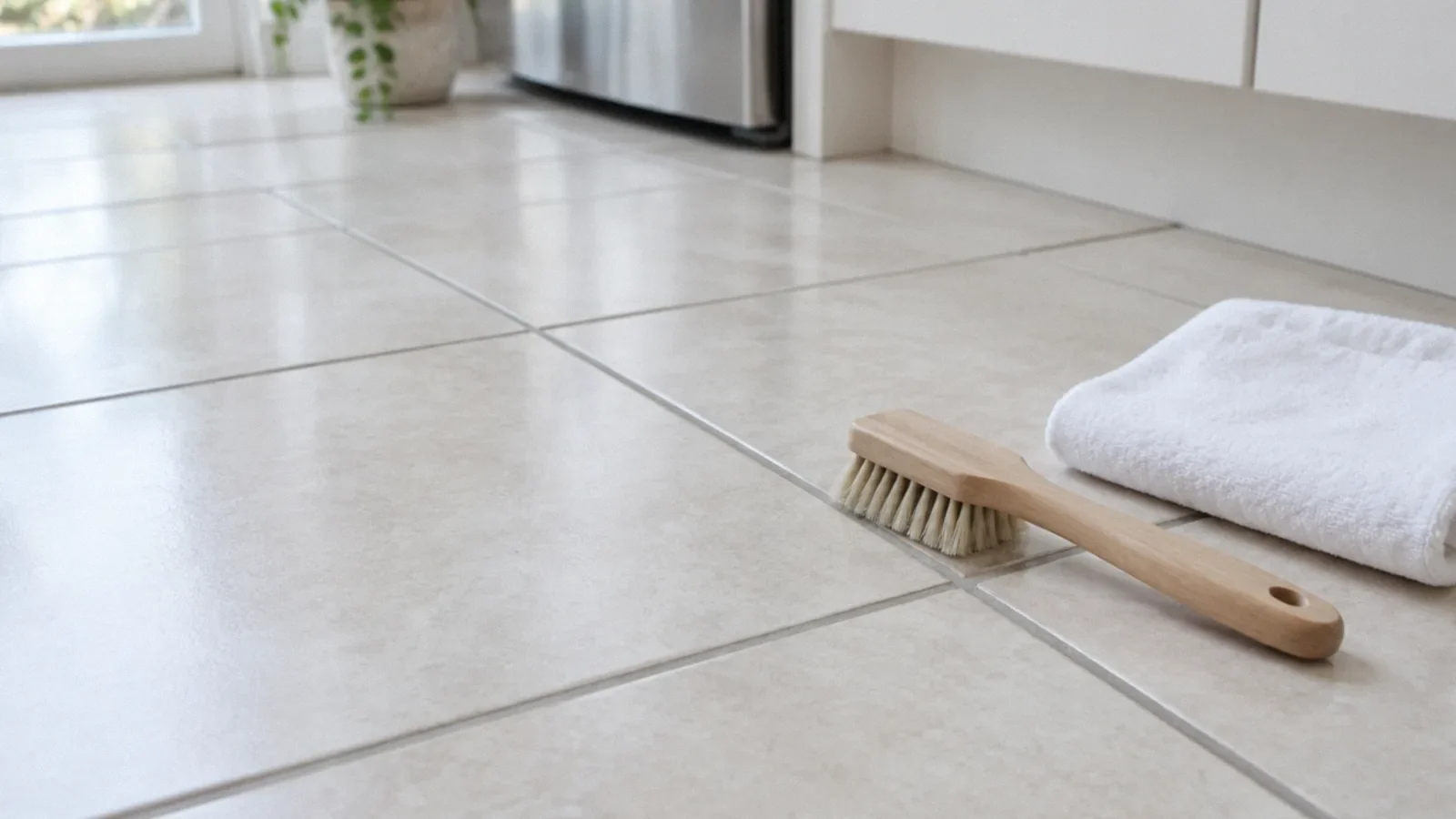
For ordinary soil, use the flooring maker’s approved cleaning method and dilution. A soft cloth or brush designed for the surface can help reach grout lines. Avoid a metal brush, aggressive scraping or a scouring pad that can damage grout or tile.
Choose a compatible cleaner
Read both the tile manufacturer’s care guide and the cleaner label. Test an inconspicuous area if recommended and stop if the color, finish or grout changes. Follow instructions for dilution, contact time and rinsing; using more chemical does not necessarily clean better.
Avoid applying an unapproved acid, bleach or solvent to natural stone, colored grout or a sealer. Do not assume a homemade recipe is harmless because its ingredients are familiar. If you cannot identify the material, ask the installer or a tile-care professional.
Baking soda, peroxide and bleach
Online recipes often combine baking soda with hydrogen peroxide, but their suitability depends on the grout, tile, sealer and product instructions. Peroxide can affect color or finishes. Do not use a mixture as a universal recommendation or promise that it will disinfect the floor.
Never mix bleach with vinegar, ammonia, peroxide or any other cleaner. CDC warns that mixing disinfectants and cleaners can release dangerous vapors. Use one compatible product as directed, provide ventilation and wear the protection required by the label.
Is steam cleaning safe?
Steam and heat may be unsuitable for some grout, sealers, tile assemblies or existing cracks. Check the manufacturer’s instructions for the floor and the machine before using steam. A machine marketed for tile does not automatically suit every installation.
Do not direct steam into damaged joints, electrical equipment or an area with an unresolved leak. If you cannot confirm compatibility, use an approved routine method or contact a professional. Excess moisture below the tile can be difficult to dry.
Dark grout and suspected mold
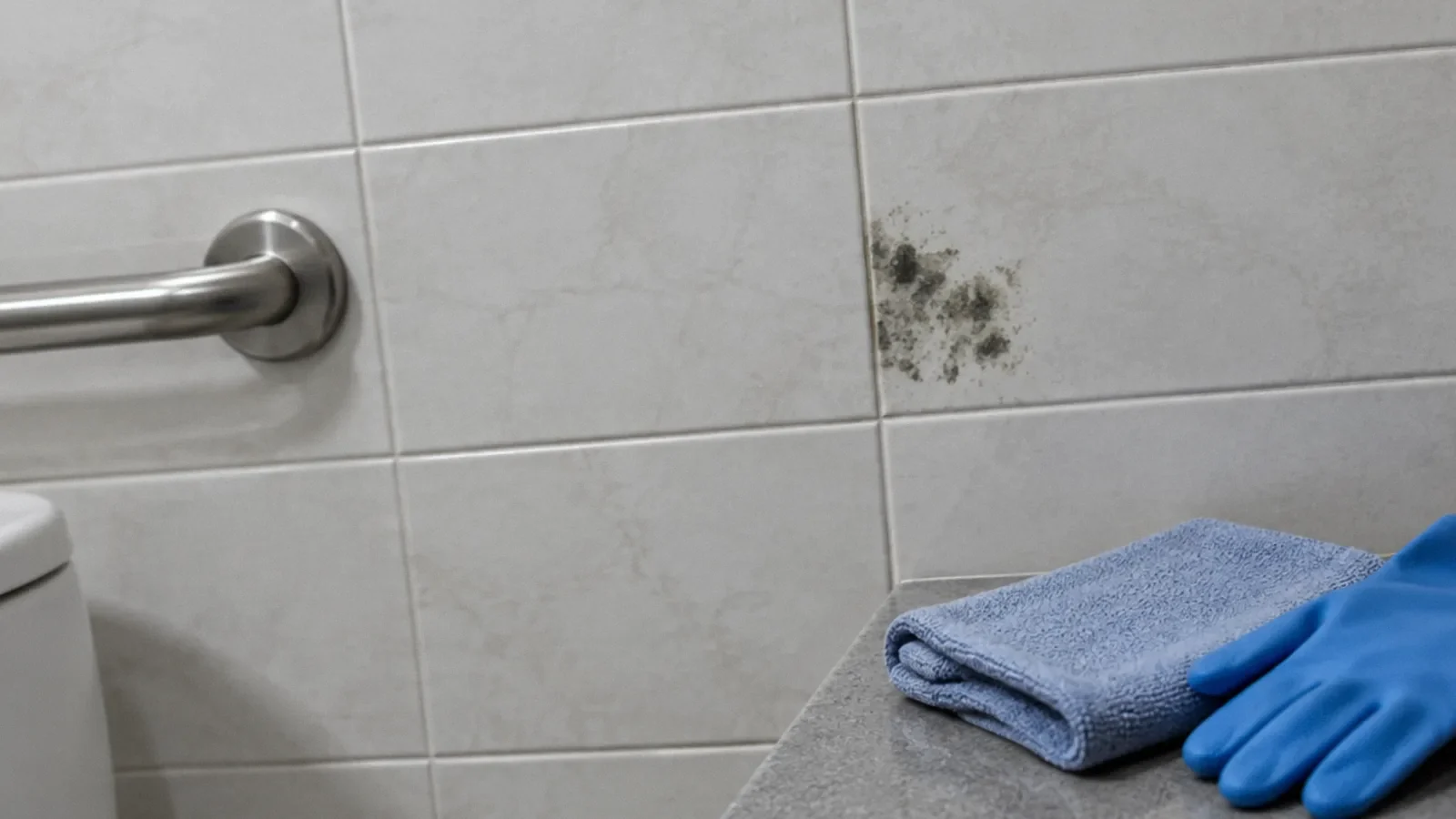
Grout can darken from soil, old sealer, moisture or growth; appearance alone does not identify mold. If there is persistent dampness, a musty odor, loose tile or water damage, investigate the source rather than repeatedly bleaching the line.
CDC advises people with certain health conditions to avoid mold exposure and recommends appropriate protection for cleanup. For extensive or concealed growth, sewage exposure or damaged materials, consult an experienced professional. Never disturb suspect material unnecessarily.
Rinse, dry and maintain
Follow the product directions for removing residue and avoid leaving standing water. Dry the surface and keep it clear until safe to walk on. A wet floor can be slippery, and water can enter cracked grout or perimeter gaps.
Whether grout needs sealing depends on the product and installation. Ask the installer or manufacturer before adding a sealer; clean and dry the assembly as directed first. Sealers are maintenance products, not a repair for a leaking shower pan or damaged subfloor.
When to ask for help
A professional tile cleaner or installer can identify the surface, inspect damaged grout and recommend a compatible method. Ask for a written scope, products, protection of nearby finishes and expected limitations. A restoration professional may also be needed when water has reached the floor assembly.
Keep a record of recurring marks and previous products. If discoloration returns after cleaning, assess moisture and residue before repeating the same treatment. Permanent staining or damaged grout may not be reversible with a cleaner alone.
A practical damp-cleaning sequence
Sweep grit first. For compatible tile and sealed grout, use a cleaner approved by the floor manufacturer at the label dilution and apply with a damp mop, not standing water. Rinse if the label requires it, then dry and keep traffic away until the surface is safe. In a bathroom, ventilate while drying and investigate recurring dampness, loose tile or musty odor.
A film after cleaning can be leftover product; hard-water mineral deposits are another possibility. Identify the surface and use only a compatible product. Acidic cleaners, including vinegar, can etch natural stone. Mixing vinegar and baking soda is not a universal cleaner and their reaction does not establish suitability for the floor.
Dish soap and different floor materials
Dawn or another dish detergent is appropriate only if the flooring maker permits it. Too much can leave slippery residue; use the permitted dilution and remove residue as directed. Never mix cleaning products. Natural stone, grout sealers, wood and laminate can have different restrictions, and excess water can damage wood or seep into joints. For a small hard-surface spot, test a compatible product in a hidden area and stop if the finish changes; persistent moisture or damaged joints warrant an installer or cleaning specialist.
Your next-step checklist
- Identify the tile, grout and sealer.
- Remove grit before damp cleaning.
- Test and follow a compatible cleaner.
- Never mix bleach with other chemicals.
- Investigate recurring dampness or loose tile.
Related questions
What is the best cleaner for grout?
Use a cleaner approved for the specific grout, tile and sealer. There is no single safe product for every floor.
Can I mix bleach and vinegar for grout?
No. Never mix bleach with vinegar, ammonia, peroxide or other cleaners.
Can I steam clean tile and grout?
Only if the tile, grout and machine manufacturers allow it. Heat and moisture can be unsuitable for some assemblies.
Does dark grout always mean mold?
No. Soil, staining, moisture and other causes can darken grout; appearance alone cannot identify mold.
How should I address suspected mold on a tile floor?
Correct the moisture source, follow EPA guidance for a small area on a hard surface and use a cleaner suitable for the tile and grout. Never mix chemicals; extensive growth, contaminated water or damaged porous material may need professional help.
What if soap makes a floor slippery?
Keep people away until the residue is removed using the flooring manufacturer’s instructions. Rinse only as appropriate for the surface and dry it promptly; do not mix cleaning products or allow water into electrical equipment.
Can vinegar and baking soda clean tile?
Suitability depends on the tile, grout and finish. Combining the two reduces their individual effects and is not a universal treatment. Follow the manufacturer’s instructions and never mix vinegar with bleach or other incompatible cleaners.
Sources & context
Public guidance supports the principles in this article. The practical questions and examples are editorial interpretation, not a site assessment or a coverage decision. State-specific rules apply only where identified.
- CDC: Cleaning and disinfecting with bleachpublic health guidance
- CDC: Mold cleanuppublic health guidance
- U.S. EPA: Water damage and floor assembliesfederal guidance