If you smell unexplained smoke or burning, leave and call emergency services when fire or electrical danger is possible. After responders confirm it is safe, removing the source and cleaning affected materials are more useful than masking odor. The approach depends on whether smoke came from a minor cooking incident, a fire or another source.
An unexplained smell can be an emergency
Do not assume a smoke or burnt-rubber smell is an old odor. It can indicate an active fire, overheating equipment or another hazard. If you see smoke, hear an alarm, suspect fire or cannot establish safety, leave immediately and call 911 from outside. Do not search a building for the source.
A carbon monoxide emergency may not produce a smell, and a combination alarm can signal either smoke or carbon monoxide. Follow the alarm instructions and emergency responders. Return only when authorized; an odor-removal product is never a substitute for resolving an active hazard.
Identify the event after the area is safe
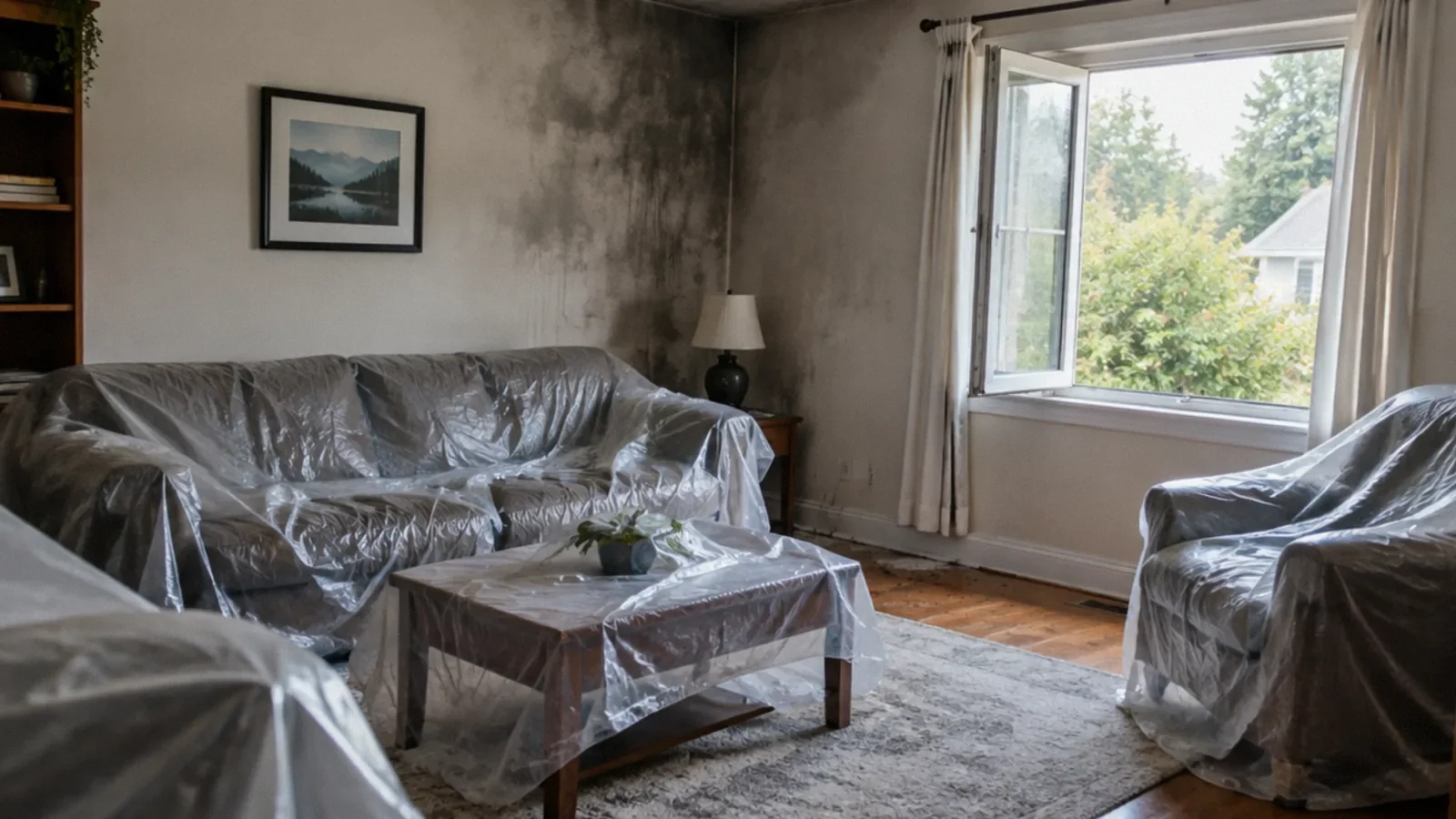
A brief cooking incident can leave a different pattern from a structural fire, wood stove problem or smoke entering from outside. Record which rooms and materials were affected and whether visible residue remains. A professional assessment may be needed after a fire or when the source remains uncertain.
Smoke particles and gases can settle on surfaces, fabrics and contents. A smell in one room does not prove the source is in that room, and a pleasant fragrance does not establish that residue has been removed. Follow fire officials’ directions before touching damaged materials.
Ventilation depends on conditions
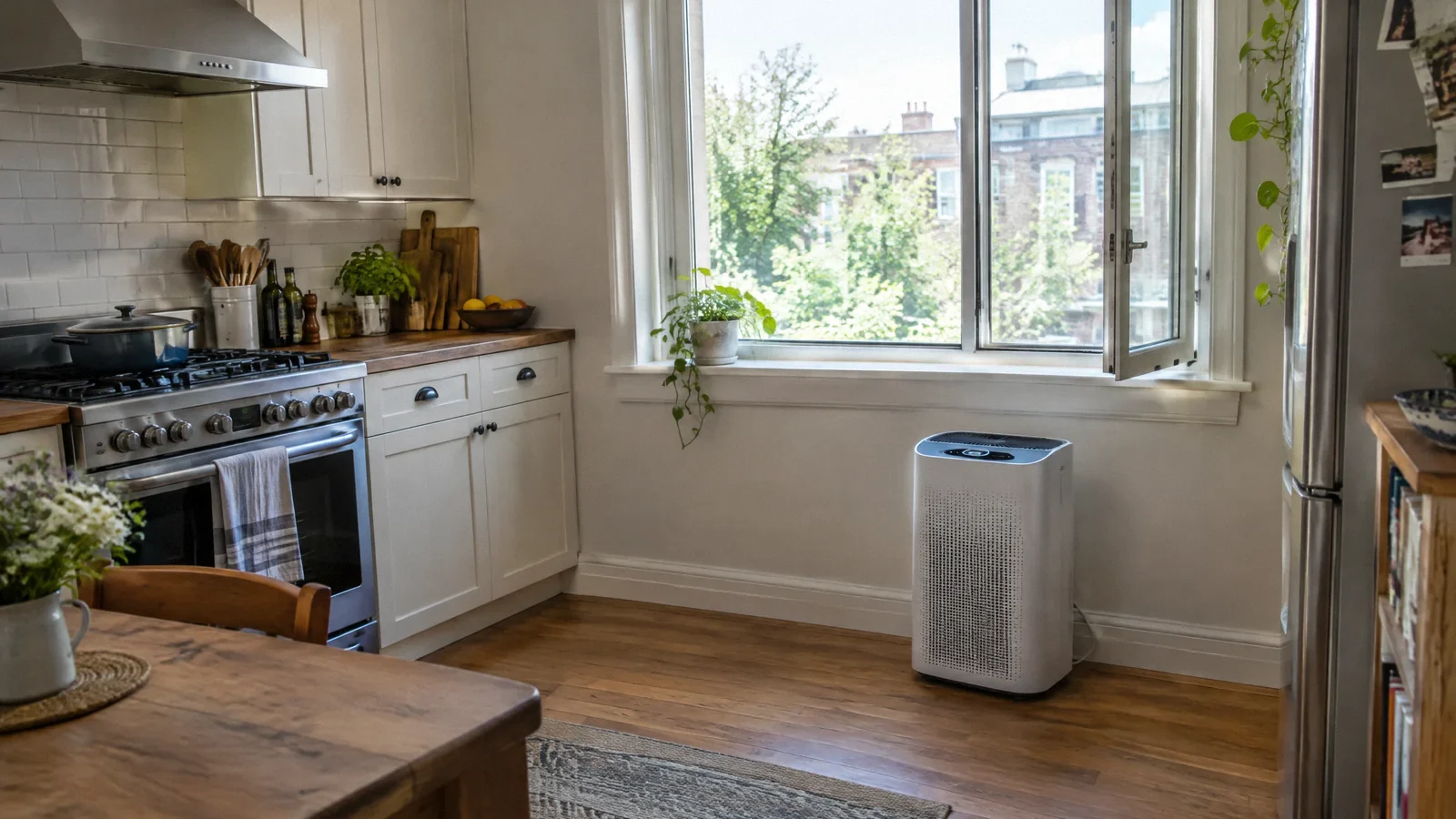
When responders say it is safe and outdoor air is clean, opening windows or using suitable ventilation may help reduce lingering indoor pollutants. During an active outdoor smoke event, bringing outside air indoors can make conditions worse; follow current local air quality and emergency guidance.
EPA guidance on wildfire smoke recommends avoiding indoor activities that create additional fine particles and using appropriately selected mechanical air cleaning when suitable. A portable filter can reduce some airborne particles but cannot by itself clean contaminated surfaces or remove all gases and odors.
Clean or assess affected materials
The right cleaning method depends on the material and the source. Hard surfaces, textiles, porous furnishings and damaged finishes do not respond the same way. After a structural fire or heavy soot exposure, obtain experienced help and avoid disturbing debris before it is assessed.
A small cooking residue on an undamaged, accessible surface may be managed according to the product and surface instructions once the area is safe. Do not mix cleaning products or use a method that damages the finish. Replace or professionally assess porous items that cannot be adequately cleaned.
Candles, sprays and odor absorbers
Scented candles, sprays and similar products may cover a smell without removing its source. Burning a candle also introduces more combustion particles. A product marketed as an odor absorber has limits and cannot confirm that a fire-damaged room is safe.
Do not use a fragrance to override a recurring burning odor. If the smell returns without a known safe source, leave and seek qualified help. A professional can assess residue, ventilation equipment and materials once emergency hazards are ruled out.
Ozone and thermal fogging
Some restoration companies offer ozone or thermal fogging. Ask exactly what material or chemical is used, its purpose, occupants’ and pets’ protection, reentry conditions and whether the source and residues will first be removed. Do not treat fogging as an automatic cure.
EPA warns that ozone is a lung irritant and that ozone generators can produce harmful concentrations indoors. It also notes limited effectiveness against many indoor contaminants at concentrations within public health standards. Do not operate an ozone generator in an occupied space.
When to hire a professional
A structural fire, extensive soot, smoke in multiple rooms, contaminated HVAC components or persistent odor can require an experienced restoration contractor. Ask for a written scope that identifies inspection, cleaning, removal, contents treatment and any proposed specialized process.
Request an explanation of what cannot be inspected and how the contractor will assess the outcome. Ask who will address damaged electrical or mechanical systems. If insurance is involved, document conditions only when safe and follow the insurer’s claim instructions.
How long does the smell last?
There is no reliable universal duration. The amount and source of smoke, ventilation, affected materials and whether residue is removed all matter. A smell that fades and returns can indicate a remaining source or material that needs further investigation.
Keep a record of when and where the odor returns, but do not remain in an area that smells actively burned or seems unsafe. Once the source is established and corrected, follow up with the contractor on any inaccessible surfaces or contents that may need additional work.
Smoke odor in a kitchen, carpet or furniture
After a minor cooking incident with no fire or appliance damage, clean accessible residue according to the surface and appliance instructions once the area is safe. Carpets and furniture can retain smoke in backing or padding; avoid overwetting them and consider professional assessment after heavy smoke or soot exposure.
Baking soda, vinegar or charcoal products may affect an odor in some circumstances, but they do not prove that smoke residues or gases have been removed. Do not mix cleaners or use fragrance to mask a recurring burning smell. If smoke is coming from vents or a heater, treat it as a potential active fire: leave and call 911 from outside.
Cooking residue and fireplace odors
After a small cooking incident, turn off the source only if safe, let the appliance cool, and discard the burned food. Clean the cool oven, nearby kitchen surfaces and accessible range-hood filters according to their manufacturers’ instructions; avoid wetting electrical parts. If the appliance smokes again or seems damaged, stop using it and arrange service.
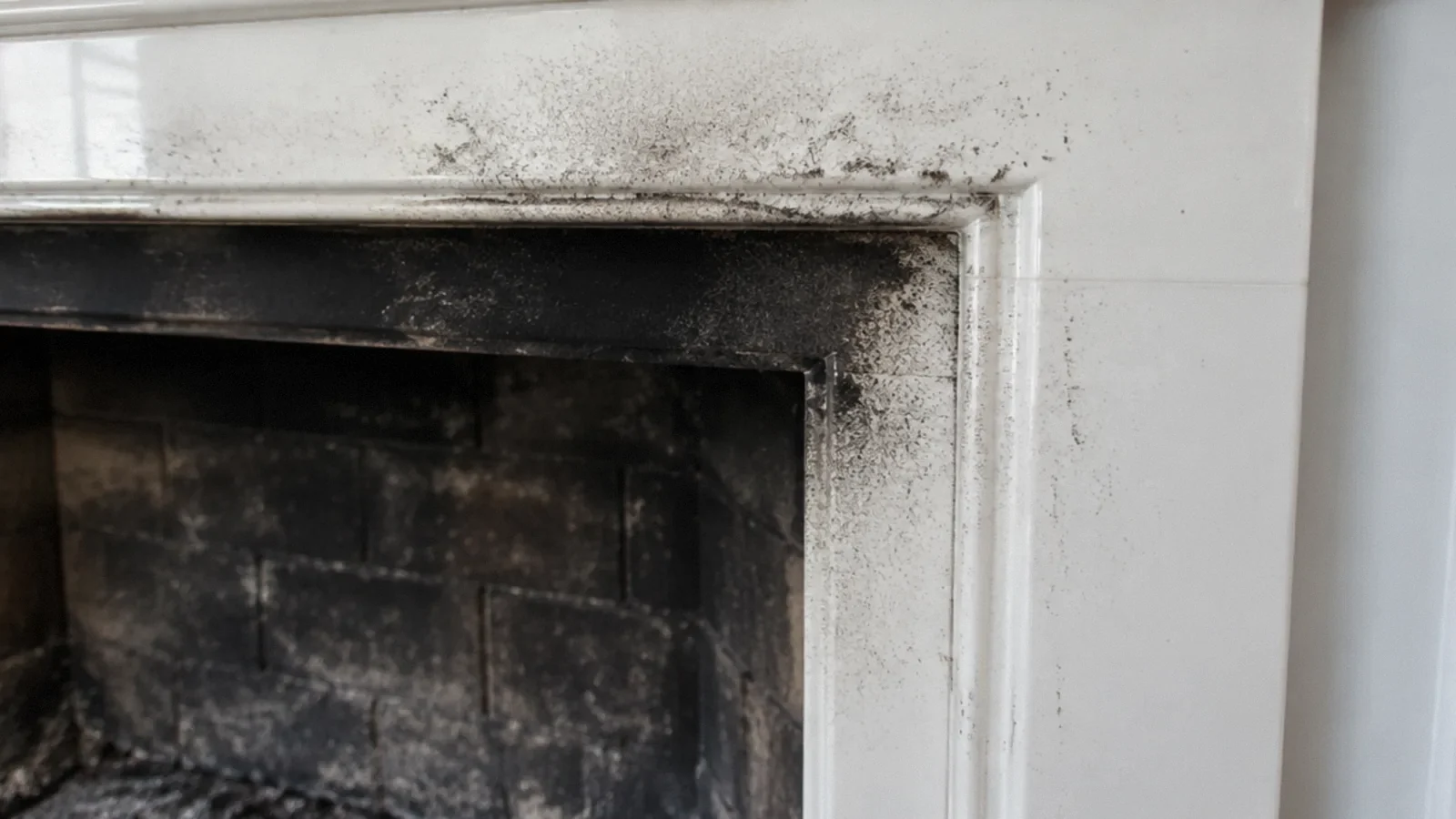
A fireplace smell may come from residue, a draft issue or another cause. Stop using it if the smell recurs and have the chimney and fireplace inspected. If smoke or burning is unexplained, leave and call for emergency help; do not search for a concealed fire.
Carpet, furnishings and odor absorbers
For a small, light odor without soot, check carpet care instructions and clean only by a method suitable for the fibers. Avoid soaking the backing or pad. Tobacco odor can persist in the backing, pad and nearby surfaces; a carpet professional can assess cleaning or replacement if it returns. Heavy fire soot requires professional assessment.
Clean finished wood furniture according to its finish; upholstery and internal padding can retain residue and need a different assessment. Baking soda and vinegar are not proof of residue removal and may damage some surfaces. Never mix cleaning products. Activated carbon can adsorb some gases and odors, but capacity and pollutant effectiveness vary; particle filters address airborne particles, not deposited contamination.
Your next-step checklist
- Leave and call 911 if an active hazard is possible.
- Wait for clearance before entering after a fire.
- Identify the source and affected materials.
- Avoid masking a recurring odor with fragrance.
- Ask for a written cleanup and treatment scope.
Related questions
How do I get smoke smell out after a fire?
Once officials say it is safe, identify and remove affected residue and materials using methods suitable for the damage. Extensive smoke may require professional help.
Is a smoke smell always harmless after a fire?
No. A recurring or unexplained burning odor can signal a continuing hazard. Leave and call for help when safety is uncertain.
Do candles remove smoke residue?
A scented candle may mask odor and adds combustion particles; it does not clean smoke residue from surfaces.
Is an ozone generator safe to use in an occupied room?
No. EPA warns that ozone can harm the lungs and that generators can produce harmful indoor concentrations.
Sources & context
Public guidance supports the principles in this article. The practical questions and examples are editorial interpretation, not a site assessment or a coverage decision. State-specific rules apply only where identified.
- U.S. EPA: Ozone generators sold as air cleanersfederal health guidance
- U.S. EPA: Wildfires and indoor air qualityfederal guidance
- U.S. EPA: Indoor air filtrationfederal guidance
- EPA: Reducing indoor exposure to wildfire smokefederal environmental health guidance
- American Red Cross: Cleaning up after a firefire recovery guidance
- U.S. EPA: Guide to air cleaners in the homeprimary guidance