Mold can grow on organic residue or coatings on damp concrete. A photo or color cannot confirm it. Correct the moisture source, clean an appropriate small exposed area safely, and assess hidden or extensive damage professionally.
Can mold grow on concrete?
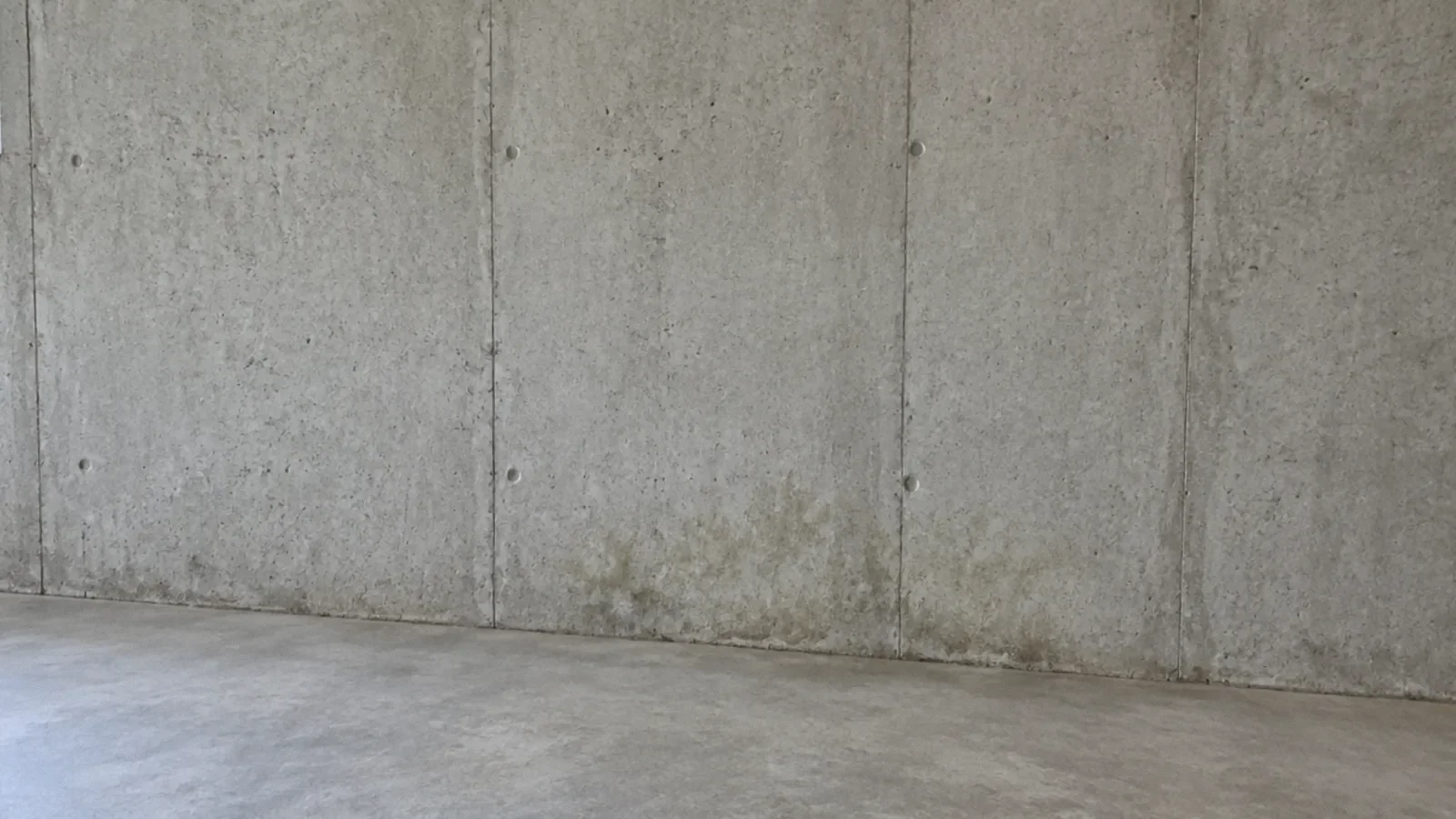
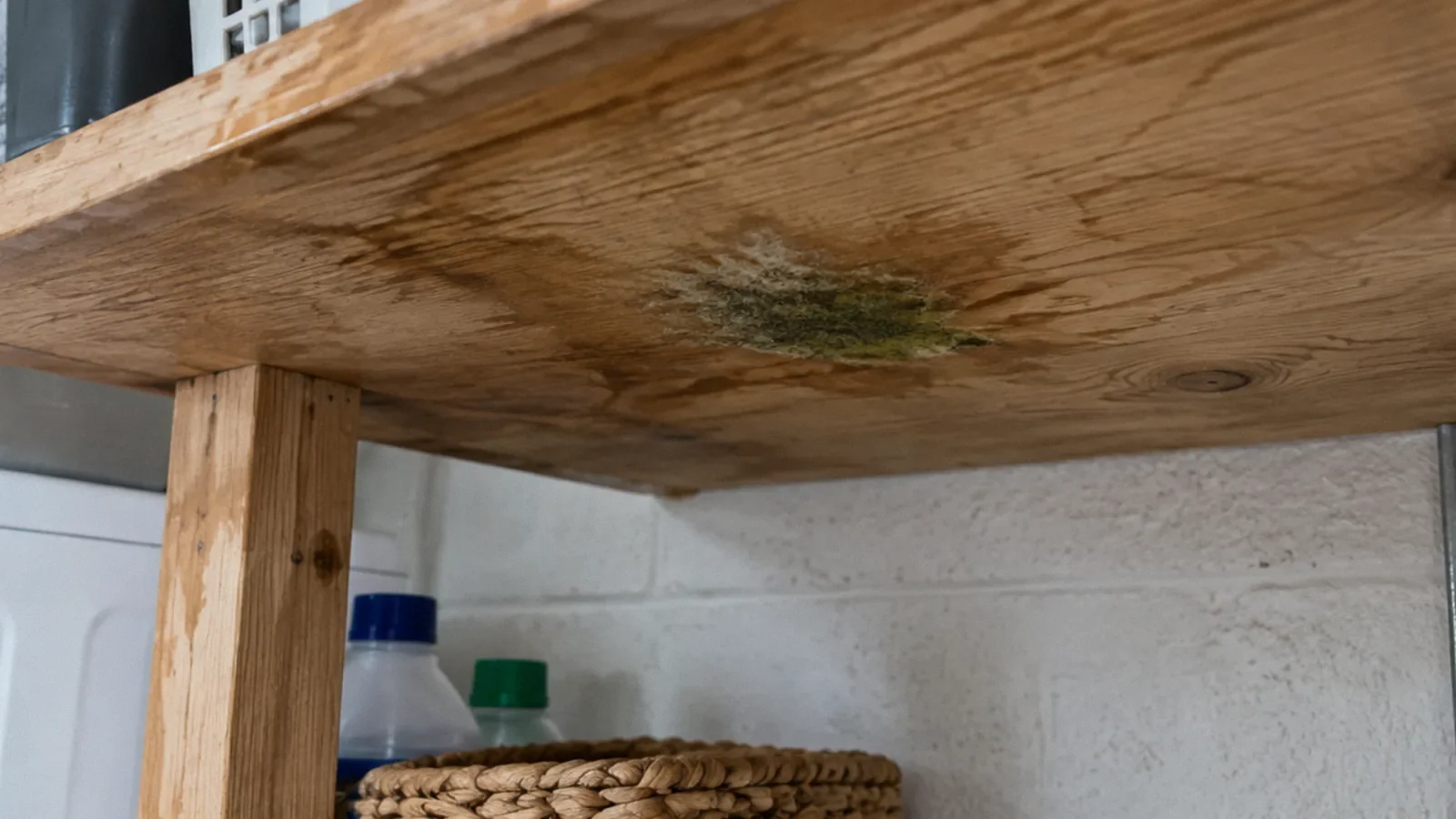
Damp concrete can support mold growth on dust, coatings or other organic material on or near the surface. Concrete also contacts wood, carpet, adhesive and insulation that may be affected by the same moisture. A dark mark is not automatically a particular mold, and a photograph cannot determine the organism or safety.
Look for the water pathway and extent before choosing a cleaner. A wet basement wall may be affected by condensation, a plumbing leak, rainwater or groundwater. More than one source is possible, and water can travel behind a finish before it becomes visible.
Mold, stains and white deposits
A white powdery deposit on masonry may be efflorescence, mineral salts carried to the surface by moisture and left after evaporation. Dirt, coatings and other residues can also resemble growth. Appearance alone cannot reliably distinguish them or rule out a separate moisture problem.
EPA’s Mold Image Library includes a captioned example of mold on painted concrete in a school building. It is a credible reference photograph, not a diagnostic comparison for a home. Use the source link below and ask a qualified inspector about uncertain or extensive deposits rather than scraping an unknown area to test it.
Before cleaning: safety and scope
Keep away from standing water near electrical equipment and avoid contact with sewage or water of uncertain origin. Seek qualified help for contaminated water, extensive growth, inaccessible cavities, damaged materials or uncertainty about safe cleanup. People with asthma, mold allergies, chronic lung disease or weakened immune systems should not participate in mold cleanup.
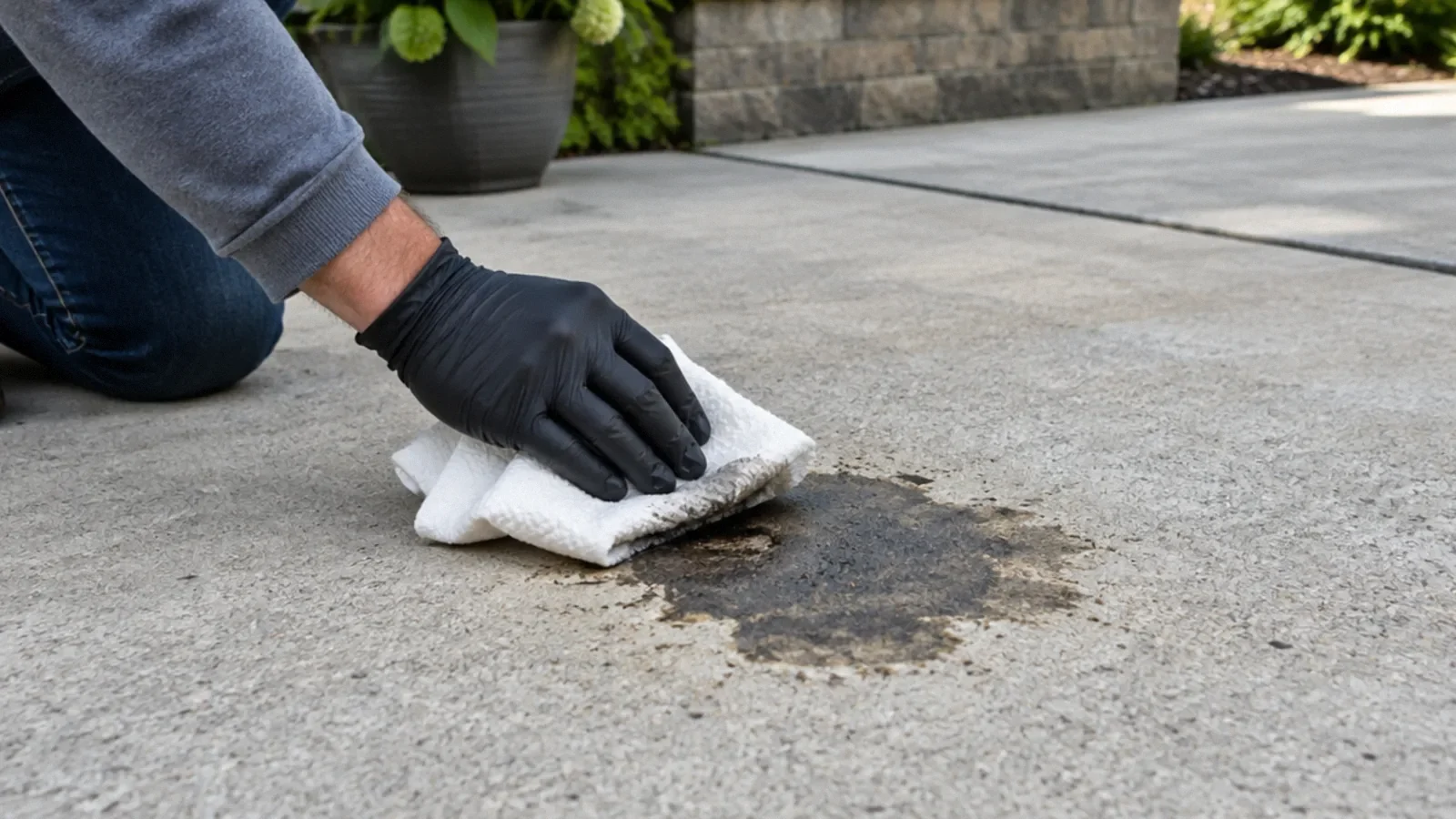
EPA’s home guide treats an area under about 10 square feet as a possible homeowner task in many cases, subject to circumstances. That is not a guarantee that every small job is safe. Consider the affected material, water source and occupant needs. Wear appropriate gloves, eye protection and an N95 respirator or better as recommended by CDC.
Clean an appropriate small exposed area
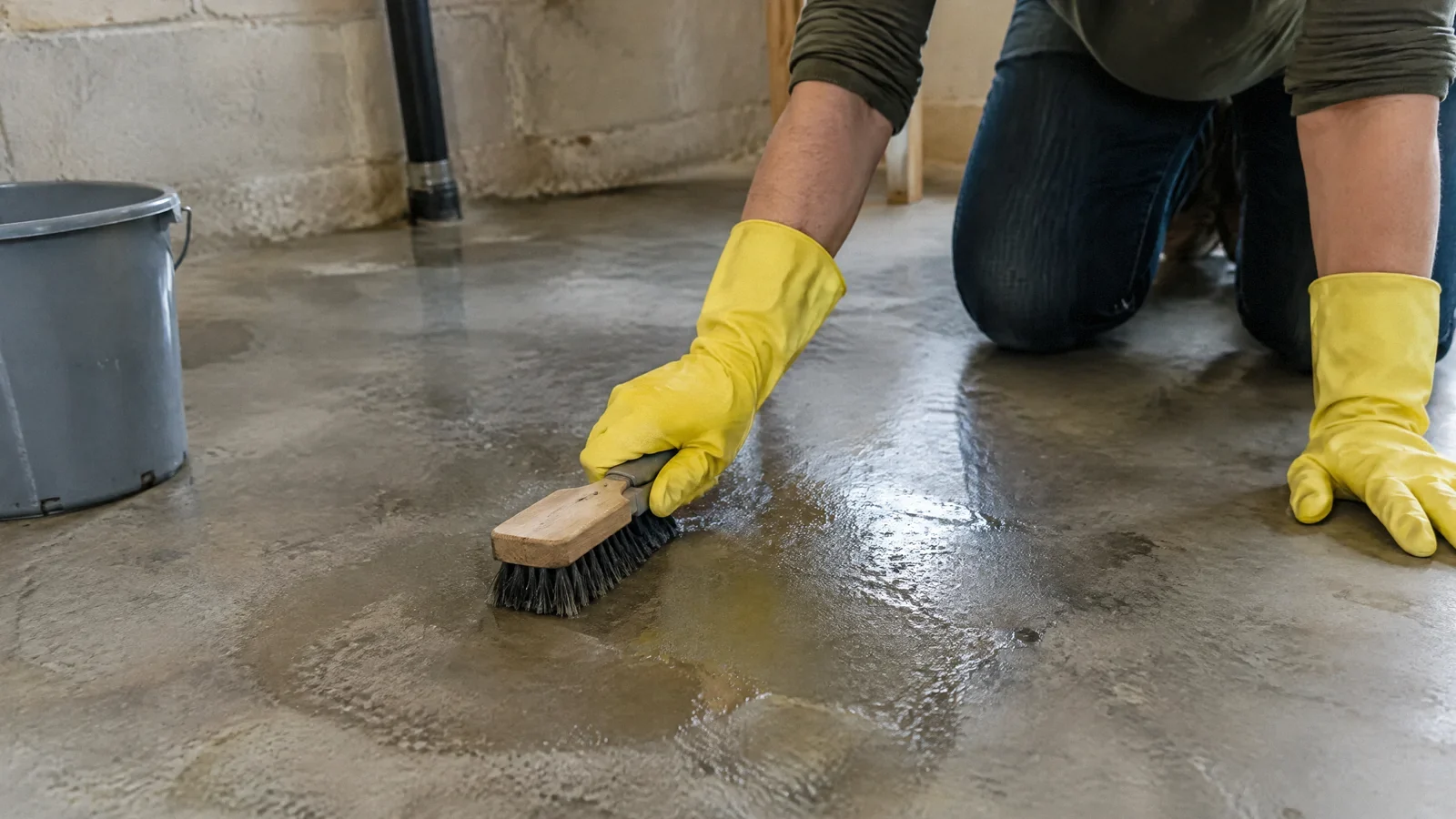
For a suitable, structurally sound small exposed surface, EPA guidance describes cleaning concrete or other hard surfaces with detergent and water and drying thoroughly. Follow the surface manufacturer’s instructions, avoid spreading debris and use only as much water as needed. Do not dry brush or blow air across suspected contamination.
Do not mix bleach with ammonia or other cleaners. A disinfectant is not a substitute for physically removing growth and correcting moisture; follow any chosen product’s label and compatibility instructions. Avoid painting or sealing over visible mold. If material crumbles, growth returns or the affected area is larger than expected, stop and seek assessment.
Basement walls and floors
On an exposed wall, inspect adjacent framing, drywall, insulation and stored items as well as the concrete. On a floor, moisture may be entering through the slab, at the wall-floor joint or from a nearby leak. Condensation can also occur on a cool surface. Timing and location are clues, not proof of a particular pathway.
Correct the water source and allow affected materials to dry before restoring finishes. Exterior drainage, plumbing repair or humidity control may be appropriate depending on the cause. A surface coating alone does not repair an active leak or reliably stop water reaching a foundation assembly.
What about mold under tile?
Tile can conceal adhesive, underlayment or adjacent porous materials affected by moisture. A clean tile surface does not prove the layers below are dry, and a stain at a grout line does not identify the extent. Ask an experienced professional to investigate persistent moisture, loose flooring or recurring odor.
Do not remove old flooring or adhesive blindly: older materials may require assessment for hazardous substances, and disturbing suspect growth can spread debris. Before new flooring is installed, follow the flooring manufacturer’s current moisture-testing requirements. EPA’s moisture-control guidance discusses evaluating slab moisture and drying before coverings are installed.
Drying and checking the repair
After cleaning, dry the concrete and nearby materials using methods appropriate to the site. A normal room humidity reading does not prove a slab or concealed wall layer is dry. Ask the professional which instruments or tests are appropriate, where measurements were taken and what criteria apply to the proposed finish.
Record the water source and repair, photograph the area and check for recurring dampness, odor or deposits. If discoloration remains, an experienced assessor can distinguish a residual stain from remaining contamination; color alone cannot settle the question. Do not close the assembly while the cause or material condition remains unresolved.
When to bring in a professional
Call a qualified remediation professional for a large or hidden area, sewage contamination, repeated growth or materials that cannot be safely accessed. A plumber may be needed for a leaking pipe, a drainage specialist for recurring rain-related entry, and an electrician for wet electrical equipment. Structural movement or a bowed wall calls for timely structural assessment.
Ask for a written scope describing the moisture repair, containment, cleaning or removal, drying and post-work checks. No treatment can guarantee that all spores are absent indoors. Prevention depends on controlling moisture and promptly addressing a new leak.
Your next-step checklist
- Identify and correct the source of moisture.
- Avoid disturbing unknown deposits or entering unsafe water.
- Use suitable protection and cleanup for a small exposed area.
- Assess hidden layers and slab moisture before new flooring.
- Investigate recurring dampness or extensive damage.
Related questions
Can mold form on concrete basement walls?
Yes. Growth can occur on organic residue or coatings on damp concrete; investigate the source of moisture.
Is every black mark black mold?
No. Color and photographs cannot reliably identify a deposit or its species.
Can mold grow beneath tile on concrete?
Moisture can affect adhesive, underlayment and adjacent organic material under tile. A clean tile surface does not prove the layers are dry.
Should I paint over mold on concrete?
No. Clean or remove affected material as appropriate, correct the water source and dry before applying a compatible finish.
Sources & context
Public guidance supports the principles in this article. The practical questions and examples are editorial interpretation, not a site assessment or a coverage decision. State-specific rules apply only where identified.
- EPA: Mold image library, painted concrete examplefederal reference photographs
- EPA: Mold cleanup guidancefederal cleanup guidance
- EPA: Mold course, cleanup methodsfederal technical guidance
- EPA: Moisture control guidancefederal technical guidance
- CDC: Mold cleanup recommendationsfederal health guidance