Water inside a refrigerator can come from a blocked defrost drain, a leaking water filter or supply component, condensation or another problem. Keep away from water near electrical connections. Follow the appliance manual and arrange qualified service if the source is unclear, water continues to collect or access requires moving the appliance.
Protect people and food first
Do not touch a wet plug, outlet or electrical connection, and do not move a heavy appliance through standing water to reach its cord. If water is near electrical equipment and safe isolation is uncertain, keep clear and contact a qualified technician or electrician.
Move food only when it is safe to do so. Perishable items require temperature control; a refrigerator that is unplugged or not cooling can warm over time. Keep the door closed when possible and use a cooler with a cold source if needed to keep food at 40°F or below.
Look for the pattern
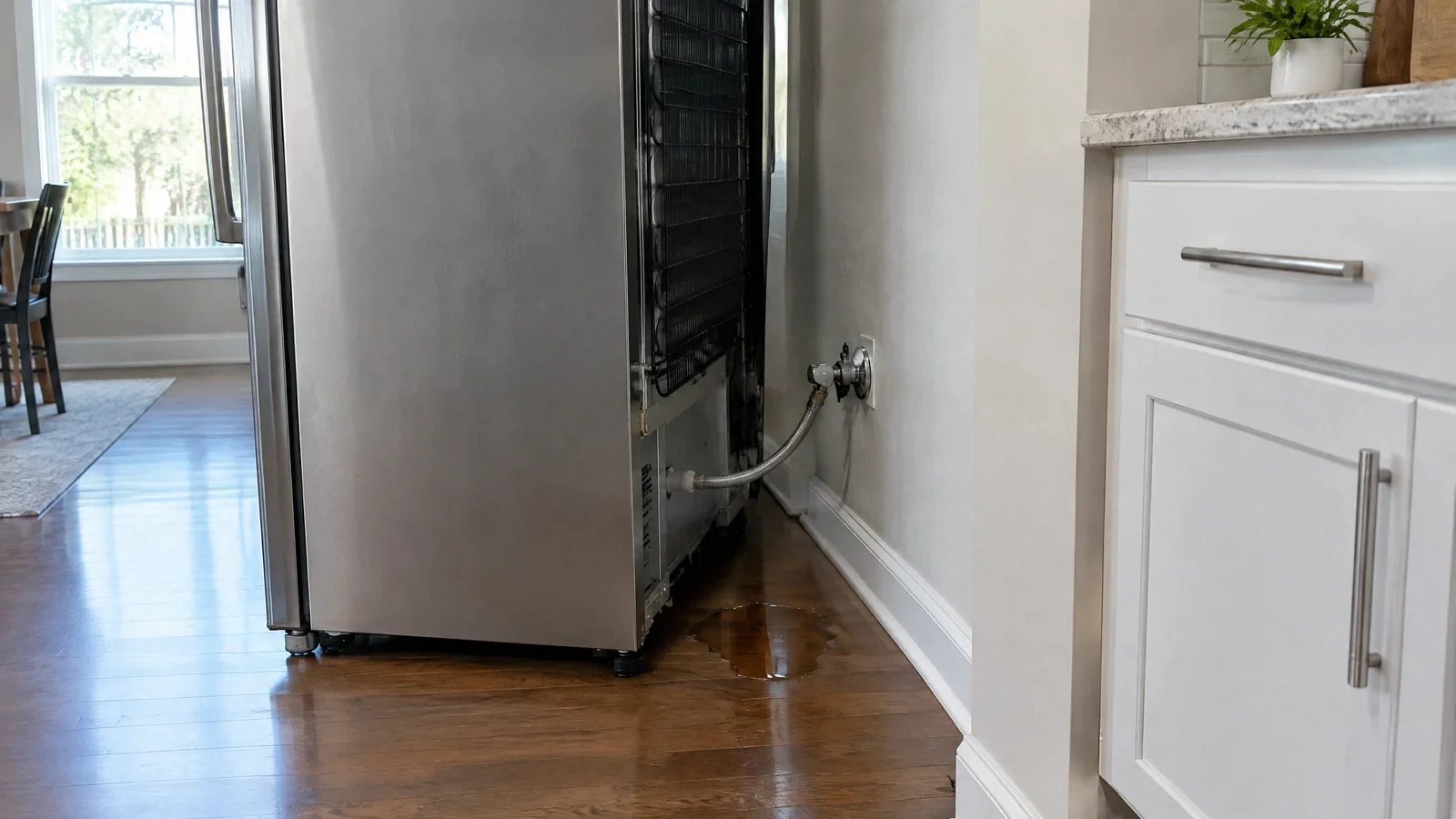
Water under a crisper drawer, near a filter housing or below the appliance can suggest different pathways. Record when it appears, whether the dispenser or ice maker was used and whether the freezer has unusual frost. These observations help a technician but do not prove the cause.
A spilled container or food package can be ruled out only if it is safely accessible. Dry a small accessible spill with the appliance and manufacturer’s safety instructions in mind. Do not remove interior panels or reach behind the refrigerator to investigate an unknown leak.
A blocked defrost drain
During normal operation, water from defrosting is directed through a drain system. Whirlpool notes that a blockage in the drain tube can cause water to collect inside the refrigerator and potentially reach the floor. The drain layout differs by model.
Do not push a sharp object into an unknown opening or pour a chemical drain cleaner into the appliance. If water continues to accumulate, ask a qualified service technician to inspect the drain and explain the appropriate repair. A blockage is only one possible cause.
Filter and water supply connections
Models with a dispenser or ice maker may have a filter housing, tubing and supply connections that can leak. A recently replaced filter or a moved appliance may provide a useful clue, but a wet surface does not prove which connection failed. Refer to the exact model instructions.
Close a clearly identified water shutoff only if it can be reached safely without moving the appliance through water or approaching wet electrical equipment. Do not force a valve. A damaged line or inaccessible connection needs qualified attention.
Condensation and doors
Warm, humid air entering a refrigerator can condense on cool surfaces. A door that does not close properly or frequent opening may contribute, while a damaged gasket or another operating problem may require service. Check the manufacturer’s guidance for your model.
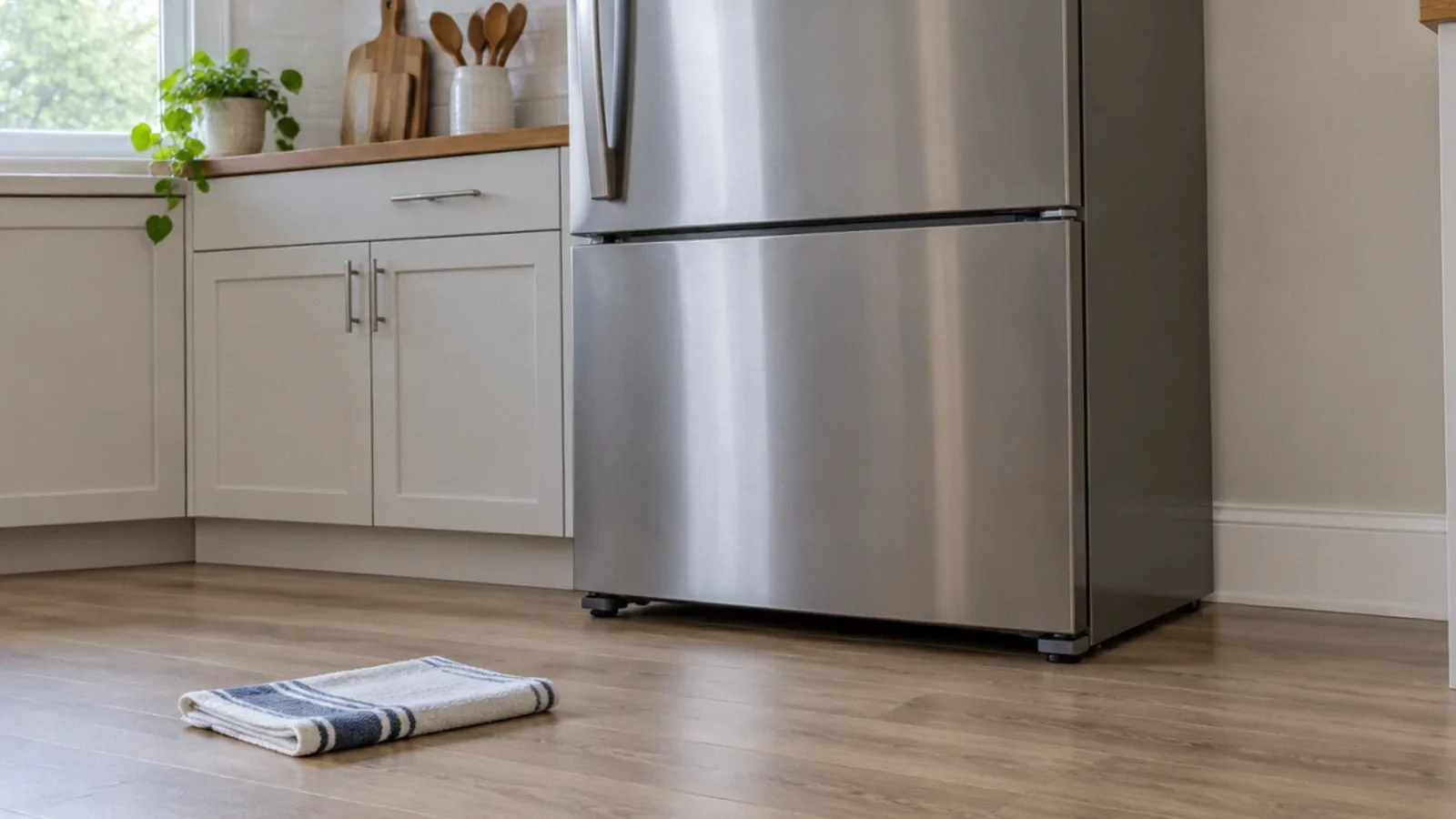
A level or installation issue can also affect where water collects. Do not assume that adjusting the feet will fix every leak, and avoid moving an appliance if the floor is wet or the supply line may be damaged. Ask a technician to assess uncertain conditions.
What to tell the technician
Provide the make and model, the location and timing of water, recent filter changes, any unusual frost and whether the appliance is cooling normally. Mention if the water supply was shut off or if the refrigerator was recently moved. Do not reproduce a leak by operating equipment in an unsafe area.
Ask what inspection is included, whether the appliance must be moved and how the work will protect the floor and supply line. Request a written explanation of the finding and any proposed replacement part. A part should match the actual model.
Check the floor and cabinet
Water that reaches the floor can migrate beneath the appliance, flooring or cabinets. The visible puddle may be smaller than the affected area. Once electrical hazards are controlled, ask a professional to assess hidden materials if moisture has persisted or damage is visible.
A repair to the refrigerator stops only the appliance source. Wet subflooring, cabinetry or wall material may require separate drying or repair. Document damage when safe and contact the property manager or insurer if appropriate. Keep the service report and receipts.
Preventing another leak
Follow the manufacturer’s instructions for filter replacement, cleaning and ventilation around the appliance. Keep food from obstructing any model-specific drain opening when instructed by the manufacturer. Inspect accessible areas for recurring water without pulling the appliance or disturbing connections.
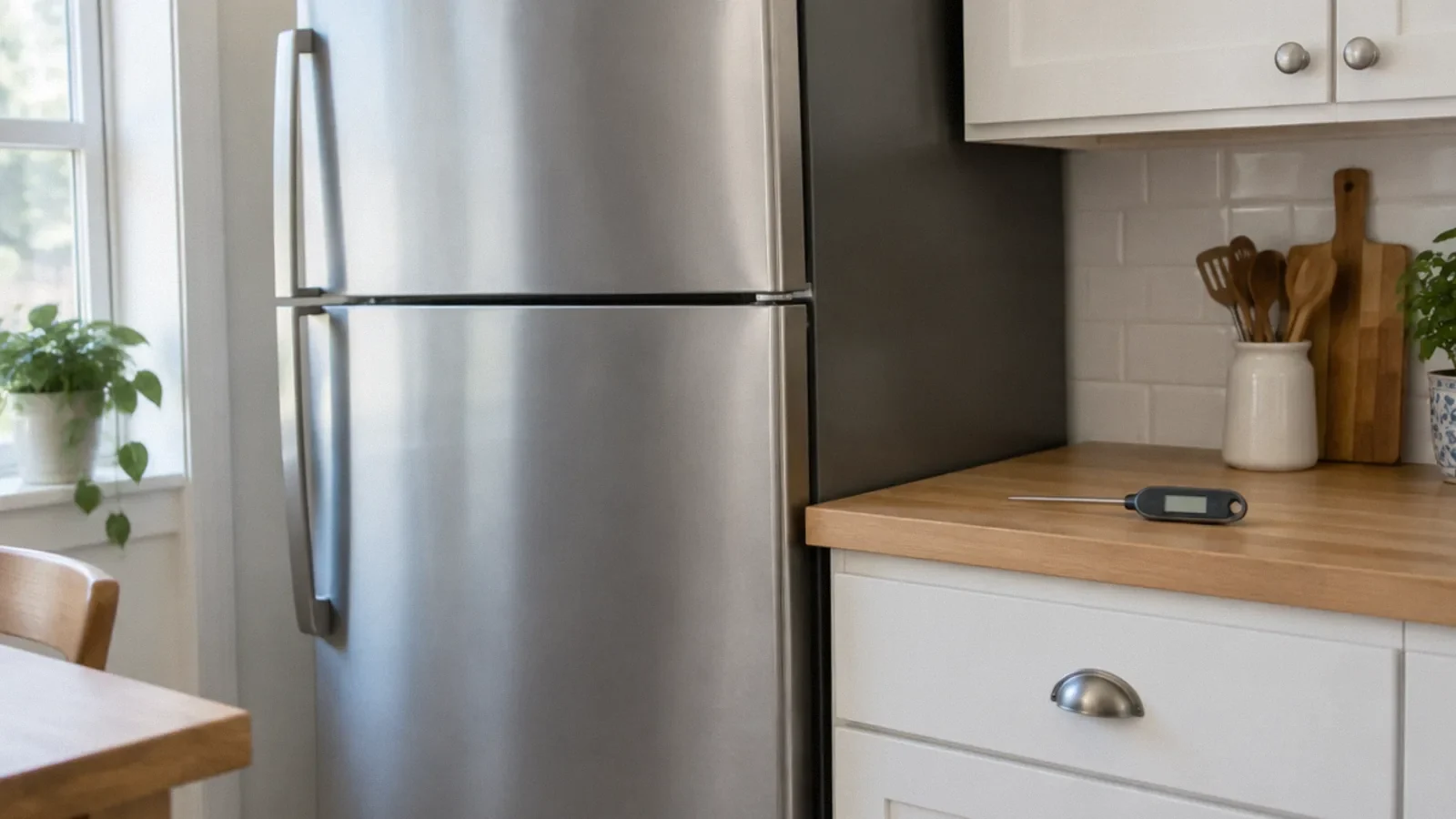
Keep a thermometer in the refrigerator and maintain safe food temperatures. If water returns after service, contact the technician with the timeline rather than repeatedly running tests around wet electrical equipment. Address both the appliance fault and any affected building materials.
Stop an active water supply when it is safe
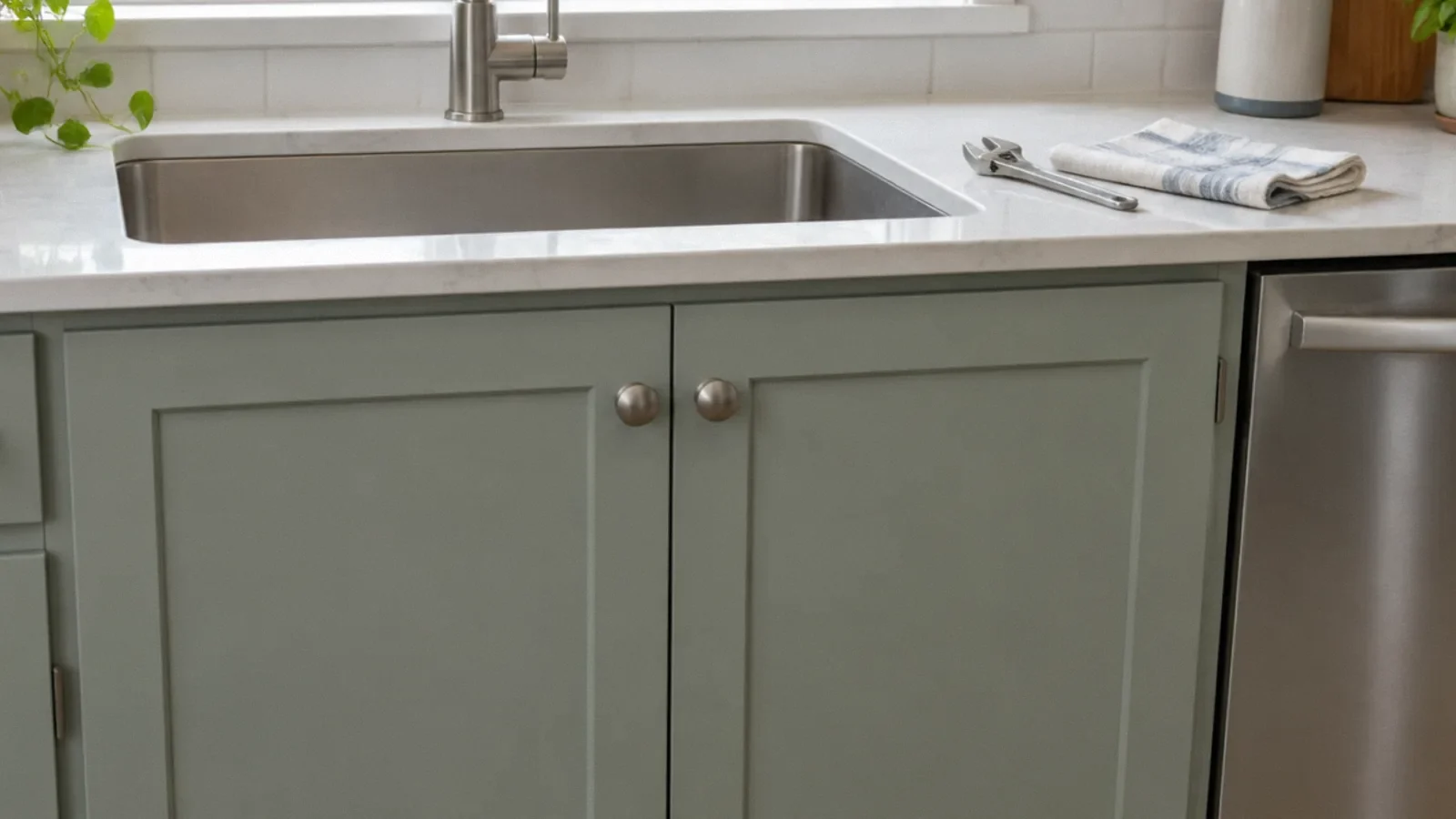
A refrigerator with an ice maker or dispenser may have a dedicated supply valve under a sink, in a cabinet or in another accessible location. Close a known valve only if it can be reached safely, without entering water near electricity or moving a heavy appliance. If the source is unclear or the valve is inaccessible, contact a plumber or appliance technician.
Not every puddle comes from the supply line. A blocked defrost drain, condensation or another source may continue after that valve is closed. Record when water appears and have the cause verified before assuming the appliance and floor are dry.
Food safety if the refrigerator loses power
If power must be disconnected, keep the doors closed while arranging a safe alternative. FDA says an unopened refrigerator generally keeps food cold for about four hours during a power outage; actual conditions and food temperatures matter. Transfer perishables to a safe cold source when needed.
Follow current CDC and FDA guidance and discard food held above a safe temperature for too long. Never taste food to determine whether it is safe. Note the time power was interrupted and use an appliance thermometer when assessing temperatures.
Compact refrigerators and straightforward checks
A mini refrigerator may have a different drain, drip tray and door arrangement from a full-size model; not every compact refrigerator has a water supply line. Consult the exact model’s manual. If safely accessible and the manufacturer permits it, remove spilled food or packaging obstructing an opening, clean the door gasket as directed, and check that nothing prevents the door closing. Inspect an accessible drip tray or drain only as the manual allows. Do not remove panels or move a heavy appliance through water.
Dry the accessible area and observe during normal operation without leaving water running or recreating unsafe conditions. If the area stays dry and the appliance cools normally, that is useful evidence that the simple cause was addressed, although it does not prove hidden flooring is dry. Water returning, a damaged gasket, an inaccessible drain, unusual frost, poor cooling or uncertain electrical safety calls for an appliance technician. A plumber may be needed for an identified supply-line fault.
For a leak centered on the supply connection, see the refrigerator water line leaking guide. For water originating in a freezer compartment, see the freezer leaking water guide. These cases can overlap, so describe the location and timing rather than assuming the cause.
Your next-step checklist
- Stay away from water near electrical connections.
- Note where and when water collects.
- Use the exact model instructions.
- Contact a technician for recurring or inaccessible leaks.
- Assess the floor and cabinets if water has spread.
Related questions
Why is there water inside my refrigerator?
A blocked defrost drain, filter connection, condensation or another issue may be involved. The model and location of the water matter.
Can I use chemical drain cleaner in the refrigerator?
Do not pour drain cleaner into an appliance. Follow its manual and arrange service for a blocked or inaccessible drain.
Should I pull the refrigerator away from the wall while water is on the floor?
Avoid moving a heavy appliance through water or reaching wet electrical connections. Seek qualified help if isolation and access are unsafe.
What if the floor remains damp after the leak is fixed?
Water may have reached layers beneath the floor or cabinets. Arrange a separate assessment and drying plan if needed.
Why might a refrigerator leak water onto the floor?
Water can travel from an internal drain, supply connection, filter housing or another source. Keep clear of wet electrical equipment and arrange service.
Why is my refrigerator leaking water onto the floor?
A supply line, filter, defrost drain, condensation or another issue may be responsible. Avoid electrical hazards and have the source identified rather than assuming the visible location identifies the fault.
Why is there water under a chest freezer?
Water may be meltwater from thawing or defrosting, condensation, a spill or another source. Check the model manual for the location and seating of an accessible defrost drain plug and inspect the door seal only if safe and permitted. Keep away from water near electrical equipment; do not move the appliance through standing water. If the source or cooling is uncertain, arrange service.
Sources & context
Public guidance supports the principles in this article. The practical questions and examples are editorial interpretation, not a site assessment or a coverage decision. State-specific rules apply only where identified.
- Whirlpool: Refrigerator leaking watermanufacturer guidance
- Whirlpool: Water inside a refrigeratormanufacturer guidance
- CDC: Keep food safe after an emergencyfederal health guidance
- Whirlpool: Ice maker leaksmanufacturer guidance
- FDA: Food and water safety during power outages and floodsfederal food safety guidance
- GE Appliances: Ice under the freezer basket and defrost-drain troubleshootingmanufacturer guidance