A dry-looking wall can contain soaked insulation. Identify the insulation type and how far water traveled before deciding what to retain. EPA’s clean-water guidance recommends replacement of wet fiberglass and cellulose insulation; framing and the rest of the cavity still need assessment and drying.
Why the wall face can mislead
Insulation lies in a concealed space with different airflow and temperature from the room. Water from a pipe or roof can enter the cavity without uniformly soaking the visible drywall. Conversely, the drywall face may dry while material behind it remains wet. A room-side touch test therefore answers very little about the insulation.
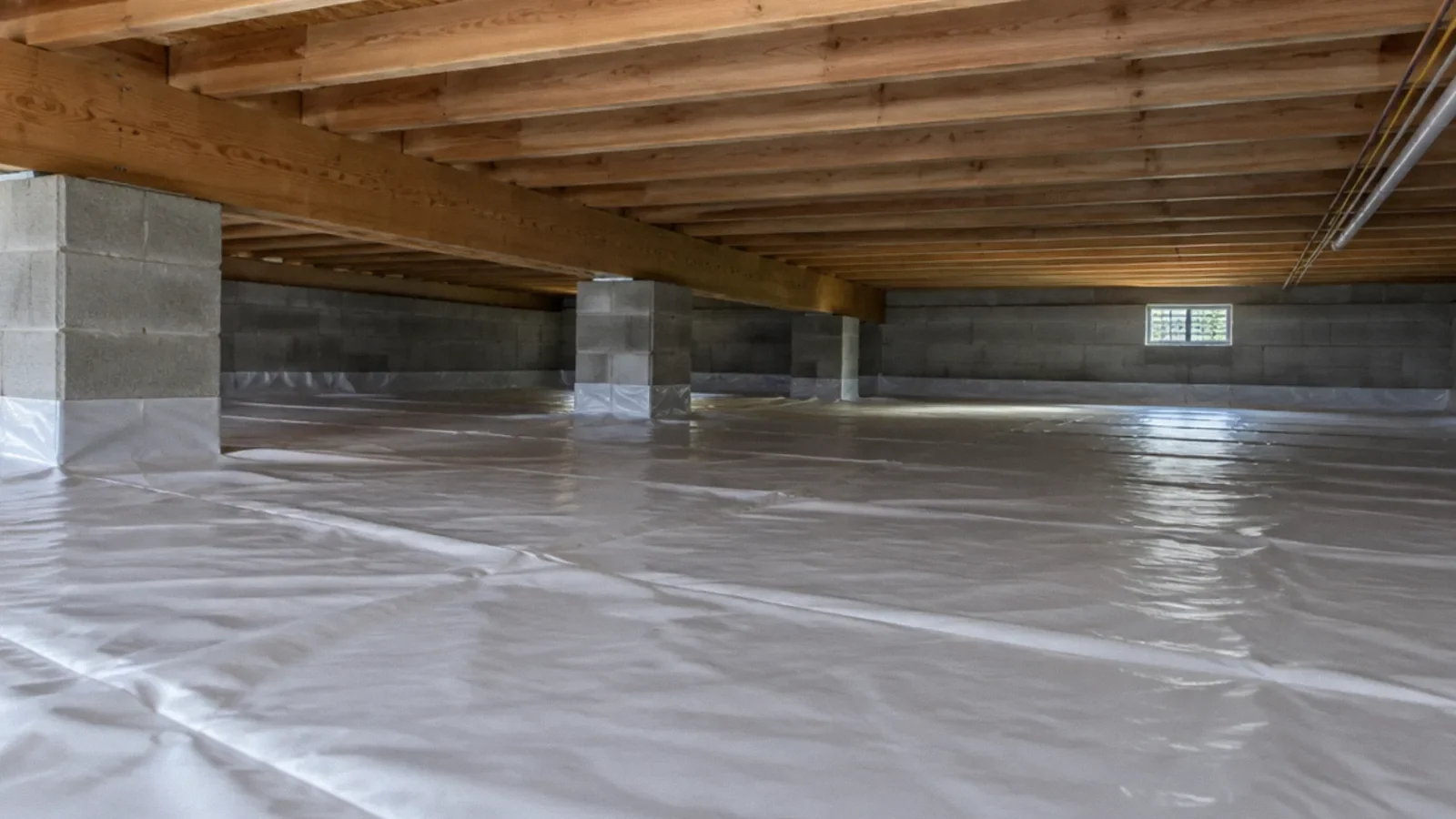
Start with the leak route and the construction. An exterior wall, an interior partition, an attic floor, and a crawlspace each have different access and moisture-control layers. Ask the assessor to identify which of those layers were actually wet and which remain uninspected.
What can the pink material in a wall be?
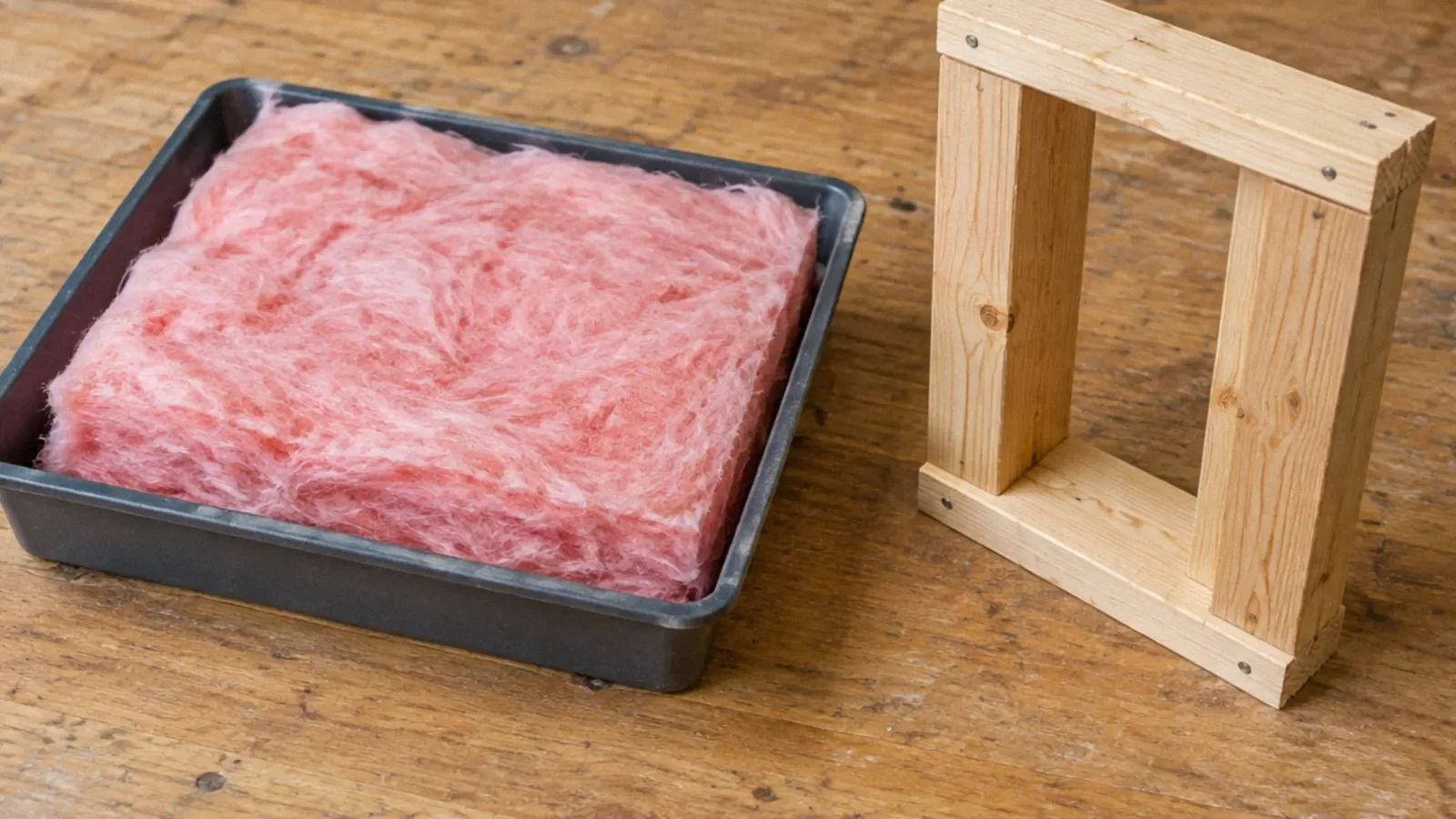
Pink fluffy material in a wall can be fiberglass insulation, but color alone does not identify the product or rule out other materials. The Department of Energy has documented pink fiberglass as one commercially available insulation. Do not touch, pull or disturb an unknown material simply to identify it.
If material is wet, treat the water source and the surrounding assembly as separate questions. EPA’s clean-water table recommends replacing wet fiberglass and cellulose; another product or contaminated exposure requires its own assessment. Before opening an older wall, consider electrical wiring and materials that may require specialist evaluation.
Identify the product before discussing reuse
Fiberglass, cellulose, mineral wool, rigid foam, and spray-applied foam are not interchangeable. Facings and surrounding materials also matter. A product that absorbs little water can still conceal wet wood or contaminated surfaces behind it. Do not convert a general statement about one insulation family into a salvage rule for the whole cavity.
EPA’s clean-water response table specifically lists wet fiberglass and cellulose for disposal and replacement. Use that as a starting point for those materials. For other systems, obtain the product-specific instructions and evaluate exposure, contamination, physical condition, attachment, and access to neighboring layers.
Removal creates a second inspection opportunity
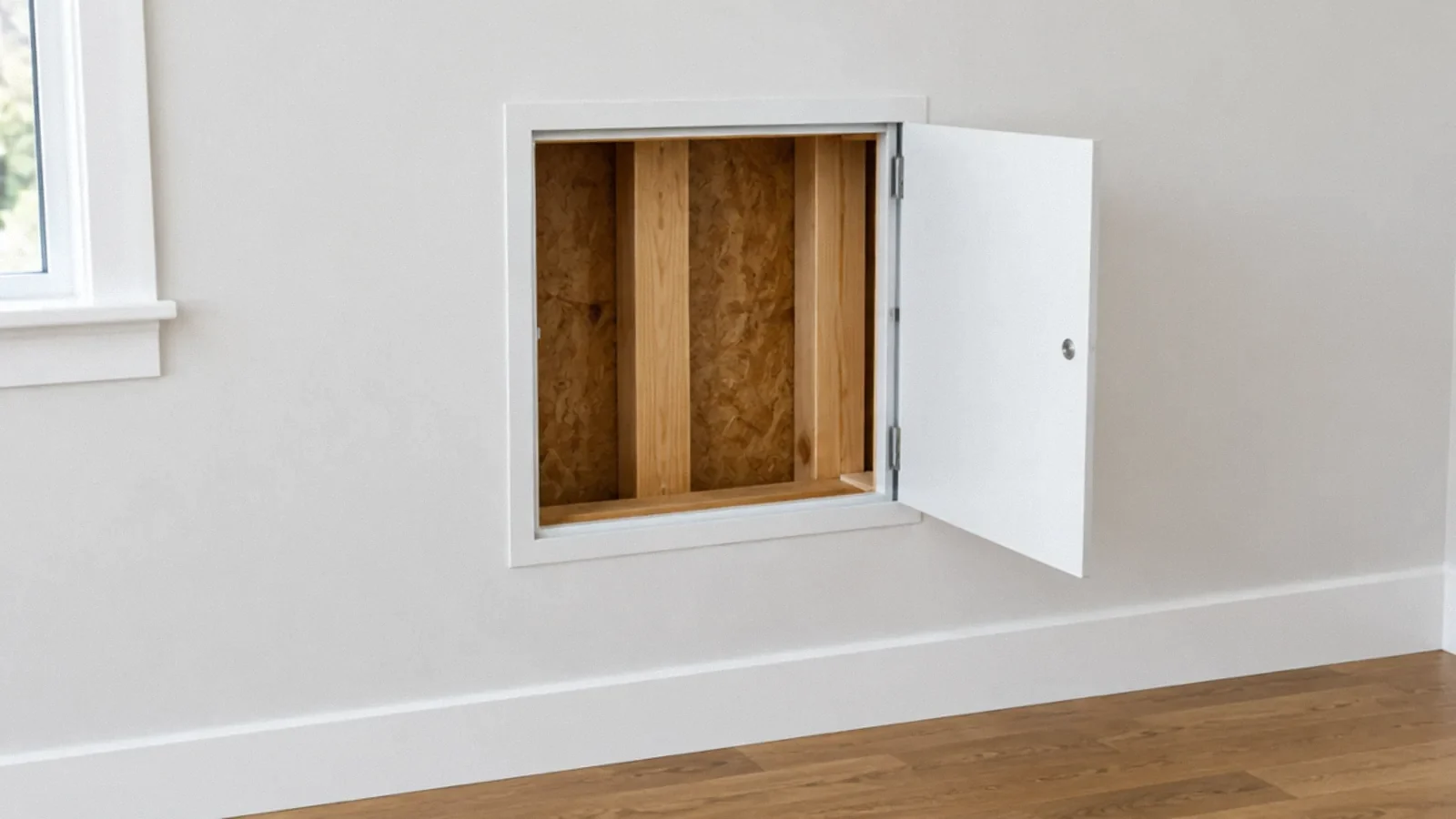
When wet insulation is removed, document the framing, sheathing, drywall back, and bottom or top plates before reconstruction. Look for the extent of the wet pathway and areas where water could have traveled laterally. Newly exposed conditions can change the initial drying boundary.
Have the crew record whether mold, debris, or deterioration changes the cleanup plan. Do not direct strong airflow into an opened cavity with unknown contamination. Source control, cleanup controls, and electrical safety precede simply adding a fan.
Dry the retained assembly before installing replacement
New insulation can obstruct access and change the drying path of retained framing or sheathing. The replacement schedule should follow evidence of suitable conditions, not the availability of the insulation installer. Request readings from the actual retained materials, along with the instrument method and comparison basis.
A statement that the old batt was removed does not establish that the wood behind it is ready. Similarly, a low room humidity reading cannot stand in for cavity measurements. Clarify who will accept the retained assembly and communicate that acceptance to the reconstruction crew.
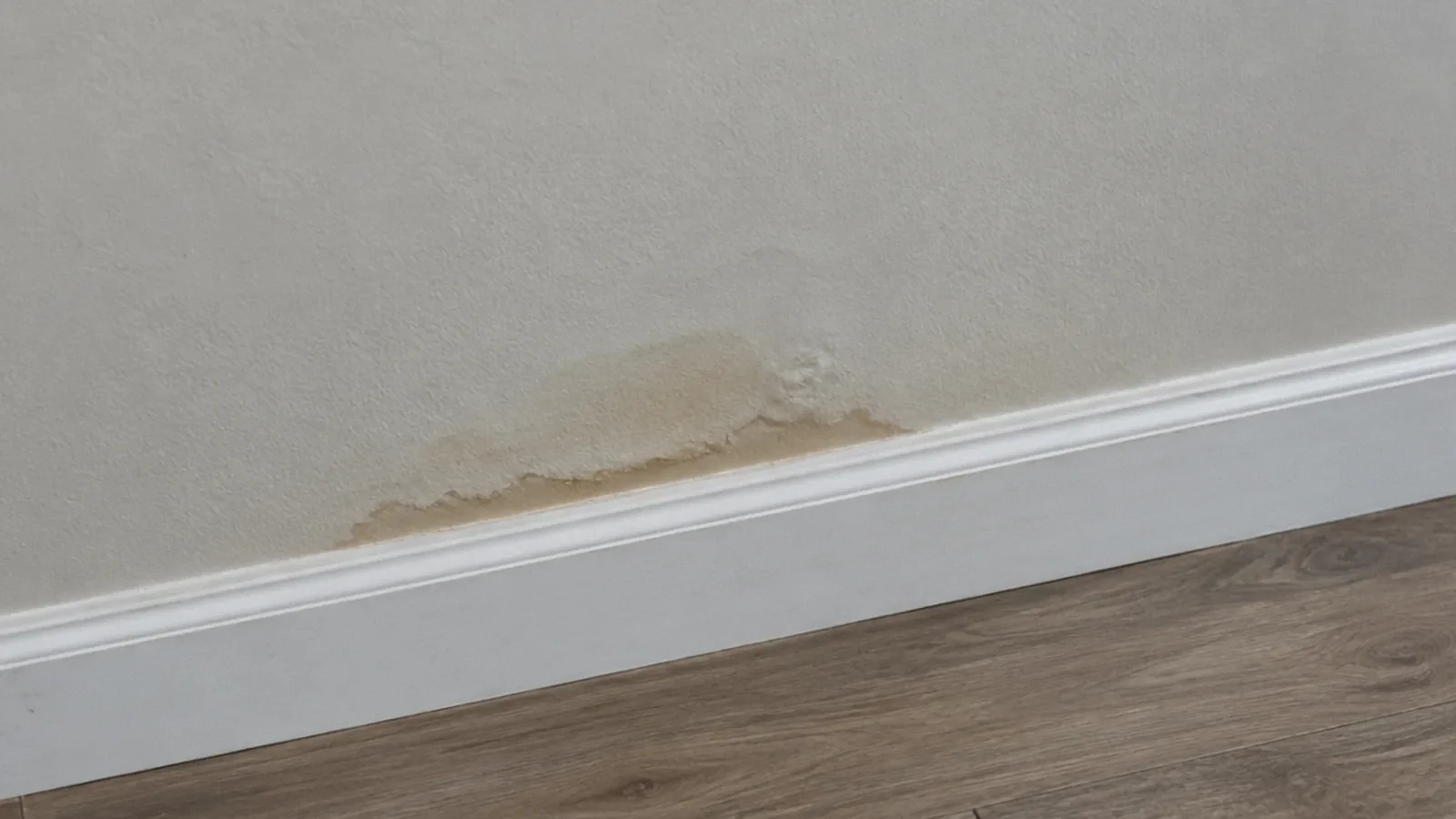
A dry drywall face beside a soaked batt
In a kitchen leak that runs down an exterior wall, a local drywall face may dry while the batt behind it remains affected. A fan in the room changes the exposed environment without necessarily reaching the batt or the sheathing. This explains why the cavity decision can differ from the finish decision.
Ask the crew to name the inspection points along the water path, including the bottom of the cavity where water may collect. If wet insulation is removed, record the boundaries rather than assuming the next bay is unaffected. Openings between bays or around services can allow travel.
For loose-fill insulation, the problem can include displacement and uneven coverage as well as moisture. Replacement should restore the intended thermal coverage and avoid leaving concealed gaps. For foam or other systems, obtain the actual product and assembly guidance rather than borrowing the fiberglass recommendation unchanged.
A stop condition before insulation replacement is retained sheathing or framing that has not met its appropriate goal, continuing source entry, or unresolved contamination. Installing new material can make those areas harder to revisit. Conversely, once the retained assembly is accepted and the correct detail is selected, the new insulation can be installed without waiting for an arbitrary extra number of days.
Keep the installation detail and photographs for later reference. If the same cavity becomes wet again, knowing what type of insulation and control layers were installed will make the next investigation more focused.
Restore moisture controls deliberately
Removing insulation may disturb air sealing, vapor-control layers, and fire or sound details. Rebuilding should restore an appropriate assembly for the building and climate. Adding plastic because it seems protective can restrict drying in an unsuitable location. EPA’s moisture-control guidance addresses these interactions at the assembly level.
For a recurring problem, determine whether the cause is liquid leakage, groundwater, air leakage and condensation, or some combination. Replacement insulation alone does not correct a drainage failure or an uncontrolled humid-air path. Document the source repair separately from the material replacement.
Different insulation, different decisions
Pink fluffy wall material is often fiberglass batt insulation; the color is a clue, not identification. Do not disturb unknown insulation. A label, construction record or professional inspection can establish the product. Wet fiberglass and cellulose should be replaced under EPA’s clean-water table, which addresses prompt response to clean water. Sewage, prolonged wetting or visible mold requires a different assessment.
Drying a surface does not establish that concealed sheathing or framing is dry. Ask the professional which cavities were checked, how the moisture source was corrected, and what evidence supports closing the wall. For the separate question of wet spray foam, product and assembly details matter.
Your next-step checklist
- Identify insulation type, facing, location, and surrounding assembly.
- Record how the wet extent was checked beyond the visible stain.
- Photograph retained framing and sheathing after removal.
- Require suitable retained-material conditions before installing replacement insulation.
- Restore appropriate air, vapor, fire, and sound-control details rather than adding layers by guesswork.
Related questions
Can a heater dry insulation through intact drywall?
The visible surface may warm without providing an effective drying path for the concealed material. A heater does not establish that wet insulation is suitable for reuse or that adjacent wood is dry.
If insulation has dried, does it automatically work as before?
No. Evaluate product type, physical condition, contamination, and installation. Dryness alone does not establish restored performance or suitability.
Should all insulation in the room be removed?
The scope should follow the actual exposure and access needs. Ask the assessor to distinguish verified unaffected areas from concealed areas that were never checked.
Should replacement insulation match the old material exactly?
Not automatically. The repair should restore an appropriate assembly and required performance. If a different material is proposed, have the responsible professional explain compatibility, moisture behavior, fire requirements, and installation details. A change chosen only because it sounds water-resistant may create another problem.
Is pink insulation ruined if it gets wet?
Color does not identify the product. EPA’s clean-water guidance recommends replacement of wet fiberglass and cellulose; have the actual material and surrounding assembly assessed.
Sources & context
Public guidance supports the principles in this article. The practical questions and examples are editorial interpretation, not a site assessment or a coverage decision. State-specific rules apply only where identified.
- EPA: Table 1, Water Damage Cleanup and Mold Prevention (clean-water material guidance)official
- EPA: Moisture Control Guidance, Chapter 1 (moisture transport and whole-assembly control)official
- U.S. Department of Energy: Mineral fiber insulationofficial building science
Community questions behind this topic
These discussions helped identify reader concerns. They are anecdotal, not technical or legal authority.