Old plaster is not the same as paper-faced drywall. Some wet plaster can be preserved, but loose ceilings, failed attachment, contaminated cavities, and damaged lath require careful assessment. Keep people away from unstable overhead material and consult someone familiar with the actual plaster assembly.
Identify how the plaster is supported
Traditional plaster can be held by wood lath and plaster keys, or by other backing systems. NPS explains how plaster pushed between wood lath forms keys that help hold it in place. Water damage can involve the finish, the backing, attachment, and framing differently.
A stain alone does not establish that the entire plaster surface must be removed. Nor does a hard surface establish secure overhead attachment. The assessor should identify the assembly and examine cracking, bulging, separation, and other signs relevant to safety and repairability.
Do not disturb an unassessed ceiling
Wet or loose overhead plaster can fall. Avoid pressing, tapping, puncturing, or standing beneath suspicious areas to test them yourself. If movement or sagging is visible, clear the area and arrange stabilization and assessment. Electrical systems above or within the ceiling need their own consideration.
Historic finishes may also contain layers requiring hazardous-material assessment before cutting or sanding. Planning access around those conditions protects both occupants and the material that may be worth preserving. Fast demolition is not automatically the best or safest preservation response.
Dry the assembly without assuming surface recovery
Plaster can cover lath, framing, insulation, or masonry that remains wet after the surface changes appearance. Determine where water traveled and which layers can be inspected. A moisture meter must be used and interpreted for the actual material; a wood-scale percentage applied to plaster is not automatically plaster moisture content by weight.
Use a combination of condition assessment, suitable measurement, and drying observation. EPA’s moisture guidance addresses the limitations of scales and the need to understand assemblies. Gentle controlled conditions may be appropriate, but an aggressive heat prescription should not be copied from a different material.
Preservation and safety can support the same plan
NPS flood-resilience work evaluates traditional materials and assemblies rather than assuming all wet historic finishes are disposable. That supports a careful salvage assessment, not a guarantee that any individual ceiling will survive. Retention should be based on attachment, cleanability, condition, and a viable drying path.
A plaster specialist can distinguish localized repair from broad replacement and identify compatible materials. Replacing a small area with an incompatible system may create movement or finish problems. Document the proposed method and what evidence would change the salvage decision.
A preservation decision with clear limits
Consider a localized roof leak over a plaster ceiling. The finish has a stain, but the attachment condition is not yet known. A competent assessment separates that cosmetic evidence from possible loose keys, wet lath, affected framing, and damaged insulation above. The source repair should be verified while the ceiling is evaluated for safe retention.
If the plaster remains sound and the concealed assembly can be appropriately addressed, targeted repair may preserve more original material than wholesale replacement. If attachment is failing, stabilization or removal may be needed regardless of how valuable the finish is. The decision should document those conditions rather than appeal only to age or appearance.
Plaster over masonry raises different moisture and attachment questions from plaster on wood lath. A repair method selected for one should not be transferred without examining the backing. Historic buildings may also contain several generations of patches, coatings, and altered cavities that change their drying behavior.
Evidence before painting and decorative restoration
Ask for photographs identifying the boundaries of retained and repaired plaster, the inspected backing, and any stabilization work. Record the measurement method used on plaster and wood separately. A wood-scale number on a mineral finish should be interpreted appropriately, not compared directly with a joist reading.
Before decorative work begins, confirm that the finish is suitably dry and stable for the selected materials. Paint compatibility and the condition of previous coatings can affect the repair. The relevant specialist should set those prerequisites; a generic wall-paint schedule cannot establish them.
A stop condition is new bulging, loose material, or continuing water entry. Another reason for reassessment is an expanding stain after the source was supposedly corrected. A preservation approach does not mean waiting beneath an unstable ceiling or retaining every fragment regardless of condition. It means identifying what can be safely and appropriately saved, correcting the water mechanism, and using a repair compatible with the surviving assembly. That balance should remain visible in the written scope and final record.
Finish only after the source and substrate are resolved
Painting can hide a stain before the underlying problem is finished. Require the source repair, cavity condition, attachment assessment, and suitable moisture state to be addressed first. Keep photographs and any areas of uncertainty in the record.
If damage returns after rain or fixture use, investigate recurrence rather than treating it as a cosmetic failure. Historic material preservation is best served by correcting the water mechanism, not repeatedly patching the point where it becomes visible.
Visible clues and what they can mean
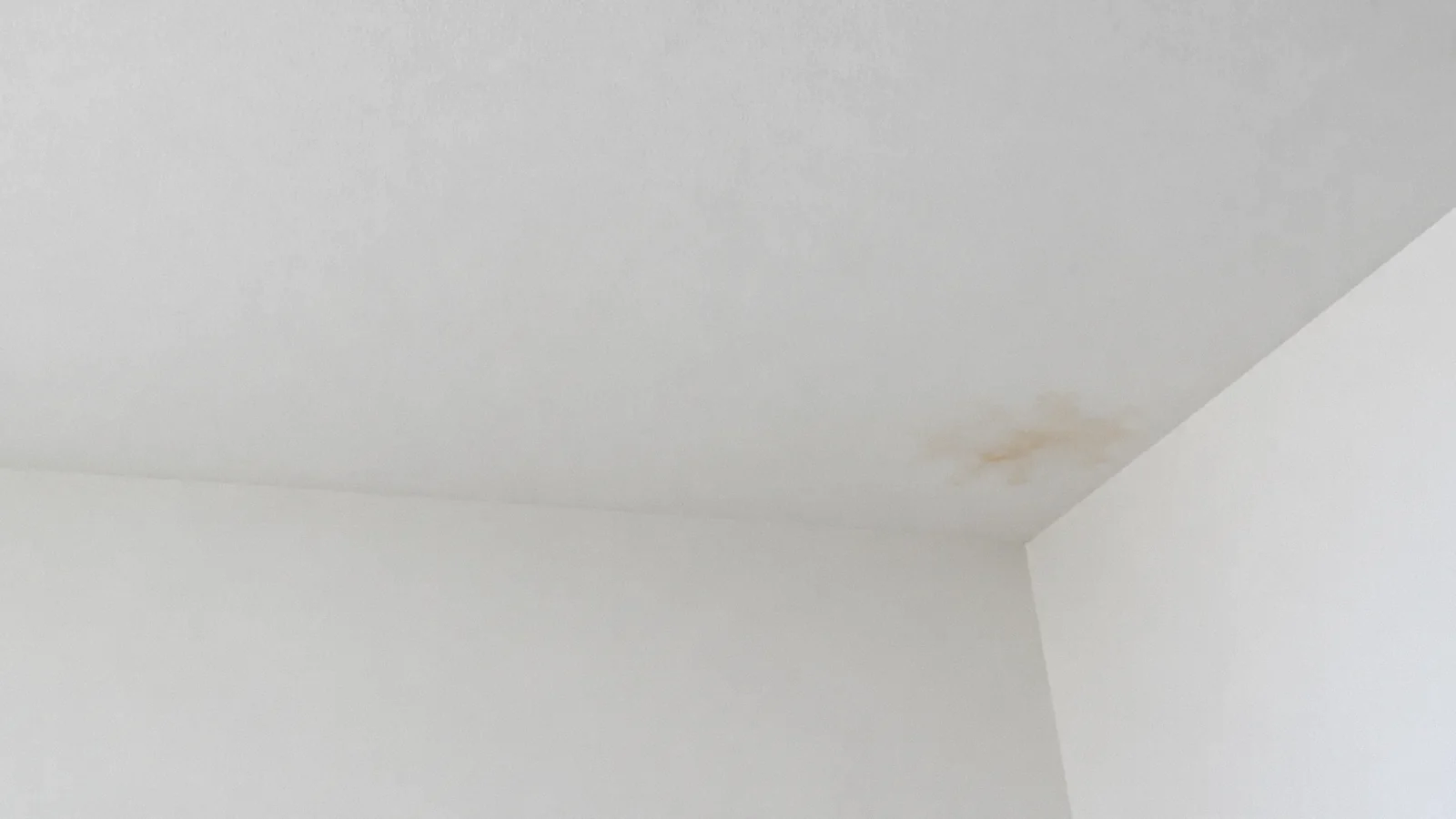
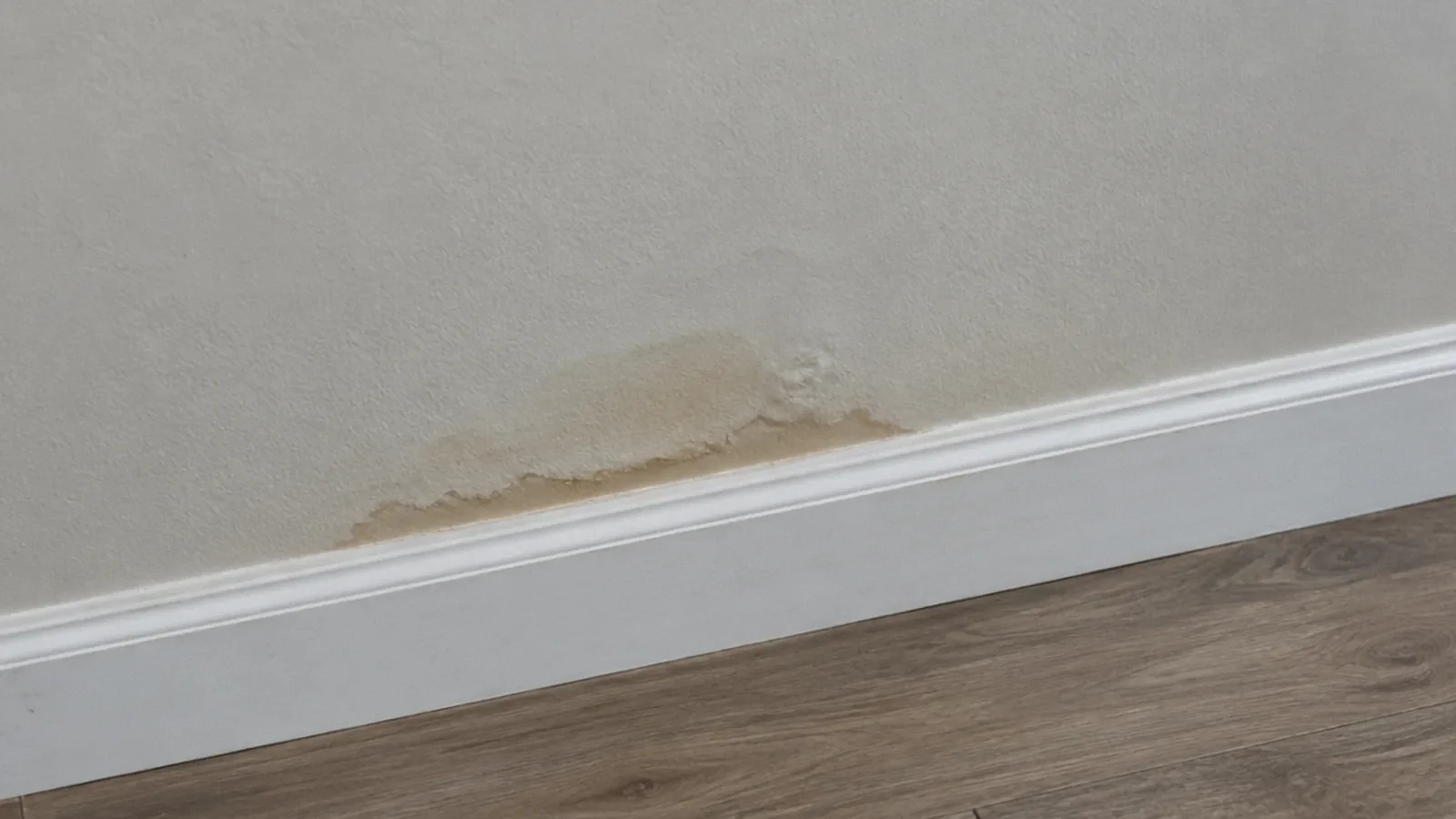
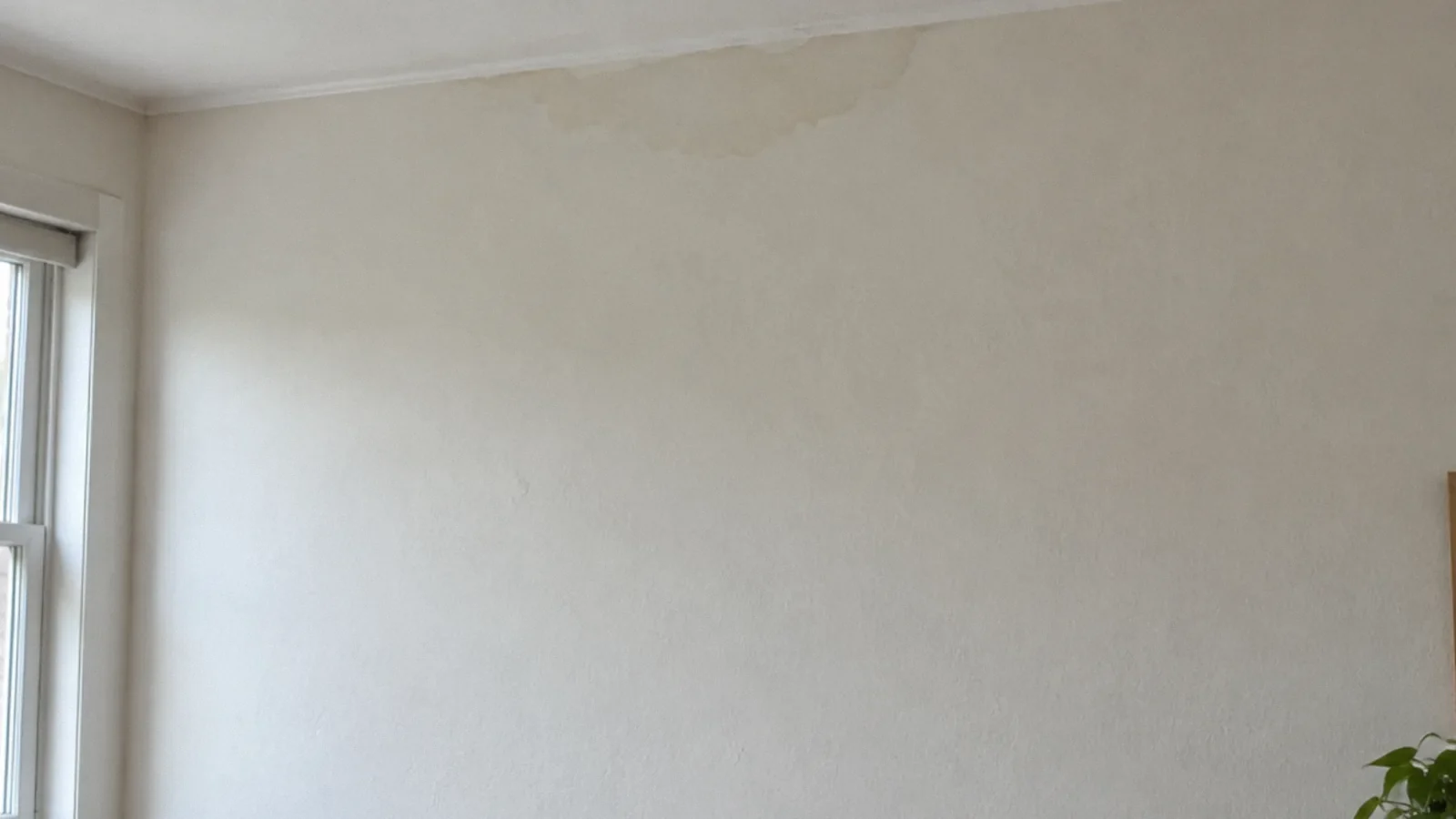
Water damage on plaster can appear as a spreading yellow or brown stain, bubbling or peeling paint, a soft or crumbling finish, cracks, bulging or separation from the backing. These are clues, not proof of a particular leak or mold. Compare the location and timing with rain, plumbing use and prior photographs, and report changes.
Keep clear of bulging walls and especially sagging ceilings. Do not press or scrape them; a specialist can assess attachment, concealed layers and the water source. A small old stain on stable plaster may need a different response from active wetness or loose material. See the separate plaster mold guide for that distinct issue.
Your next-step checklist
- Identify plaster backing and attachment rather than assuming drywall construction.
- Keep people away from bulging or loose overhead areas.
- Plan inspection around utilities and potentially hazardous old finishes.
- Evaluate retained plaster, lath, framing, and cavity moisture separately.
- Use a compatible repair after source correction and condition acceptance.
Related questions
Must all flood-wet plaster be discarded?
No blanket conclusion is justified. Contamination, attachment, backing, physical condition, and the ability to clean and dry the assembly determine the options.
Does a moisture meter work on plaster?
Some instruments support appropriate scales or comparative use, but interpretation matters. Record the method and avoid treating an arbitrary wood-scale reading as plaster moisture content.
Can I repair the stain before the ceiling is assessed?
Do not conceal a potentially loose or wet assembly. Assessment and stabilization, if needed, come before finish repair.
What are signs of water damage on plaster walls?
Staining, bubbling finishes, cracking or bulging can be clues, but they do not establish the source or attachment condition. Avoid disturbing loose material and arrange assessment.
Sources & context
Public guidance supports the principles in this article. The practical questions and examples are editorial interpretation, not a site assessment or a coverage decision. State-specific rules apply only where identified.
- EPA: Moisture Control Guidance, Chapter 1 (moisture transport and whole-assembly control)official
- CDC: Reentering Your Flooded Homeofficial
- National Park Service: Plaster and Lathofficial
- National Park Service: Testing Traditional Materials for Flood Resilienceofficial
- Public safety and technical guidanceofficial guidance
- National Park Service: Should I replace my plaster ceiling?official preservation guidance
Community questions behind this topic
These discussions helped identify reader concerns. They are anecdotal, not technical or legal authority.