Wait until the storm threat has passed and authorities allow access. Stay away from fallen wires, unstable trees, floodwater and damaged structures. Once safe, document visible damage, notify your insurer or property manager and obtain a written assessment. Temporary protection and permanent repair are separate steps.
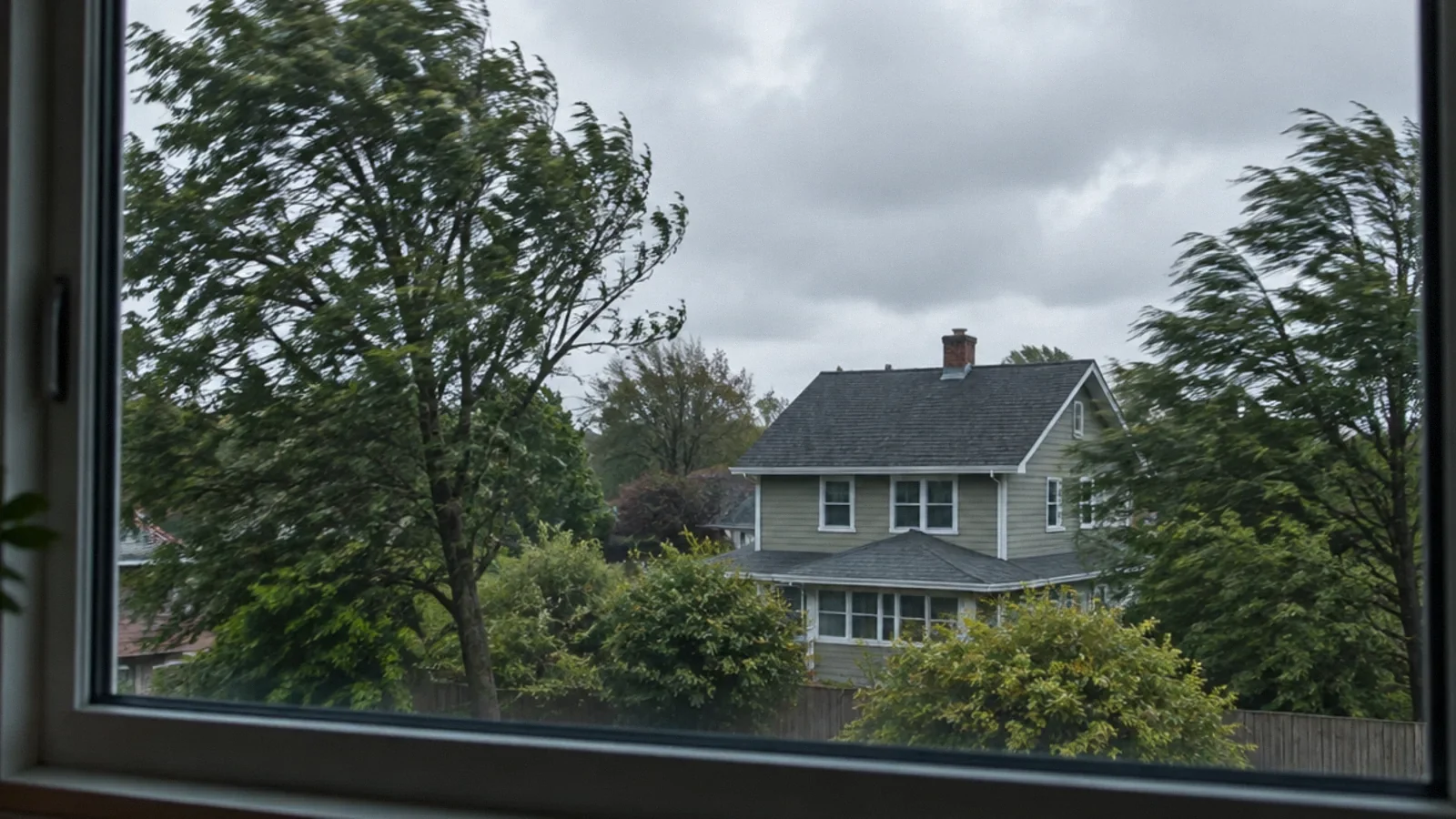
Do not go out while the storm is active
Continue monitoring local warnings and shelter instructions. A short calm period does not necessarily mean every hazard has ended; another storm band or wind gust can arrive. Follow evacuation or shelter orders and keep household members away from windows and damaged areas.
Do not climb onto the roof or go outside to retrieve debris during dangerous weather. If there is an immediate emergency, call 911 from a safe location. Protect people first and wait for qualified responders when the building or utilities may be unsafe.
Recognize electrical and structural hazards
Assume a downed power line is energized and stay well away from it and anything it touches. Report it to the utility or emergency services. A damaged wall, roof, chimney or ceiling can fail without warning; do not stand beneath it or enter a structure authorities have not cleared.
If gas may be leaking, leave immediately without operating switches, phones, appliances or vehicles near the suspected leak. Call 911 and the utility from a safe location. Never enter standing water to reach a breaker or touch wet electrical equipment.
Look for damage from a safe place
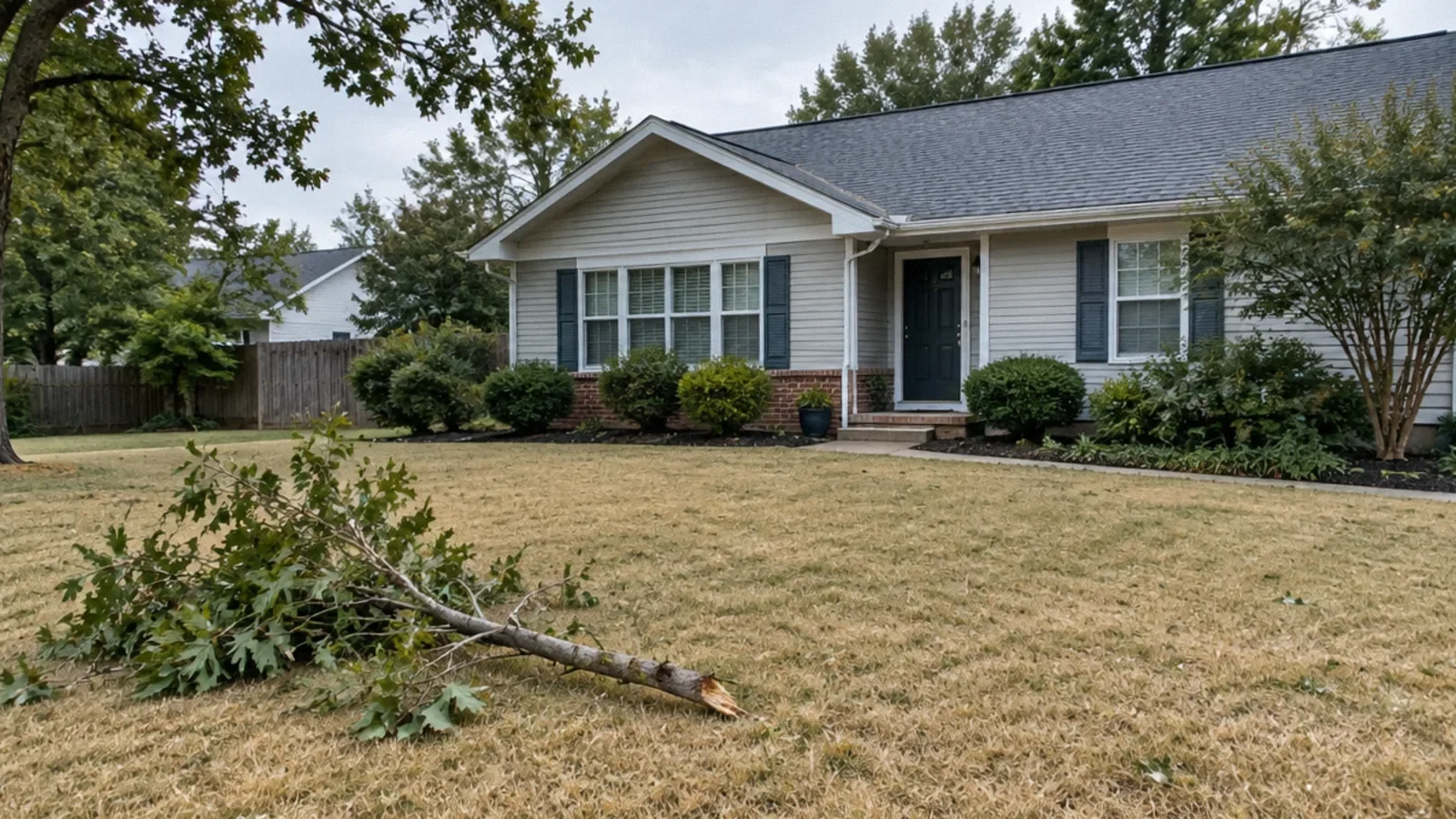
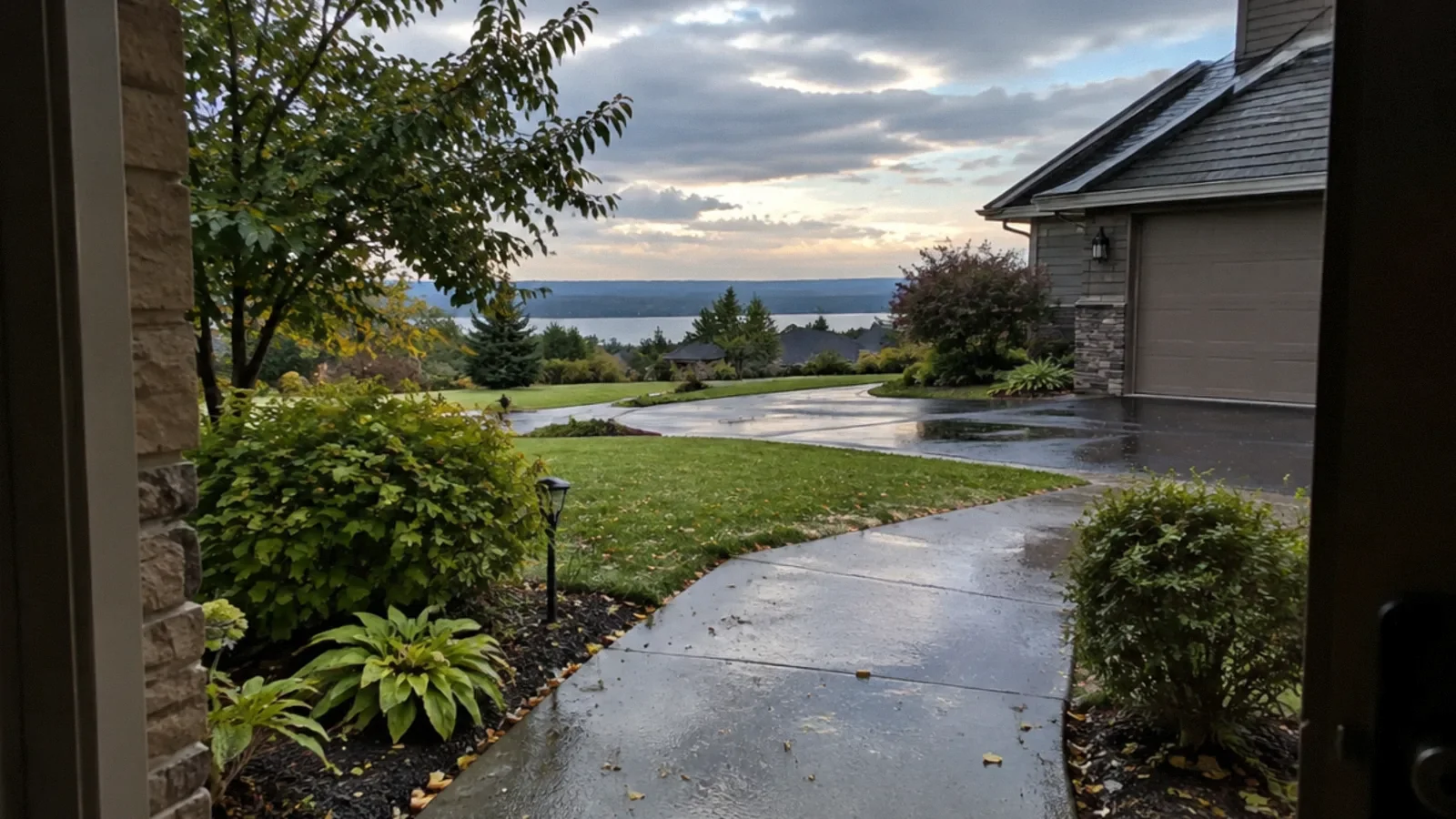
Once the area is declared safe, observe from the ground for displaced roofing, broken branches, damaged gutters, broken glazing or water entering through an opening. Take photographs only where access is safe. A ground-level view cannot establish the condition of concealed roof layers or framing.
Hail marks, a new leak or a fallen tree can have different repair implications. Record where you see a condition and when it was first noticed. A qualified professional can distinguish visible storm effects from older wear and identify areas that could not be inspected.
Water inside after a storm
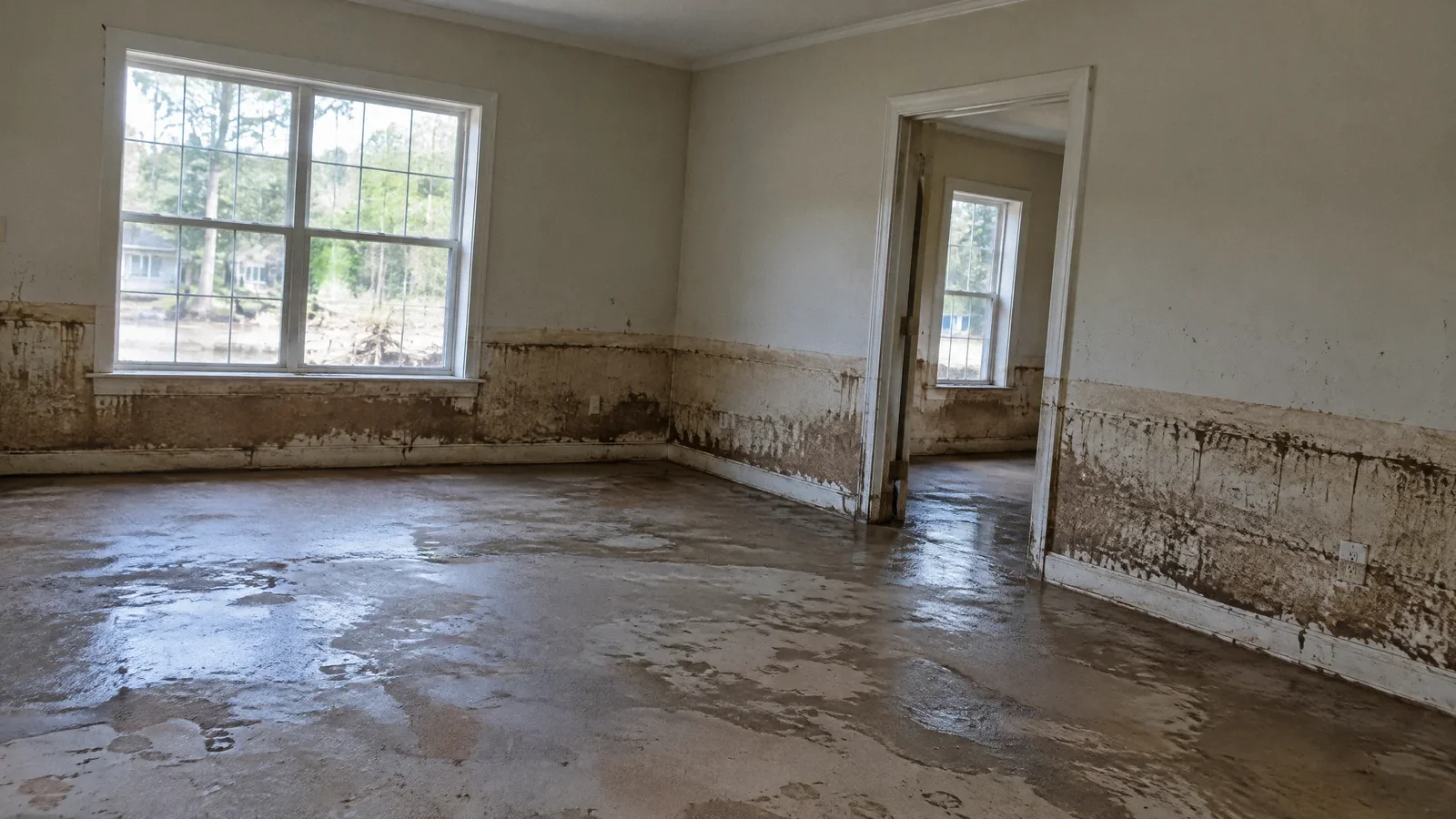
Rain can enter through a damaged roof, window, wall or foundation. Floodwater can also contain sewage, chemicals or other contaminants. Keep people and pets out of unsafe water and avoid electrical equipment near wet areas. Do not assume a small ceiling stain shows the full extent of water travel.
If the source is safely accessible, prevent additional water entry only within your abilities and local guidance. A professional can assess the water source, affected materials, cleaning and drying. A sagging ceiling may collapse; stay clear and do not puncture it.
Winter storms, hail and wind
Ice, snow, hail and wind can damage different parts of a property. Snow or ice on a roof adds fall and structural risks; do not attempt to remove it from an unsafe location. Follow local emergency guidance and ask a qualified contractor to assess the specific condition.
Hail damage depends on the material and impact. Not every visible dent proves that the entire roof must be replaced. Request a documented inspection of the covering, flashing, gutters and underlying areas when safe access is possible.
Notify the insurer or property manager
Report the loss promptly and ask about the policy’s documentation requirements, emergency protection and the claims process. Coverage depends on the policy, cause and facts; a general storm checklist cannot determine whether a particular loss is covered. Renters should also notify the owner or manager.
Keep photographs, reports, estimates, correspondence and receipts. Ask before discarding damaged items unless keeping them would create an immediate health or safety hazard. Do not delay emergency response merely to create a record.
Compare repair estimates
Request a written scope identifying what was inspected, what remains inaccessible, proposed temporary protection, material removal, drying and permanent repairs. A roof covering estimate may exclude tree work, interior drying or structural repairs. Confirm who is responsible for each part.
Ask how additional hidden damage will be documented and authorized, and review contractor credentials and insurance. The least expensive headline price may describe a smaller scope. Do not sign a document you do not understand or rely on pressure to make an immediate decision.
After repairs
Review the completed work against the agreed scope and request records of inspection, permits and moisture measurements where applicable. A dry-looking surface does not prove that insulation or a wall cavity is dry. Address the water pathway and any damaged drainage before closing concealed areas.
Watch for recurring leaks after later rain from a safe place and report them promptly. Keep the repair documents with your property records. If the storm exposed broader vulnerabilities, discuss prevention improvements with an appropriately qualified professional.
Cleanup after monsoon rain and wind
Monsoon cleanup may involve windblown debris, mud and flooding from the same storm. Wait for official clearance and distinguish ordinary yard debris from flood-contaminated material. Stay out of moving water and away from downed utilities; continued rain can create new hazards after the first storm passes.
For water that entered the building, follow the detailed guide to cleaning a house after a flood. The source, contamination and affected materials determine the cleanup and drying scope. Keep roof repairs, tree work and interior restoration separately identified in written estimates.
Your next-step checklist
- Wait for the all-clear and stay away from fallen wires.
- Avoid damaged structures, floodwater and wet electrical equipment.
- Document visible damage from a safe place.
- Notify the insurer or property manager.
- Compare written scopes for protection, drying and repair.
Related questions
What should I do first after storm damage?
Wait for official clearance, avoid electrical and structural hazards, and call emergency services for immediate danger.
Can I inspect a damaged roof myself?
Avoid climbing onto a damaged or wet roof. Observe from the ground and hire a qualified roofer for a safe inspection.
Does an estimate include interior drying?
Not always. Ask each provider to specify roof work, water removal, drying and interior repair separately.
Does insurance cover all storm damage?
Coverage depends on the policy, cause and circumstances. Ask your insurer about the specific loss.
Sources & context
Public guidance supports the principles in this article. The practical questions and examples are editorial interpretation, not a site assessment or a coverage decision. State-specific rules apply only where identified.
- National Weather Service: Safety after a stormfederal safety guidance
- National Weather Service: After a hurricanefederal safety guidance
- U.S. EPA: Flood cleanup safetyfederal guidance
- National Weather Service: Monsoon safetyfederal weather safety guidance