Stay clear until access is safe
Floodwater can conceal holes, debris, electrical hazards and contamination. Do not drive through it or walk across it to check a room, switch or drain. Follow evacuation and reentry instructions from public officials. If the building is surrounded by water, remain outside until the responsible authority says entry is safe.
The water level inside a building does not necessarily show the source or the full extent of damage. It may have entered through a doorway, moved through a crawl space or backed up through a drainage route. When it is safe to describe the situation, tell the responders when water appeared, how high it reached and whether it is still entering.
Water Damage Guard provides flood cleanup in Half Moon Bay from San Carlos. Call (650) 550-0619, 24/7, to discuss the property and any access restrictions. An assessment can be coordinated with the owner, public authority and other professionals responsible for the source or structural safety.
What the 2022 storm documented
Sewer Authority Mid-Coastside reported that Pilarcitos Creek overflowed into its wastewater plant on December 31, 2022, flooding buildings and treatment equipment. The authority’s later report also discussed problems in the wider conveyance system. Those systemwide findings should not be assigned to a particular neighborhood or home without evidence.
Half Moon Bay’s emergency declaration records that responders helped people from flooded homes and roads near Pilarcitos and Oak avenues during the same storm. This is a historical example of local impact, not a forecast for any address. Conditions vary with the route of water, ground elevation, public drainage and the characteristics of each building.
Keep the date, observed water path and any public notices with the property record. An official report of a past storm can provide context, but it cannot establish that a present leak came from the creek. A fresh investigation is needed to understand the event affecting the property now.
Flood maps are not a diagnosis
A city-hosted 2023 study for a particular Stone Pine site describes an approximate FEMA Zone A floodplain near Pilarcitos Creek. The study concerns that site and its model; it does not classify every parcel in Half Moon Bay. Use current official mapping for the actual address, and ask the appropriate floodplain or building staff if the designation or a proposed repair is unclear.
A map is one piece of information. Water can also collect outside mapped areas, and a mapped area does not explain the route by which water reached a particular room. Describe observations without entering an unsafe area. Photographs taken from a safe position, the timing of entry and the affected surfaces can help professionals assess what happened.
If officials have assessed a building after an emergency, keep their instructions. Half Moon Bay’s Building Division says it performs structural damage assessments in an emergency or disaster. An official safety assessment is distinct from a private cleanup scope, an insurance decision and any later permit review.
Contamination and materials
Outside floodwater may carry soil and other contaminants. The assessment should identify what it contacted, how long materials were wet and whether cavities or spaces below a floor were reached. Keep children and animals away from the affected area. Do not move contaminated belongings through clean rooms before a safe handling route has been planned.
Some materials can be cleaned or dried under appropriate conditions, while others may require removal. The decision depends on the material, its condition and the source of water. Ask the team to explain the proposed treatment and how affected areas will be separated from spaces that remain in use. A household vacuum is not suitable for collecting floodwater or debris.
Identify irreplaceable documents or fragile items to the person assessing the property. Photograph them if it is safe. For an insurance claim, ask how damaged items should be documented or retained. Safety directions and necessary emergency work take precedence over completing an inventory in a hazardous space.
Drying begins after the source is controlled
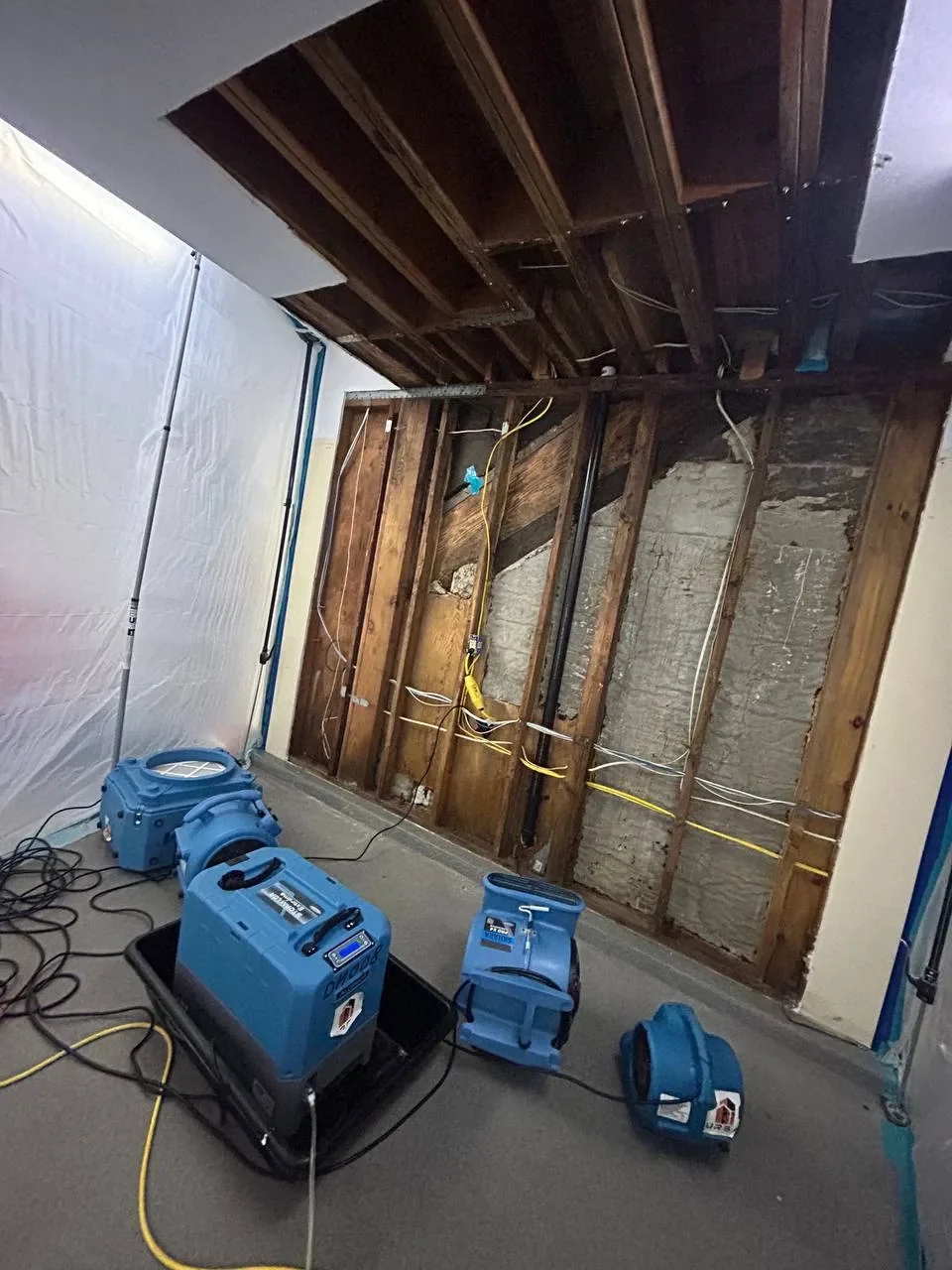
Removing visible water is only the beginning of the drying decision. Moisture may remain in a wall, floor or cabinet after the surface no longer looks wet. Ask what measurements will be taken, which areas are inaccessible and how the team will know whether the conditions support replacement of finishes.
If outside water can still enter, coordinate temporary protection and source repairs before closing materials. Do not assume a floor drain, sump or exterior pipe is working correctly because it is visible. A qualified professional can assess the system and explain whether a plumbing, drainage or other repair is needed.
Document unexpected findings as work proceeds. If the affected area grows or another storm brings water back, tell both the source-control and restoration teams. An updated scope may be needed. Keep the inspection notes and drying record with the documents for the subsequent repair.
Preparing for the next stage
Residents may need to make decisions about furniture, stored documents and flooring while the source is still being investigated. Identify which items are urgent to preserve and which can remain in place safely until the assessment. A list of rooms, photographs from an approved safe location and notes about the height of the water can help establish the original condition.
If the property includes a garage, basement or crawl space, describe those areas even when the most visible water was in a living room. Water can collect below the level where it entered and may be concealed by stored items. Do not enter a confined or contaminated space to move belongings; ask the people evaluating the property how it can be accessed safely.
For a business, agree on who can authorize entry and how records, stock and equipment will be tracked. For a home, identify the person who will receive updates and decide where uncontaminated belongings can be kept. These arrangements help prevent affected material from being moved repeatedly while the source and scope are still being established.
If access routes or utilities change after the initial call, notify the team before its visit. A newly restricted entrance, continuing runoff or a damaged service line may change where equipment can be placed. Keep emergency exits clear and follow the instructions of the agencies responsible for roads, public drainage and building safety.
Repair decisions after the water recedes
The person planning repairs should know what material was exposed, what was removed and what remains to be inspected. Some work may need building or plumbing review, particularly if it goes beyond replacing a finish. Ask the City about the specific scope rather than assuming every flood cleanup is a construction project or that every repair is exempt.
For a rental or shared property, contact the owner or manager and agree on who can authorize access to common spaces. Record the condition of shared walls and services without assuming that the visible point of entry is the source. If an authority has limited occupancy, follow that direction while the building is assessed.
Before finishes are replaced, confirm that the source is addressed, the materials are appropriate for the proposed repair and required inspections are arranged. A written handoff between the people doing cleanup and the people rebuilding helps preserve the facts needed for the next decision.
Common questions
Can I walk through shallow floodwater to turn off power?
Do not enter floodwater to reach electrical equipment. Stay clear and ask qualified responders or electrical professionals to make the area safe.
Does the 2022 Pilarcitos flood prove my address is in a flood zone?
No. The incident documents a historical local storm. Check current official mapping and the conditions at the specific property.
Is a city disaster assessment the same as cleanup?
No. Half Moon Bay says its Building Division performs structural damage assessments in emergencies; cleaning and drying affected materials are separate work.
Can I begin drying while water continues to enter?
The source must be controlled and access made safe. Continuing water entry may require temporary protection or a separate repair.
What should I tell the cleanup team?
Describe when water appeared, the affected spaces, access restrictions, possible contamination and any instructions received from officials.