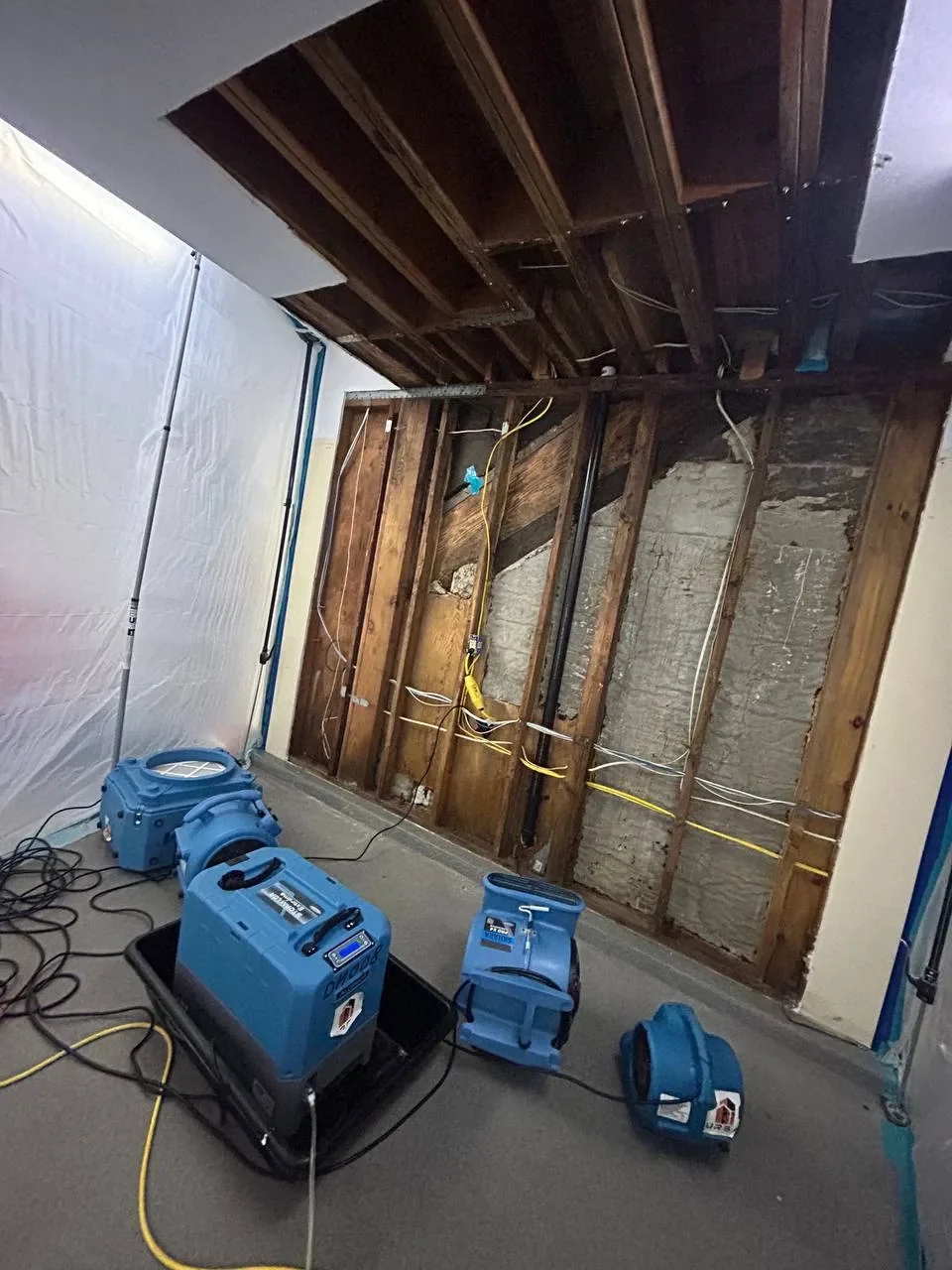
Water damage in a commercial property
Water in a commercial property can affect occupied rooms, equipment, inventory, records, and building systems at the same time. Water Damage Guard provides commercial water damage restoration. Call (650) 550-0619, 24/7, to describe the source, the affected areas, and the people responsible for access and decisions.
A response must fit the property. A small office leak, a flooded retail area, and water moving through several occupied units present different access and coordination questions. The work may involve water removal, evaluation of affected materials, drying, cleaning, and planning for repairs. The actual scope depends on the water source, safety conditions, construction, and operations in the building.
Protect people and control access
Keep employees, customers, tenants, and visitors away from standing water and areas with suspected electrical or structural hazards. Do not cross water to reach a panel, operate wet equipment, or investigate a sagging ceiling. If a shock hazard is possible, leave the area and contact the utility or a qualified electrician. Follow emergency officials' instructions if the property is subject to an evacuation or entry restriction.
If a plumbing valve is accessible without entering danger, shutting off the source may limit additional water. Otherwise arrange the appropriate professional response. Tell the building manager whether water is still flowing and whether the source may be a supply line, drain, sprinkler system, sewage backup, or outside floodwater. Do not assume that water is safe because it looks clear.
Establish a contact who can authorize access and communicate decisions. In a multi-tenant property, the building owner, property manager, tenants, and other service providers may each control different spaces or systems. A clear point of contact helps arrange entry and notify affected occupants without requiring anyone to enter an unsafe room.
Understand the source and building systems
A leak from a pipe or appliance requires a different investigation from a sewer backup or stormwater intrusion. The visible water may be far from its source: it can travel through ceilings, along service penetrations, and under flooring. Provide the building layout and any information about affected floors, adjacent tenants, and the time the problem was first noticed.
A plumber, sprinkler specialist, drainage professional, wastewater agency, or other qualified party may need to identify and correct the source. Water removal cannot permanently resolve an active failure. Ask who is responsible for arranging the source repair and how it will be coordinated with the restoration assessment.
Building systems may require separate attention. Wet electrical equipment, elevators, mechanical systems, communication equipment, and fire protection components should be evaluated by the appropriate qualified professionals. Do not reset or operate damaged equipment solely to resume business. The restoration scope should identify the boundaries of the work and the other parties needed to make systems safe.
Assess the affected footprint
Once access is safe, the assessment considers the source, visible water, affected contents, and accessible materials across the relevant rooms and floors. The edge of a puddle does not necessarily mark the limit of moisture. Water may enter a wall base, run beneath a raised floor, collect above a ceiling, or affect a tenant below. Ask which areas were inspected and which could not be reached.
Moisture measurements can help evaluate accessible materials and follow changes over time. A reading must be interpreted for the instrument, material, and conditions; it does not describe every concealed layer. If a cavity or floor assembly may be affected, discuss whether an opening is needed, who can authorize it, and how the area will be protected and repaired.
An older building may contain materials requiring special handling before disturbance. If asbestos or lead is suspected, seek appropriate professional guidance before demolition. Ask how the concern will be evaluated, how occupants will be protected, and who will arrange any required handling and disposal. The work should not proceed on the assumption that an unknown material is safe.
Coordinate around operations and occupants
Discuss the operating hours, essential routes, sensitive areas, and any restrictions on access. A business may need to separate affected work areas from customer or employee spaces, coordinate deliveries, or arrange temporary use of another room. The appropriate arrangement depends on safety and the work being performed; it should not be based on a promise that every area can remain open.
Identify who will notify tenants, employees, vendors, and the building owner. Agree on how updates and proposed scope changes will be communicated and who can approve them. If a neighboring unit or common corridor is involved, arrange access through the responsible manager. Keep a record of decisions and any space that could not be examined.
Discuss sensitive activities such as food preparation, healthcare, or storage with the responsible operator and applicable specialists. Different contents and operations may require additional handling or regulatory guidance. A general restoration plan cannot determine whether a particular product, room, or operation is safe to resume.
Water removal and contents
When the source is controlled and access is safe, accessible water can be removed. The method depends on depth, access, contamination, available power, and the building layout. Removing water from a floor does not establish that its underlying layers or adjacent walls are dry. An assessment after extraction helps identify remaining moisture and any need for further access.
Inventory, equipment, records, and furnishings need separate decisions. Identify essential documents, electronics, stock, and items with special handling requirements before they are moved. Wet goods may be heavy, fragile, or contaminated. Discuss how items will be documented, protected, separated, and evaluated rather than moving them through unaffected areas without a plan.
Some materials cannot be adequately cleaned or dried after contact with contaminated water. Floodwater can contain sewage, chemicals, and other hazards, according to CDC. Ask what is proposed for cleaning or removal and why. If chemicals or hazardous products may have mixed with the water, disclose that before entry so the appropriate specialist can be involved.
Drying and monitoring building materials
Structural drying addresses moisture remaining in floors, walls, ceilings, and other affected materials. The plan depends on the construction, access, conditions inside the building, and safe power. Equipment placement should account for occupied routes, sensitive contents, and the surfaces that need attention. A machine operating in a room is not proof that every concealed layer is dry.
Ask which locations will be monitored, how progress will be reported, and what conditions must be met before finishes are replaced. Repeated observations and measurements can inform the next decision, but limitations should be explained when an area cannot be accessed. Do not disconnect or move equipment without discussing the effect on the plan and the safety of the arrangement.
If visible mold is present, do not disturb it or direct fans at it. EPA cautions that fans can spread mold. The moisture source and growth both need attention, and a separate remediation plan may be appropriate. Water-affected heating and cooling components should be evaluated before operation by the relevant specialist.
Equipment, records and inventory decisions
Not every business asset can be treated like a building finish. Servers, point-of-sale equipment, machinery, paper records, stock, and specialized instruments may have different handling requirements. Do not energize wet equipment to check whether it works. Ask the manufacturer, IT provider, equipment specialist, or other appropriate party how to evaluate and protect the asset.
Separate the building restoration scope from decisions about business contents and data. Identify who owns each item, who may authorize movement, and whether the insurer or another party needs an inventory. Photograph conditions when safe and retain records of what was moved, cleaned, discarded, or referred for specialist evaluation.
If a tenant's inventory and the owner's building materials are affected in the same incident, communicate the distinction to the relevant parties. Contract terms and insurance policies differ; the restoration assessment alone cannot determine responsibility or coverage. Keep the incident documentation organized so each party can supply the information its insurer or adviser requests.
Cleaning, repair and return to use
The cleaning method depends on the water source and affected surfaces. A sewage backup or flood requires different precautions from a contained supply leak. EPA warns against mixing cleaning products or adding bleach to other chemicals. A product alone does not correct the source, remove all damaged material, or establish that a space is ready for occupancy.
Before finishes are replaced, discuss how affected assemblies were evaluated and dried and whether the source repair is complete. Repairs may involve flooring, wall materials, ceilings, trim, or other components. Plumbing, electrical, structural, and mechanical work may belong to separate trades. Check with the local building department about permits for the actual proposed repairs.
Return to use depends on safety, cleaning, dryness, systems, and any remaining restrictions. Ask the responsible professionals which areas and utilities can be used and what work is outstanding. Coordinate the decision with the building owner and affected occupants. A business opening its doors does not by itself establish that every concealed area or system has been assessed.
Timing and continuity planning
The time required depends on the extent of water, the source repair, safe access, material layers, occupancy constraints, and specialist work. A loss affecting several tenants or floors can involve coordination that differs from a contained incident in one room. Request updates as findings become available and discuss how a changed scope affects the sequence.
EPA recommends prompt drying of water-damaged materials to help prevent mold. That general prevention guidance is not a promise of a fixed restoration duration for a commercial building. Plan temporary operations and access around the conditions and restrictions actually identified. Do not assume that a schedule developed before concealed areas are examined will remain unchanged.
A continuity plan may involve moving staff, protecting records, notifying suppliers, or arranging temporary space. Those business decisions belong to the operator and other responsible parties. The restoration team can explain its work area and access needs so the operator can make informed arrangements.
Insurance and documentation
Notify the relevant insurer or broker promptly if a claim is contemplated. Commercial property, tenant, business interruption, flood, and equipment coverage can have different terms, limits, exclusions, waiting periods, or endorsements. Ask the insurer or broker how the actual policy applies to the cause and the affected property; residential policy examples do not establish commercial coverage.
Keep a timeline, photographs taken safely, source-repair reports, inventory records, invoices, and communications. Ask what the insurer needs before damaged material or stock is discarded and how necessary emergency measures should be documented. Record any additional damage discovered during opening or drying and communicate it promptly.
A restoration provider can document observed conditions and propose work, but it does not decide the insurance claim. Ask for a written explanation of changes to scope and the authorization required before additional work proceeds. Retain copies so the owner and tenants can distinguish completed tasks from work still proposed.
Questions for the initial assessment
Have the building address, a safe contact number, access instructions, and the names of authorized decision-makers ready. Explain whether the source is active, whether multiple tenants are involved, and whether standing water, sewage, electrical equipment, or damaged ceilings are present. Provide any restrictions issued by emergency officials.
Ask what is included in the initial assessment, which systems need another specialist, how occupants will be protected, and how updates will be delivered. Clarify the handoff from source repair to removal, drying, and reconstruction. A useful plan makes the limits of the inspection clear and leaves room to revise the scope when additional conditions are found.
Common questions
Can a business stay open during restoration?
That depends on safety, the affected area, building systems and the work underway. Coordinate with the owner and responsible professionals.
Who repairs the source of the water?
A plumber or another qualified specialist may need to repair the source. Identify the responsible party and coordinate that work with restoration.
Can wet business equipment be turned on to test it?
Do not energize wet equipment. Ask the appropriate equipment or electrical specialist to evaluate it first.
Does removing water dry walls and floors?
Not necessarily. Moisture can remain in materials and concealed layers after visible water is removed.
How long does commercial restoration take?
It depends on the source, affected materials, safe access, occupants, specialist work and drying conditions.
Will commercial insurance cover the loss?
Coverage depends on the policy, cause, limits and exclusions. Consult your insurer or broker about the specific claim.
Sources
- CDC: Floodwater safety Checked
- EPA: Flood cleanup and indoor air Checked
- EPA: Flooded home Checked
- California Department of Insurance: Commercial insurance guide Checked