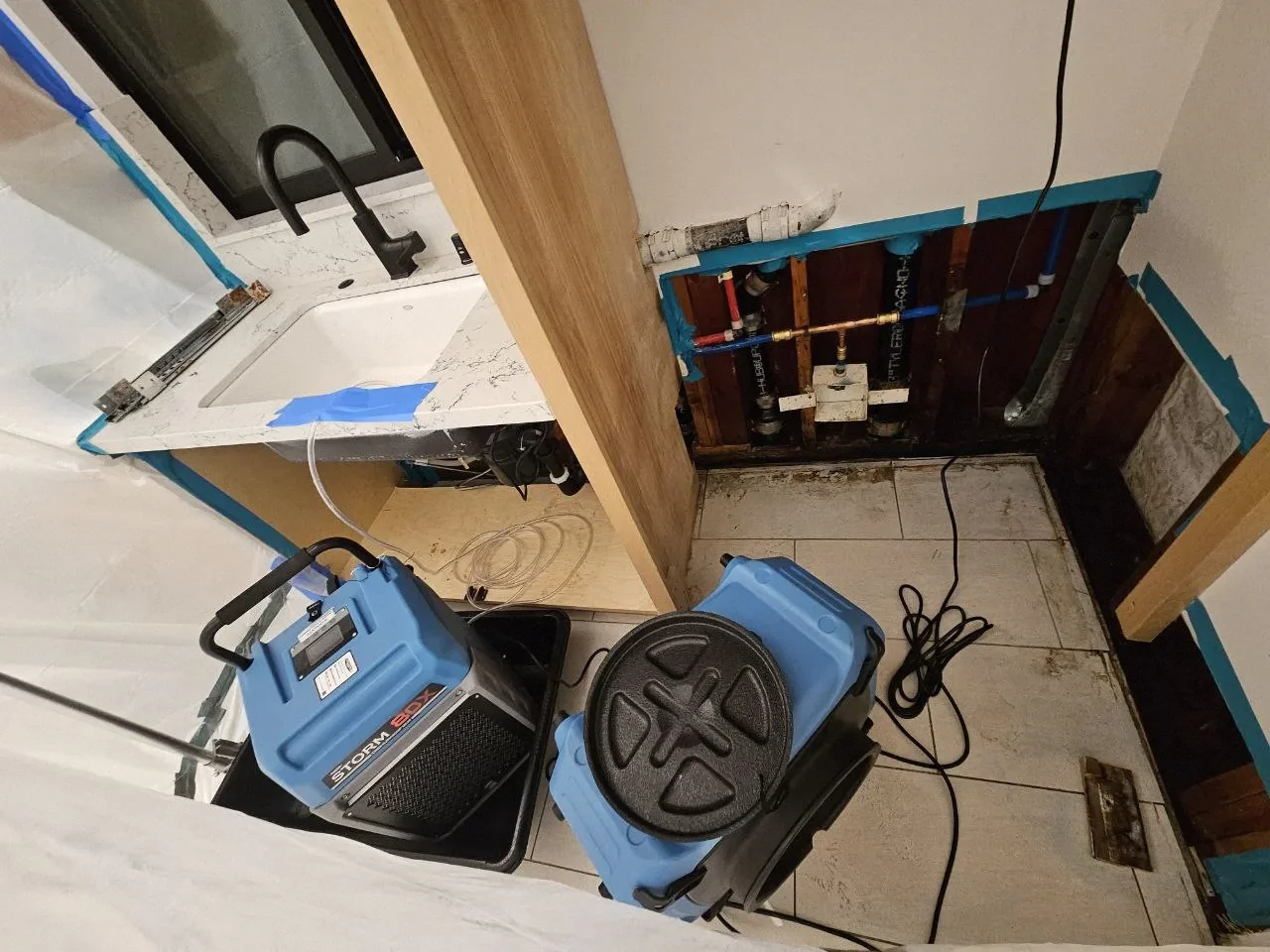
Start with safe access
When water appears inside a property, move people and pets away from the affected area. Do not cross standing water to reach an electrical switch or touch wet equipment, and stay clear of a sagging ceiling. If a fixture shutoff is reachable safely from a dry place, closing it may limit additional flow. If not, leave it alone and request appropriate help.
Note when the water appeared, which room was affected first and whether the flow continues. A mark on a ceiling can be some distance from its source, and a wet floor may reflect more than one issue. Take photographs only when safe, and tell the property manager if access to an adjoining unit or common space may be necessary.
Water Damage Guard provides water damage restoration in Dublin from San Carlos. Call (650) 550-0619, 24/7, to discuss the location, suspected source and any restrictions left by responders. A property assessment identifies what can be examined and what needs additional investigation.
Water service and lateral repairs
Dublin San Ramon Services District, or DSRSD, provides water, wastewater and recycled water services in Dublin. The district identifies repair, replacement and alteration of a sewer lateral as work requiring district permitting. A wastewater backup inside a room should be investigated and the affected materials assessed separately from any repair to the line.
To report an after-hours public water or sewer leak, the district lists Alameda County Sheriff Dispatch at (925) 462-1212. Describe whether the problem appears in a street, meter area or building and follow the district’s directions. This number connects to dispatch; it should not be mistaken for a promise that a private repair has been arranged.
A plumber or other qualified professional can help locate a private defect. Keep any findings, permits and notices with the property records. Do not assume that the age of a building establishes the material or remaining life of a concealed pipe, or that a wet area by itself proves the utility main is the source.
Rain and public storm response
Dublin says Public Works staff clear storm drains and debris during heavy rains and receive reports of flooding or downed trees on public roads and public property. The city lists Public Works at (925) 833-6630 and Police Services for after-hours reports. Do not approach downed wires or enter a flooded road to collect information for a report.
Public drainage and private building drainage have different responsibilities. When safe, note whether water enters from a door, a roof, a wall or a fixture, and give the responsible professional the location and timing. A report about a public inlet does not itself dry a wet room or identify the cause inside a private structure.
The City provides free sandbags at its corporation yard for residents and businesses whose property is threatened, asking each to take no more than ten. Check current availability and instructions before traveling. Preparation supplies are not a reason to cross water or disregard emergency directions.
Water heater and permit decisions
Dublin’s residential handout says a permit is required to install or replace a water heater. The city also offers an online instant permit option for residential replacement of a gas-only tanked water heater. The option is limited to its stated project category; a different installation or additional work may require a different review.
Give Building and Safety the proposed scope rather than assuming that stopping water, replacing equipment and rebuilding a wall are one permit decision. Ask which inspections are needed before work is covered. If opening a surface reveals additional damage, discuss whether the permit or plans need to change.
The city’s Building and Safety contact is (925) 833-6620. Keep the permit record, any inspection results and the source-repair documentation with the restoration scope. A past record can be useful but does not establish the current condition of an appliance or concealed piping.
Emergency work in a public works permit area
Dublin’s Public Works permit guidance says that for emergency work covered by that program, the department and inspector must be notified on the day of work and the permit application submitted within five business days. This is a specific public works process, not a universal extension for all building or district permits.
If a repair affects a street, public right-of-way or other area requiring a public works permit, identify the location and responsible agency before the work is concealed. Emergency measures and the later permanent repair may need coordination among the owner, utility and City. Ask which approvals apply to the actual work.
Record the time and location of the emergency, the person contacted and what was done. This gives the permit holder useful information when the formal application is submitted. It does not remove the need for safe access or any other required district and building review.
Local project areas and individual properties
Dublin identifies Positano, Tassajara Hills and Schaefer Ranch as geologic hazard abatement district project areas. These names can help orient a reader but are not a comprehensive neighborhood map or proof that every property has the same slope, drainage or maintenance responsibility. Use the address and project documents when asking an agency or association a property-specific question.
An association may manage a common component while an owner is responsible for a unit or private fixture. Review the governing documents and identify the actual source before assigning a repair. A stain in one space may result from water traveling through a shared assembly.
If water affects multiple units, agree on a contact for arranging access and protecting common routes. Preserve observations from each affected area so that the investigation can compare them. Location alone should not be used to infer construction type, pipe material or the condition behind a closed wall.
Inspect the route of moisture
The visible edge of wet flooring or a wall mark may not show the full extent of affected material. Ask the restoration professional which rooms and surfaces were assessed, what remained inaccessible and how moisture findings relate to the source. Cabinets and baseboards can hide the point where water moved into an adjoining space.
The source also changes how affected items are handled. A sewage release, outdoor floodwater and a supply-line leak should not be treated as interchangeable because the water looks similar. Keep occupants out of the affected area and discuss protection of clean rooms before items or equipment are moved.
If further damage is discovered after an assembly is opened, request an updated scope. Keep the original observations and the new findings together. A record that describes limitations is more useful than a conclusion that all concealed materials are dry without inspection.
If sprinkler water enters a building, coordinate any shutoff with the responsible fire-system professional and keep exit routes clear when safe to do so.
Drying and the repair sequence
A useful recovery sequence begins with controlling the source, then evaluating affected materials, cleaning or removal where appropriate, drying and planning reconstruction. More than one professional may be involved. Identify who is repairing the source and who will arrange required inspections before a wall or floor is closed.
Ask how the team will assess remaining moisture before finishes are replaced. If a leak remains active or rain can still enter, explain that limitation and coordinate a source repair. A new finish installed over a continuing problem may have to be opened again.
For a shared property, coordinate equipment access with the owner or manager. Respect restrictions on common spaces and identify a safe route for removing affected materials. The work should reflect the actual condition and the instructions of any responsible authority.
Before disturbing painted finishes in a pre-1978 home, ask the professional about applicable lead-safe requirements. EPA says paid renovation work in covered older homes can be subject to its lead renovation rule, with stated exemptions. The age of a building alone does not prove lead paint is present.
Belongings, records and insurance
When safe, photograph affected rooms and list damaged belongings. Electronics, documents, upholstered furniture and hard surfaces may each need different evaluation. If you intend to contact an insurer, ask what documentation is needed before disposal when circumstances allow.
Keep a timeline of the first observation, notifications, source repair, inspections and any changes in scope. Distinguish what you saw from a cause that is still being investigated. Insurance coverage depends on the policy and the facts; a permit or restoration assessment does not guarantee payment.
Tenants and owners of condominiums should ask who coordinates access and where belongings can be stored safely. Written communication can make it easier to track the work without prematurely deciding fault or the outcome of a claim.
Returning the room to use
Before replacing finishes, review any unresolved inspection or access questions with the people responsible for the property. Ask what was repaired, what was inspected and what remains to be done. Do not restart damaged equipment just because the visible surface appears dry.
A building’s water systems and affected rooms can involve several separate decisions. A district permit addresses a particular utility or lateral scope; restoration addresses the materials reached by water. Keep both records so that the sequence is clear if another professional needs to review the work later.
Call Water Damage Guard at (650) 550-0619 for water damage restoration in Dublin. The company is based in San Carlos and accepts calls 24/7. Describe the present condition and follow any instructions already issued by the utility, building official or emergency responder.
Related guides and services
- Wildfire Smoke Cleanup Alameda County
- Water Damage After Fire
- Dublin Defensible Space
- Alameda County
- Water Under Washing Machine
- Wildfire Smoke Damage In House
- Water Heater Leaking What To Do
- Wildfire Preparednesslifornia
- Water Damage Restoration
- Water Damage Repair
- Emergency Water Removal
- Structural Drying
- Flood Cleanup
- Burst Pipe Leak Cleanup
- Ceiling Wall Floor Water Damage
- Crawl Space Basement Drying
- Dublin
- Mold Inspection Testing
- Dublin
- Smoke Soot Odor Removal
- Commercial Water Damage
- Pleasanton
- Livermore
Common questions
Who provides water and wastewater services in Dublin?
DSRSD provides water, wastewater and recycled water services in Dublin. Contact the district about its system and the specific location.
Does a sewer lateral repair need a district permit?
DSRSD lists lateral repair, replacement and alteration among work requiring district permitting.
Where can I report after-hours public water or sewer leaks?
DSRSD lists Alameda County Sheriff Dispatch at (925) 462-1212 for after-hours public water or sewer leaks.
Does Dublin require a permit for a replacement water heater?
The city’s residential water heater handout says a permit is required. The instant permit option applies to its stated gas-only tanked replacement category.
What is the deadline for qualifying emergency public works permit work?
Dublin describes same-day notification and an application within five business days for emergency work covered by that public works process.
Do project-area names establish the cause of a leak?
No. The source and condition of an individual property require investigation.
Sources
- DSRSD leak reporting Checked
- DSRSD service and permit FAQs Checked
- Dublin storm preparedness Checked
- Dublin residential water heater handout Checked
- Dublin Building and Safety permits Checked
- Dublin Public Works permit requirements Checked
- Dublin geologic hazard abatement districts Checked
- EPA lead renovation and repair program Checked