Protect people and stop additional use
If wastewater comes through a drain or fixture, keep occupants and pets away from the affected area. Stop using connected fixtures when it is safe to do so; more water entering a blocked line can increase an overflow. Do not cross standing water to operate an electrical switch or touch wet equipment.
Note which fixture overflowed first, whether the water continues and whether another unit is affected. These observations can help a professional investigate, but they do not prove where a blockage lies. Notify the property manager if a common line or access to neighboring units may be involved.
Water Damage Guard provides sewage cleanup in Dublin from San Carlos and accepts calls at (650) 550-0619, 24/7. Describe the visible extent, the current flow and any access restriction. A safe assessment determines the materials affected and the appropriate next steps.
Private lateral and public system
The Dublin San Ramon Services District’s 2025 sewer system management plan describes private lateral ownership from the building through the connection to the main and assigns maintenance, inspection and repair to the owner. This description concerns the district’s service area; ask the district about the actual connection and property before choosing a repair.
An overflow inside a building does not by itself establish that the defect is in the private lateral. A professional may need to investigate the building drain, the connection and the public system. Keep the findings separate from an assumption based on the first location where wastewater appeared.
Once the source is identified, coordinate the line repair with the cleanup of affected rooms. Clearing an obstruction may stop the release, but it does not remove waste or moisture already in flooring, wall bases or belongings. Ask who is responsible for each task and when access is safe.
How a private lateral spill is handled
The district’s 2025 plan says that when its staff identify a private lateral spill, they notify the owner and the governing city. The owner is responsible for cleaning the affected area, while the city mitigates issues to its storm system. This describes the district’s procedure for that situation; it is not a determination about the cause of every backup.
If wastewater has reached an outdoor drain or a shared area, tell the responding agency where it was observed without entering the contaminated area. The path of water and the location of the defect need investigation. Do not wash waste toward a storm drain in an attempt to clear a surface.
For a multi-unit property, the manager can coordinate access and communicate with occupants about fixture use. Keep any agency instructions and professional findings with the repair record so that the sequence can be understood later.
Permits and inspection timing
Dublin lists trenching in a street for a utility repair, including sewer lateral work, among activities covered by its encroachment permitting program. If the proposed work reaches the public right-of-way, ask Public Works about the actual location, required application and inspection. A district permit and a city encroachment permit can address different parts of a project.
DSRSD says an inspection can be requested in its portal after a permit has been issued, and district staff then schedule it. Ask the permit holder who will arrange access and when work can be covered. This describes the district process for permitted work, not a promise of an inspection at a particular time.
If excavation or opening an assembly reveals a condition different from the initial plan, discuss the revised scope with the permit holder and the relevant agencies. Keep inspection results and any approved change with the property records.
Assess the material reached by wastewater
The visible edge of a spill may not show all affected surfaces. Wastewater can reach beneath flooring, behind a baseboard, into a cabinet or through an opening to another room. Ask which areas can be examined, which remain inaccessible and how the team will protect unaffected spaces.
The material and exposure influence whether an item can be cleaned or requires another decision. A hard surface, upholstered furnishing and electronic device should not automatically be treated alike. Discuss how belongings will be handled and where they can be stored without carrying residue into a clean room.
If a wall or floor is opened, request updated findings before reconstruction. The scope should identify what was observed and what remains uncertain. An initial photograph can document a moment in time, but it does not show the condition inside a closed assembly.
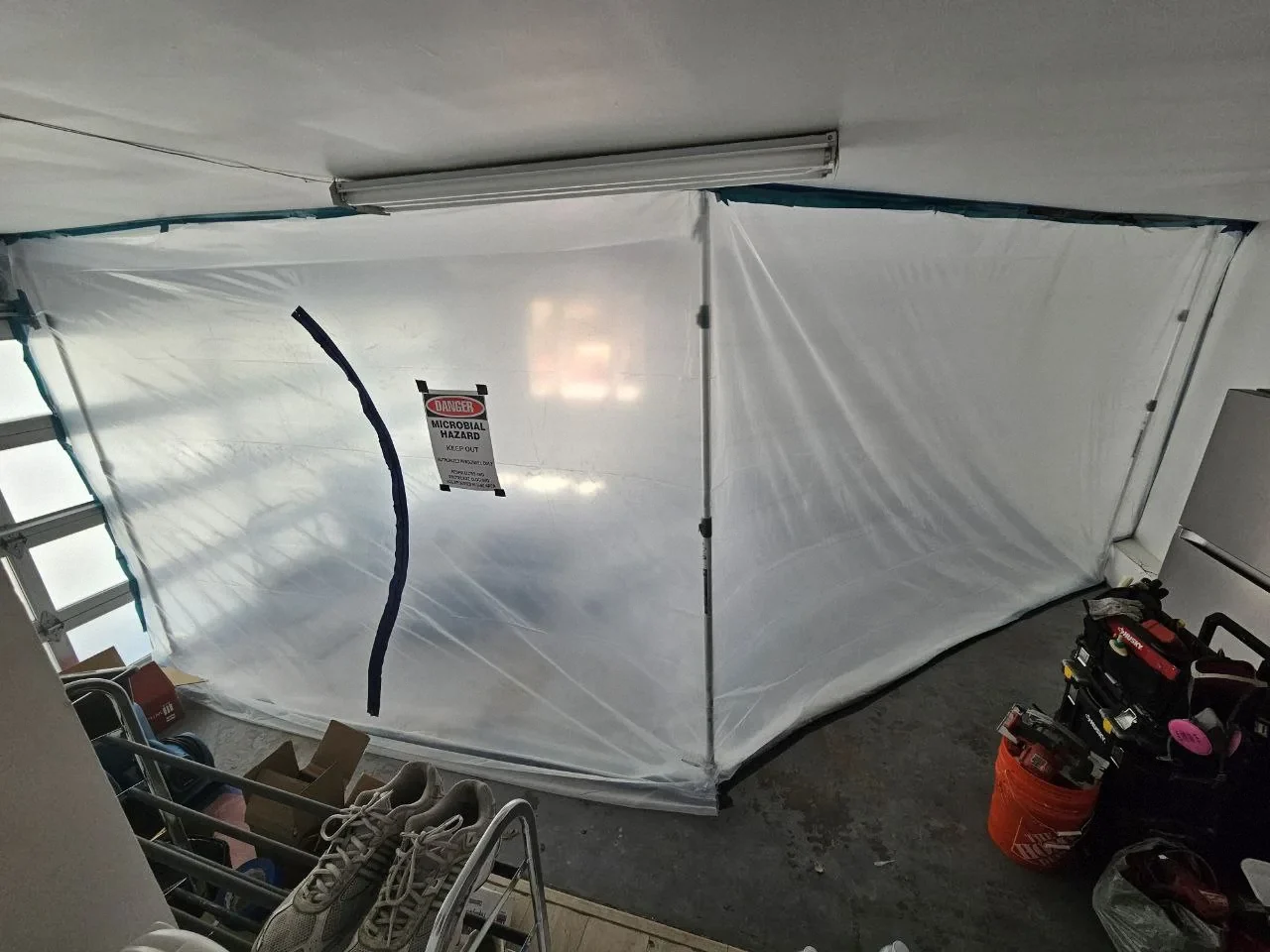
Before work begins, agree on the route for equipment and removed materials, especially where the only exit passes through an unaffected space. The team should explain how it will separate work areas and handle items that cannot be moved immediately. A manager may need to coordinate use of shared hallways and communicate with other occupants.
Drying and rebuilding
After the release stops, the affected area may require cleaning, removal or drying depending on the material and exposure. Ask how the condition will be assessed and what safety measures will be used around unaffected rooms. Do not return to an area restricted by an authority until permission is given.
The source repair and the later reconstruction may involve different professionals. Coordinate any required inspection before a pipe or assembly is covered. If water returns, document the change safely and tell the people investigating rather than assuming the original cause has been resolved.
Before finishes are replaced, ask how remaining moisture will be evaluated and whether any inaccessible areas still need attention. A record of the work completed and the limits of the inspection helps the owner plan follow-up without assuming that every concealed component was examined.
Ask the people performing the work to identify which surfaces were evaluated and how any remaining moisture will be checked. If access is limited by a locked unit or a structural concern, document that limitation rather than treating it as proof the space is unaffected. Arrange follow-up only when entry can be made safely and with the necessary authorization.
Documentation and communication
Take photographs and list affected belongings when safe access is permitted. If you plan to make an insurance claim, ask the insurer what documentation it needs before disposal when circumstances allow. Coverage is a decision under the policy and facts, not a result promised by a cleanup request or a permit.
In a rental or condominium, tell the owner, manager or association about the observed condition and arrange access to common spaces. Review the applicable property documents before assigning responsibility. A shared line can affect several spaces, and the first visible mark may not identify its source.
For sewage cleanup in Dublin, call Water Damage Guard at (650) 550-0619. The company is based in San Carlos and accepts calls 24/7. Explain whether the release is ongoing and follow any directions from the district, City or emergency responder.
Retain the district permit, inspection outcome, any street-work approval and a description of the source repair. These records can be compared with the restoration scope if questions arise later. They also help distinguish a public system response from work performed on the private property, without assigning a cause before the investigation is complete.
If belongings must be stored during work, ask where they can be placed and whether contaminated items require separate handling. Keep exit routes clear and follow any instructions from the property manager or responding agency.
Related guides and services
Common questions
Who is responsible for a private sewer lateral in the district plan?
DSRSD describes owner responsibility for the lateral from the building through its connection to the main. Ask about the specific property and defect.
What happens if district staff identify a private lateral spill?
The district plan describes notifying the owner and governing city, with owner cleanup and city mitigation of storm-system issues.
Can street excavation require a Dublin permit?
Yes. The City lists trenching in the street for utility repairs among encroachment-permit activities.
How is a district inspection requested?
DSRSD says a permit holder can request an inspection through its portal after permit issuance; district staff then schedule it.
Does clearing a blockage clean a contaminated room?
No. Source repair and evaluation and handling of affected materials are separate parts of recovery.