What an inspection is meant to answer
A mold inspection starts with a practical question: where is moisture entering or accumulating, and what materials may be affected? Discoloration on a baseboard, a recurring musty smell, a leak beneath a sink, or a prior overflow can each point to a different investigation. The visible mark is a useful starting point, but the path of water may extend behind the finish or into an adjoining room. A careful assessment considers the history of the building as well as the conditions visible at the time of the visit.
An inspection is not the same thing as removing mold. The goal is to identify areas that warrant attention and to describe the next decision: repair a source of water, investigate a concealed space, clean affected materials, or bring in another specialist. Water Damage Guard can discuss your situation and the appropriate scope. Call (650) 550-0619 at any time, including when a recent leak has made the concern urgent.
Signs to describe before the visit
Tell the person arranging the assessment when you first noticed the problem, whether the appearance or smell changes with weather, and whether the location has been wet before. A photograph taken when the stain appeared may be more useful than a description of how large it looks today. If a leak has already been repaired, retain the repair information and identify the date, the pipe or fixture involved, and the areas that were opened.
Point out nearby water sources without assuming that the closest fixture caused the damage. Water can travel along framing, across a ceiling, or beneath a floor covering before it becomes visible. Conditions outdoors, a roof opening, condensation on a cold surface, a plumbing fault, or water retained after a previous incident can call for different follow-up. A stain alone does not establish which of these occurred.
A musty odor also deserves investigation, but it does not identify a species or show how much material is affected. Avoid covering the smell with fragrance or painting over a suspicious patch before the area is assessed. Those actions can make the underlying condition harder to see, while leaving the source of moisture unresolved. If the area is inaccessible or you suspect electrical or structural hazards, stay clear and describe what you observed from a safe location.
How a moisture investigation can proceed
The assessment begins with the incident history and a visual examination of accessible surfaces. The investigator may look at the suspected area and neighboring rooms, noting staining, damaged finishes, visible growth, and conditions that could permit water to enter. Furniture, stored items, and floor coverings can obscure the edges of a problem; moving them should be discussed before work starts, especially if the material is fragile or contaminated.
Moisture measurements can help distinguish a material that is currently wet from an old mark that appears dry. Readings need interpretation in context: construction materials respond differently to instruments, and a measurement at one point does not describe everything behind a wall. Comparing related areas and following the pattern of readings can help determine where further investigation is warranted. It does not by itself identify mold or guarantee that a concealed cavity is clear.
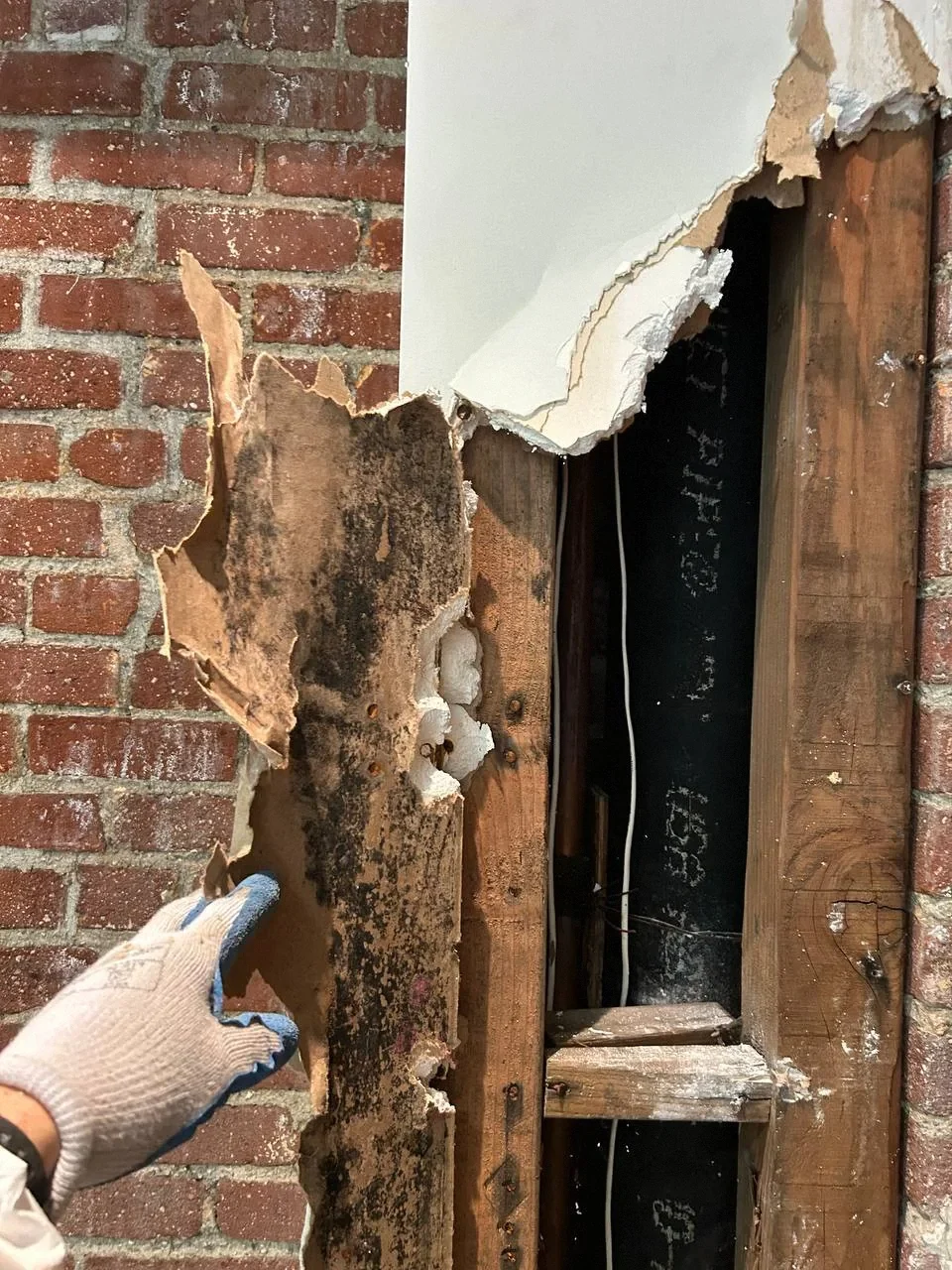
Some questions cannot be answered without opening a finish or arranging a specialist inspection. Explain who owns the property and obtain the necessary permission before an invasive opening is made. An older building may contain materials that require special handling when disturbed; ask the appropriate qualified professional about suspected lead or asbestos before demolition. A careful scope should identify what will be opened, how the area will be protected, and how it will be left afterward.
When testing may help, and when it may not
Inspection and laboratory sampling are separate decisions. EPA states that sampling is unnecessary in most cases when mold growth is visible. Visible growth and a moisture problem already call for attention; a laboratory result does not repair the leak or remove affected material. Ask what specific decision a proposed test will change before agreeing to it.
There may be a reason to seek a specialist opinion when the source of a concern is unclear, when a particular question remains after an inspection, or when documentation is needed for a dispute. The person designing sampling should explain the question, where and how samples will be collected, what the laboratory will report, and what the limitations are. An isolated result without context can be difficult to interpret and should not be presented as a complete assessment of a building.
EPA notes that no federal limits have been set for mold or mold spores that can be used to determine compliance with a federal mold standard. A species name or a number on a report therefore should not be treated as a universal pass or fail for the home. Ask who will interpret the results, whether additional inspection is necessary, and how a finding affects the plan for fixing moisture and cleaning. Confirm the availability and scope of any testing service before authorizing it.
What to do while waiting for an assessment
If water is actively escaping, stop the source only if you can do so safely. For a plumbing leak, that may mean closing an accessible valve or calling a plumber. Do not enter standing water to reach a valve, touch wet electrical equipment, or operate a switch in an unsafe area. If there is a risk of shock, leave the area and ask the utility or a qualified electrician for help.
Keep children, pets, and people who may be particularly sensitive away from the affected area. Do not disturb visible growth or direct a fan at it; EPA cautions that fans can spread mold. Avoid mixing cleaning chemicals, and do not rely on a spray or a coat of paint as a substitute for correcting the moisture source. If you have health concerns, speak with a healthcare professional rather than relying on a building test to diagnose symptoms.
Document the conditions from a safe position. Record when you noticed the issue, take photographs if possible, and keep receipts for emergency work. If you rent or live in a shared building, notify the owner, property manager, or association as appropriate so the responsible parties can coordinate access and investigate adjacent spaces. Avoid making assumptions about fault or insurance coverage until the relevant facts and documents have been reviewed.
From findings to a cleanup plan
A useful assessment describes the affected locations and explains the proposed next steps in ordinary language. Ask which areas were accessible, which remain concealed, and whether more investigation is recommended. If the source remains active, agree on who will address it before finishes are restored. Cleaning a surface while water continues to enter does not resolve the conditions that allowed growth.
The cleanup approach depends on the extent of the affected area, the materials involved, and whether contamination can be contained. A nonporous surface may be handled differently from porous material that cannot be thoroughly cleaned and dried. The scope should identify material proposed for removal, protections for surrounding spaces, and how the area will be evaluated after work. Discuss possessions separately, especially documents, textiles, and items of sentimental value.
Once remediation is complete, ask for a clear explanation of what was done and what remains outside the scope. EPA recommends addressing the moisture problem and visible growth; lingering water damage or mold indicates further work may be needed. Follow-up may include checking the repaired source during use or after rain and watching for a returning stain or odor. No single visual check can promise that a different leak will never occur.
Insurance and records
A mold concern may arise after a sudden plumbing leak, repeated seepage, floodwater, or another event. These causes can be treated differently under a policy. Coverage, exclusions, limits, deductibles, and endorsements depend on the contract and the facts of the loss. Do not assume that an inspection, testing, or remediation will be paid for merely because a separate water claim exists.
Contact your insurer or agent promptly if you intend to report a loss. Ask what documentation it needs and whether it wants to inspect before materials are removed, while still taking safe, reasonable steps to limit further damage. Keep photographs, communications, the inspection scope, invoices, and any laboratory report together. The California Department of Insurance explains the residential claims process and offers consumer guidance; the insurer makes the initial coverage determination under the policy.
Preparing questions for your appointment
Before the visit, write down the rooms involved and whether the issue is ongoing or appears related to a previous event. Gather building plans or prior repair reports if they are available, and identify who can authorize access to adjoining units, locked rooms, or concealed spaces. If the property is occupied, discuss the needs of residents and any restrictions on entry before the investigation begins.
Ask what the inspection includes, whether instruments or sampling are part of the proposed work, and whether additional charges require separate authorization. If an opening is suggested, ask who repairs it and how the area will be protected. Request an explanation of the findings and the limits of the inspection. These questions help you compare the proposed work with the actual problem instead of purchasing a test that may not answer it.
Common questions
Does every mold inspection require a lab test?
No. EPA says sampling is unnecessary in most cases when mold is visible. Ask what question testing would answer and confirm the proposed scope before authorizing it.
Can a moisture meter identify mold?
A meter can help identify moisture in materials, but a reading alone does not identify mold or describe every concealed condition.
Should I paint over a suspicious spot?
Wait until the cause has been investigated and addressed. Paint can conceal the visible sign without correcting the moisture problem.
How long will an investigation take?
The scope depends on access, the number of affected areas, the history of the moisture problem, and whether concealed spaces need further investigation.
Will homeowners insurance pay for testing?
Coverage depends on the policy, the cause, applicable exclusions, and the insurer’s assessment. Contact your insurer and ask about your particular claim.
What happens if the source is behind a wall?
Discuss the need for an opening, property-owner authorization, protection of the area, and any other specialist involvement before work begins.