Identify the water supplier for the address
San José’s November 2025 water-quality information identifies three retailers serving the city: San Jose Water, San José Municipal Water and Great Oaks Water. The address determines which supplier to contact. A city name on a mailing address does not establish which retailer serves that property.
San Jose Water lists 408-279-7900 for customer service at any hour. If that company serves the property, explain where water is visible and whether it is still flowing. For a different retailer, use that supplier’s contact information. A plumber may need to investigate a line or fixture inside the building.
Keep people clear of standing water near electrical equipment and avoid an unstable ceiling or floor. Do not cross water to reach a panel. If an immediate danger remains, leave and call 911. A safe, accessible fixture shutoff may stop an individual source; otherwise seek qualified assistance.
Report sewage entering a dwelling or street
San José’s sewer bulletin directs residents to report sanitary sewer backups into a dwelling or street to the Department of Transportation at 408-277-4373, at any hour. Give the dispatcher the location and describe the condition. If wastewater is entering the building, keep people and pets out of contact with it.
Stop using affected fixtures when it is safe to do so and notify the property owner or manager. In a building with shared plumbing, the people using other connected fixtures may also need instructions. A qualified plumber can investigate the source while the affected rooms are assessed for cleanup.
The location where water appeared is useful evidence but does not by itself identify a blockage. Keep a record of when the backup began, which fixtures were affected and whether the condition changed. Source correction and cleanup address different parts of the problem.
A documented Coyote Creek flood
Valley Water reports that Coyote Creek overtopped at Rock Springs on February 21, 2017, and firefighters evacuated 276 people there by boat. The event shows why an observed water path and official evacuation instructions matter; it does not establish the current risk for a specific address.
For a current storm, consult official alerts and the appropriate flood map. Avoid moving water and do not drive through a flooded route. After authorities allow access, photograph visible conditions from a safe place and note the height and rooms reached. Water can also come from a plumbing failure or an opening unrelated to a creek.
A property assessment should distinguish what is visible from what has not been examined. A wall, floor assembly or stored item can be affected beyond the obvious water line. Ask which spaces can be reached and what further access is needed before planning reconstruction.
Fire hazard mapping and the actual parcel
San José’s GIS layer records the city’s adoption of the 2025 CAL FIRE fire hazard severity zone data on June 17, 2025. A map designation is not a statement that a particular building has burned or that all properties face the same conditions. Check the relevant current map and ask the city about the parcel.
After a fire, wait for the responsible authority’s permission before entering. Smoke residue, burned material and water used in suppression may affect different rooms. Do not reconnect damaged utilities or assume that a surface is safe merely because it looks dry.
When access is permitted, identify the owner or manager who can authorize the assessment. Record which rooms have been inspected and which remain inaccessible. A restoration plan should explain how smoke, contents and water damage will be assessed together with any necessary specialist work.
A city damage survey and repair planning
San José offers an optional paid damage survey for properties damaged by fire, flooding and other catastrophes. The city’s April 2026 request form describes priority plan review and inspection scheduling among its benefits. The city inspector’s survey is a separate process from an assessment of wet materials by a restoration team.
Ask the Permit Center about the current survey process, cost and applicability before beginning repairs. A permit or inspection may be needed for the actual reconstruction even when a survey is not requested. Keep documents and photographs together, and identify which contractor will arrange any required inspections.
If opening an assembly reveals additional damage, notify the owner and the relevant trades. The scope may need to change. A surface that appears clean or dry does not show what remains inside an unopened cavity.
Rental properties and repair communication
The city’s Rent Stabilization Program hearing guide says the Apartment Rent Ordinance covers most rental apartments built before September 7, 1979. Individual eligibility and the question presented still matter; do not assume every rental or every repair is covered by the ordinance.
Tenants should promptly tell the owner or manager about an active leak and document the notice. Ask how access will be arranged and whether another unit or common area could be involved. The person who discovers the problem may not be the person authorized to approve opening a wall or moving shared equipment.
If the room cannot be used, communicate about safe access to essential belongings and the expected sequence of work. Questions about rights, insurance and any temporary housing assistance should be directed to the appropriate program or adviser. A restoration contractor does not determine a tenant’s legal entitlement.
Different parts of a large city
San José’s planning layers identify named areas including Willow Glen, Japantown, Alviso, Berryessa, Rock Springs and Naglee Park. These names help describe a location; they do not identify the pipes, foundation, flood designation or condition of any individual building.
When calling, provide the street address, type of property and the rooms affected. Explain whether the source is still active and whether the building has common access or shared utilities. Those details help determine which people and trades need to coordinate the visit.
Water Damage Guard serves San José from San Carlos, CA 94070. Call (650) 550-0619, 24/7, to discuss the condition and access. The service scope depends on what an assessment finds at the property.
What an assessment can establish
An initial visit can identify visible standing water, damaged finishes and accessible areas that require further attention. The assessment may include moisture readings, observations of the source and a discussion of materials exposed to the water. Readings need context: a single number does not identify every hidden pocket or establish the cause.
Ask what areas have not been inspected and why. Furniture, cabinets, insulation and floor coverings may conceal the extent of water movement. Opening an assembly can answer some questions but requires authorization and may reveal additional repair needs. Agree how those findings will be communicated before work starts.
If the source involves a roof, a pipe, a drainage system or equipment, a specialist in that system may be needed. Stopping active water and drying the affected materials should be coordinated, but one does not automatically complete the other. Keep the scope of each trade clear.
Removing water and drying the structure
Once it is safe and the source is controlled, accessible standing water can be removed. The condition of the water and the surfaces it contacted influence the cleanup plan. An affected carpet, hard floor and insulated wall may need different handling. Discuss any proposed removal and the reason for it with the owner.
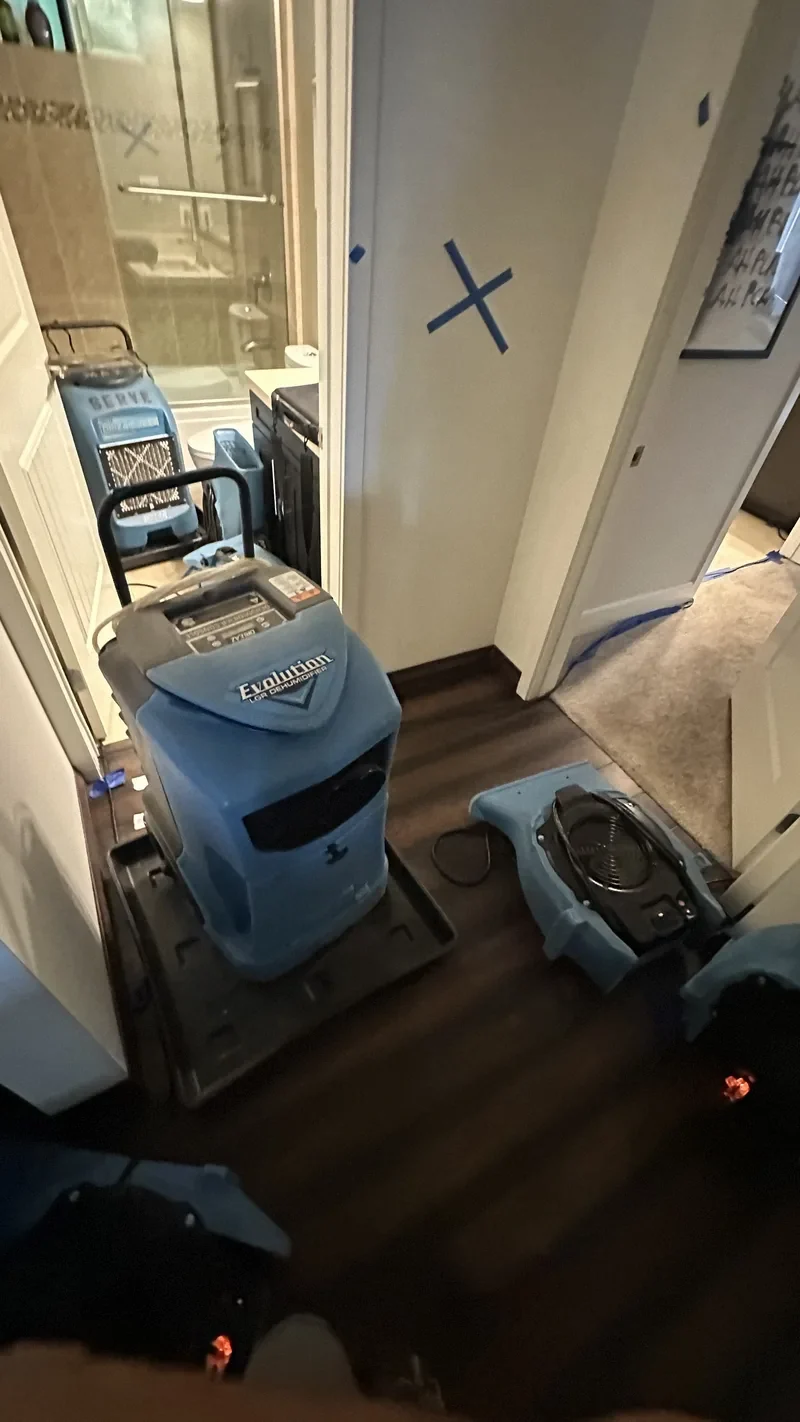
Drying is a process monitored over time, not a promise based on the first visit. Ask what measurements will be recorded, where equipment will be placed and how access will be maintained. In a shared building, equipment and work areas should be coordinated with the manager and occupants.
If moisture remains in a concealed space, another opening or a change in the plan may be needed. Do not replace finishes simply because the visible surface looks better. The owner should understand any remaining limitations and the trade work that must happen before reconstruction.
Contents, documentation and return to use
Photograph damage only when it is safe. Record the date, the observed source, the rooms affected and any communication with the owner, utility or insurer. Keep estimates, invoices and inspection records together. An insurer determines coverage from the policy and circumstances; a cleanup estimate does not establish it.
Agree who will inventory and move belongings. Some items can be assessed and cleaned, while others may need a different decision because of their material or contact with contaminated water. Ask the insurer about documentation before disposal and keep a clear record of items moved for storage.
Before a room returns to use, confirm that the source is addressed, the accessible affected materials have been evaluated and any required trade inspections are complete. Discuss areas that were not examined. A plan for the remaining work helps the owner understand what has been resolved and what still needs attention.
If a household or business cannot use an affected area, decide how essential activities can continue without entering the work zone. A manager may need to coordinate keys, elevators or other shared access. Let each trade know about equipment or belongings that must remain accessible. If work is delayed, ask who will monitor any temporary protection and how a change in the water source will be reported. Keep the contact information for the person authorized to approve additional work with the project documents. A written record of these decisions can reduce confusion when the property owner, occupants and contractors are not present at the same time. The appropriate sequence depends on conditions found on site.
- Santa Clara County king tides and bay flooding: protecting a shoreline home
- Santa Clara County flood zones and creek flooding: checking your address
- Santa Clara County sandbags: finding supplies and protecting a home
- Wildfire smoke in Santa Clara County homes: cleanup after a smoke event
- Repair and deduct california
- Water damage after fire
- San Jose backwater valves: rules and checking for rebates
- San Jose rental repairs and relocation after water damage
- San Jose creek flooding and cleanup after a storm
- Building permits for water damage repairs in San Jose
- San Jose wildfire zones and defensible space after fire
- Flood damage restoration process
- Flood facts measurement and risk
- Rental water leak responsibilities
- Wildfire smoke damage in house
- Sewage backup cleanup decisions
- Flash flood facts and safety
- Exterior flood resilience upgrades choose for the actual hazard
- Additional living expenses water damage
Common questions
Which water supplier serves my San José address?
The city identifies three retailers; check the supplier for the particular property before reporting a water service issue.
How do I report a sewer backup into a San José dwelling?
The city bulletin lists the Department of Transportation at 408-277-4373 at any hour.
Does the 2017 Rock Springs flood establish my property’s current risk?
No. It is a documented historical event; check current maps and local guidance for the parcel.
What is a San José damage survey?
It is an optional paid city inspection process for qualifying damaged properties, with the benefits described on the city request form.
Does the Apartment Rent Ordinance cover every rental?
No. The city guide describes most apartments built before September 7, 1979; individual eligibility should be checked.
Can a neighborhood name identify a building’s plumbing?
No. San José map names identify areas, while the property’s actual plumbing must be assessed separately.
Sources
- San José water retailer information Checked
- San Jose Water contact information Checked
- San José sewer backup bulletin Checked
- Valley Water 2017 flood report Checked
- San José adopted fire hazard map layer Checked
- San José damage survey request Checked
- San José Rent Stabilization hearing guide Checked
- San José planning map layers Checked