Water damage restoration in Cupertino: a safe first step
A broken supply line, an overflowing fixture or stormwater entering at a low doorway can each leave a different pattern of damage. Before investigating, determine whether the room is safe to approach. Do not enter standing water near electrical equipment or touch a wet switch. Leave an unsafe area and call 911 for an immediate threat.
If the source is active, contact the appropriate utility or qualified trade. From a safe place, note the location, the time water appeared and whether it is continuing to spread. A wet floor can hide water beneath a finish, while a stain may have another cause. The assessment should follow the evidence at the property rather than a diagnosis based on appearance alone.
Water Damage Guard serves Cupertino from San Carlos. Call (650) 550-0619, 24/7, to discuss the affected property. Explain any access restrictions, the suspected source and whether a plumber, utility or other professional is already involved. A telephone conversation helps coordinate a visit but cannot establish the final scope.
Find the right water provider
Cupertino lists both California Water Service and San Jose Water as water providers and offers a service-area map. The provider depends on the address. A public main problem and a leak in a private line need different investigation, so give the utility the precise location and follow its directions.
Keep clear of a damaged roadway, excavation or flowing water. If water is entering the building, a qualified plumber can help determine how to isolate a private source when that can be done safely. Do not assume that closing a valve at one fixture has stopped a leak elsewhere.
Once the flow is controlled, the materials inside still need assessment. Keep a record of the time of the incident, observations and contacts. Utility work, plumbing repair and restoration are separate scopes that may need to be scheduled together.
Sewer providers and backup response
The City lists Cupertino Sanitary District and Sunnyvale Sanitary as sewer providers and recommends using the service map to identify the provider for a property. Cupertino Sanitary District asks customers with a backup to call its office or after-hours dispatch rather than rely on email. Check the address and provider before applying a district-specific procedure.
Stop using connected fixtures during a backup and keep occupants away from wastewater. A plumber or agency can investigate the line and control the source, while the cleanup team addresses contaminated material already inside. Do not remove a manhole cover or enter a confined space to diagnose the blockage.
Give the dispatcher a clear location and describe whether the problem is in a room, yard or public area. A record of fixture use and the time of the backup can help the investigation. It does not by itself determine the point of blockage or which party will pay for repairs.
Storm drains and flood concerns
Cupertino says it owns and operates the storm drainage system, while Cupertino Sanitary District provides sewer service to the majority of city parcels. Storm drains and sanitary sewers have different functions. A street drainage concern should not be treated as proof that a building sewer is blocked, or the reverse.
The City advises reporting blocked storm drains or drainage problems through Cupertino 311. For immediate danger, use emergency services rather than a routine request. Record the location from a safe position and avoid reaching into an inlet when water is moving or conditions are unsafe.
For a property with floodplain questions, Cupertino directs residents to Public Works about floodplain code requirements and to Building before construction. A map or general description does not determine the cause of a particular interior loss. Ask the City about the address and the specific work being proposed.
For storm-related damage, note whether the water arrived from outside, a roof or a plumbing fixture, if that can be observed safely. A blocked public drain should be reported through the City’s process, while a repair within a property may need a different professional. Avoid moving debris close to fast water or placing it where it can enter a drainage opening.
Where service applies
Cupertino’s planning-area map identifies Monta Vista, Rancho Rinconada, Garden Gate, Inspiration Heights, Fairgrove and Jollyman among named areas. The map includes some unincorporated land, so a neighborhood name alone does not establish that an address is within city limits or identify its utility provider. Confirm the actual parcel and service area.
Access arrangements can differ between an occupied apartment, a detached home and a commercial space. Explain shared entrances, parking restrictions, pets and any areas that must remain in use. A safe route for equipment and removal of damaged materials can be planned once the conditions and permissions are known.
The location of water inside a building matters more to the cleanup scope than the neighborhood label. Affected materials should be evaluated for the source, duration and path of the water. Do not assume that a particular pipe or foundation material is present because a building is old or because it is in a named area.
Measure the extent of the loss
Water can move beneath flooring, into wall cavities and along concealed framing. The visible edge of a wet area is a starting point, not necessarily the boundary of the loss. An assessment may include moisture measurements and a closer look at connected materials where access is appropriate.
Explain what has already been moved, dried or repaired. If prior records or photographs show a recurring condition, share them with the assessor. The objective is to identify what is known, what remains uncertain and which openings or additional specialists may be needed to evaluate concealed damage.
Before disturbing older materials, consider whether hazardous-material evaluation is necessary. A building’s age alone does not establish a specific material. Any proposed removal should be explained to the person authorized to approve work, including the expected effect on occupied areas.
An assessment can also identify practical constraints that change the work sequence. A cabinet may conceal the affected floor, a shared wall may require coordination with another occupant, or an appliance may need a qualified person to disconnect it. Record these limitations and the rooms affected so the people making decisions understand what has been inspected and what is still inaccessible.
Drying and cleaning are different tasks
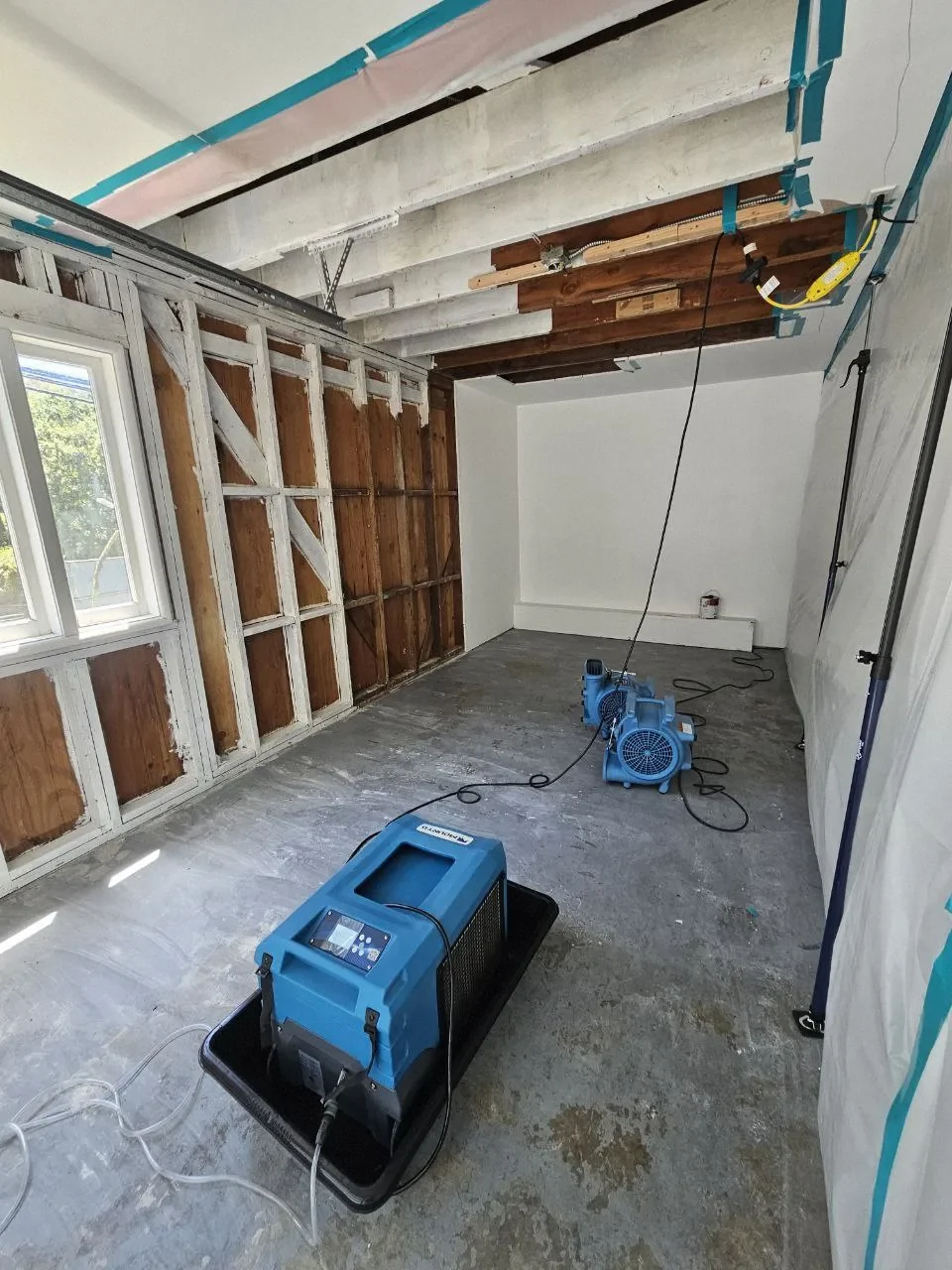
The response depends on the source and the materials involved. Water that has contacted sewage or outside floodwater may require different handling from a clean supply leak. Standing water and unsuitable materials may need removal before effective drying can begin. Equipment placement should account for the actual space and a safe electrical supply.
Drying progress is assessed over time, including relevant concealed locations when accessible. A surface that looks dry does not prove that the layer beneath is ready to close. Conversely, moisture readings require interpretation in context; a single number does not explain the cause or condition of every material.
Ask how the affected area will be separated from clean belongings, what documentation will be provided and what work is outside the cleanup scope. If additional damage appears, request an updated description of the work before reconstruction proceeds.
Permits for repair work
Cupertino’s Building Division FAQ distinguishes stopping leaks under stated conditions from removing and replacing defective concealed drainage or water piping, which it says requires a permit and inspection. The exact proposed work matters. Ask Building before covering a repair and do not assume that every cleanup task requires the same permit.
The City provides an online portal for certain instant permits and inspection scheduling, with property information that includes the sanitary district. Availability depends on the permit type. The person performing repair work should confirm the proper application and inspection sequence for the project.
Keep approved records, photographs and relevant measurements together. A plumber, electrician, structural professional or finish contractor may be involved in different phases. A clear handoff identifies the source repair, the materials that remain open and any inspection still required.
Return the property to use
Before rebuilding, confirm that the source has been controlled, affected materials are ready for repair and required inspections have been completed. In a rental or shared property, coordinate access and approvals with the person responsible for the building. Temporary arrangements should reflect the actual condition of the affected rooms.
Keep a concise record of the scope performed, items removed and any outstanding issues. If insurance is involved, discuss documentation and contents decisions with the insurer. A restoration assessment does not determine policy coverage or the legal responsibilities of the parties.
Call Water Damage Guard at (650) 550-0619 any time to discuss water damage in Cupertino. Describe the current source, the rooms reached and any agency instructions or repair work underway. That information helps the team plan an assessment and coordinate with the other parties involved.
Before scheduling a finish contractor, review the remaining open areas and agree on access for any inspection or follow-up measurement. Keep the names and scopes of the parties involved with the repair records. If a new leak or previously hidden wet area is discovered, report it promptly so the assessment can be updated before it is concealed by replacement materials.
Related information and guides
Explore these resources for local repair decisions and practical cleanup guidance.
Common questions
Which water company serves my Cupertino address?
The City lists Cal Water and San Jose Water and provides a service-area map. Check the specific address.
Which sewer agency should I call?
Cupertino lists Cupertino Sanitary District and Sunnyvale Sanitary as providers. Use the City’s map to identify the provider for the property.
How does Cupertino suggest reporting a blocked storm drain?
The City directs residents to Cupertino 311 for blocked drains or drainage problems; use emergency services for immediate danger.
Does replacing concealed defective piping require a permit?
The City’s Building FAQ says removing and replacing defective concealed drainage or water piping requires a permit and inspection. Confirm the proposed scope with Building.
Does a neighborhood name establish city jurisdiction?
No. Cupertino’s planning-area map includes some unincorporated land. Verify the parcel and its service provider.
Sources
- Cupertino utility providers and service maps Checked
- Cupertino Sanitary District emergency contacts Checked
- Cupertino storm and sanitary system FAQ Checked
- Cupertino storm and flood preparedness Checked
- Cupertino floodplain management Checked
- Cupertino planning areas map Checked
- Cupertino Building Division FAQ Checked
- Cupertino building online services Checked