Protect people before property
Floodwater can conceal moving currents, damaged pavement, debris and electrical hazards. Follow evacuation and reentry instructions, and do not cross standing water to operate equipment or enter a building. Call 911 for an immediate emergency. Wait for authorities to permit access when an area is closed or the structure may be unsafe.
From a safe position, note when water appeared, whether it is still rising and where it reached the building. A doorway or low room may be where water becomes visible, but it does not necessarily reveal the origin. Give the people investigating the situation a precise location and distinguish your observations from an unconfirmed cause.
Water Damage Guard provides flood cleanup in Cupertino from San Carlos. Call (650) 550-0619, 24/7, to discuss the property, current access and known damage. A telephone conversation can help coordinate the response but cannot determine structural safety or the final scope of cleanup.
Check the address and the flood map
Valley Water says the revised Permanente Creek watershed flood insurance rate map became effective September 5, 2024 and identifies changes affecting parts of Cupertino and neighboring cities. Use the current official map for the address and ask the relevant floodplain office about the designation. A change in mapped risk does not eliminate all possible flooding.
A map describes a hazard classification; it does not prove why water entered a particular room. Surface drainage, a localized blockage or a plumbing failure can also introduce water. The property needs an assessment of its own conditions, including the route of entry and materials reached.
Keep official notices and the date of the event with photographs taken from a safe location. If access is restricted, do not bypass barriers to collect information. The cleanup team and any design professional need the actual site conditions and the current directions from public agencies.
Sandbags and public drainage
Cupertino lists free prefilled sandbags at a self-service station outside the City Maintenance Yard at 10555 Mary Avenue. Availability and access may change during a storm, so check current City information before traveling. Sandbags may help divert shallow surface water in appropriate conditions, but they cannot make a flooded structure safe.
The City says crews vacuum storm drain inlets before the rainy season and check them for hazardous material. This preventive maintenance is distinct from an investigation of a particular blocked drain. Do not reach into an inlet or stand near moving water to remove debris during dangerous conditions.
If authorities order evacuation, leave by the route they specify rather than delaying to protect belongings. After a storm, public maintenance work and the assessment of an interior assembly are separate tasks. A cleared street drain does not remove water that has already entered a floor or wall.
Reporting a creek problem
Cupertino’s floodplain page provides Valley Water contacts for creek blockages and for reporting substances polluting a creek. Give the exact location and describe what is visible from a safe place. The fact that an agency accepts a report does not establish ownership or responsibility for every drainage feature on private land.
Do not move debris in swift water or place waste where another storm can carry it into a drain or creek. When a private feature may be involved, ask a qualified professional to identify the source and the appropriate repair. Proposed grading or drainage changes may also need City review.
For an urgent threat use emergency services. A routine report or online request does not replace an emergency response. Keep the report information with the property record and communicate it to the people evaluating any related interior damage.
Investigate water and materials
Outside floodwater can carry soil and contaminants into a building. Keep occupants away from affected rooms and avoid moving wet contents through clean areas without a plan. The assessment considers the water path, the duration of exposure and the types of materials reached.
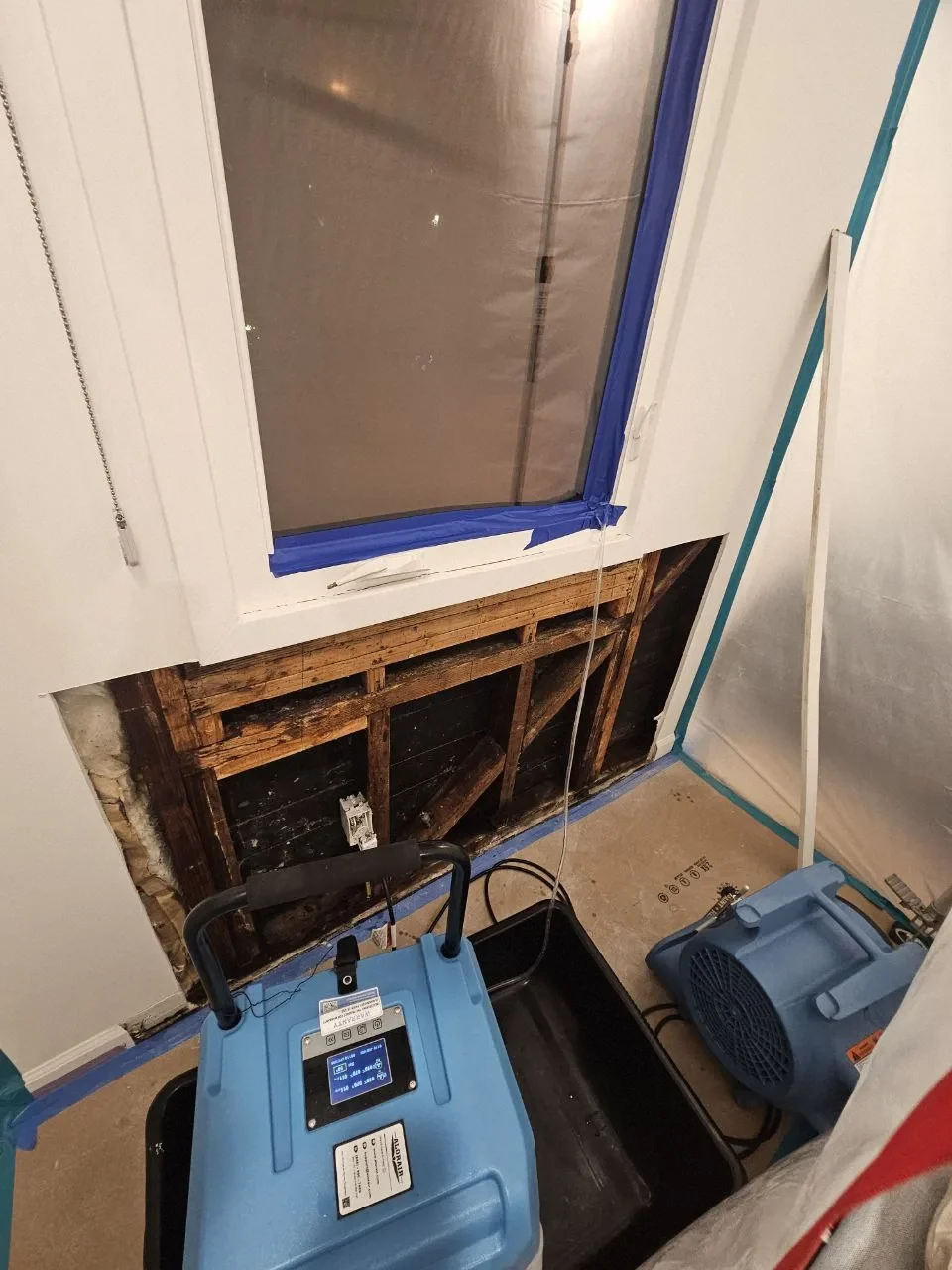
Moisture may be present below flooring or behind a wall even when the visible surface has begun to dry. Measurements and controlled access can help define the work, but they must be interpreted for the material and conditions. Tell the assessor about previous leaks, recent repairs and areas that cannot be reached.
If opening an older assembly is necessary, determine whether separate hazardous-material evaluation is needed before disturbance. Age does not establish the presence of a particular substance. Ask what will be opened, how clean rooms will be protected and how newly discovered damage will be communicated.
A property may have water in more than one type of assembly. A carpet, a raised wood floor and a tiled bathroom can retain moisture differently, so the inspection should identify the actual materials and their condition. The location where water entered, the time it remained and whether it contacted soil or sewage all influence the next decision. Avoid assuming that every wet item can be treated in the same way.
Removal, cleaning and drying
Standing water and materials that cannot be adequately cleaned may require removal. The appropriate method depends on the exposure and the affected material. Contents should be evaluated separately from the building; some items may need specialist treatment, while others may not be suitable to retain.
Drying equipment should be selected for the actual space and a safe power supply. Follow-up observations and measurements can show progress in accessible areas. Drying does not replace appropriate cleaning after contaminated water, and a dry-looking finish does not establish that the layer beneath is ready for reconstruction.
Document the scope, photographs and any items removed. If an insurer is involved, coordinate contents and disposal decisions when it is safe and practical. A cleanup record should explain what was examined and identify areas that could not yet be assessed.
Equipment also needs a practical route in and out of the property. Identify narrow doorways, shared corridors and any area that must stay accessible. If utilities have been disconnected, the team must establish a safe power arrangement before operating equipment. Discuss the expected monitoring schedule and the person who will receive updates while the space is being dried.
Coordinate the repair
Before installing new finishes, confirm the continuing source is controlled and the materials are ready for repair. Plumbing, electrical, structural and drainage work may involve different trades. Ask the City which permits or inspections apply to the proposed construction and keep the approved documents accessible to the repair team.
For an occupied building, agree on access, equipment placement and the rooms that can remain in use. Shared entrances and limited parking may affect the schedule. If further water or hidden damage appears, request an updated assessment rather than closing over an unresolved condition.
Call Water Damage Guard at (650) 550-0619 to discuss flood cleanup in Cupertino. Explain what is known about the source, access and agency response. A coordinated handoff helps the property owner manage the separate tasks of controlling water, cleaning affected materials and arranging repairs.
The final handoff should state which rooms were included, which materials were removed and whether any areas remain inaccessible. This helps the repair contractor understand where further investigation is required. If a drainage or structural specialist is working outside, share the relevant observations without assuming that one inspection resolves every issue inside the building.
Related flood cleanup guides
These resources explain flood restoration and lower-room water decisions.
Common questions
Can I enter floodwater to switch off power?
No. Stay away from water near electrical equipment and arrange a qualified response.
Where does Cupertino list free sandbags?
The City lists a station outside its Maintenance Yard at 10555 Mary Avenue. Check current availability.
Did the 2024 map update eliminate all flood risk?
No. Valley Water reports a revised watershed map; check the current designation for the particular address.
Who can receive a report about creek debris?
Cupertino’s floodplain page lists Valley Water contacts for creek blockages and creek pollution reports.
Does drying alone clean floodwater contamination?
No. Affected material must be assessed and appropriately cleaned or removed before reconstruction.