Wait for safe access
Outdoor floodwater can contain debris, sewage or other contaminants. Do not walk or drive through moving or standing floodwater, enter a restricted structure, or touch electrical equipment that has been wet. If there is an immediate threat to life, call 911. Follow instructions from emergency responders and the building authority before returning to an affected area.
When it is safe to communicate, explain whether water is still entering, where it reached the building and whether access is limited. A creek overflow, surface runoff and water coming through a damaged roof can affect a property differently. Do not assume that a clear-looking puddle is clean or that the apparent point of entry explains the entire water path.
If safe to do so without delaying urgent action, photograph the affected rooms and the outside water level. Keep a note of the time and of any changes you observe. Do not open a public drain or enter water to investigate it. The information can help a professional understand what needs assessment once the site is accessible.
What a flood assessment needs to establish
An initial assessment considers the water source, its route through the property, the materials affected and whether it has reached concealed spaces. The visible edge of water on a floor is not necessarily the full boundary of wet material. A wall cavity, floor assembly or storage area may need separate evaluation where water entered or remained.
Explain whether there are occupants, pets, shared spaces or business operations that affect access. A commercial space may contain records, stock or equipment that needs separate attention. In a home, belongings in a low cabinet or garage can be affected even if the main living room appears dry. The appropriate work depends on what is actually found.
Ask for a scope that identifies known conditions and limits. The plan may need to change if an inaccessible room becomes available or an opening reveals additional damage. A clear record distinguishes the immediate response from a later building repair, drainage evaluation or insurance decision.
A local history of creek improvements
Valley Water reports that its Calabazas Creek Flood Protection Project was completed in 2011 along a 3.7-mile reach between Miller Avenue in Cupertino and Wardell Road in Saratoga. That is a description of a particular project, not evidence that a given address is protected from every flood or that a recent loss was caused by the creek.
FEMA’s historical flood insurance study also describes modifications to Prospect Creek between its confluence with Calabazas Creek and Beauchamp Lane. The study reflects conditions documented at the time. A historical project or study does not replace a current map, a property-specific inquiry or an assessment after water has entered a building.
If you need to understand a parcel’s mapped status, use current official flood information and consult the responsible authority. A mapped area, an observed water path and an insurance coverage decision answer different questions. Do not infer a specific home’s risk from a citywide description or assume that land outside a mapped zone cannot flood.
Sandbags are a preparation resource
Saratoga’s Public Works page lists a rainy-season self-fill sandbag location at 19700 Allendale Avenue and a limit of 25 bags per person. The page lists availability around the clock during the rainy season. Supplies and conditions can change, so check the city’s current information before making a trip.
Sandbags may be part of advance preparation for an identified entry path, but they do not make it safe to stand in floodwater or guarantee a building will remain dry. Decide where they can be placed before an approaching storm, and do not obstruct emergency access. If water is already moving around the property, follow public safety instructions instead of attempting a last-minute installation in the water.
After an event, do not assume the same barrier or exterior condition can be reused without inspection. Ask the city or a qualified adviser about handling used materials and assess whether water found another route. If a recurring problem affects the site, its permanent solution may require a separate drainage or building evaluation.
Cleaning, drying and repair have different scopes
The source and condition of the water matter when choosing a response. Material contacted by outdoor floodwater should not automatically be treated as if it were affected by a clean supply leak. Tell the assessment team if sewage, debris or an unknown substance may be involved, and keep occupants away from the area until a safe plan is established.
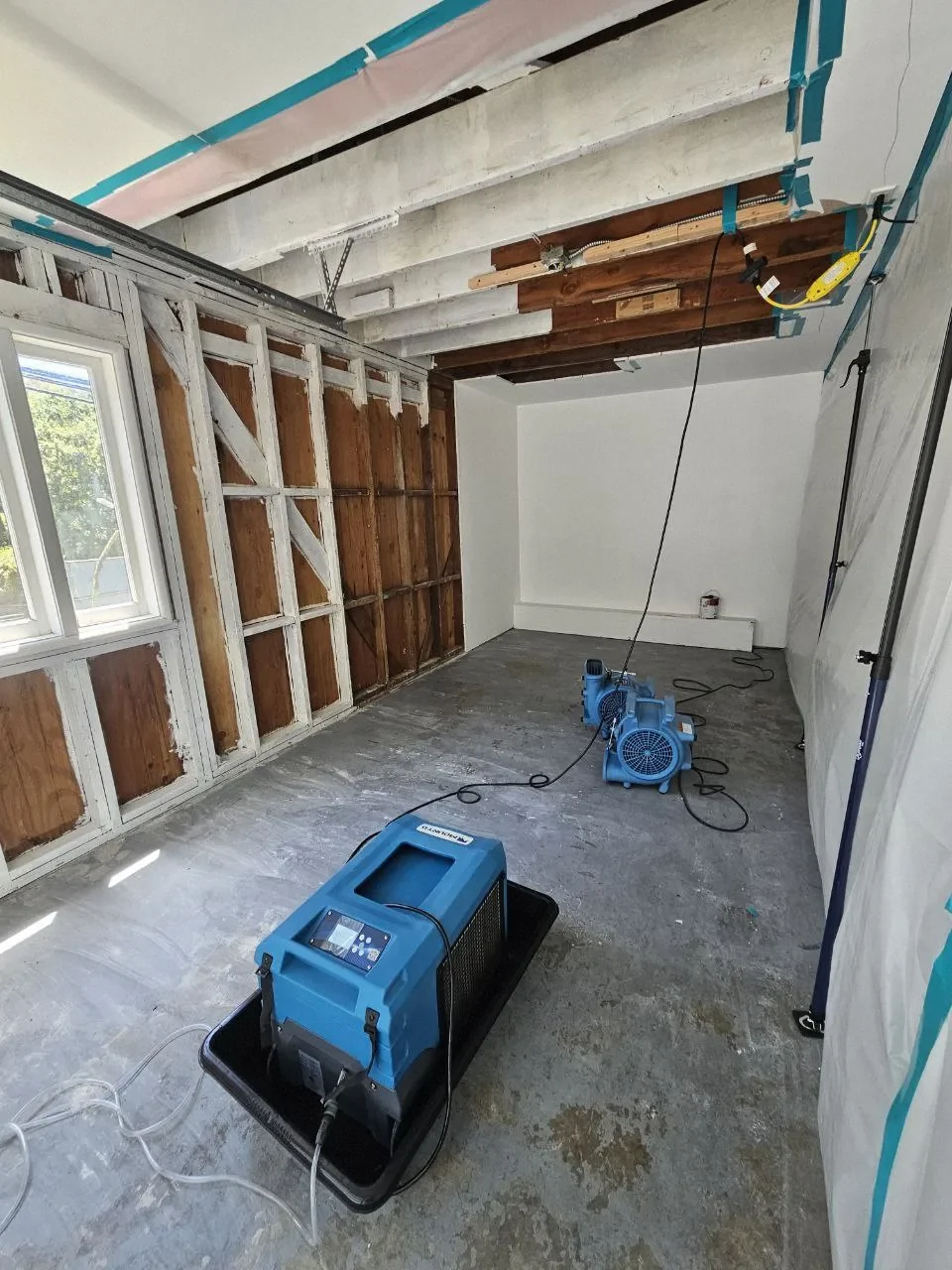
An appropriate scope can include protecting unaffected contents, addressing water in accessible areas and evaluating building materials. Whether a material can be cleaned or must be removed depends on the actual exposure and material. Ask how work areas will be separated from occupied spaces and how changes to the scope will be communicated.
Addressing water inside does not by itself repair an exterior opening, damaged appliance or plumbing line. When the source needs another trade, record who will perform that work and when it can be checked. A finished surface should not conceal an active water problem. Any necessary trade work and inspections should be coordinated before the assembly is closed.
If reconstruction changes outdoor surfaces
Saratoga’s stormwater page identifies a Small Project Worksheet for detached single-family projects that create or replace 2,500 to less than 10,000 square feet of impervious surface and are not part of a larger development. This is a development threshold, not a rule that all flood cleanup or interior drying requires a stormwater worksheet.
If a recovery plan expands to include paving, reconstruction or drainage changes, describe the actual work to the city and ask which process applies. The total new or replaced surface and the type of project may matter. Keep site work, building repairs and cleanup as separate line items so each responsible agency can review the relevant scope.
A worksheet does not determine why a particular property flooded. Where outdoor grading or drainage may have contributed to water entry, a site-specific investigation can examine the existing conditions and options. Do not change a drainage path based only on the direction in which water was seen moving during one storm.
Coordinate documentation and next steps
Notify your insurer or property manager about the event and ask how they want the condition recorded. Keep photographs, a list of affected belongings and the names of the people responsible for source repairs. Insurance coverage is determined by the policy and claim; the presence of water does not establish which coverage applies.
Before work is finished, discuss which materials were addressed, what was inaccessible and whether any separate repair remains. If a building official has placed conditions on occupancy, ask what documentation or inspections are needed before the space is used again. Keep records of those decisions with the scope and any later revisions.
Water Damage Guard accepts calls at (650) 550-0619, 24/7. Describe the source if known, the rooms affected and whether emergency responders have restricted access. The next step can then be based on the property’s condition rather than a promise about a fixed response time or a predetermined amount of work.
Common questions
Can I enter a flooded building?
Follow directions from emergency responders and the building authority. Avoid floodwater and wet electrical equipment, and do not enter a restricted structure.
Does a creek project guarantee a property will not flood?
No. Historical projects describe specific reaches and do not determine the risk at an individual address. Use current official information for the property.
Where can Saratoga residents find sandbags?
The city lists a seasonal self-fill location at 19700 Allendale Avenue. Check current availability and conditions before visiting.
Does flood cleanup always require a stormwater worksheet?
No. Saratoga’s worksheet applies to specified development or redevelopment thresholds, not simply because water entered a building.
Can the same team determine insurance coverage?
Coverage is determined by the policy and claim. Document the conditions and ask the insurer how to report the loss.