Follow access and safety instructions
Explain where outside water entered, whether it has receded and whether officials have restricted access. Note any visible sediment or debris and which spaces were affected. The water source, possible contamination and condition of materials need assessment at the property before cleanup is planned.
Follow evacuation, road-closure and reentry instructions from responsible authorities. Stay away from moving water, downed wires, unstable slopes and wet electrical equipment. Do not enter a flooded building simply to collect belongings. Call 911 for an immediate threat to life.
Once access is permitted, record the path of water and any high-water mark only where it is safe. Note whether sediment, sewage or debris may be present. A photograph can help document the event, but it does not establish the condition of hidden wall or floor layers.
A property-specific flood question
Santa Cruz directs residents to its planning staff or FEMA for property-specific flood-zone and elevation information. Ask about the exact parcel and current map rather than assuming that a neighborhood name determines its zone. A map is one input to a repair decision and does not describe every way water can enter a building.
Santa Cruz floodplain code defines substantial damage as restoration cost equal to or exceeding 50% of the structure’s pre-damage market value. For qualifying substantial improvements in a flood hazard area, the code specifies information to accompany an application for a required permit. Confirm the current zone, regulation and project with the City; this is not a rule that every wet room automatically meets the threshold.
If reconstruction is proposed, ask who will document the damage and whether any additional floodplain review is required. An insurance estimate, a moisture assessment and a City determination serve different purposes. Keep the correspondence and any approved repair documents together for the people coordinating the work.
Local river and coastal context
On August 31, 2026, Santa Cruz announced seasonal maintenance of the San Lorenzo River levee system, including clearing drainage infrastructure and work around gravity outlets. This is a dated City announcement, not evidence that a particular property is protected or that the work has been completed.
City Public Works describes a planned West Cliff Drive road realignment following storm damage and coastal erosion during winter 2023–24. The project remains a public infrastructure plan, not evidence of damage to a particular home or proof that every creek has the same hazard. Consider the actual route of water at the property.
A storm can affect access, utilities and repair scheduling as well as the building itself. Ask the owner or manager who can authorize access and whether a shared route remains usable. Do not cross a closed road or approach unstable debris to inspect a structure.
Identify the water and affected materials
Outside water can carry sediment and other contaminants. Tell the person assessing the loss if wastewater may also have entered, and describe any areas that have been inaccessible. The water source affects handling decisions; the same visible depth does not make two events equivalent.
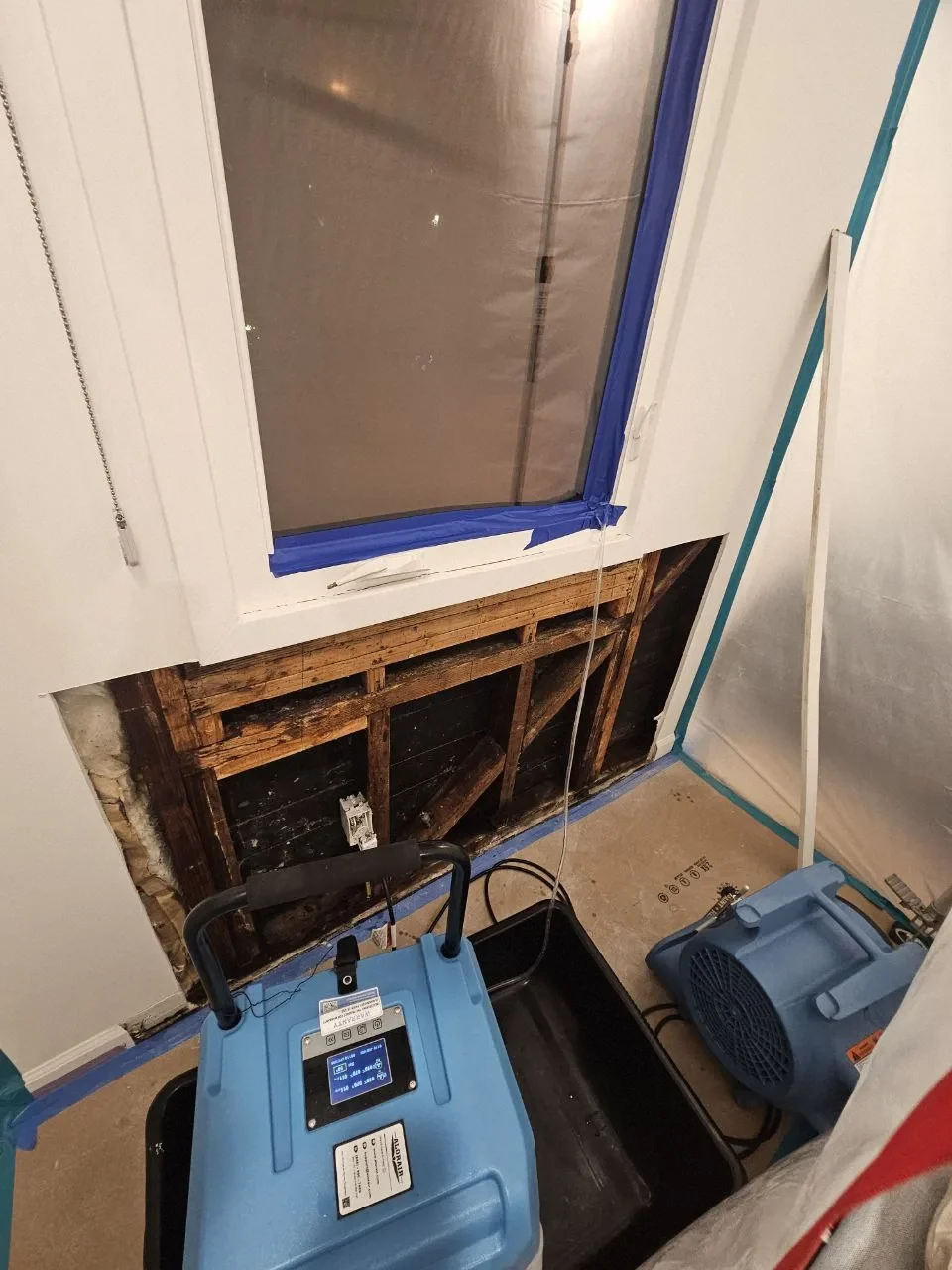
A floor can contain a surface finish, underlayment and structural material. Water may reach lower layers or travel along a wall before it becomes visible. Ask which accessible parts were examined, what was found and where further examination is needed. Do not treat an unexamined cavity as dry simply because the surface looks better.
Before water removal or equipment placement, electrical and structural hazards must be addressed. A qualified professional should evaluate systems or assemblies that may be unsafe. If a component cannot be assessed immediately, document the limitation and the condition that must be resolved before the next step.
Ask for a written scope that distinguishes source control, water removal, material assessment, treatment and reconstruction. The extent of work should follow the observed conditions. If opening a wall reveals additional damage, request an explanation of the change and how it affects the next decision.
A thorough assessment should distinguish what can be examined now from areas awaiting safe entry or another contractor. Ask for the reason a particular layer may need to be opened and how adjacent spaces will be protected. If the scope changes, request a revised explanation identifying the newly observed condition, the proposed treatment and any effect on timing.
Contents and insurance records
Where safe, prepare a list of affected belongings and ask the insurer what photographs, receipts or estimates it needs. Some items may require separate evaluation before disposal. Do not enter an unsafe or restricted room for documentation, and do not assume an item is salvageable solely from its appearance.
Ask how contaminated items will be separated from clean belongings and how debris will leave the work area. The property owner or manager should identify who can approve disposal and where material can be held temporarily. A clear inventory helps coordinate decisions among the owner, insurer and service providers.
Flood coverage, other property coverage and reimbursement depend on the policy and circumstances. Ask the insurer directly about applicable terms and documentation. An estimate of restoration work does not determine whether a claim will be paid or what temporary housing expenses are covered.
For a shared building, discuss how occupants will receive notices and how common corridors will be protected. A repair plan should account for access by residents, contractors and inspectors. If a route cannot be used, the person managing the property should explain the alternative.
Dry, repair and verify
After the source of water has been addressed and access is safe, drying and repair can be coordinated around the affected assemblies. Ask how the team will monitor conditions, what materials may remain in place and when another trade needs access. A new finish should not conceal a continuing water pathway.
If City review or an inspection applies, identify who will request it and how the space will be protected until that step occurs. Keep the approved scope, photographs and any revised estimate available to the owner and the people performing the work. Document questions that remain open.
Where the building cannot be returned to use immediately, agree on a contact and a practical update schedule. The status of a source repair, a drying assessment and an official approval can differ. Communicating each decision separately helps occupants understand what remains before a room is usable.
When water has affected a rented or shared property, identify the person responsible for authorizing each stage and communicating with occupants. Keep records of any interrupted service and the expected next update. Before belongings return to a room, ask whether the necessary assessment and repairs have been completed for that particular space.
Discuss your Santa Cruz property
Call Water Damage Guard at (650) 550-0619, 24/7, to discuss flood cleanup in Santa Cruz. Share the affected spaces, access status and known source of the water. The response depends on the property conditions and work authorized by the responsible party.
If you have an official notice, a previous assessment or a record of source repairs, make the relevant information available to the project coordinator. If the source remains uncertain, say so. The next step should be based on a safe investigation, not on an assumption drawn from a past storm or a map alone.
Common questions
When can I enter after flooding?
Follow official reentry instructions and avoid moving water, downed wires and wet electrical equipment. Access must be safe before an assessment.
How can I check my property’s flood zone?
Santa Cruz directs residents to City planning staff or FEMA for property-specific flood-zone and elevation information.
Does a past flood establish risk for my home?
No. Historical events provide context, while the parcel’s present conditions and applicable map require separate review.
Does every wet room need floodplain review?
No. The City’s floodplain code applies to specified areas and work; ask the City about the current zone and proposed repair.
What should I document for insurance?
Ask the insurer what evidence it needs and document only when safe. Coverage depends on policy terms and the circumstances.
Sources
- Santa Cruz flood preparedness Checked
- Santa Cruz floodplain management code Checked
- Santa Cruz levee maintenance announcement Checked
- Santa Cruz Public Works projects Checked