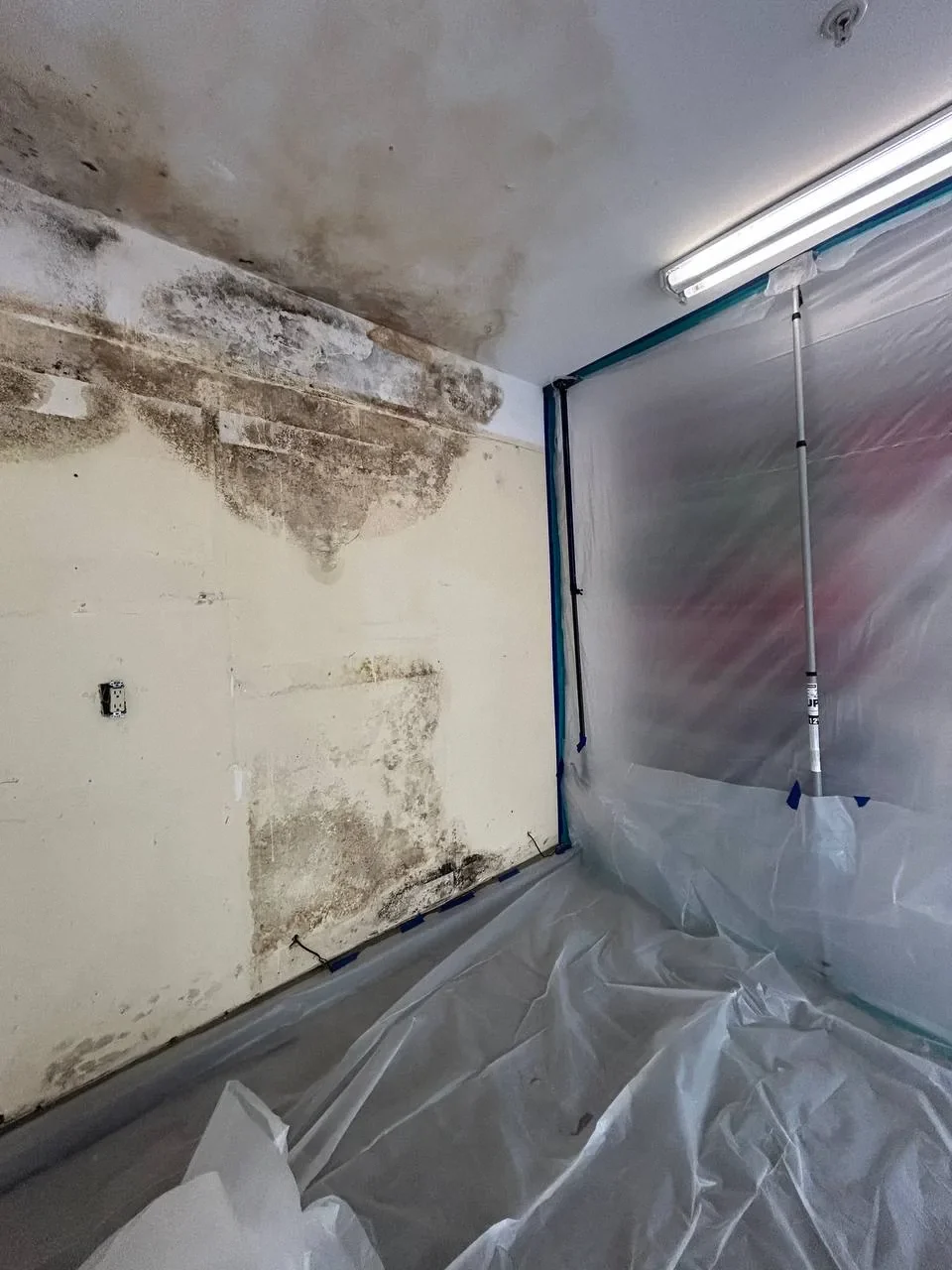
What mold remediation addresses
Mold remediation addresses visible or suspected growth and the materials affected by it, alongside the moisture condition that allowed it to develop. Water Damage Guard provides mold remediation; call (650) 550-0619, 24/7, to discuss the affected area and any known leak or other source of moisture. The appropriate scope depends on what is found, the materials involved, and whether the water problem has been corrected.
Remediation differs from simply removing a stain. A patch can return if water continues to enter or moisture accumulates again. EPA explains that mold should be cleaned and the underlying water problem fixed. A plan should identify both the affected materials and the work needed to address the source, including any repair that belongs to a plumber, roofer, or other specialist.
Recognizing a possible problem
Discoloration, visible growth, a recurring musty odor, or a history of wet materials can prompt an investigation. Mold can be concealed behind finishes or contents, so the visible area may not show the full extent. A stain or smell alone does not identify a species, establish a health diagnosis, or prove precisely where moisture originated.
Tell the person assessing the property when the condition appeared, whether a leak or overflow occurred, and whether the appearance changes after rain or use of a fixture. Previous photographs, plumbing records, and details of repairs can help explain the history. Identify adjacent rooms or units that may have been exposed to the same water source, but do not enter another person's space without authorization.
Avoid disturbing a suspected area while waiting for an assessment. Do not scrub it aggressively, paint over it, or direct a fan at visible growth. EPA cautions that fans can spread mold. Keep children, pets, and anyone with relevant health concerns away from the area, and consult a healthcare professional about symptoms rather than relying on a building inspection for a diagnosis.
Finding and stopping moisture
The investigation considers how moisture is reaching the material: a plumbing leak, roof or window intrusion, water left after an overflow, condensation, or another condition. Each has a different remedy. Repairing the source may require a separate trade, and the responsible party should understand what must be completed before the area is closed or refinished.
A moisture meter can help evaluate accessible building materials, but a single reading cannot describe every concealed layer or identify mold. Instruments respond differently to materials and conditions. If the pattern suggests a hidden wet area, discuss whether an opening is needed, who can authorize it, and how the surrounding space will be protected.
If a building is rented or shared, notify the owner or property manager and coordinate access. Water can travel between units or through common assemblies, and the investigation may require cooperation among several parties. Avoid assigning blame based on a stain's location; the actual path and source need evaluation.
Assessment before a remediation scope
A useful assessment identifies visible growth, affected materials, potential moisture sources, and areas that could not be examined. The scope can change if concealed damage becomes visible after access is obtained. Ask how findings will be communicated and who is authorized to approve a change in work.
The material matters. A hard surface that can be cleaned is different from porous material whose interior has been affected and cannot be adequately cleaned or dried. Drywall, insulation, carpet, furniture, and stored belongings may require different decisions depending on their condition and exposure. The goal is an appropriate plan for the actual material, not an automatic promise to save or discard everything.
Opening finishes can expose additional hazards. If older material may contain asbestos or lead, seek appropriate professional guidance before disturbance. Ask who will evaluate the concern, how the work area will be protected, and how removed material will be handled. Do not assume that a small opening is risk-free.
When sampling may be useful
Inspection and testing are distinct services. EPA states that in most cases sampling is unnecessary when visible mold is present. The need to clean visible growth and correct the moisture source does not disappear because a sample has not been taken. Before paying for testing, ask what question it will answer and how the result would change the proposed action.
A specialist may recommend sampling in particular circumstances, such as an unresolved question about a source or a need for documentation. The person designing the sampling plan should explain where samples will be taken, what the laboratory will report, and the limits of interpretation. A single number or species name without context is not a complete assessment of the home.
EPA notes that no federal limits have been established for mold or mold spores that can be used to check compliance with a federal mold standard. A test result should therefore not be presented as a universal federal pass or fail. If independent assessment or post-work sampling is desired, discuss the purpose and who will perform and interpret it before remediation begins.
Protecting the rest of the property
The work plan should consider how to keep affected material and dust from spreading to spaces that remain occupied. The protective measures depend on the size and location of the work, the materials involved, and the building layout. Ask what areas will be separated, how workers and materials will move through the property, and whether occupants or pets need to avoid a particular route.
Contents should be discussed before they are moved. Stored boxes, textiles, and furniture can block access or carry contamination into an unaffected room. Identify valuable or irreplaceable objects and ask how their condition will be evaluated. Whether an item can be cleaned depends on its material and exposure; a general odor treatment cannot guarantee preservation.
Do not mix cleaning products or add bleach to other chemicals. EPA warns that this can create dangerous conditions. The choice of cleaning method depends on the surface and the scope, and a spray is not a substitute for removing growth, addressing affected material, and correcting moisture. Ask for a clear description of the proposed work rather than judging it by the product name alone.
Cleaning, removal and drying
Remediation may include cleaning suitable surfaces and removing materials that cannot be adequately cleaned or dried. The decision depends on what the material is, how extensively it is affected, and whether concealed areas are involved. Ask which components are proposed for removal, why, and who will replace them after the area is ready for repair.
Moisture control continues throughout the work. If a plumbing repair, roof repair, or drainage correction is still pending, agree on how the schedule will account for it. Drying equipment should be selected and operated only after the area and electrical conditions are assessed. Visible growth should not be dispersed by a fan.
Finishes should not be replaced over unresolved moisture or visible growth. Discuss how the affected surfaces will be checked, what areas remain inaccessible, and whether additional specialists are needed. An attractive new finish is not evidence that a concealed source has been corrected.
How completion is evaluated
Ask for an explanation of what was cleaned or removed, what moisture source was addressed, and what remains outside the scope. EPA advises that after remediation there should be no signs of water damage or mold growth. A returning stain, odor, or wet material warrants further investigation. An inspection has practical limits, especially where a cavity could not be accessed.
The condition of the property should be evaluated as a whole rather than by odor alone. Some odors may have other causes, and a lack of odor does not prove that every concealed area has been inspected. If sampling is proposed after work, ask the specialist what question it answers and how results will be interpreted alongside the physical findings.
No remediation project can promise that a new leak will never occur. Keep records of the source repair and monitor the affected area during normal use or after the conditions that previously caused the issue. If the problem returns, notify the appropriate party and investigate promptly instead of covering the sign again.
Timing and occupancy
The time required depends on the extent of growth, affected materials, access, moisture conditions, and the repair needed to stop the source. A small accessible area and a concealed problem across several rooms will not necessarily follow the same sequence. The scope and schedule may change when an opening reveals additional damage.
Discuss the use of affected rooms, the needs of occupants and pets, and any health concerns before work starts. A healthcare professional can advise an individual about symptoms or medical concerns. The people planning the work can explain the proposed protections and access restrictions, but should not promise a medical outcome.
Ask for progress updates and a clear distinction between remediation, source repair, and reconstruction. If different companies or trades perform those tasks, identify who coordinates them and who will confirm that the relevant work is complete before the next stage begins.
Insurance and records
Coverage for mold varies by policy and cause. California Department of Insurance guidance notes that mold and seepage are often excluded from standard homeowners coverage, while policy language and endorsements may change the analysis. Contact your insurer or agent about the specific loss rather than assuming that a mold finding is covered or excluded in every situation.
Keep photographs taken safely, the history of the water problem, source-repair invoices, assessment findings, and communications with the insurer. If you intend to make a claim, report the loss promptly and ask about documentation and necessary emergency measures. The restoration scope describes proposed physical work; the insurer decides coverage under the policy.
If additional material is discovered during the work, record the finding and ask for a revised scope before authorizing the change. Notify the insurer if a claim is open. Keeping these records together helps explain the relationship between the moisture source, the remediation work, and any subsequent repair.
Common questions
Will painting over mold fix the problem?
No. The growth needs to be addressed and the moisture source corrected. Paint can conceal the visible sign without resolving the cause.
Is testing always required before remediation?
EPA says sampling is unnecessary in most cases when visible mold is present. Ask what specific question a test would answer.
Can a moisture meter identify mold?
A moisture meter can help assess wet materials, but it does not identify mold and cannot describe every concealed layer.
How long will remediation take?
The duration depends on the extent, materials, access and source repair. The scope can change when concealed conditions are found.
Can I stay in the property during work?
That depends on the work area, protective measures and occupants’ needs. Discuss access and any health concerns with the appropriate professionals.
Does insurance cover mold remediation?
Coverage depends on the cause, policy exclusions and endorsements. Ask your insurer about the specific claim.