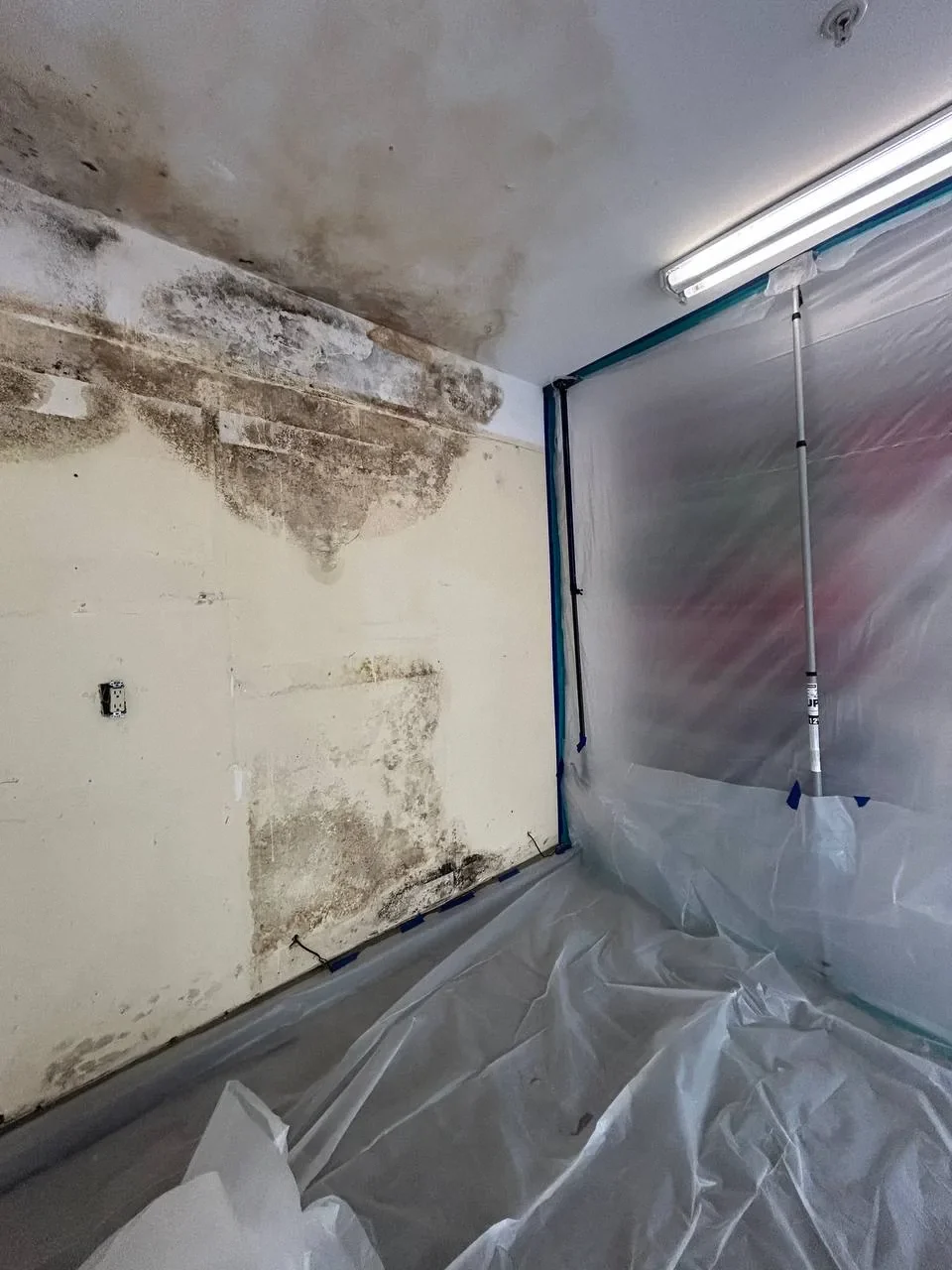
Understand the moisture first
Share where the damp area or visible growth appeared, when it was first noticed and whether water is still entering. Mention any previous leak repair and areas that cannot be accessed. The source and affected materials need assessment at the building before a treatment plan is chosen.
Keep people and animals away from visible growth and do not disturb it. A stain may guide an investigation but cannot establish the type of mold or the full affected area. If water is entering, take only safe steps to stop it. Do not enter standing water to reach an electrical switch or appliance.
Note whether the moisture returns after a fixture is used or rain falls, and preserve a record of earlier repairs. Photographs are useful only if they can be taken safely. The first visible spot may be some distance from the actual source, especially when water moves beneath a floor or behind a wall.
A rental moisture concern
Alameda County Public Health’s 2019 mold resource advises a renter to tell the landlord about the moisture problem and contact the city building code office if the landlord does not respond. The document distinguishes an inspection for underlying moisture or building conditions from mold testing. Because the resource is dated, confirm current contact details and procedures.
San Leandro’s tenant relocation ordinance addresses certain landlord-caused terminations for eligible units on parcels containing at least two tenant-occupied housing units. It has exceptions and conditions. The existence of a moisture complaint does not automatically establish eligibility or require a tenant to move. Ask the city how the rules apply to the actual tenancy and any notice received.
Keep written reports and responses together, including dates and the rooms involved. If the situation presents an immediate danger, contact the appropriate emergency service rather than waiting for a routine housing process. The owner, tenant, city and restoration team have different responsibilities; one party’s assessment does not decide every legal or insurance issue.
A specific accessory-unit checklist
San Leandro’s checklist updated in April 2025 is for a specific process to legalize qualifying unpermitted accessory or junior accessory units built before 2020 and outside a flood zone. It calls for a third-party licensed contractor to complete the checklist and includes dampness, visible mold and sewage among the conditions to review.
The checklist includes an exception for minor mold on surfaces that normally accumulate moisture as part of their intended use. It is not a citywide mold survey and does not prove that an ordinary residence has a particular defect. If the affected space is an accessory unit, ask the city which process and standards apply to the property.
A checklist finding is a starting point for the proposed repair, not a substitute for examining the source. The city form says that a violation response leads to remediation, repair or reconstruction proposed in the permit drawings. Identify the actual condition and confirm the applicable submittal before work is concealed.
Finishes and work behind them
San Leandro lists painting, papering, tiling, carpeting and counters as examples of permit-exempt finish work in R-3 occupancies. That exemption does not grant permission to ignore other codes or exempt a separate regulated plumbing, electrical or structural repair. Explain the full scope to the Building Division before rebuilding.
A finish can hide water-damaged backing. If a leak continues behind a newly painted wall, a cosmetic repair will not correct it. Ask the professional investigating the source whether the area needs to be opened and how the condition of the remaining material will be assessed before new finishes are installed.
If the work changes after an assembly is opened, document what was discovered and ask whether plans or permits need revision. A homeowner or manager should know who is responsible for source repair, inspection and the treatment of wet material. The steps can involve different contractors.
Plan how materials will be handled
Treatment depends on the material, the cause and duration of moisture, and the condition found during assessment. Hard surfaces, porous insulation and personal belongings may need different handling. Ask for an explanation of containment, cleaning, removal and disposal before approving the work.
Water may travel beneath flooring or into wall backing beyond the visible stain. Identify which areas are accessible, where further examination is planned and what remains uncertain. If an area cannot be examined safely at first, that limitation should be recorded rather than treated as proof that the material is dry.
Air movement must be considered around affected material so dust is not spread to other rooms. If a heating or cooling system may have been affected, ask a qualified professional to evaluate it before operation. Protect adjacent spaces and coordinate any movement of contents with the people responsible for the building.
The sequence of work also matters. A repair to the source may require access through the same assembly that is being evaluated for moisture. Agree on how the area will be protected while any trade work and required inspection take place. If additional material is found to be affected, ask for a description of the finding and its effect on the proposed treatment. This makes the change reviewable and helps the owner coordinate any related building work. Keep the affected area separated from normal use until the responsible professionals say the work is complete and it is appropriate to return.
Document the work
When access is safe, list affected contents and the rooms where they were located. Ask an insurer what photographs, estimates or receipts it needs and whether it wishes to inspect items before disposal. Coverage depends on the policy and circumstances; neither an odor nor a complaint determines the claim.
A useful scope separates stopping the water source, evaluating material, treating the affected area, drying and restoring finishes. Each decision should be based on the conditions found. Ask how a new finding will be communicated and who has authority to approve a change.
Before a wall is closed, confirm that the source has been corrected and that applicable inspections are complete. Ask how the remaining material was evaluated for readiness. Keep the final scope and records so another contractor or the property owner can understand what was done.
Arrange a discussion
For a shared building, identify the person who can authorize access to common areas and arrange any interruption of shared services. A wet ceiling in one unit may have a source elsewhere. A clear record of where and when water appeared helps coordinate the investigation without presuming its cause.
Call Water Damage Guard at (650) 550-0619, 24/7, to discuss a San Leandro property. Mention any official notice, prior inspection and restriction on entry. An on-site evaluation provides the basis for the next steps and the work appropriate to the actual building.
If the source has already been repaired, share that information and any records. If it remains unknown, say so. Rebuilding should follow source correction and evaluation, with a clear handoff among the parties responsible for the repair.
Common questions
What should a renter do about continuing moisture?
Alameda County’s 2019 resource advises notifying the landlord and contacting the city building code office if there is no response. Check current local procedures.
Does every leak qualify for relocation assistance?
No. San Leandro’s ordinance has eligibility conditions and exceptions, including requirements relating to the parcel and the reason for termination.
Does the city accessory-unit checklist cover all homes?
No. The April 2025 form addresses a specific legalization process for qualifying unpermitted ADUs and JADUs.
Can finish work be exempt from a permit?
San Leandro lists certain finish work in R-3 occupancies as exempt, subject to other applicable rules. A separate regulated system repair can still require a permit.
Can a stain show all affected material?
No. Moisture can be concealed beneath flooring or behind wall finishes, so further evaluation may be needed.