Start with safe access
Identify the affected spaces, whether water is still entering and any restrictions on access. Describe when the problem began and whether a fixture or pipe is suspected. A property assessment is needed to determine the source and the condition of materials before the work is planned.
Keep people and pets away from standing water, damaged ceilings and electrical equipment. If a water shutoff can be reached without entering a hazardous area, closing it may limit a supply leak. Never enter water to reach a breaker or operate a wet appliance. Call 911 for an immediate threat to life and follow instructions from responding officials.
Water can appear at a point some distance from the source. Note when the problem started, whether fixtures were in use and whether rain preceded it. Take photographs only from a safe location. A mark on a wall is useful evidence for an investigation, but it cannot by itself identify a pipe, roof or drainage failure.
Determine the sewer jurisdiction
Oro Loma Sanitary District serves designated parts of San Leandro. The city also has its own sewer system, so the appropriate agency depends on the address. For the city system, San Leandro assigns maintenance of the service lateral to the property owner and the public sewer main to the city. Confirm the relevant system before assuming that a district rule or contact applies to the property.
If wastewater enters through a fixture or floor drain, stop adding water to connected fixtures while the cause is investigated. Keep people away from affected water and arrange for the line to be evaluated. A private line and a public main are different parts of the system, and the visible location of a backup does not settle where the blockage is.
A cleanup plan should be coordinated with the people repairing the source. If the drain can back up again while a room is being treated, replacement finishes could be affected a second time. Ask the responsible contractor or agency what has been checked and what remains uncertain, and retain the findings with the property record.
Storm drains and local waterways
Alameda County Flood Control Zone 9 serves part of San Leandro and lists the Belvedere, D1, F and H pump stations in its zone inventory. Zone boundaries and facilities should not be mistaken for the flood designation of an individual building. Use the address and current official information when making a property-specific decision.
San Leandro says city crews clear storm-drain inlets and basins and inspect problem flood areas before winter rains. The Flood Control District also reports hazardous-tree removal along San Leandro Creek completed in 2025. These are different maintenance activities by different agencies. Neither a past project nor a seasonal inspection guarantees that a private property will remain dry.
After outside water reaches a building, record the apparent entry point and high-water mark if conditions allow safe access. Outdoor water can carry sediment or contamination. A qualified professional can examine the route, openings and affected materials after the immediate hazard has passed. Do not approach moving water or damaged electrical equipment to document it.
A storm drain and a sanitary sewer have different functions and should not be treated as interchangeable disposal points. When arranging cleanup, ask how removed water and debris will be handled under the applicable requirements. If a public inlet appears obstructed, provide the city with the location rather than attempting to clear it while water is moving. The safe response depends on present conditions and instructions from the agency responsible for the infrastructure.
Check the flood designation
San Leandro participates in the National Flood Insurance Program and directs owners to FEMA maps for property-specific flood information. A neighborhood name, a nearby channel or one wet yard is not enough to determine the designation of a particular address. Ask the city about the current map and how the result relates to planned work.
The city’s flood-damage prevention guidance explains that rebuilding a substantially damaged building below the 100-year flood elevation can be subject to additional requirements. The official determination, the location and the proposed work matter. Consult the city before assuming that a damaged building can simply be restored without floodplain review.
Insurance coverage is a separate question. Ask the carrier what information is required and how the policy applies to the event. Keep notices, photographs and repair estimates together. A flood map, a maintenance project and a claim decision each answer different questions; none alone explains the condition of every room.
Repairs and permits
San Leandro lists water heater replacement and sewer lateral replacement among residential work requiring a building permit. A water-damage project may also involve plumbing, electrical, structural or finish work, so describe the full scope to the city. Removing standing water and replacing a building component are distinct steps.
Ask the contractor who will prepare the application and arrange inspections. Work that must be inspected should not be concealed before the appropriate approval. If an assembly is opened and a new condition is found, discuss whether the repair plan or permit needs to be revised. Keep approved documents available as required.
The scope may change as the source is confirmed. A failed heater, a defective line and water entering from outdoors do not call for identical repairs. Identify which party will stop the source and who will evaluate wet materials. The city can explain permitting for the proposed work, while the people inspecting the building can describe its physical condition.
Evaluate the affected assembly
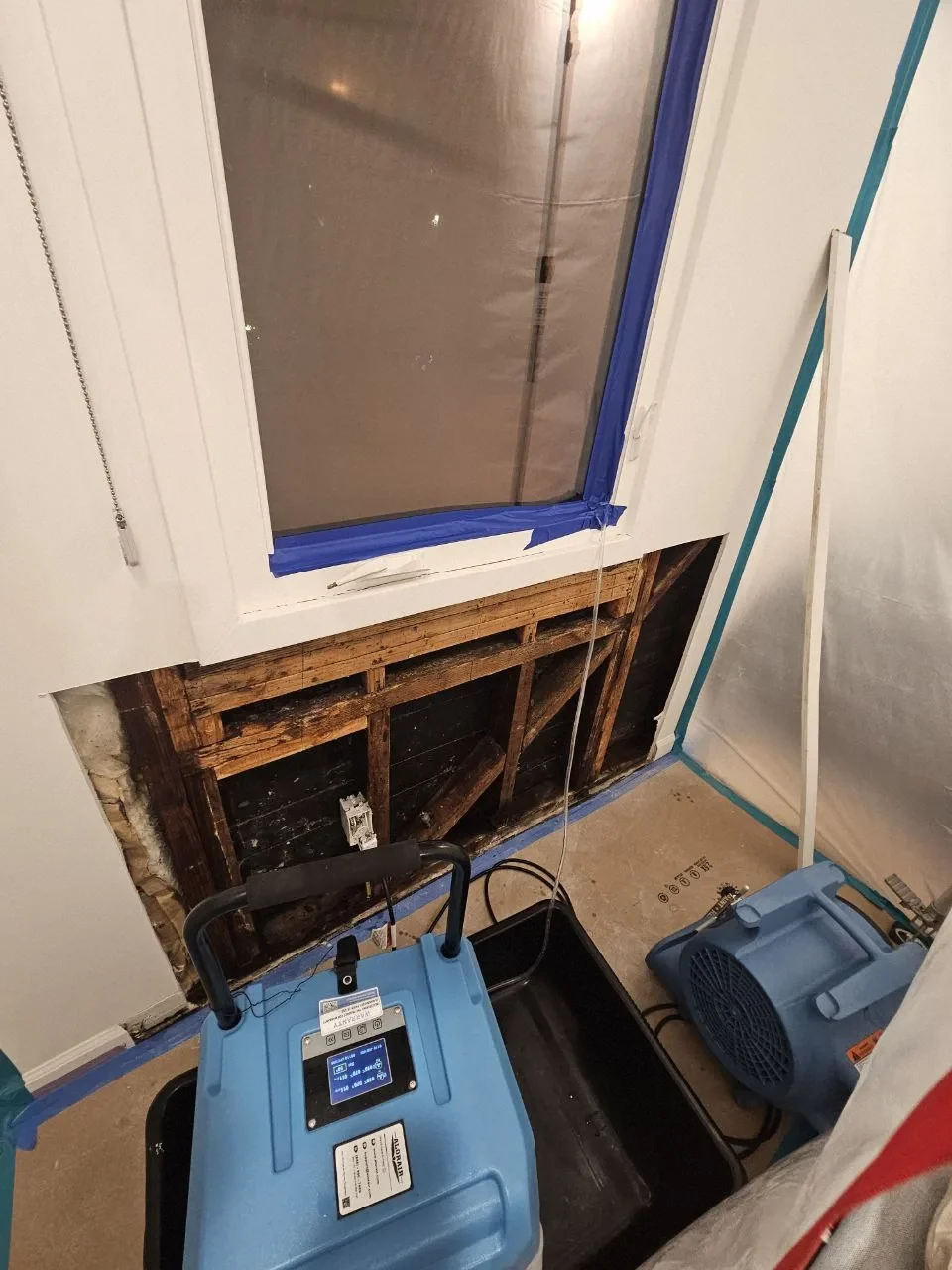
Water can move beneath flooring, into a cabinet base or behind wall finishes. The visible edge of moisture does not necessarily show the entire affected area. Assessment should consider the source, duration and material, and should identify where additional access is needed to understand the condition.
Ask for a written plan that separates source correction, removal of water, treatment of affected material, drying and reconstruction. Each step has a purpose. If the source remains active, new finishes may become wet again; if a damaged pipe is repaired, the surrounding material may still require evaluation.
When sewage or outdoor water is involved, tell the team evaluating the space. Material handling may differ from an isolated supply leak. Keep occupants out of the affected area and ask how adjacent rooms and belongings will be protected. The method should follow the actual material and exposure rather than a single assumed solution.
A floor assembly can include a finished surface, backing and structural support. Each layer may need a different evaluation. Ask what can be checked without removal, where an opening may be needed and how the team will determine whether the remaining materials are ready for reconstruction. If access is limited, record that limitation instead of treating it as proof that no water reached the area. A revised plan may be needed if hidden conditions differ from the first assessment.
Neighborhoods and building context
The city’s 2022 neighborhood association map identifies Estudillo Estates, Broadmoor, Washington Manor and Bay-O-Vista among local association areas. Association boundaries are a way to describe areas; verify the actual address and sewer jurisdiction rather than assuming every property has the same service provider.
Homes and businesses can have different layouts, past repairs and shared systems. A building’s age or neighborhood does not prove that a particular supply or drain pipe is made of a certain material. Ask a qualified professional to identify the accessible components and describe what further inspection may be needed.
If you rent, notify the owner or manager promptly and preserve a written record of the water problem. Explain the affected areas, when it began and whether it is continuing. Repair access, habitability, insurance and temporary accommodation are separate issues whose requirements depend on the tenancy and circumstances.
Plan the handoff
Before anyone opens a concealed area, ask how belongings and unaffected rooms will be protected and who will coordinate trade work. A plumber may repair a source, while another professional evaluates electrical equipment or structural components. The proposed scope should identify these responsibilities and explain how additional findings will be handled.
Ask the insurer what photographs, receipts and damaged-item details it needs. Coverage depends on the policy and event. Do not put yourself in danger to preserve evidence, and do not assume a phone description settles the full extent of damage. Keep a timeline and copies of notices where they can be shared with the people evaluating the property.
Call Water Damage Guard at (650) 550-0619, 24/7, to discuss a San Leandro property. Share known source repairs, utility visits and access restrictions. The sequence should follow the actual condition, required agency reviews and a clear plan for returning the space to use.
For a shared building, establish who has authority to arrange access to common rooms and building systems. Let occupants know about any restrictions and the planned sequence of work. A repair to a source in one area can affect a neighboring unit, while treatment of the wet materials may take place in a different room. Written coordination helps the people involved understand which part of the work is complete and which inspection or decision is still pending.
Common questions
Which sewer agency serves my San Leandro property?
Oro Loma serves designated parts of the city and San Leandro operates its own system. Confirm the address and agency before applying a district-specific rule.
Who maintains a lateral in the city sewer system?
San Leandro assigns the service lateral to the property owner and the public sewer main to the city for its system.
How can I check my flood zone?
The city participates in the National Flood Insurance Program and directs owners to FEMA maps. Check current official information for the address.
Does a sewer lateral replacement need a city permit?
San Leandro lists sewer lateral replacement among residential projects requiring a building permit; confirm all applicable agency requirements for the property.
What does Zone 9 tell me about my building?
Zone 9 serves part of San Leandro and has district facilities, but its inventory alone does not establish a property’s flood designation.
Sources
- Oro Loma sewer trouble guidance Checked
- San Leandro sewer lateral FAQ Checked
- Alameda County Flood Control Zone 9 Checked
- Alameda County Flood Control Zone 13 Checked
- San Leandro storm information Checked
- San Leandro substantial damage guidance Checked
- San Leandro storms and flood information Checked
- San Leandro permit guidance Checked
- San Leandro neighborhood association map Checked