Water damage restoration in Hayward: safety and the source
When water enters a building, move people and animals away from the affected area. If a fixture shutoff is safely reachable, close it. Do not enter standing water to operate a switch or touch wet electrical equipment, and stay away from a sagging ceiling. Call 911 for an immediate threat to life.
Write down when water was noticed, where it appeared and whether it continues to enter. A supply leak, outdoor flood and sewage backup require different source investigations. Clear-looking water is not proof that it is clean. Photograph the affected area only when safe and follow any official restriction on access.
Water Damage Guard is based in San Carlos. Call (650) 550-0619, 24/7, to discuss a Hayward property. Describe the source if known, affected rooms and any utility or building instructions. The scope of restoration depends on an assessment of the actual conditions.
Water service and repair boundaries
Hayward says its water customers maintain and repair pipes on the customer side of the meter, while the city maintains the meter and its street-side facilities. Establish the location of a leak before assuming which party will repair it. The person investigating should describe what was found and whether water has been stopped.
The city lists (510) 881-7933 for water infrastructure reports during published weekday hours and (510) 293-7000 for after-hours emergencies. Confirm the current hours and provide the address and observed condition. A call to the utility and the assessment of wet materials in the building address different parts of the event.
Once a source repair is arranged, ask the restoration team to follow the path of the water. A pipe can be repaired while the surrounding wall, cabinet or floor remains damp. Keep the repair report with photographs and any later inspection records.
Sewer responsibilities and reporting
In Hayward’s city sewer service area, customers maintain private laterals through their connection to the public sewer. Establish where a defect lies and which agency serves the address before arranging repairs. A pipe may extend beyond the edge of a yard, so an inspection should identify the actual location and the work proposed.
A sewer backup needs a source investigation and an assessment of contaminated materials. Avoid using connected fixtures while the problem is being located; extra flow can worsen an overflow. Do not open a public manhole or assume the blockage is in one location merely because a low fixture overflowed.
The city lists sewer overflow reporting contacts for properties in its sewer service area. Explain the symptoms and follow the responsible agency’s directions. A private contractor may be needed for a building or lateral even when the public system is also checked.
Flood control and storm preparation
Alameda County Flood Control Zone 4 serves part of Hayward. The district reports that identified improvements were deferred after a proposed assessment increase failed in June 2025. That is a description of a local project decision, not proof that a particular property is in a flood zone or will flood.
During inclement weather the city identifies a self-service sandbag station at 16 Barnes Court. Operating rules and availability depend on activation status, so check before traveling. Sandbags are a preparation measure; they do not make a flooded road safe or replace an evacuation order.
For the actual address, consult current official flood information and ask an insurance adviser how a designation relates to the policy. A map, a public channel and a private entry point answer different questions. After a storm, record the apparent route of water only if access is safe.
Rental conditions and relocation
Hayward’s Residential Rental Inspection Program accepts inspection requests from tenants, owners and their representatives and also performs periodic city inspections. Describe the visible issue, location and prior communications when making a request. The city decides how it will respond; a request is not a guarantee of a particular finding.
The city’s temporary relocation program addresses qualifying displacement for significant code-compliance repairs, major remodels or natural events not caused by a tenant or guest, subject to exclusions. A wet room does not automatically establish eligibility or a need to vacate. Ask the city about the actual notice, property and circumstances.
Tenants should notify the owner or manager promptly and retain a dated copy. If access or essential facilities are affected, discuss arrangements in writing. An emergency order takes precedence over an estimated repair schedule.
Wildland interface and fire repair
Hayward’s designated wildland-urban interface includes an area east of Mission Boulevard from south of D Street to the Union City boundary. A general area description does not determine the designation of every parcel. Check the applicable map and ask the city about the property and planned work.
After a fire, follow the responsible officials’ directions about entry. Smoke, heat and water used during suppression can affect different building materials. If reconstruction or a system repair is proposed, describe the actual scope to the city and ask which building or fire approvals are required.
Vegetation management near a structure and cleanup inside a damaged room address different problems. An address-specific fire-zone review can inform reconstruction but cannot identify all materials affected by the current incident.
Neighborhood names and individual properties
The city’s neighborhood plans map identifies Mt. Eden, Tennyson-Alquire, Harder-Tennyson, Hayward Highland, Fairway Park, Glen Eden, Southgate, Jackson Triangle and Santa Clara. These names help orient residents; they do not establish a property’s sewer service provider, flood risk or fire-zone designation.
Use the actual address when contacting the city, a district or an insurer. Two buildings in the same neighborhood may have different plumbing layouts, drainage and repair histories. Do not infer a pipe material or a concealed defect from the neighborhood name or the building’s age.
If multiple units share a wall, floor or drain, notify the property manager about the affected areas. Coordinate access to common spaces and avoid attributing responsibility to a neighboring unit until the source has been investigated.
Follow the water through the building
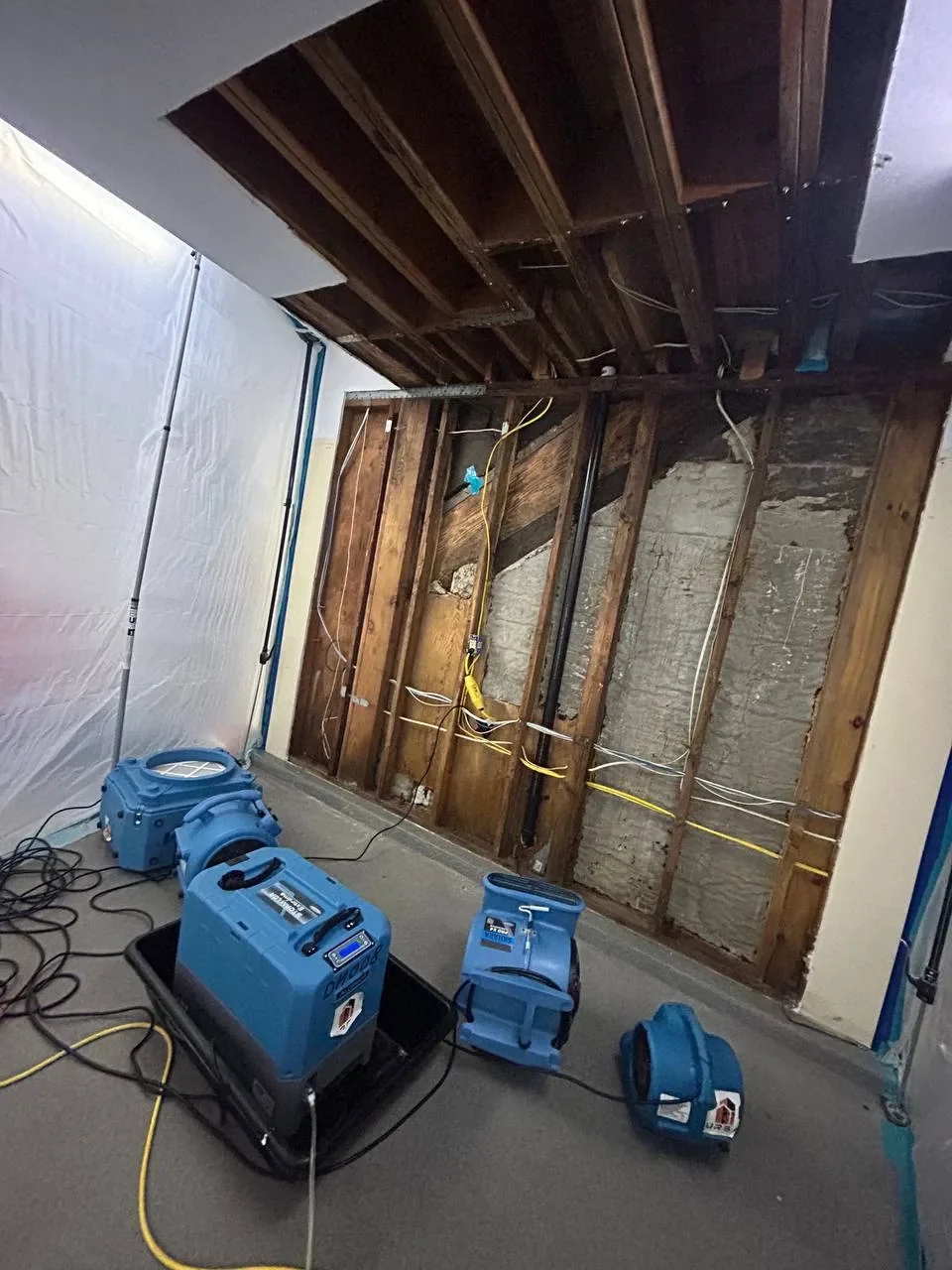
A wet floor can meet a cabinet, baseboard or wall cavity that retains moisture after the surface looks dry. Ask what was inspected and what remains inaccessible. A reading at one location is helpful but cannot establish the condition of every concealed component.
The water source affects cleanup. A sewage overflow, stormwater and a supply-line leak present different contamination questions. Ask the team how it will protect unaffected areas, handle contents and decide whether a material can be cleaned or needs removal.
If the source is continuing, coordinate its repair with drying. A new finish should not cover an unresolved leak. When opening an assembly reveals more damage, request an updated description and determine whether additional trades or inspections are needed.
Contents, insurance and records
When safe, photograph the affected rooms and list belongings by location. Ask the insurer what information is needed before disposal if the condition permits time to wait. Electronics, documents, furniture and textiles may require different evaluation; a dry-looking exterior does not establish that an electrical item is safe.
Keep source-repair reports, estimates, photographs, invoices and any permit or inspection records. Tenants should also retain notices and requests to the owner or manager. These documents can help explain the sequence, but coverage is determined by the policy and insurer.
If an essential room is unavailable, discuss a safe access plan and temporary arrangements with the responsible party. In a shared property, decide how equipment and removed materials can move without unnecessarily affecting clean spaces.
Coordinate reconstruction
After the immediate water source is controlled, identify the trades responsible for plumbing, electrical, structural and finish work. Ask the city which permits apply to the actual scope and who will schedule required inspections. Work should not be concealed before an applicable inspection.
A restoration plan should say which materials were inspected, what is proposed for removal or cleaning and what remains uncertain. If concealed damage changes the project, ask for a written update. Drying and reconstruction should be based on the condition found rather than a fixed schedule promised before access.
After completion, retain the records and report any recurrence. Earlier photographs and repair documentation can guide a new investigation, but they cannot establish that a later leak has the same source.
Questions to ask the team
Who will establish whether the source is still active? Which spaces were examined, and how will unaffected areas be protected? Ask for answers specific to the property, including how contents will be handled and how additional findings will be communicated.
For a sewer problem, first confirm whether the address is served by the city or Oro Loma. For a storm event, separate the question of public drainage from the point where water entered the building. Neither a map nor a neighborhood name substitutes for an assessment.
Before authorizing reconstruction, clarify who will coordinate trades, permits and inspections. A clear record of the source repair and the affected materials is more useful than a promise of insurance coverage or a fixed response time.
If the work affects an occupied building, also ask how the team will protect access to unaffected rooms and what the occupants need to know before equipment is installed. When another contractor is repairing the source, identify the contact responsible for sharing its findings. Record changes to the proposed scope as they arise.
Common questions
Who repairs water pipes on the customer side of the meter?
Hayward says its water customers maintain and repair customer-side pipes; the city maintains the meter and its street-side facilities.
Who maintains laterals in the city sewer service area?
Hayward says customers maintain private laterals through their connection to the public sewer in the city service area.
Where does Hayward list storm sandbags?
The city identifies a self-service station at 16 Barnes Court, subject to activation and availability.
Can a tenant request a rental inspection?
Yes. Hayward’s program accepts requests from tenants, owners and their representatives.
Does a neighborhood name determine fire-zone status?
No. Check the address against the applicable current map and ask the city.
Sources
- Hayward water leak reporting Checked
- Alameda County Flood Control Zone 4 Checked
- Hayward sandbag information Checked
- Hayward residential rental inspection program Checked
- Hayward tenant relocation assistance Checked
- Hayward defensible space and property transfers Checked
- Hayward neighborhood plans map Checked
- Hayward sewer overflow reporting Checked
- Hayward sewer overflow reporting Checked