Avoid floodwater and wait for safe access
Do not walk or drive through floodwater. It can conceal debris, open drains and electrical hazards. Move people and pets away from affected spaces and follow evacuation instructions. Never enter standing water to operate a switch or handle wet equipment. Call 911 for an immediate threat to life.
When officials allow access, record where water entered, how high it reached and which rooms became wet, provided this can be done safely. Outdoor water may carry sediment or contaminants. A sewer backup, supply leak and water crossing a doorway are different source questions.
Water Damage Guard provides flood cleanup from San Carlos. Call (650) 550-0619, 24/7, to discuss the Hayward property and any access restrictions. The work needed depends on a safe assessment of the building and affected contents.
Ward Creek and local flood planning
Alameda County Flood Control maintains the Ward Creek channel between Line F and Pacheco Way in Hayward. The agency’s maintenance responsibility for that segment does not establish the condition of a private drain or a particular building.
Hayward’s resilience plan warns that severe storm surge combined with abnormally heavy rain could flood bayside flatlands, especially downstream Ward Creek in South Hayward. This is a planning scenario, not a prediction of flooding at an individual address. Use current official maps and agency information for the property.
An environmental study published by Hayward in 2026 describes the city’s floodplain management ordinance as regulating development and flood barriers on land subject to flooding, mudflow or flood-related erosion. Ask the city how its actual ordinance and any conditions apply before planning a barrier or other construction.
Report the right condition
Hayward accepts reports of clogged storm drains through Access Hayward and directs emergency flooding reports to police. Give the location and describe the observed condition. A public drain report helps the agency investigate its system; the damaged interior still needs its own assessment.
Do not attempt to open a public drain or cross moving water to clear debris. A professional can examine the route by which water entered a building, while the city or district can address its facilities. Keep a record of the report and any instructions received.
If water appears through a plumbing fixture rather than a doorway or exterior wall, say so when requesting help. The source must be investigated rather than inferred from a broad flood-zone label. A backup may involve different contacts and cleanup considerations.
Assess the affected building
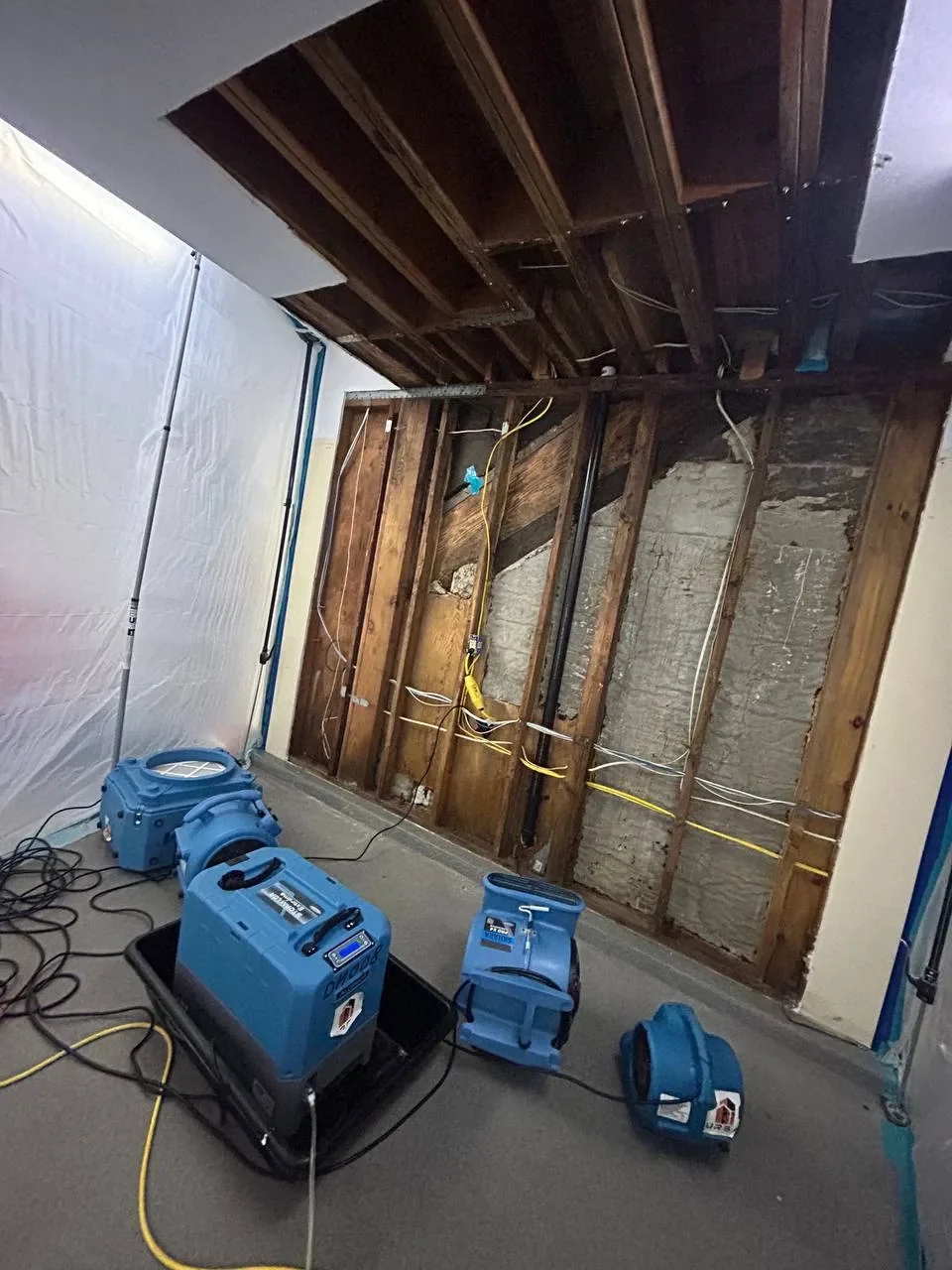
Floodwater can move beneath floor finishes and into lower walls, cabinets or insulation. Ask which areas were inspected and what remains inaccessible. A surface can appear dry while moisture persists in an enclosed assembly.
The cleanup plan should address contamination as well as drying. Ask why a material is proposed for cleaning or removal and how unaffected rooms will be protected. Outdoor water and sewage have different histories from a clean supply line, so the source and exposure matter.
If electrical equipment or appliances were wet, do not restart them until the appropriate professional or utility has assessed them. Follow the building authority’s instructions about access and occupancy. A falling water level does not by itself make a structure safe.
Contents and insurance records
Once it is safe, photograph affected rooms and list belongings by location. Ask the insurer what documentation is needed before disposal when the circumstances allow. Coverage depends on the policy and the insurer’s review, not on the presence of a flood-control channel.
Paper records, electronics, upholstery and hard furniture may require different evaluations. Discuss whether a specialist should assess a particular item and how it will be stored or moved. Avoid carrying contaminated materials through clean rooms without a plan.
Keep receipts, photographs, trade reports and any permit records together. A tenant should retain repair requests and notices. These records can help explain the sequence, but they do not determine responsibility or guarantee reimbursement.
Coordinate source repair and reconstruction
A drainage issue can require an agency report, a private repair and restoration of the building. Identify who will address each part and who will share the findings. If a plumber or electrician is involved, coordinate their work with the people handling wet materials.
Before new finishes are installed, ask how the source correction and affected assembly will be checked. If construction, plumbing or work in the public right of way is proposed, ask the city or responsible district which permits and inspections apply.
If more damage is found after a floor or wall is opened, request a revised scope and explanation. Required inspections should be scheduled before work is covered. Retain the final documents with the source-repair history.
Plan for future storms
Use the actual address to review the current flood map and ask about insurance. A regional project or a historical event cannot establish the risk, policy terms or drainage condition of every parcel. Ask an adviser about separate flood and sewer-backup coverage if relevant.
When conditions are safe, consider where runoff approaches doors, garages and other low openings. A qualified professional can evaluate recurring entry and propose changes appropriate to the site. Before altering drainage or installing a barrier, check applicable city rules.
Keep emergency supplies and records accessible, but do not remain in a dangerous area to protect possessions. If another event occurs, record the new observations and do not assume its cause is identical to an earlier loss.
Understand the path into the property
A high-water mark can help document what was observed, but it does not by itself show the source of the water or the condition of the materials below a finish. Record whether the water entered at an exterior opening, rose through a fixture or appeared in more than one location. Do this only when the area can be reached safely.
For recurring entry, ask the investigator how the building, site and nearby drainage connect. A blocked public inlet, a damaged private pipe and water crossing the ground are different possibilities. The person evaluating the property should identify evidence for the proposed cause and explain what remains unknown.
If an improvement is recommended, ask who will maintain it and whether the proposed work needs an agency review. Do not direct water onto a neighboring property or alter a public facility without the required authorization.
Occupied and shared buildings
Where multiple households use a building, identify who can authorize access to shared rooms and communicate the schedule. A wet hallway, storage room or utility space may affect residents beyond the unit where water first appeared. Notify the manager and document the locations that can be seen safely.
Discuss essential facilities, belongings and any restrictions before equipment is installed. If an occupant cannot use a room, the owner or manager should explain the temporary arrangement and the route for updates. Legal and insurance questions depend on the actual circumstances and should be directed to the appropriate adviser or agency.
After source repair and cleanup, ask how residents will be told about remaining work and required inspections. An estimated schedule should be revised when concealed damage is discovered; it does not override an official order about access.
Questions for the team
Ask what was inspected, what remains uncertain and how affected materials will be separated from clean spaces. Clarify how belongings will be inventoried and whether other trades are needed.
Ask who will correct the source and what evidence will be used before reconstruction. If a city or district inspection is required, identify who schedules it and how changes to the scope will be communicated.
After work is complete, retain a written record and report recurring dampness or odor. A new investigation may be needed to distinguish remaining moisture from a separate source.
Common questions
Can floodwater be entered if it looks shallow?
Avoid it; water can conceal debris, openings and electrical hazards.
Who maintains the named Ward Creek segment?
Alameda County Flood Control says it maintains the channel between Line F and Pacheco Way.
Does the resilience plan predict flooding at my address?
No. It describes a planning scenario; check current official information for the property.
Where can clogged storm drains be reported?
Hayward accepts reports through Access Hayward; emergency flooding is directed to police.
Does a map decide insurance coverage?
No. Coverage depends on the policy and the insurer’s review.