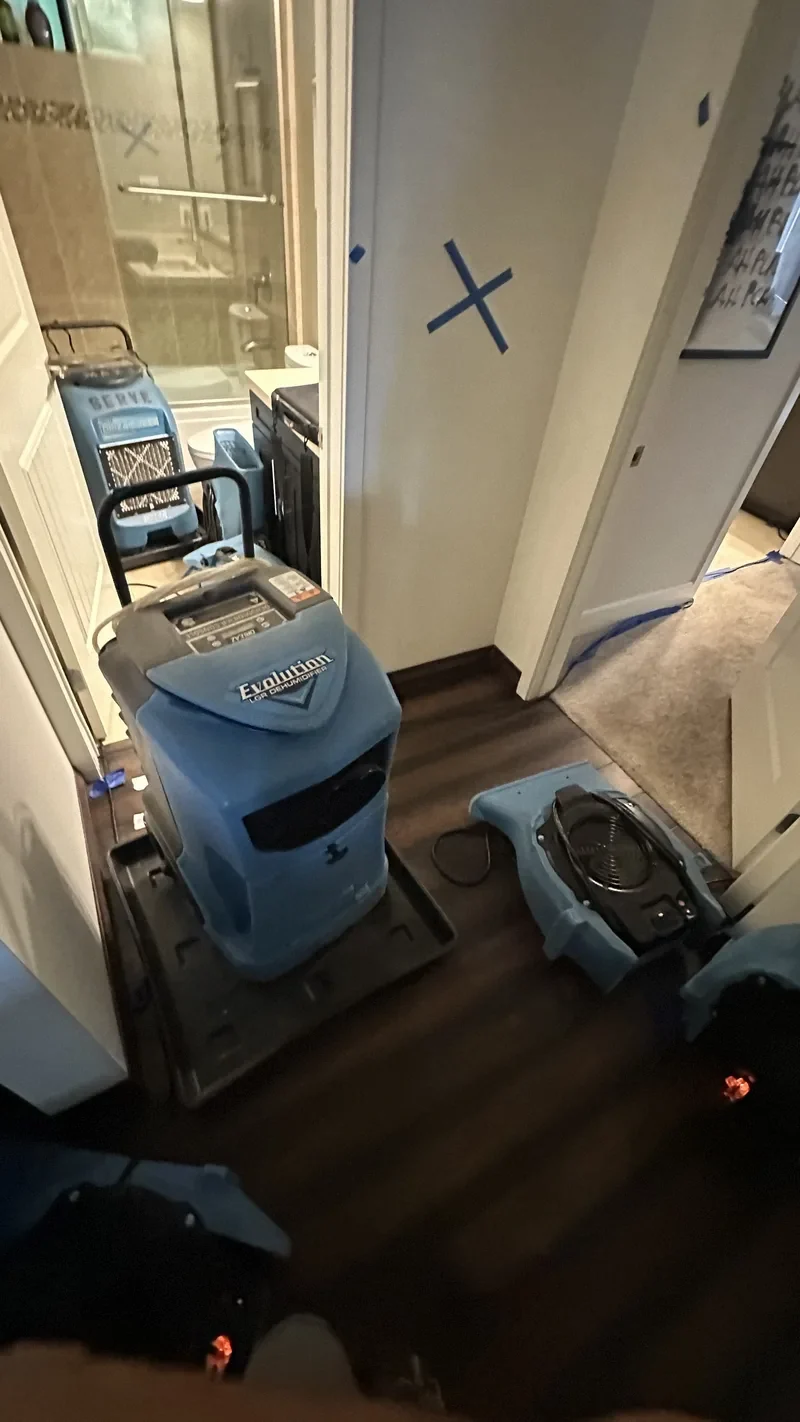
Keep away from the immediate hazard
Water can enter a building from a supply pipe, a drain or outdoors. Move people and pets away from the affected area. Close a fixture shutoff only if it is safely accessible; do not enter standing water to reach an electrical switch or touch wet equipment. Stay clear of a sagging ceiling and call 911 for an immediate threat to life.
Note when water appeared, which rooms are affected and whether it continues to rise. Clear-looking water does not establish that it is clean or identify its source. Take photographs only when safe and follow any instructions from responders or the building authority.
Water Damage Guard provides restoration from its San Carlos base. Call (650) 550-0619, 24/7, to discuss a San Francisco property and its access conditions. Source repair and assessment of wet building materials are related, but a plumbing repair alone does not dry the surrounding room.
Upper and lower sewer laterals
The San Francisco Public Utilities Commission, or SFPUC, says the property owner maintains the upper lateral and must repair or replace it if it is in poor condition. The owner also maintains and clears the lower lateral. These segments connect the building to the public sewer and can extend beyond what is visible on the property.
If an SFPUC inspection finds a structural defect in the lower lateral requiring repair, the agency generally performs that work at no extra cost. That distinction concerns structural repair, not the owner’s obligation to keep the lower lateral clear. The actual defect and any exceptions must be determined for the property.
If wastewater enters the building, avoid using connected fixtures while the cause is investigated and keep occupants away from affected areas. The SFPUC lists 311, or (415) 701-2311 from outside San Francisco, for water, power and sewer emergencies. A pipe repair and cleaning contaminated materials inside the building are separate work.
Stormwater and the combined sewer
Most of San Francisco is served by a combined sewer network that carries wastewater and stormwater in the same pipes. This describes most of the city, not every drainage arrangement. A backup in a particular building still requires investigation of the fixture, lateral and public system.
The National Weather Service recorded 5.46 inches of rain in San Francisco on December 31, 2022. That measurement describes a historical storm at the reporting location; it does not establish flood depth or damage at a particular address. Current conditions and the path of water into the property matter.
After heavy rain, avoid floodwater and wet electrical equipment. If water enters through a fixture, tell the appropriate agency or plumber what happened. Water ponding at an outdoor opening, a blocked private drain and a sewer backflow are different observations and should not be assigned the same cause without evidence.
Understanding storm flood maps
SFPUC’s 100-Year Storm Flood Risk Map, updated in December 2024, shows modeled stormwater runoff risk. It does not show flooding depth above ground or flooding from the Bay or ocean. Check the map and its explanation for the actual address rather than treating a neighborhood label as a parcel determination.
A modeled map is a starting point for questions about a specific property. Check how water reaches exterior openings, whether a garage or occupied room lies below the street, and what prior owners or managers have documented. An elevation or risk category does not identify the path of water through a particular door, wall or fixture.
Ask an insurer about the coverage and exclusions that apply to the building and its contents. Keep maps, photographs and past repair records with other property documents. When investigating recurring water entry, describe the observed path and timing to the person assessing the building; a sewer backup and surface runoff may call for different remedies.
Sandbags and emergency information
San Francisco Public Works offers up to ten free sandbags to residents and businesses during severe rainstorms, while supplies last and with proof of address. Verify the current availability and instructions before traveling. Sandbags are a preparation measure, not a reason to remain in an evacuation area or cross flooded streets.
An owner can consider how runoff approaches doors, garages or low openings before a storm. A professional can assess recurring entry and propose work appropriate to the property. Before modifying drainage or a building, ask the city which approvals are needed.
Keep records and emergency supplies accessible, but do not risk injury to protect possessions. After the event, document the route of water and any high-water mark only when safe. Those observations can help distinguish outdoor entry from a plumbing problem.
Rental housing and repairs
The San Francisco Rent Board’s tenant petition form allows a rent reduction request for a substantial decrease in a housing service when rent has not been reduced accordingly. A petition is a process, not an automatic award. The applicable tenancy and facts should be checked with the Rent Board or a housing adviser.
Tell the owner or manager about leaks or damaged areas promptly and preserve the date and wording of the request. If an essential room cannot be used, discuss access, belongings and temporary arrangements. Keep any official notice and follow restrictions on entry.
A property assessment documents observed water and materials; it does not determine every tenant right or insurance question. If the source may affect a shared wall or another unit, notify the person responsible for the building and coordinate access rather than assigning fault from the first visible stain.
Neighborhood context
A 2022 San Francisco Department of Elections analysis-neighborhood map labels Mission, Bayview Hunters Point, Sunset/Parkside, Excelsior, Bernal Heights and Noe Valley. These are analytical tract groupings, not legal parcel boundaries or an assessment of a particular home.
Use the address when asking SFPUC, the city or an insurer about a property. Buildings in the same area can have different lateral layouts, entry points and repair histories. Do not infer a pipe material or flood designation from a neighborhood name or building age.
For an older building, permit records and a qualified plumbing inspection can help identify the actual installation. If more than one unit is affected, coordinate with the owner or association and document the observed locations before drawing conclusions about the source.
Trace moisture through the building
A wet floor can meet a cabinet base or wall cavity that remains damp after the visible surface dries. Ask what was inspected, which spaces remain inaccessible and whether an opening is needed. A reading at one location is useful information but does not describe every concealed component.
The source affects the response. Sewage, outdoor floodwater and a supply leak present different contamination and repair questions. The team should explain how it will protect unaffected rooms, handle contents and decide whether material can be cleaned or needs removal.
If opening an assembly reveals additional damage, request a written update. Stop ongoing water entry before replacing finishes. A repair should address the actual source as well as the materials that became wet.
Mold and the source of moisture
Visible growth or a persistent damp odor calls for investigation. Color alone does not identify a species or establish the hidden extent. Avoid disturbing suspect material until the affected area and occupants’ needs have been considered.
A roof, plumbing fixture, window or drainage issue may require a different trade from the person handling damaged finishes. Ask how the source will be controlled and what will be checked before a wall or floor is closed.
A property assessment is not a medical diagnosis. People concerned about symptoms should consult a qualified health professional. If testing is proposed, ask what decision the result will inform and how the work would change.
Contents and documentation
When safe, list affected belongings by room and photograph their condition. Ask an insurer what information is needed before disposal if circumstances allow time. Papers, electronics, textiles and furnishings may require different evaluation, and wet electrical equipment should not be energized.
Keep source-repair reports, estimates, invoices, communications and applicable permit records together. Tenants should retain notices and dated repair requests. The documentation can explain the sequence, but coverage depends on the policy and the insurer’s review.
If a room is unavailable, discuss access and temporary arrangements with the responsible party. In a shared building, agree on a route for equipment and removed materials that protects unaffected areas.
Coordinate repair and reconstruction
Once the source is controlled, ask how remaining moisture will be checked before finishes are replaced. Plumbing, electrical, structural and finish work can require different trades and approvals. Describe the actual scope to the city and identify who will schedule any required inspection.
If concealed damage changes the work, request an updated scope and explanation. A fixed schedule cannot be established reliably before access and assessment. Required inspections and official restrictions take precedence over an estimate’s completion date.
After work, retain the source diagnosis and restoration records. If water returns, report the new observation promptly. An earlier record can assist an investigation, but a later event may have a different cause.
If the work affects a shared building, identify who may authorize access to common areas and how occupants will receive updates. A wet utility room or hallway can affect more than one unit. Keep observations separate from assumptions about fault, and ask the appropriate professional to explain the evidence for the proposed repair. Record any change to the scope and the person responsible for arranging it.
Common questions
Who maintains the upper sewer lateral?
SFPUC says the property owner maintains it and repairs or replaces it when necessary.
Who clears the lower lateral?
The owner maintains and clears it; SFPUC generally performs necessary structural repairs after its inspection.
Does all of San Francisco use a combined sewer?
SFPUC says most of the city is served by a combined network, not necessarily every property.
Does the storm flood map show water depth above ground?
No. SFPUC says it does not show depth above ground or Bay and ocean flooding.
How much rain fell during the 2022 New Year storm?
The National Weather Service recorded 5.46 inches in San Francisco on December 31, 2022; a particular property may have experienced different conditions.
Sources
- SFPUC sewer laterals and backwater valves Checked
- SFPUC sewer system and storms Checked
- National Weather Service 2022–2023 atmospheric rivers report Checked
- SFPUC storm flood maps Checked
- San Francisco Public Works sandbags Checked
- San Francisco Rent Board tenant petition form (archived copy) Checked
- San Francisco 2022 analysis-neighborhood map Checked