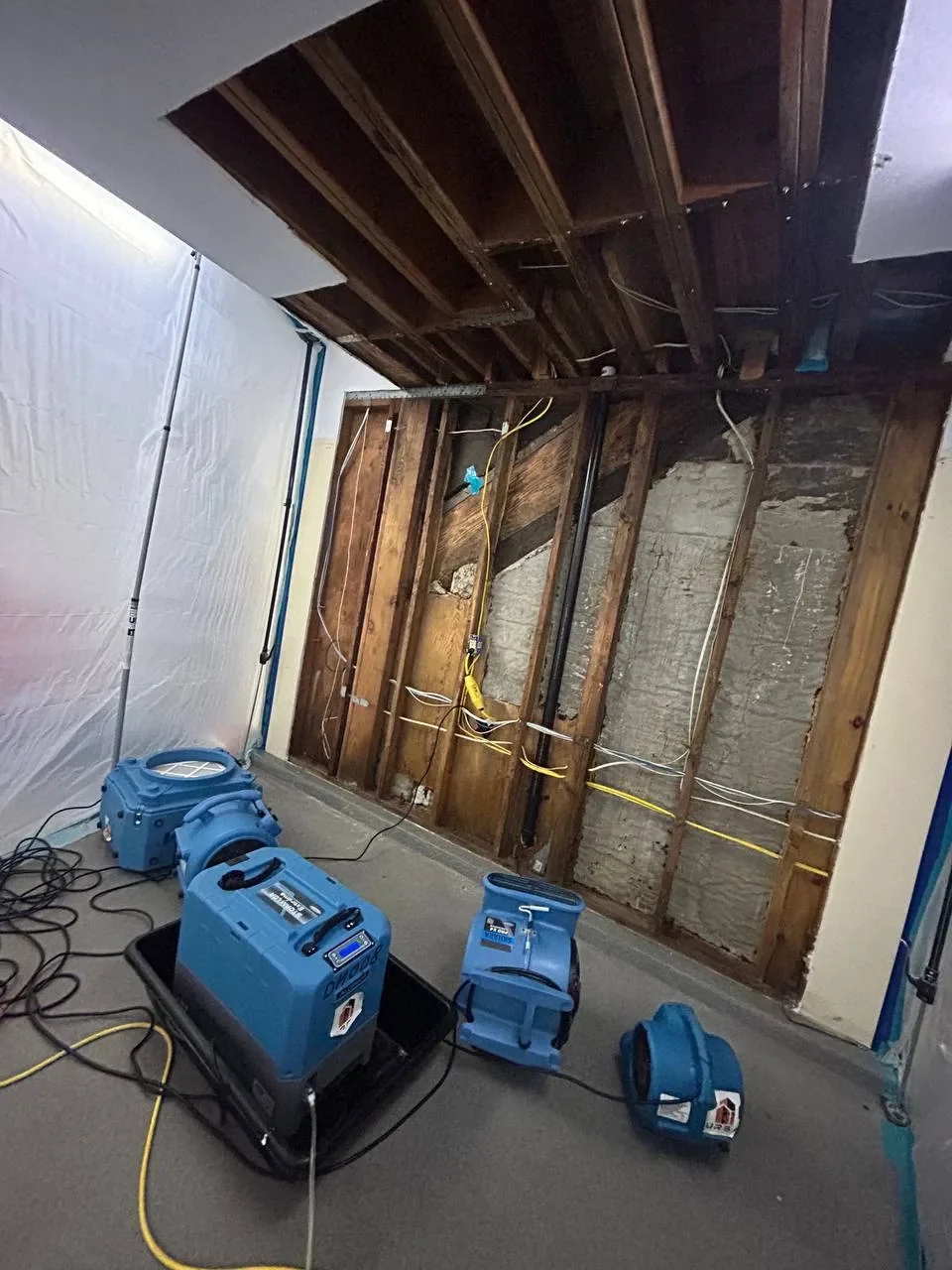
Respond to the conditions at the property
Water Damage Guard helps Brisbane property owners and occupants address water damage from leaks, backups and stormwater. The right first step depends on whether water is still entering, where it came from and whether the affected rooms can be reached safely. A caller can describe the symptoms without knowing the technical cause; the source and extent still need an individual assessment.
Brisbane’s General Plan identifies Central Brisbane and Northeast Ridge as planning subareas with residential uses. These are planning descriptions rather than proof that any particular property shares the same construction or hazard. A unit on a slope and a property closer to the Bay may face different drainage questions, and an interior plumbing leak can occur in either setting.
If water is near electrical equipment, stay away and arrange for a qualified person to make it safe. Do not touch a wet switch, appliance or cable. Keep people away from a bulging ceiling and leave the building if structural conditions appear unsafe. In an immediate life-threatening emergency, call emergency services.
The water and sewer systems serve different purposes
Brisbane Public Works describes a water system with approximately 25 miles of mains, five storage tanks and four booster pump stations. Its sewer operation maintains approximately 19 miles of gravity and pressurized mains and four sewer lift stations. These are public-system descriptions; the location of a building leak or backup still has to be determined.
When a pressurized supply is leaking, a safely accessible shutoff can limit additional water while a qualified trade diagnoses the failure. Tell other occupants before interrupting the supply. If the leak appears related to an appliance, do not operate or move electrical equipment through standing water. Document the affected area only from a safe position.
A drain backup has a different response. Limit the use of fixtures that may add flow, keep people and pets away from wastewater, and explain where the water appeared. A blockage in a building line, a shared lateral or the public main cannot be distinguished reliably from the room name alone.
Private and shared sewer laterals
Brisbane’s sewer lateral guide says that, in the City sewer districts, the property owner maintains the lateral from the building into the City main. The guide also describes some central Brisbane homes with shared private laterals, sometimes crossing private easements, maintained by the properties served. The actual connection and any agreement should be checked for the address.
If a backup may involve the City system, Brisbane lists Public Works during business hours and police outside business hours for reporting it. The City’s FAQ gives 415-508-2130 for Public Works and 415-467-1212 for police outside business hours. Provide the location and what was observed; the report does not by itself assign responsibility for the cause or the cost.
When sewage has entered a building, avoid spreading it into clean rooms. The pipe problem and the cleanup are separate work items: restoring flow does not remove contamination from materials already touched by wastewater. Ask the appropriate repair and restoration professionals how those tasks will be coordinated.
Stormwater, the lagoon and the Bay
Brisbane says its storm-drain system discharges untreated water to Brisbane Lagoon or directly to San Francisco Bay. Storm drains are not the same as the sanitary sewer system. During rain, water from a paved surface, slope or blocked inlet may reach a building by a route that is not obvious from inside. Document the observed entry point and conditions without placing yourself in moving water.
OneShoreline describes Brisbane Lagoon as having been created during construction of US 101 and serving a stormwater detention role. It and the City are preparing a shoreline resilience plan focused on low-lying development and infrastructure. A regional plan is context for future decisions, not a guarantee that an individual property is protected or that work has been completed.
Flood conditions vary by elevation, drainage, tides and the actual storm. A creek, lagoon or shoreline map does not establish the hazard at a specific parcel. Check the property and follow local warnings. Avoid crossing flowing water and do not enter a flooded room containing electrical equipment.
Dry the affected assembly, not only the surface
Water may be visible on one side of a wall but travel through joints into another room or beneath flooring. An assessment considers the water source, affected materials and duration of exposure. A surface that looks or feels dry is not a reliable account of the condition inside the assembly.
Accessible water can be removed before the remaining moisture is addressed. Depending on conditions, the plan may involve protecting contents, opening an area for inspection or removing material that cannot be adequately cleaned or dried in place. The scope should be explained to the person authorizing work and adjusted if concealed conditions differ from the initial assessment.
Before finishes are replaced, confirm that the source has been controlled and coordinate any necessary inspections. If a pipe or exterior drainage defect is repaired by another contractor, keep the schedules connected. Replacing a floor while water is still entering can conceal the same problem.
Homes on slopes and after heavy rain
Runoff may arrive from uphill ground, a roof discharge, a paved area or a damaged drainage feature. A retaining wall can be part of that setting, but its appearance alone does not show whether water pressure or another cause has affected it. A leaning wall, new cracks or movement of soil calls for site-specific professional review.
Do not dig behind a suspect wall, approach a moving slope or work on a roof while conditions are unsafe. Photograph an observed entry point from a safe location and note whether mud or debris came with the water. The information can help the people assessing the drainage and any interior damage understand the sequence.
If repair involves grading, a wall or changes in the public right-of-way, ask the City which approvals apply before construction. A temporary measure for a storm and a permanent site repair are different decisions. The separate hillside guide explains the locally documented planning and permit considerations.
Occupants, belongings and next decisions
For a rented or shared property, notify the owner or manager promptly and describe the affected spaces and any ongoing source. Arrange permission and access to adjoining units or common areas when water may have traveled beyond the first room. Keep a record of the notice and subsequent observations.
An insurer may request photographs, a timeline and invoices. Ask the insurer what documentation it needs and what the individual policy covers. Temporary housing and storage may be important when a property cannot be occupied, but reimbursement depends on the policy and its terms. Preserve receipts and obtain guidance from the relevant insurer or housing contact.
If a musty odor or visible growth is present, investigate the moisture source and limit disturbance. Painting over a damp surface does not repair the water pathway. The amount of material requiring attention depends on the actual condition and use of the space, not a general assumption about the city.
Common indoor sources and how they differ
An appliance hose or fitting can leak slowly behind a cabinet, or release water quickly while a machine is operating. The first visible water may be on a floor away from the failed connection. Once power and access are safe, a qualified person can examine the appliance and connections. The source repair and drying the surrounding materials are related jobs, but one does not replace the other.
A bathroom leak can travel through a floor opening or a concealed pipe chase before a ceiling stain appears below. Describe when the fixture was last used and whether the mark changes with use. A single observation cannot identify the exact failure. Avoid opening a ceiling that may be holding water or working around damaged wiring; let the person assessing the area decide how to inspect safely.
Water near a heater may originate from a valve, pipe or the heater itself. Shutoffs and fuel or electrical components should be handled only when they can be reached safely. Ask the appropriate trade to diagnose the cause before replacing equipment. Then assess adjacent stored belongings and wall or floor materials that may have remained wet.
Coordinate the people involved
The occupant who first finds water may not be the person who can authorize work. Identify the owner, manager or association contact and agree on who will receive updates. If a shared wall or floor may be affected, arrange access to the other side and avoid assuming the problem is confined to the first visible room.
A clear scope should describe the spaces inspected, any limits on access, the proposed drying or cleanup and the subsequent work needed by a repair contractor. If an insurer is involved, ask what it needs before disposing of damaged contents, provided they can be retained safely. Keep the decisions and any photographs together so that later inspections have a useful starting point.
Record any changes in the water level or affected rooms as conditions develop.
Repair permits and a clear handoff
Ask the Brisbane Building Division about the actual proposed repair, particularly if plumbing, wiring, a structural component or exterior site work may be replaced. Describe what is known before work begins and update the scope if opening a damaged area reveals additional problems. Arrange any required inspection before the work is covered.
Keep a simple record of the source, dates, rooms, photographs and work performed. This helps the owner, repair contractor and any insurer understand the same sequence. If an area could not be accessed, record that limitation rather than assuming it was unaffected.
Water Damage Guard is based in San Carlos and takes calls for Brisbane at (650) 550-0619, 24/7. Tell us whether the source is active, whether the water could contain sewage or outdoor debris, and who can provide safe access. Once conditions are assessed, discuss a scope suited to the property and the work that must be done by other trades.
Mold after water damage
If materials remain damp after water enters, ask about assessing affected areas for mold before repairs conceal them. The appropriate response depends on the material and conditions found.
Common questions
Who maintains a sewer lateral in Brisbane’s City sewer districts?
The City’s lateral guide says the property owner maintains the line from the building into the City main. Confirm the actual line and any shared arrangement for the property.
Can Brisbane homes share a private sewer line?
Yes. The City guide describes some central Brisbane homes served by joint private laterals, sometimes across easements. The served properties maintain the shared line.
Who should I contact about a suspected City sewer backup?
Brisbane lists Public Works at 415-508-2130 during business hours and police at 415-467-1212 outside business hours for suspected City-system backups.
Where does Brisbane stormwater go?
The City says its storm-drain system discharges untreated water to Brisbane Lagoon or directly to San Francisco Bay.
Does the Brisbane shoreline plan protect my specific home?
The plan concerns flood resilience for low-lying development and infrastructure. It does not establish completed protection or the hazard at an individual property.
What does the City identify as residential planning areas?
The General Plan identifies Central Brisbane and Northeast Ridge as planning subareas with residential uses. A planning designation does not establish the condition of a specific home.