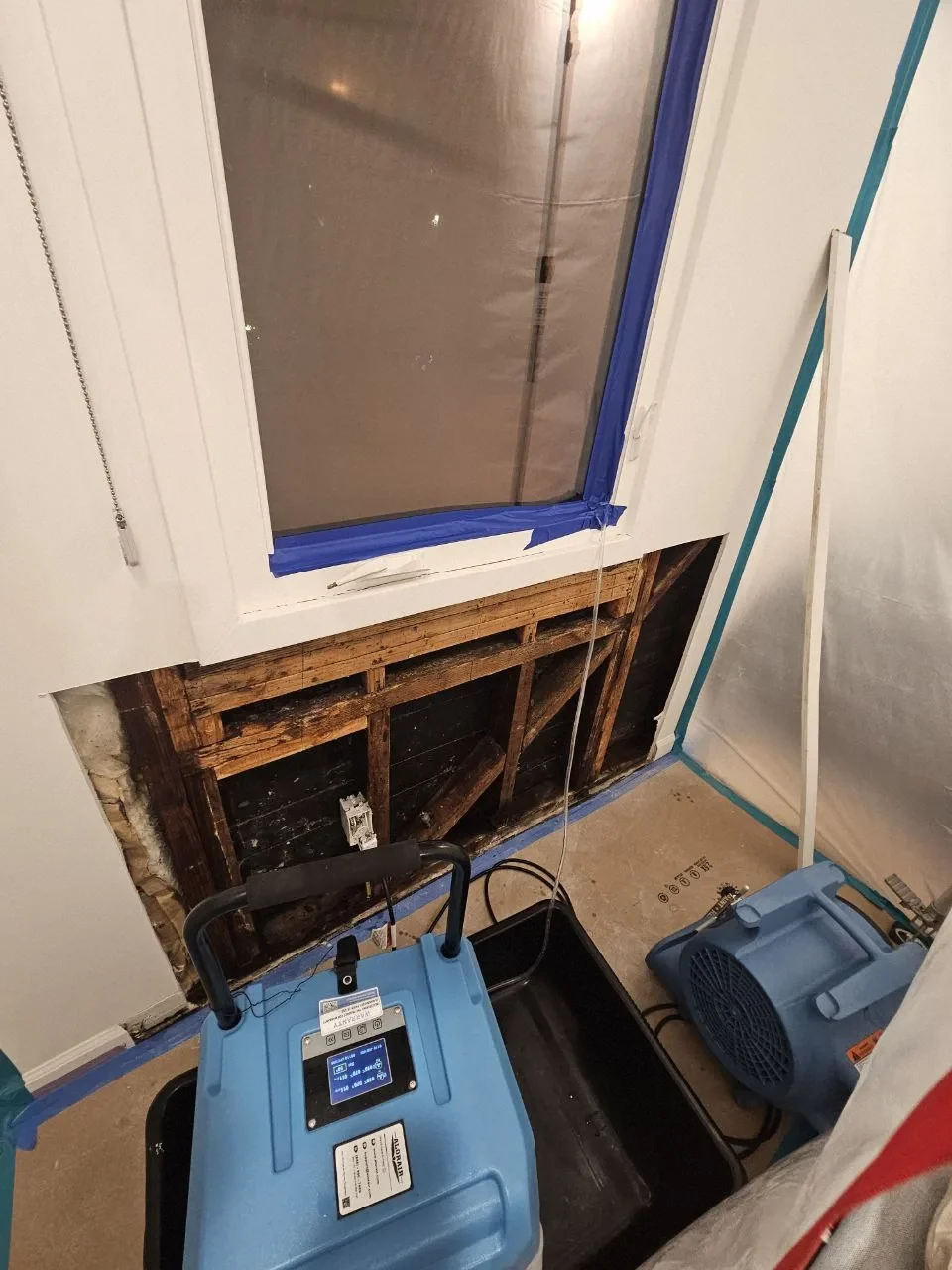
Water damage in Daly City: source and immediate safety
When water appears in a Daly City home, first find a safe place away from standing water, electrical equipment, sagging ceilings and unstable materials. Do not walk through water to reach a panel or handle a wet appliance. If there is an immediate danger, leave the area and call 911. A fixture shutoff may be useful when it is accessible without entering a hazardous area, but do not assume the visible water is the only affected area.
Daly City Water and Wastewater Resources asks customers who need a water shutoff to call 650-991-8200, including after hours. Its plumbing guidance warns customers not to turn off the meter themselves because damage to the service can lead to repair liability. The proper next call depends on who supplies the address. California Water Service lists Daly City in its Bayshore District, so check the water bill or ask the provider rather than assuming that every property has the same retailer.
Once the active source is controlled, note which rooms and belongings were affected and when you first noticed the water. Photos taken from a safe position can help explain the sequence to a property manager or insurer. Tell the restoration team whether the source was a supply line, an appliance, rainwater, sewage or an unknown opening; these situations call for different decisions about cleaning and access.
What an assessment can establish
Water can move below finish flooring, behind baseboards and through openings around cabinets or plumbing penetrations. A visible stain can mark the path rather than the source. Assessment starts with the known history and a careful examination of accessible surfaces, then considers whether further investigation is needed. Moisture readings are interpreted in context: a reading on one material does not by itself identify a failed pipe or prove that the space behind it is dry.
Explain any previous work, recent rain, changes in water use and the location of plumbing or utility equipment you know about. A condominium or apartment may have shared walls, floors or supply lines; the owner or manager can help coordinate access to adjacent spaces. When an area cannot be opened immediately, document the limitation and agree on the next check. The purpose is to make a practical plan for the actual building, not to promise a particular outcome before it has been inspected.
Separating stormwater from a sewer backup
A wet garage after a storm may receive water from an exterior door, a roof, surface runoff or a plumbing backup. Each path needs a different correction. If water continues to enter from outdoors, drying the floor alone will not resolve the source. If wastewater is involved, limit access and avoid moving contaminated materials through unaffected rooms. A professional can assess which materials need cleaning or removal after the source has been identified.
Daly City directs reports of clogged storm drains to its Street Division at 650-991-8097 during business hours. For non-emergency storm issues such as downed trees, its preparedness page lists 650-991-8119 during business hours and 650-992-1225 afterward. Those contacts address public infrastructure or storm concerns; they do not replace an assessment of conditions inside a private building. For a fallen line or an immediate threat, stay clear and use emergency services.
The city’s 2023 sewer spill response plan distinguishes city-maintained mains from private laterals. Its procedures direct staff to recommend a contractor when the blockage is in the customer’s lateral. The exact location of a blockage matters: do not assume that water appearing at a floor drain proves that the public main is the cause. Describe the fixtures affected and whether water rises when no one in the building is using plumbing.
Runoff and local drainage projects
Daly City reported in September 2026 that construction had started on the Vista Grande Drainage Basin Improvement Project, intended to reduce flooding in its basin. A regional project can be important context, but it is not a determination that an individual address will flood or that a particular property is protected. The elevation and drainage path at the building, the location where water actually entered and the condition of the property still need individual attention.
After heavy rain, record whether water came through an opening, rose from a drain or accumulated against an exterior wall. The distinction helps when speaking with a drainage professional or building official. Avoid treating a retaining wall as a simple waterproof barrier: its design, drainage and surrounding ground are separate questions. If soil is moving or a wall appears unstable, keep away and seek qualified evaluation instead of excavating beside it.
A cleanup plan can address water already inside while the owner arranges the investigation of the exterior source. Keep the two decisions coordinated. Replacing interior finishes before an active entry point has been corrected can conceal the route of water and make another wetting harder to detect.
Drying and protecting unaffected spaces
After the source has stopped and the building is safe to enter, the work may include extracting standing water, moving affected contents and drying building materials. The approach depends on the amount and source of water, how long it has been present and the materials involved. Some finishes can be dried in place; other materials may need to be removed for access or because they cannot be cleaned appropriately. These choices follow an assessment, not a fixed assumption about every room.
Containment and a clear path for moving materials can help keep work organized. If a room is still occupied, discuss access, pets, ventilation, equipment noise and the areas needed for normal use. Affected personal items should be sorted with the owner rather than discarded automatically. Record what is removed, where moisture was found and the areas that remain inaccessible so the next person can understand the status of the work.
Drying should be checked over time against the conditions of the affected materials and comparable dry areas. Measurements help guide decisions but do not replace finding and correcting the source. Before finishes are restored, confirm that the reason for the water entry has been addressed and that any required inspection has occurred.
Mold, odors and recurring moisture
An odor or discoloration can be a reason to investigate moisture, but neither identifies the source or defines the size of a cleanup by itself. Look for a continuing leak, condensation, water intrusion or a previously wet assembly. Disturbing suspect material without understanding what lies behind it can spread dust and make the affected area harder to contain. A restoration assessment should explain the observed conditions and the proposed scope before removal starts.
For a rental or shared building, report the problem to the owner or manager promptly and keep a dated record of communications. Identify where moisture appears and whether a leak is active, rather than relying on a description of odor alone. Access to a neighboring unit, roof or common utility space may need coordination. The resident, owner, plumber and restoration team may each have a different role in resolving the same problem.
Cleaning a visible surface is not a substitute for stopping moisture. Once repairs are complete, consider whether the area can be observed during the next relevant use or rain event. If staining returns or the material becomes wet again, revisit the source instead of repeatedly covering the symptom.
Repairs and permits after water damage
Daly City states that the 2025 California building codes, with local amendments, apply to permit applications submitted on or after January 1, 2026. The actual requirements depend on the scope and date of the project. Emergency mitigation, repair of a plumbing system and rebuilding an opened wall can involve different decisions. Ask the Building Division about the proposed work before assuming all restoration tasks have the same permit status.
Tell the permit office what was damaged and what the repair will change. For example, replacing a finish, altering framing and installing a new plumbing line are different scopes. If a contractor is involved, establish who will obtain any required permits and arrange inspections. Keep a record of the approved scope and changes discovered after opening a wall or floor; the initial estimate may not describe concealed damage.
Coordinate the repair sequence with drying. A temporary opening can make an assembly accessible for assessment and inspection, but the decision to close it should follow the applicable permit and the condition of the materials. The city’s building office can clarify questions for the particular project; this page cannot determine whether a permit is required for an unseen condition.
Planning the recovery as an owner or renter
The recovery may involve several people: the occupant who reports the damage, an owner or manager who authorizes access, a plumber or roofer who addresses the source, and a restoration team handling affected materials. Ask each participant what has been completed and what remains. A shared written timeline helps prevent finish repairs from being scheduled before a leak has stopped or before the relevant area has been checked.
Daly City describes residential rehabilitation assistance for eligible non-emergency repairs, subject to eligibility and available funding. In July 2026 the city reported a six-to-twelve-month waiting list. It is not an emergency response service or a promise of payment. Ask the city about current availability and requirements before relying on the program for a repair decision.
If an insurer may be involved, contact the carrier or agent about documentation and the claim process. Preserve photos, invoices, observations and communications, and ask how to handle materials that cannot safely remain in place. Coverage depends on the policy and circumstances. Water Damage Guard can discuss the observed restoration scope; the insurer determines coverage and an owner determines which work to authorize.
Serving Daly City neighborhoods
Water Damage Guard serves Daly City from its San Carlos base. City planning material identifies named areas including Westlake, Serramonte, St. Francis Heights, Original Daly City, Crocker, Southern Hills, Bayshore and Hillside. These names help describe the service area; they do not establish that a particular address shares the same building construction, drainage condition or utility provider as another address.
When calling, provide the property location and the type of building, the source if known, and any restrictions on entry. Tell us if there is an active leak, suspected sewage, smoke damage or a room that cannot safely be entered. A clear description helps plan the discussion, while the scope of work remains dependent on the conditions found on site.
- Daly City community planning document
- Flood cleanup in Daly City
- Fire damage restoration in Daly City
- Preparing a San Mateo County home for the rainy season
- San Mateo County sandbags: where to get them and how to place them
- Atmospheric river damage
- Foundation drainage and grading after repeated water entry
- What to do after storm damage
- French drain basement water explained
- Tree or storm damage to roof
Common questions
Who helps Daly City water customers with a shutoff?
Daly City Water and Wastewater Resources asks its customers to call 650-991-8200 at any hour and warns against turning off the meter yourself. Verify the water provider for your address.
Where can I report a clogged Daly City storm drain?
Daly City lists its Street Division at 650-991-8097 during business hours for clogged storm drains. For other non-emergency storm problems, use the contacts on the city’s storm preparedness page.
Does Daly City maintain every sewer lateral?
The city’s 2023 spill response plan distinguishes city-maintained mains from private laterals. The location of a blockage must be established before deciding who handles it.
Does the Vista Grande project guarantee a home will not flood?
No. Daly City reported construction had begun in September 2026 to reduce flooding in the basin. The project is not a parcel-specific flood determination.
Are rehabilitation funds an emergency response?
No. Daly City describes assistance for eligible non-emergency repairs subject to funding and eligibility. Ask the city for current availability; its July 2026 notice reported a waitlist.
Which building codes apply to a Daly City permit application?
Daly City says the 2025 California building codes, with local amendments, apply to applications submitted on or after January 1, 2026. Ask the Building Division about the project’s specific scope.
Sources
- Daly City plumbing repair and water shutoffs Checked
- Cal Water Bayshore District Checked
- Daly City storm drain reporting FAQ Checked
- Daly City storm preparedness Checked
- Daly City 2023 sewer spill response plan Checked
- Daly City Vista Grande project Checked
- Daly City adopted building codes Checked
- Daly City residential rehabilitation programs Checked
- Daly City community planning document Checked