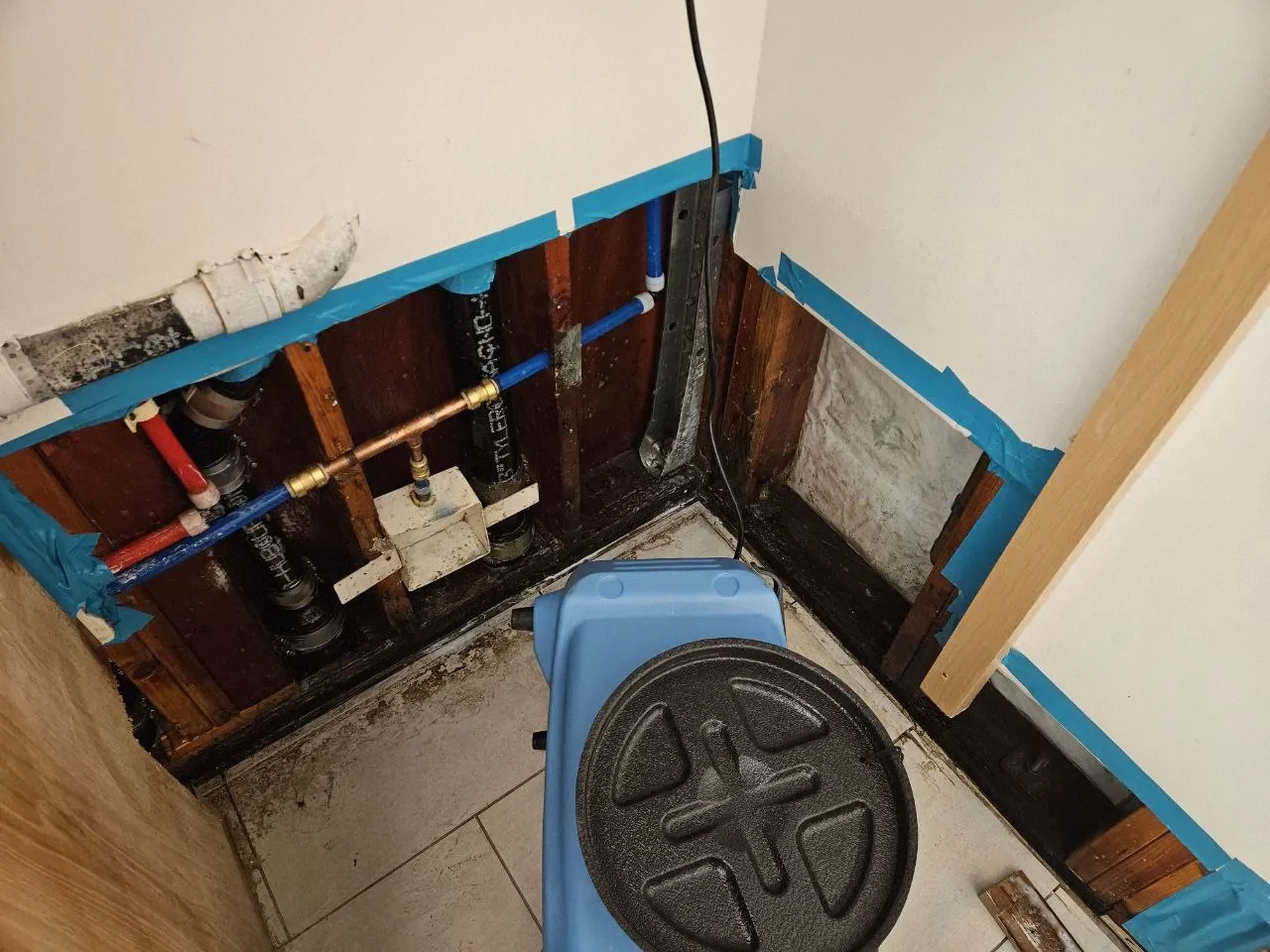
Cleanup after a burst pipe or leak
A burst pipe or plumbing leak can send water into a room quickly or leave a slow, concealed wet area behind a cabinet, wall, or floor. Water Damage Guard provides burst pipe and leak cleanup to address water and affected materials after the source is controlled. Call (650) 550-0619, 24/7, to discuss where the leak occurred and what you can safely observe.
The immediate cleanup and the plumbing repair are related but separate decisions. A plumber may need to locate and repair the failed pipe, fitting, valve, or appliance connection. Cleanup addresses water that has already reached the building and contents. Both parts need coordination: drying cannot solve a leak that is still feeding the affected area.
Stop the source only when it is safe
If an accessible fixture shutoff can be reached safely, close it to reduce the flow. A main water valve may be appropriate when the individual source cannot be isolated, but do not cross standing water or enter an unsafe space to reach it. If water is near electrical equipment, outlets, or appliances, stay away and contact the utility or a qualified electrician. Never operate a wet switch or touch electrical equipment while standing in water.
A ceiling that bulges, a floor that moves, or water emerging from a light fixture is a reason to stay clear and seek qualified help. Do not puncture a sagging ceiling or move an energized appliance. Keep other occupants and pets away from the affected space. If the property is rented or shared, notify the owner or manager so the water source and access to adjoining areas can be coordinated.
Describe whether the water is still flowing, where you first saw it, and whether it came from a supply pipe, a drain, an appliance, or an unknown source. If the water may contain sewage or another contaminant, mention that immediately. A clear appearance is not proof of cleanliness, especially after water has contacted building materials or contents.
Finding the actual leak
The visible puddle and the failed component may not be in the same place. Water can travel along a pipe, framing, or the underside of a floor before it appears. A stain under a bathroom may originate at a fixture connection, a drain, a supply line, or another nearby component. A professional investigation can help narrow the source rather than assuming that the nearest visible pipe caused the problem.
Provide the history you know: when the mark appeared, whether it changes when a fixture is used, whether the water meter or supply has been shut off, and what repairs were already attempted. Photographs taken from a safe location can show the progression. An intermittent leak may not be active during a visit, so the account of when it occurs can be important to the person investigating it.
Locating a concealed leak may require a plumbing specialist or an opening in a finish. Ask what is proposed, whether the owner has authorized access, and who will repair the opening afterward. An older building may contain materials that need special handling before disturbance. If asbestos or lead is suspected, consult the appropriate qualified professional before demolition.
Mapping where water traveled
After the source is isolated and the area is safe, the affected room and accessible adjoining spaces can be examined. Water may collect beneath a vanity, behind a baseboard, under a floating floor, or in the ceiling of the room below. The first wet surface is a starting point for the assessment rather than a complete boundary for the work.
Moisture measurements can help identify accessible materials that are wet and follow changes during drying. Results must be interpreted in context: instruments and building materials differ, and one reading does not describe the entire assembly. If evidence suggests water behind an inaccessible finish, discuss whether further access is needed and what limitations remain if the area is not opened.
Separate the source of water from the current condition of the property. A plumber may repair the failed line quickly, but flooring or wall materials can remain wet after the pipe is fixed. Conversely, an old stain may no longer be wet. The restoration decision should reflect the materials and conditions found, not the stain alone or the date of the plumbing repair.
Removing water and protecting belongings
Accessible standing water should be addressed when the source has been controlled and entry is safe. The amount of water, flooring, access, and available safe power affect the method. Moving water out of the room helps limit continued contact, but it does not automatically remove moisture held in subflooring, drywall, insulation, or furniture.
Identify belongings that were affected before they are moved. Ask about photographs, records, electronics, textiles, and items of sentimental value. Some may be cleaned and dried, while others may be damaged beyond practical recovery. If a claim is being considered, photograph and inventory items when safe and ask the insurer what documentation it needs before anything is discarded.
A cabinet or built-in fixture may obstruct access to the wet surface behind it. Discuss whether the item must be moved or opened, how it will be protected, and who is responsible for reinstalling or replacing it. Where a shared wall or a unit below is involved, coordinate through the property manager or other authorized person. Do not enter another unit without permission.
Drying walls, floors and ceilings
Drying focuses on remaining moisture in the building materials after accessible liquid water is removed. The approach depends on the construction, the extent of wetting, and whether the water source or other hazards have been addressed. Equipment placement should allow affected areas to dry while respecting safe electrical conditions and the needs of occupants.
Progress can be monitored through observations and repeated measurements in accessible materials. A surface that feels dry may cover a wet layer. Ask how the team is evaluating the subfloor, wall base, cabinet cavity, or ceiling assembly where appropriate. If an area cannot be reached, the scope should explain that limitation and whether an opening is recommended.
Do not aim a fan at visible mold. EPA cautions that fans can spread mold, and the growth and the underlying moisture problem need attention. If a heating or cooling system was affected by water, arrange the appropriate inspection before relying on it for drying. A schedule should be based on conditions and progress rather than a fixed number of hours promised before assessment.
What if the leak was slow or hidden?
A slow leak may remain unnoticed until a cabinet swells, a floor changes shape, a stain appears, or a musty odor develops. The period of exposure and the material affected can change the cleanup decision. A soft or delaminated component may require a different approach from a sound material that can be cleaned and dried. The inspection should consider adjacent spaces and whether the source is still active.
Visible growth or a persistent odor may justify a separate mold assessment. EPA advises cleaning mold and correcting the moisture problem; painting over the mark does not fix the cause. Do not disturb suspected growth to see how far it extends. Ask about an appropriate plan for investigating concealed material and protecting the surrounding area.
A leak below a slab or within a wall may also require specialized location and plumbing work. Cleanup of the affected interior does not by itself diagnose the location of a failed line or repair it. Ask the relevant specialist to explain the proposed investigation, its limitations, and how the restoration work will be coordinated with the plumbing repair.
Repairs after the affected area is ready
Repair may include replacing removed wallboard, insulation, trim, flooring, or cabinets, depending on the loss. Before finishes are installed, confirm that the source has been repaired and discuss how the condition of underlying materials was evaluated. Covering a wet assembly can conceal a problem that still needs attention.
A plumber, electrician, building contractor, or other specialist may have work separate from the cleanup scope. Ask for a clear description of each party's responsibility and the order in which work will occur. Check with the local building department about permits for the actual repair; requirements depend on location and scope. Retain any repair documents and inspection records.
If the source was an appliance or a connection, follow the manufacturer's and the responsible professional's guidance before it is returned to use. A new finish does not verify that a valve, supply hose, or electrical connection is sound. Ask who will confirm that the repaired system can be used and what to watch for after it is turned back on.
Insurance considerations
California Department of Insurance guidance identifies sudden accidental water damage as generally covered by many homeowners policies and lists seepage or leaks among commonly excluded causes. Those general descriptions are not a coverage decision for your loss. The policy language, circumstances, deductible, limits, and any endorsement matter, and the failed pipe itself may be treated differently from damage caused by escaping water.
If you intend to file a claim, contact the insurer promptly. Document the source, the date of discovery, the affected rooms, and necessary emergency work when it is safe. Keep the plumber's findings, photographs, receipts, and communications. Ask the insurer what it needs to review before damaged items are discarded and how to report newly discovered damage.
A restoration provider can explain observed conditions and proposed work; it cannot promise payment under the policy. If an opening reveals additional damage, record the finding and discuss the changed scope and authorization with the parties involved. Keep copies of all versions so you can distinguish completed work from proposed repairs.
Planning for normal use
The length of cleanup depends on the amount of water, the materials involved, access, and the time needed to stop the source and dry the assembly. A leak affecting only an accessible surface does not have the same scope as water through several floors. Ask for updates as measurements and findings become available, and discuss any room or utility restrictions with the appropriate professionals.
After repairs, keep the source documentation and watch for a returning stain, moisture, or change in the affected finish. A recurring sign calls for another investigation rather than repeated painting or surface drying. Maintenance of accessible valves and connections may help you notice problems, but no inspection or device can promise that a different component will never fail.
Common questions
What should I do when a pipe bursts?
Stay away from electrical hazards and shut off the water only if the valve is safe to reach. Contact a plumber and notify the property owner or manager.
Does cleanup include fixing the pipe?
A plumbing specialist may need to locate and repair the source. Discuss who will handle the pipe repair and coordinate it with cleanup.
Can a leak affect the room below?
Yes. Water can travel through floors and ceilings or along framing. Accessible adjoining areas should be assessed when safe.
How long does drying take?
It depends on the water source, affected materials, access and the conditions found. Progress should be reviewed during the work.
Will a slow leak cause mold?
Moisture can support mold growth, but the actual condition requires an assessment. Visible growth and the water source both need attention.
Will my insurance cover the cleanup?
Coverage depends on the cause and the policy, including exclusions and limits. Ask your insurer about the specific loss.
Sources
- EPA: Flooded home Checked
- EPA: How do I get rid of mold? Checked
- California Department of Insurance: Residential insurance Checked