When a leak affects an occupied space
People and pets need a safe place away from the water before anyone investigates the damage. If a fixture valve can be reached without crossing standing water or touching electrical equipment, close it to stop the flow. Do not enter water to reach the electrical panel or stand under a ceiling that is bulging. For an immediate danger to life, call 911.
When describing the loss, distinguish what you saw from what you suspect. A wet ceiling beneath another unit might have several possible sources; an overflowing drain is different from rain at a doorway. Explain when the water was first noticed, whether it is continuing and which rooms cannot be used. An unknown source is useful information, not a problem to conceal.
Photograph conditions from a safe location if that does not delay urgent action. Note any source repairs already made and preserve the relevant communications. If another person controls the space, coordinate permission and a safe time for access. Water Damage Guard can discuss the affected property at (650) 550-0619, including after normal business hours.
Different buildings, different access needs
Campbell identifies Downtown Campbell and San Tomas as neighborhood or planning areas. The city’s neighborhood association descriptions and area plans provide geographical context; they do not establish the age, condition or plumbing material of a particular building. A property in either area needs its own assessment.
A leak can involve a single room, a multi-unit building or a commercial space. In an apartment, arrange access with the tenant and property manager and record the rooms where moisture was observed. If water may have crossed a unit boundary, avoid declaring responsibility before the source is established. A ceiling stain in one unit does not by itself establish the condition of the unit above.
For a business, explain the location of essential records, inventory and equipment as well as any areas customers or staff must avoid. An assessment can identify what is accessible and what remains concealed. It may also reveal that the source repair, drying and reconstruction should be coordinated as distinct pieces of work.
Who handles a sewer backup?
West Valley Sanitation District identifies Campbell in its service area and provides a map to check an address. If sewage is entering the building, keep people away from the affected area and avoid using connected fixtures while the blockage is being investigated. An address check matters because a city name alone does not establish every utility connection.
The district explains that the owner keeps the building sewer clear between the building and an existing property-line cleanout. When no cleanout exists or its location is unknown, its guidance places clearing responsibility through to the district main. This distinction concerns clearing the line; it does not establish the cause of any particular backup or the condition of the building materials.
West Valley Sanitation says upper lateral work to address a backup requires a district permit. If a plumber identifies a line repair, ask who will handle that permit and any city review. Restoration of affected rooms is a separate scope. Keep records of the source investigation and the work performed so a later repair is not confused with the initial cleanup.
Rain, street flooding and communication
Valley Water’s 2019 groundwater report identifies a Los Gatos Creek sampling location near Gilman Avenue and East Campbell Avenue in Campbell. That is one documented creek location, not a determination that an individual property lies in a floodplain. A creek name or mailing address cannot substitute for a current map and the details of the parcel.
If water appears after a storm, note whether it entered at a door, opening or drain and whether outside water was present. Stay away from moving or standing floodwater and do not lift a drain cover yourself. The first visible wet surface may be downstream of the actual point of entry, so keep observations distinct from conclusions about cause.
Campbell says it uses AlertSCC for emergency notifications and recommends that residents register for county and city alerts. Alerts can help people receive official information during an emergency, but they do not replace a plan for leaving a building if conditions become unsafe. Check the city’s current information for local instructions and road conditions.
When discussing a past storm, preserve its date and location. A creek observation at one road crossing does not show that water entered another building. For an individual site, ask the appropriate public agency and any qualified drainage professional to identify the relevant maps and drainage features before drawing conclusions.
A rental repair request
Notify the housing provider about the location and timing of a leak. A written record can help coordinate access and explain which rooms or belongings were affected. If the provider asks for photographs, take them only where it is safe. An immediate safety issue should not wait for a written exchange.
Campbell says Project Sentinel administers the city’s Rent Mediation Program. Its published procedure addresses rent-increase and service-reduction petitions; a service-reduction petition needs a separate form. The city says a tenant should first make a good-faith effort to resolve the dispute with the owner or manager. The program can provide information about the process, but the particular facts determine which route is available.
The city says renters or owners of complexes with four or more units are eligible for conciliation and mediation through that program. It also describes a Rental Increase Fact Finding Committee that hears rent-increase disputes and issues nonbinding determinations. These local procedures do not establish an automatic right to relocation or an outcome in an individual dispute. Ask a qualified adviser about the applicable circumstances.
Property conditions and city inspection
Campbell Code Enforcement lists leaking roofs, deteriorated floors and walls, and lack of plumbing among the housing issues it investigates. A complaint to the city and a restoration assessment serve different purposes. The city can explain whether the reported condition is within its jurisdiction; the property owner or manager still needs to coordinate the actual work and access.
The Building Inspection Division says it inspects permitted work for compliance with approved plans and codes, and permits inspections to be scheduled online or by phone. Its inspection handout says work requiring inspection must remain accessible and exposed until it has been inspected and approved. Ask the division which inspections apply to the proposed scope before concealing a repair.
A source repair may require a different trade from the work needed to restore the affected room. Give each person a clear description of the work and ask who will coordinate the permit, inspection and final finish. If a wall is opened and the scope changes, record the new finding and check whether another approval is needed.
From stopping the source to restoration
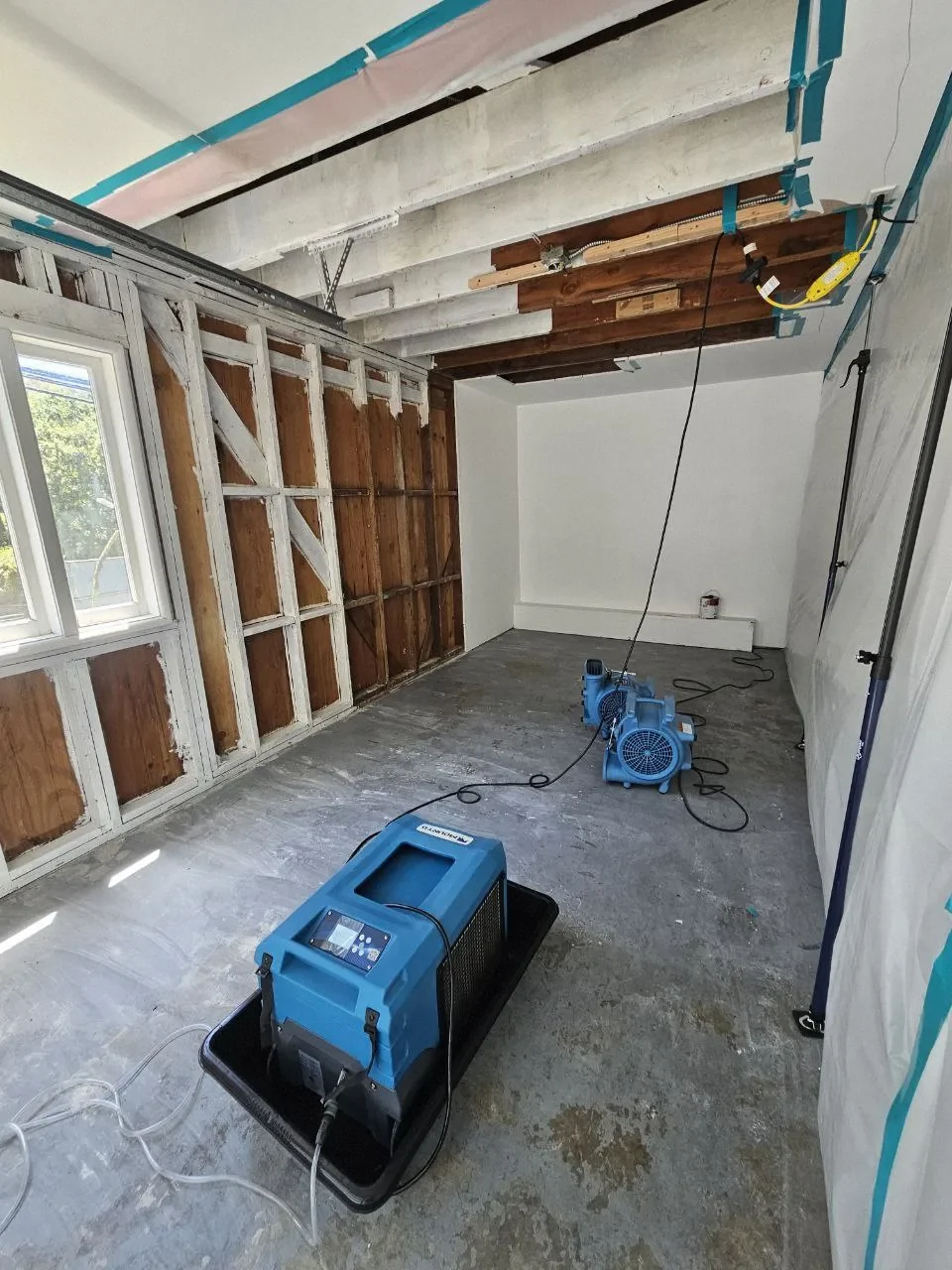
A useful assessment begins with the source, the affected materials and the limits of safe access. A plumber or utility may be needed to stop the water; an electrician may need to address affected equipment. Restoration then considers how to protect unaffected contents and address water in the materials involved. No one can determine the full scope from the city name or from a single photograph.
Ask how the work will be documented and what happens if the affected area proves larger than first observed. A wall cavity may not be visible until it is opened, and a ceiling can be unsafe to approach. The proposed response should explain what will be examined, the condition found and any changes that require discussion before additional work.
After the source is repaired, retain the trade records and the restoration scope. If there are outstanding inspections or separate reconstruction, identify who is responsible and what must happen before the space returns to use. A completed source repair and a completed restoration job are related, but they are not the same decision.
Working with an insurer or property manager
Contact your insurer or the party responsible for the building as soon as practical. Ask which information they need, and keep copies of the documents you submit. Photographs, a list of affected belongings and the date the source was stopped can help establish a timeline. A policy and its claim process determine coverage; a restoration description does not decide it.
For temporary arrangements, keep the information requested by the insurer or another qualified adviser. A tenant may need to coordinate with the housing provider, while an owner may need to arrange access for multiple trades. If an official has restricted occupancy, follow that instruction and ask what conditions must be met for return.
Water Damage Guard accepts calls at (650) 550-0619, 24/7, from its San Carlos base. Describe the affected space, the source if known and any current restrictions. The scope and sequence depend on conditions at the property rather than a fixed promise about how quickly the job will be complete.
Common questions
Which sewer district serves Campbell?
West Valley Sanitation District lists Campbell in its service area. Check the district map for the individual address before assuming a specific connection.
Who clears the building sewer lateral?
For a district-served property, WVSD describes the owner’s clearing responsibility to an existing property-line cleanout, or to the main where no cleanout exists or its location is unknown.
What can a tenant do about a service reduction?
Campbell’s program says to first make a good-faith effort with the owner or manager; if unresolved, a tenant may file a petition with the additional service-reduction form.
What housing issues does Campbell Code Enforcement list?
The city lists conditions such as leaking roofs, deteriorated walls and floors, and lack of plumbing among the housing issues it investigates.
How does Campbell inspect permitted work?
The Building Inspection Division reviews work for compliance with approved plans and codes. Its handout says work requiring inspection remains accessible and exposed until approved.
Sources
- Campbell neighborhood associations Checked
- Campbell zoning and area plans Checked
- West Valley Sanitation District service area Checked
- West Valley Sanitation backup guidance Checked
- Valley Water 2019 groundwater report Checked
- Campbell emergency notifications Checked
- Campbell tenant and landlord disputes Checked
- Campbell Rental Increase Fact Finding Committee Checked
- Campbell code enforcement Checked
- Campbell building inspections Checked
- Campbell inspection sequence Checked