Water damage in Santa Clara: safety and the source
Keep people away from standing water, wet electrical equipment and ceilings or floors that appear unstable. Do not cross a flooded room to reach a breaker. If an accessible fixture valve can be reached without danger, it may stop that source; otherwise leave the area and seek qualified help. Call 911 for an immediate threat to life.
Santa Clara’s March 2026 flood handout lists 408-615-5640 for city utility, storm drain or flooding emergencies. A municipal planning document identifies Silicon Valley Power as the city’s municipal electric utility. Describe the observed condition and address to the responsible utility; the appropriate response depends on the system involved.
From a safe place, record where water appeared and whether it is still entering. Notify the owner or manager when the building is rented or shared. A suspected pipe, fixture or roof opening is useful information for the first conversation, but the source needs inspection before the repair can be defined.
Finding where water traveled
A ceiling stain may appear some distance from the entry point. Water can move along framing, behind baseboards or below a floor covering. An assessment considers the recent history, accessible materials and whether an active source remains. A measurement can help identify where further examination is needed, but it does not by itself identify a failed component.
Santa Clara’s May 2026 urban water plan describes groundwater and treated water purchased from the San Francisco Public Utilities Commission and Valley Water among the city’s potable sources. That describes the municipal supply, not the material or condition of pipes inside an individual building. A plumber should evaluate the actual line when a leak is suspected.
Provide available repair history and explain whether water appears after plumbing use, rain or another event. If a cabinet, wall cavity or neighboring room cannot be reached, note the limitation. New information after an opening may change the scope; the owner should understand what has been observed and what remains unknown.
Creeks, rain and the individual property
The city’s March 2026 flood-risk handout says Calabazas Creek and the Guadalupe River partly bound Santa Clara, while San Tomas Aquino and Saratoga creeks run through it. This describes local geography; it does not establish that a specific address is in a flood hazard area or that a wet room was affected by a creek.
For storm-related entry, record whether water approached a doorway, moved across a yard, entered around the roof or rose from a drain. A drainage professional, roofer or plumber may be needed depending on the actual path. Avoid approaching unstable soil, downed lines or moving water to collect evidence.
The same city flood information describes up to ten free sandbags for residents at the City Corporation Yard and lists 408-615-3080 for information. Confirm current availability and instructions before traveling. Sandbags can be a temporary preparation measure; they do not correct a hidden building leak or guarantee protection from flooding.
Sewer cleanout decisions
Santa Clara’s March 2026 cleanout request describes an option for a property owner to ask the city to install or upgrade a property-line cleanout for a fee. The form also describes private-contractor options. An access point can help with work on a lateral, but the presence or absence of a cleanout does not determine why water backed up into a building.
If wastewater appears at a fixture, keep people and pets away and avoid touching the water. Stop using affected plumbing when safe and notify the owner or manager. Tell the utility or plumber which fixtures are involved and whether the water level changes when plumbing is used. The location of the obstruction needs investigation before responsibilities and repairs are determined.
Cleaning affected rooms is separate from clearing or repairing a line. Coordinate the people responsible for each stage and establish when plumbing can safely return to use. In a multi-unit building, a shared line may require access to common areas or communication with other occupants.
Assessment and extraction
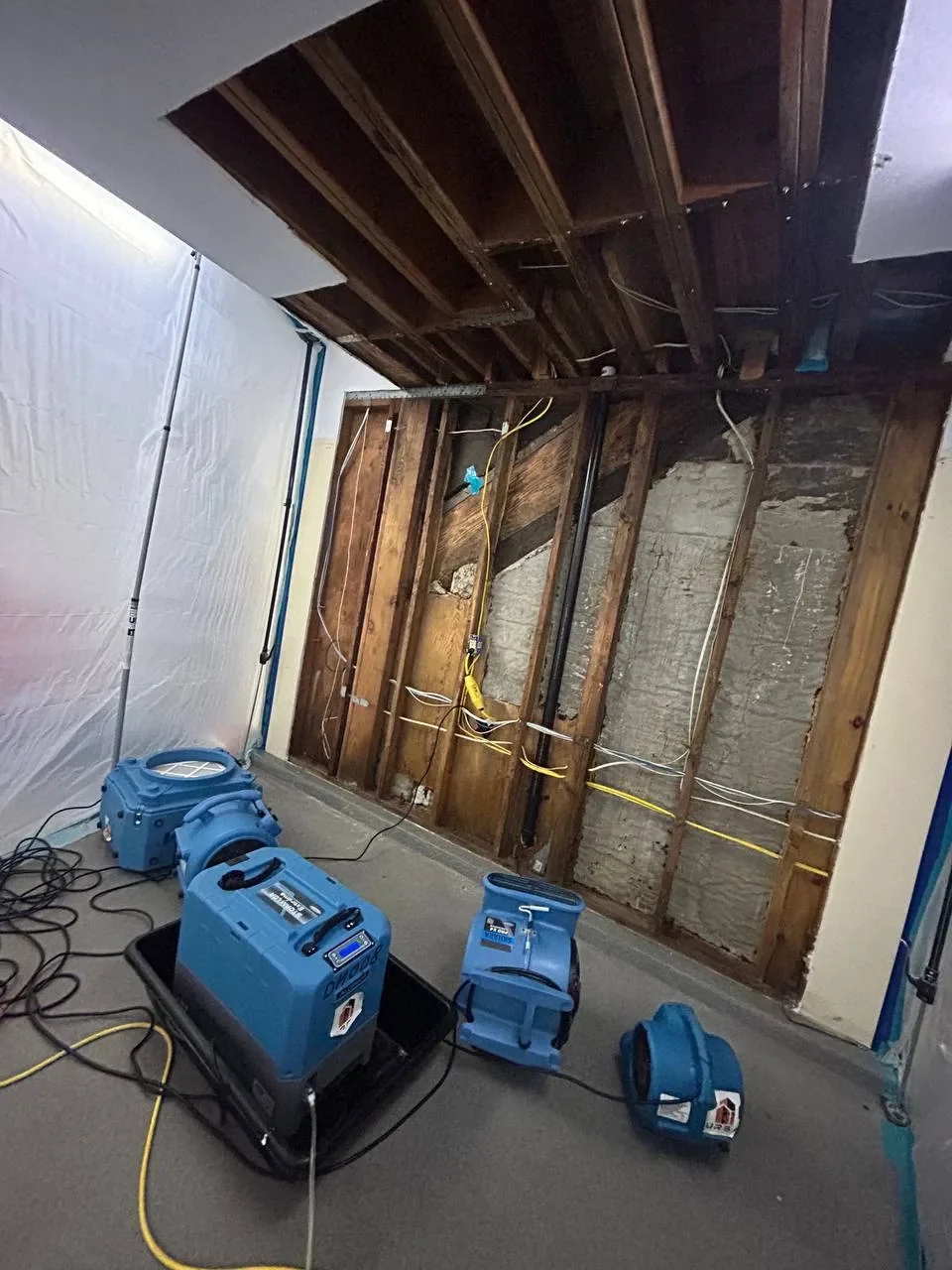
When the water source has been controlled and access is safe, an assessment identifies standing water and affected materials. Extraction may remove accessible liquid, while openings can be needed to examine material beneath flooring or behind a wall. The choice depends on the source, the length of wetting and whether the assembly can be reached and dried.
Water from outdoors or a sewer can contain debris or contaminants and should not be treated as identical to a clean supply leak. Ask how the work area will be separated from unaffected spaces and how contents will be handled. A hard surface, wet insulation and a damaged personal item can require different decisions.
Agree on a route for equipment and removed material, particularly in a shared hallway or occupied business. The owner should know what is being removed and what could change the scope. Photograph belongings and keep an inventory when it is safe; consult an insurer about its documentation process before disposal where possible.
Drying and source repair are connected
A floor that feels dry may conceal moisture in a layer underneath. The team can use measurements over time together with physical inspection to guide drying, but an inaccessible cavity should be identified as unexamined. Discuss what access is needed and who can authorize it before walls or cabinets are opened.
A plumber, roofer or drainage specialist may need to correct the source while the affected materials are being evaluated. An active leak can undo drying work. Conversely, a source repair does not prove that a wet assembly is ready for new finishes. Coordinate the sequence and document any condition that changes after work begins.
Before closing a wall or floor, confirm the source repair, material condition and any applicable inspection. Keep the repair record and photographs available to the owner. If water appears again, note when and where it returns; the next cause may differ from the first.
The city permit process
Santa Clara’s April 2026 online portal guide shows separate residential simple-permit categories for re-roofing, sewer or water work and water heaters. A category in the portal does not mean that every project qualifies for that process. Describe the actual work to the Building Division, including changes to plumbing, framing or equipment.
The city’s building permit application says Water and Utilities review permits other than single-family residences for whether domestic, irrigation or fire service upgrades are needed. This is a review step for the specified applications, not a claim that every water-damage cleanup needs a utility upgrade.
Ask who will obtain any required permits and schedule inspections. If concealed damage changes the work after an assembly is opened, discuss the change before proceeding. Drying, replacing a pipe and rebuilding a wall are distinct scopes, and the applicable requirements depend on the project.
Residents, owners and documentation
For an occupied home or business, discuss which rooms will be unavailable, where equipment can be placed and how occupants will receive updates. A manager may need to coordinate a shared utility or neighboring unit. Identify who can authorize a change if the assessment reveals additional damage.
Keep a dated timeline, photographs, invoices and communications. If insurance is involved, ask the carrier about the claim process and the information it needs. Coverage depends on the policy and circumstances. The restoration scope and the insurer’s coverage decision are separate matters.
If an odor or discoloration returns after a repair, record the timing and location and arrange another investigation. Covering a recurrent symptom can make the source harder to find. The correction should address the actual moisture path, not merely the visible stain.
Questions to resolve before finishes return
Ask the person repairing the source what was found, what was replaced and whether the system needs another check. A leak that stops temporarily does not necessarily identify the component that failed. If the cause remains uncertain, record the limitation and agree on the next investigation rather than installing a finish that makes the area difficult to reach.
Ask the restoration team which materials were examined, which were removed and how the remaining wet area will be checked. A cabinet that cannot be moved or an inaccessible cavity should be identified in the work record. If a separate trade needs the opening for a permit inspection, coordinate that access before insulation, drywall or floor coverings are replaced.
For an occupied property, discuss the order of work and the spaces needed for ordinary activities. The manager or owner may have to arrange access to shared equipment and notify neighboring occupants. Keep a single point of contact for changes to the scope so that new findings are communicated before additional work is authorized.
Serving Santa Clara
City neighborhood planning material identifies Old Quad in Santa Clara. A neighborhood name helps explain where service is requested, but it does not establish a building’s plumbing, flood risk or current condition. Tell the restoration team the address, the affected area and any access restriction.
Water Damage Guard is based in San Carlos, CA 94070 and serves Santa Clara. Call (650) 550-0619, 24/7, to discuss water damage restoration. The actual work depends on an assessment of the source and materials.
Common questions
Who handles a Santa Clara utility or flooding emergency?
The city’s March 2026 flood handout lists 408-615-5640 for city utility, storm drain or flooding emergencies.
Where does Santa Clara obtain drinking water?
The city’s May 2026 urban water plan describes groundwater and treated water purchased from SFPUC and Valley Water among its sources.
Do Santa Clara creeks establish my home’s flood risk?
No. The city’s flood handout describes several local creeks; determine the risk for the individual parcel separately.
Can a Santa Clara owner request a city sewer cleanout?
The city’s March 2026 form describes a request to install or upgrade a property-line cleanout for a fee. Confirm current options and terms.
Are Santa Clara sandbags always available?
The March 2026 city handout describes up to ten free sandbags for residents, but availability can change. Call the city before traveling.
Does every Santa Clara repair qualify for a simple permit?
No. The city portal lists specific categories; eligibility and required reviews depend on the proposed project.
Sources
- Santa Clara 2026 flood information handout Checked
- Santa Clara municipal planning document Checked
- Santa Clara 2026 urban water plan Checked
- Santa Clara 2026 flood-risk handout Checked
- Santa Clara sewer cleanout installation request, March 2026 Checked
- Santa Clara April 2026 online permit portal guide Checked
- Santa Clara building permit application Checked
- Santa Clara Old Quad neighborhood planning document Checked