Keep away from unsafe water
Floodwater can conceal debris, damaged flooring or electrical hazards. Do not enter standing water to reach a breaker or handle a wet appliance. Keep others away from unstable ground or a sagging ceiling. Leave and seek qualified help if conditions are unsafe, and call 911 for an immediate threat.
When it is safe to observe the building, record where water entered, whether it continues to flow and which rooms were affected. A roof opening, surface runoff and a sewer backup call for different source repairs. The visible water line alone does not prove the route or the condition of materials behind a finish.
A documented Santa Clara storm
The city’s December 2015 Storm Drain Master Plan documents flooding at Benton and Los Padres, Washington and Santa Clara streets, and Avenida del Lago during the December 12, 2014 storm. These are historical observations from a specific event. They do not establish the current risk at a particular address or imply that a repair was performed by Water Damage Guard.
For an individual property, note the observed water route and check current mapping and conditions with the appropriate agency. A regional history can explain why drainage is worth investigating, while the source of a wet room still needs a property-specific assessment. Avoid approaching moving water or unstable ground to take photographs.
Repair review in a special flood hazard area
Santa Clara’s March 2026 floodplain handout says improvements to existing buildings in special flood hazard areas require city review for substantial improvement. Whether a proposal meets the applicable definition depends on the property and work. Ask the city about the address and the intended repairs before assuming that all flood cleanup has the same permit treatment.
The city’s March 2026 new-housing checklist calls for pre- and post-construction elevation certificates for new construction or substantial improvement in those areas. A certificate is tied to the specified building process, not a guarantee that a parcel cannot experience water entry from another source.
Provide the city and responsible design professional with the proposed scope and available damage information. If conditions discovered after opening a wall change the repair, ask whether the application or review must change. Drying an existing room and rebuilding a substantially improved structure are different decisions.
Manufactured-home installation
Santa Clara’s floodplain code requires specified licensed installation and elevation certification for manufactured homes installed in flood hazard areas, subject to the responsible enforcement agency. This applies to the installation described in the code, not automatically to every wet manufactured home.
If a damaged home is being replaced or substantially altered, ask the city and the relevant enforcement agency which permits, installer qualifications and certifications apply. A cleanup contractor can assess wet contents and finishes, while the installation and floodplain decisions require the appropriate authority and qualified professionals.
Extracting and handling affected material
After the source is controlled and the area is safe, extraction can remove liquid from accessible surfaces. Water may have moved below flooring, into insulation or along a wall base. The assessment should identify where moisture was found, which materials were exposed to outdoor debris and which spaces remain inaccessible.
The source and duration of wetting influence whether material can be cleaned and dried or needs removal. Outdoor runoff, wastewater and a clean supply leak are not equivalent. Discuss the handling of belongings, protection of unaffected rooms and a route for moving debris before work begins.
Photograph and inventory items when it is safe, and ask the owner or insurer how disposal decisions should be documented. A heavy cabinet or closed wall may limit the first inspection. Agree on who can authorize an opening and how the scope will change if further damage appears.
Drying before finishes are restored
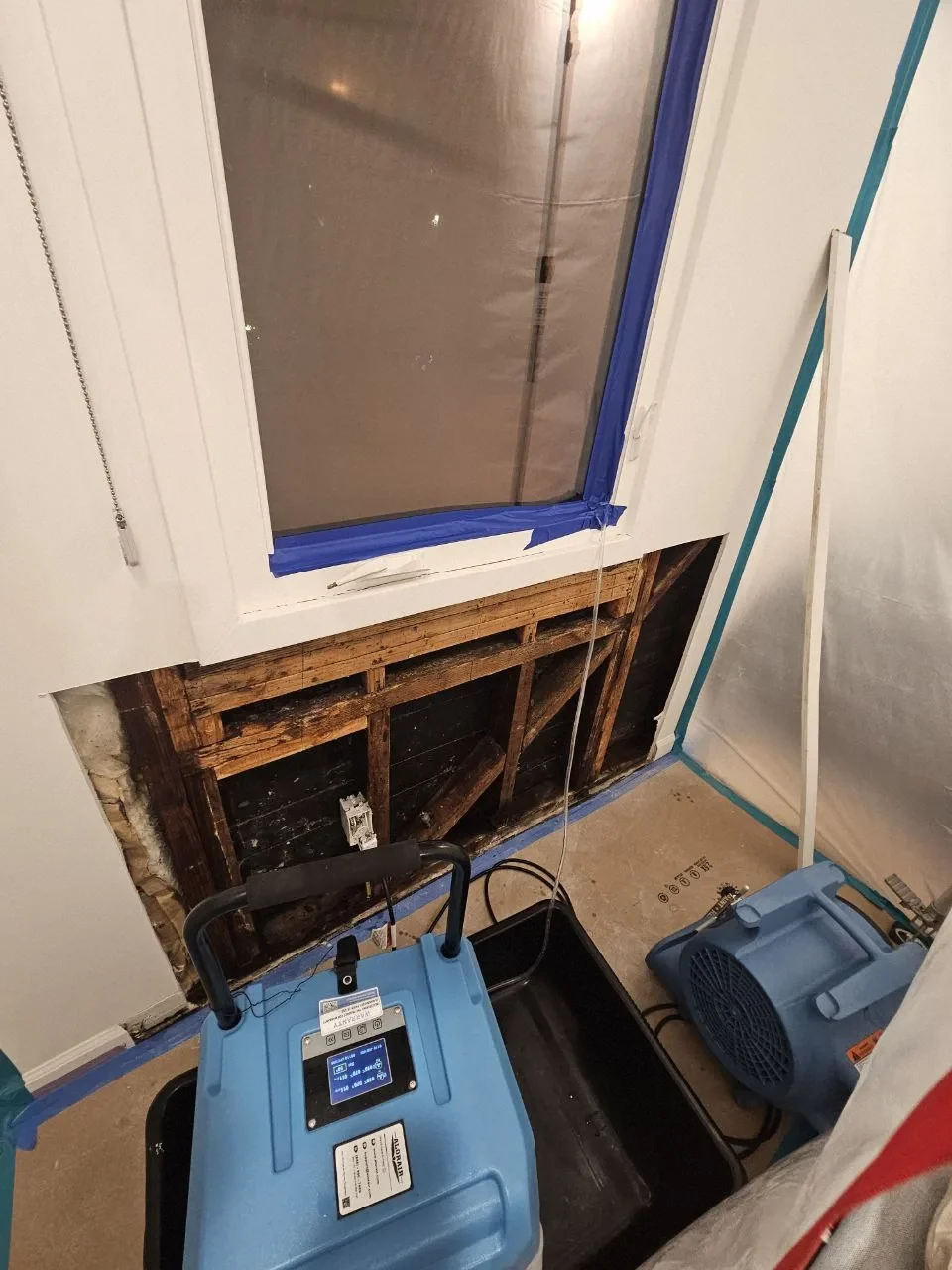
A dry-looking surface can conceal a wet layer. Measurements over time help guide drying when interpreted with the material and the surrounding conditions, but they do not substitute for access to a hidden cavity. The work plan should state which areas are being checked and what remains unexamined.
Coordinate safe power, equipment placement and access for occupants. If the source is still active or rain enters again, the plan may need revision. A roofer, plumber or drainage professional may need to correct the entry path while the restoration team evaluates the interior.
Before closing a wall or replacing flooring, confirm that the source repair, material assessment and required inspections have been completed. Keep the record of what was opened and what was repaired. If water returns, the dates and photographs can help the next investigation.
If the water contains sewage
Keep people and pets away from wastewater and notify the owner or manager. Stop using affected fixtures when that can be done safely. Tell the utility or plumber which fixtures are involved and whether the level changes when another fixture is used. The location of a blockage cannot be determined from the appearance of one drain alone.
Pipe clearing, cleaning of contaminated rooms and drying are separate tasks. In a building with a shared line, coordinate access and communication before fixtures in other units are used. A city or contractor should identify the source; the cleanup team should explain the handling of affected materials.
Document access and remaining questions
When an owner or manager authorizes the assessment, agree on which rooms and shared spaces the team can enter. A locked room, built-in cabinet or covered floor can limit what is visible during the first visit. Record those limits and identify who can approve an opening if the water path suggests moisture behind the finish.
If the property is occupied, discuss where people can safely pass while equipment is operating and whether essential fixtures remain available. A business may need a separate route for staff or deliveries. These decisions depend on the work area and building layout; visible water removal alone does not establish that the space is ready for ordinary use.
Keep a written record of the source investigation and the proposed correction. An interior stain may recur if water still approaches an exterior opening. The responsible trade can explain how it will evaluate the source, while the restoration team documents the condition of materials inside. Neither observation should be used to invent a conclusion about a parcel’s flood zone.
When an insurer is involved, ask what photographs and records it needs. Save invoices and communications, and discuss disposal of contents when safe. The insurance decision is separate from the assessment of physical damage and depends on the policy and circumstances.
Prepare for the repair stage
Ask who is responsible for source repair, permits, inspection and finish work. A drainage specialist, roofer, plumber or electrician may be needed depending on the actual path of water. Agree on a communication point for changes in scope if a concealed condition is discovered.
For an occupied property, identify the rooms that cannot be used and a safe route for occupants and workers. A manager may need to arrange access to a common area or neighboring unit. The practical plan should reflect the actual building and not assume that a regional flood project solves every source of water.
Water Damage Guard serves Santa Clara from San Carlos. Call (650) 550-0619, 24/7, to discuss flood cleanup and any access limitations. The work is determined by the conditions found at the property.
Common questions
Does a historical flood establish my property’s risk?
No. The 2014 observations describe specific locations and a specific event; check current mapping and conditions for the parcel.
Does every cleanup need an elevation certificate?
No. The city checklist applies to specified new construction and substantial improvements in special flood hazard areas.
Can I enter standing water to reach a breaker?
Do not cross water that may contact electrical equipment. Seek qualified assistance.
Does a pipe repair clean a flooded room?
No. Source repair and assessment of affected materials are separate steps.
How do I contact Water Damage Guard?
Call (650) 550-0619, 24/7, to discuss the affected area.