Safety before cleanup
Keep away from standing water that may contact electrical equipment. Do not cross a flooded room to reach a breaker or touch a wet appliance. Floodwater can also conceal debris, damaged flooring or contamination. If the building or surrounding ground is unstable, leave and seek qualified help. Call 911 for an immediate threat.
When safe observation is possible, note where water entered, whether it is still rising and which materials were affected. A roof leak, exterior runoff and a sewer backup can all leave water on a floor, but their sources and cleanup methods differ. Record the time and take photographs from a safe location.
Tell the owner or manager if the property is rented or shared. Access to a common drain, roof or neighboring unit may need coordination. A restoration assessment should identify the visible path of water and the spaces that could not yet be inspected.
FEMA flood zones and new construction
Sunnyvale’s November 2025 flood-zone construction handout describes special requirements for qualifying new construction and substantial additions in FEMA zones AE and AO. The rules apply to the specified work and site, not automatically to every cleanup after a leak. Confirm the current map and the proposed scope with the city.
The handout calls for elevation certificates at permit review, foundation inspection and before occupancy for qualifying new construction in those zones. A certificate is part of the specified construction process; it is not a guarantee that a building cannot experience water damage from another source. Ask the city which submissions apply to the project.
Keep the map and project records with the property information. If the water entered through a roof or failed plumbing, a flood-zone designation does not identify that cause. The actual building and water path still need investigation.
Additions and manufactured homes
The city’s 2025 handout directs owners of additions that are not substantial improvements to a separate guide and says an elevation certificate may be required. This is a distinct project category; do not assume that the same documentation applies to every addition or every repair. Ask the Building Safety Division about the specific proposal.
Sunnyvale’s floodplain code sets a base-flood elevation plus one foot for specified manufactured homes in flood hazard areas, including certain replacements or substantial improvements on sites with a flood-substantially-damaged home. The detailed conditions matter. A manufactured home is not automatically subject to that provision solely because water entered it.
If a damaged building will be altered or replaced, provide the city with the address, the observed damage and the intended work. A reconstruction plan may involve different rules from extracting water and drying the existing room. Coordinate the decisions without assuming that one permit covers every trade.
Remove water and assess materials
After the source is controlled and safe access is established, extraction can remove standing liquid from reachable areas. Water may also have traveled under a floor, into insulation or along the bottom of a wall. The assessment should explain where moisture was found and which areas need further access.
Outdoor runoff carrying soil or debris is not identical to a clean water supply leak. The source, the duration of wetting and the material’s condition influence whether it can be cleaned, dried or must be removed. Ask how belongings will be documented and what the team will do if an opening exposes additional damage.
In a shared building, agree on a route for equipment and removed material. Protect unaffected rooms and coordinate access to hallways with the manager. A clear work area and a documented scope help the owner understand which parts of the property are being addressed.
Drying enclosed assemblies
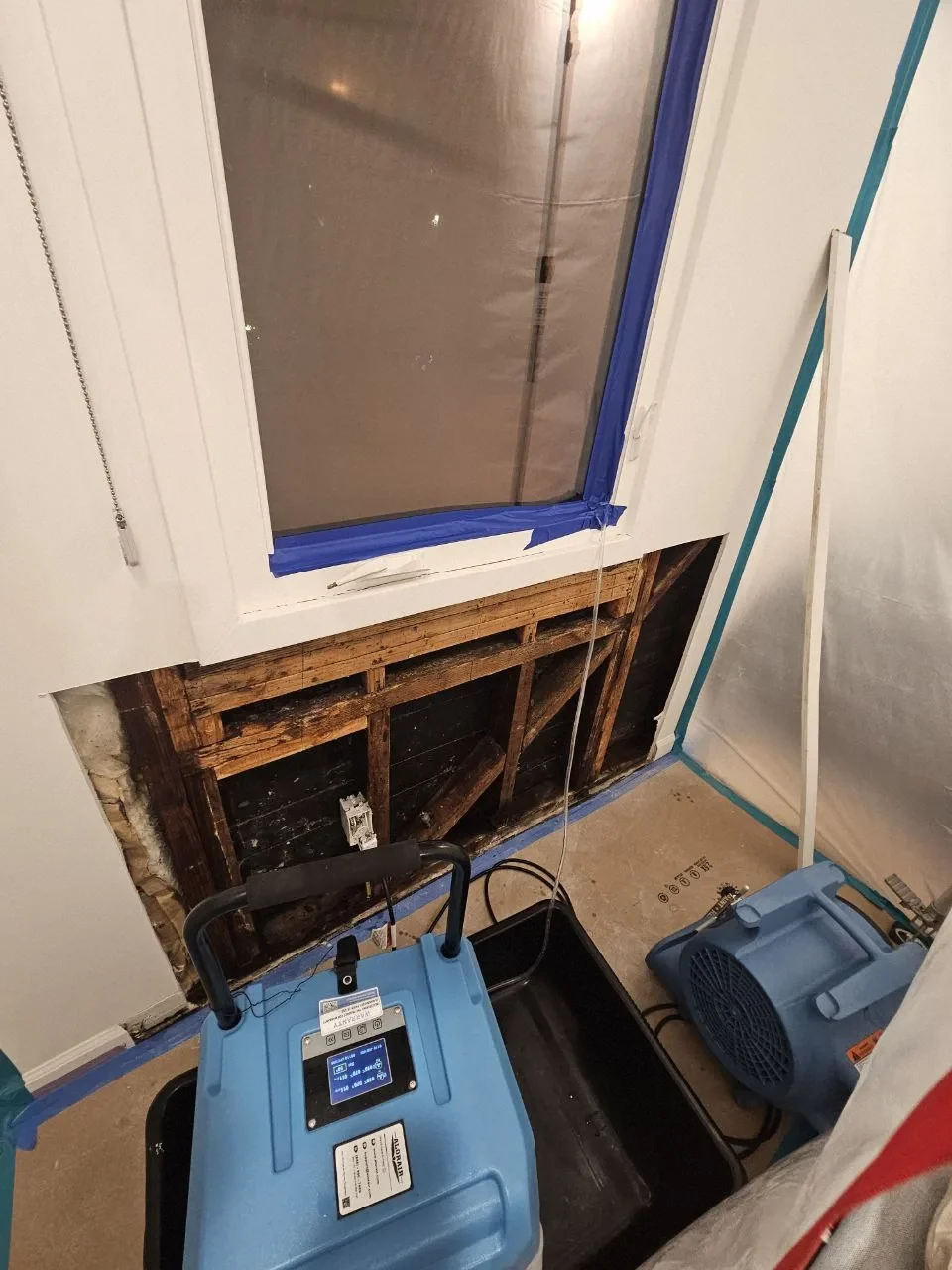
A floor that looks dry can conceal moisture in a layer underneath. Measurements can help track drying when interpreted with the material and surroundings, but they cannot establish the condition of a space that remains inaccessible. Ask which locations are being checked and what would require an opening.
Equipment placement should account for safe power, entry routes and the needs of occupants. If water continues to enter during a storm, the drying plan may need to be revised. The source repair and restoration teams should communicate so that one stage does not conceal a problem needed by the other.
Before the wall or floor is closed, verify that the source has been corrected and that any required inspection has been completed. Keep the record of what was opened and repaired. That history can help a future assessment if the same area becomes wet again.
When a drain or sewage is involved
If water rises through a toilet, shower or floor drain, limit access and tell the plumber which fixtures are affected. Stop using the affected plumbing if it is safe to do so. A blockage inside a private line and a problem in a public main may look similar from inside a room; the actual location needs investigation.
Contaminated contents and building materials require an assessment suited to the source. Do not assume that a pipe clearing alone cleans the room, or that interior drying repairs the pipe. For a shared line, coordinate with the owner or manager before fixtures in other units are returned to use.
Document the water path and repair decisions
Photographs taken before material is moved can help show where water reached a doorway, cabinet or wall. Record the date and the conditions observed rather than guessing how the water entered. If an insurer is involved, ask what documentation it needs and keep invoices and communications in one place. Coverage is determined by the policy and the circumstances.
After the first assessment, ask which areas were accessible and which could not be examined. A floor covering, heavy cabinet or locked room may conceal part of the affected assembly. Agree who can authorize further access and what information will be shared if more moisture is found. That decision belongs with the actual property owner or authorized representative.
For a business, a work route may need to account for staff, customers and deliveries. Identify spaces that cannot safely be used and the person who can approve changes to the schedule. A home has different needs, but the same practical question remains: who will coordinate access for source repair, drying and any required inspection?
When the source is thought to be outside, a drainage professional can assess whether the observed route relates to an opening, grade or another feature. Avoid making a permanent alteration based only on the location of a puddle inside. The planned correction should account for the receiving area and applicable city requirements.
After the immediate recovery
Review what happened and whether the correction is complete. A damaged roof, a blocked drain or water approaching a doorway can each require a different trade. Record the time, entry point and repair so that the owner can recognize a recurrence and provide useful information to a contractor.
If a rental room cannot be used, discuss access and communication with the owner or manager. Several trades may need the same space at different times. Agree who can authorize a change in scope and who will schedule the relevant inspections before finishes are replaced.
Water Damage Guard serves Sunnyvale from San Carlos. Call (650) 550-0619, 24/7, to discuss flood cleanup, the source if known and any unsafe conditions. The work appropriate to the building depends on an assessment.
Common questions
Does every wet room require a flood-zone permit?
No. Sunnyvale’s described floodplain requirements apply to specified development and site conditions; ask the city about the work.
Does a flood map prove where water entered?
No. The route of entry at the building needs investigation.
Is an elevation certificate always needed for an addition?
The city’s handout says it may be required for certain additions; confirm the specific project.
Can I replace flooring once the surface looks dry?
A visible surface may conceal wet material underneath. Assess the assembly before closing it.
Can I call after hours?
Yes. Water Damage Guard accepts calls at (650) 550-0619, 24/7.