Limit contact and identify the blockage
Keep people and pets away from wastewater and do not touch wet electrical equipment. If it can be done safely, stop using fixtures connected to the affected line and notify the owner or manager. A backup can carry contaminants into flooring and stored items; a space with electrical or structural hazards should not be entered until a qualified person has made it safe.
Note which fixtures are affected, whether the water rises while plumbing is in use and whether the problem is confined to one room. These observations help the utility or plumber investigate. They do not by themselves establish whether the obstruction is in a private lateral or a public main.
Photograph from a safe location and record when the problem started. Tell the cleanup team that sewage may be involved, whether the flow has stopped and which spaces are inaccessible. The source and duration of wetting affect how materials and contents are handled.
Access to the lateral matters
Sunnyvale’s 2020 sewer system management plan says an inaccessible or absent right-of-way cleanout may require the owner to provide suitable lateral access after the main is found clear. This is the plan’s described procedure, not evidence that a particular property has a cleanout or that every backup is in the lateral.
Ask the utility and the plumber what they have found and what access is needed before authorizing additional work. A cleanout is an access point for inspection or clearing; it does not by itself establish the condition of the pipe. In a shared building, the person responsible for the line may need to coordinate access with several occupants.
Courtesy clearing and structural repair are different
The 2020 city sewer plan allows staff discretion to try to clear a lower lateral from an accessible right-of-way cleanout as a courtesy. It separately describes discretionary city repair of a structural defect in a right-of-way lateral. These are conditional practices in a dated plan, not an automatic promise of free clearing or repair at every address.
Ask the city what it will do under current procedures, where the blockage or defect is located and which work remains the owner’s responsibility. Clearing an obstruction is different from repairing a broken pipe. A camera or other investigation may be useful after the flow is restored, but the correct method depends on the condition of the line.
Keep the findings and any work authorization with the property records. If several contractors are involved, identify who is restoring flow, who handles contaminated building materials and who will repair the pipe. A cleanup plan cannot substitute for a source correction.
Replacement work and inspections
Sunnyvale’s 2026 residential water and sewer piping handout requires a plumbing permit before sewer piping replacement within its described scope. It also describes a rough inspection before the pipe is covered and a final inspection after completion. This does not imply that ordinary cleaning after a backup is the same as replacing a sewer line.
Describe the planned work to the Building Safety Division and ask who will obtain the permit and schedule inspections. If the line crosses a public area, ask whether other approvals apply. An owner should understand what the plumber plans to replace and whether the scope changes when the line is exposed.
Assess affected rooms and contents
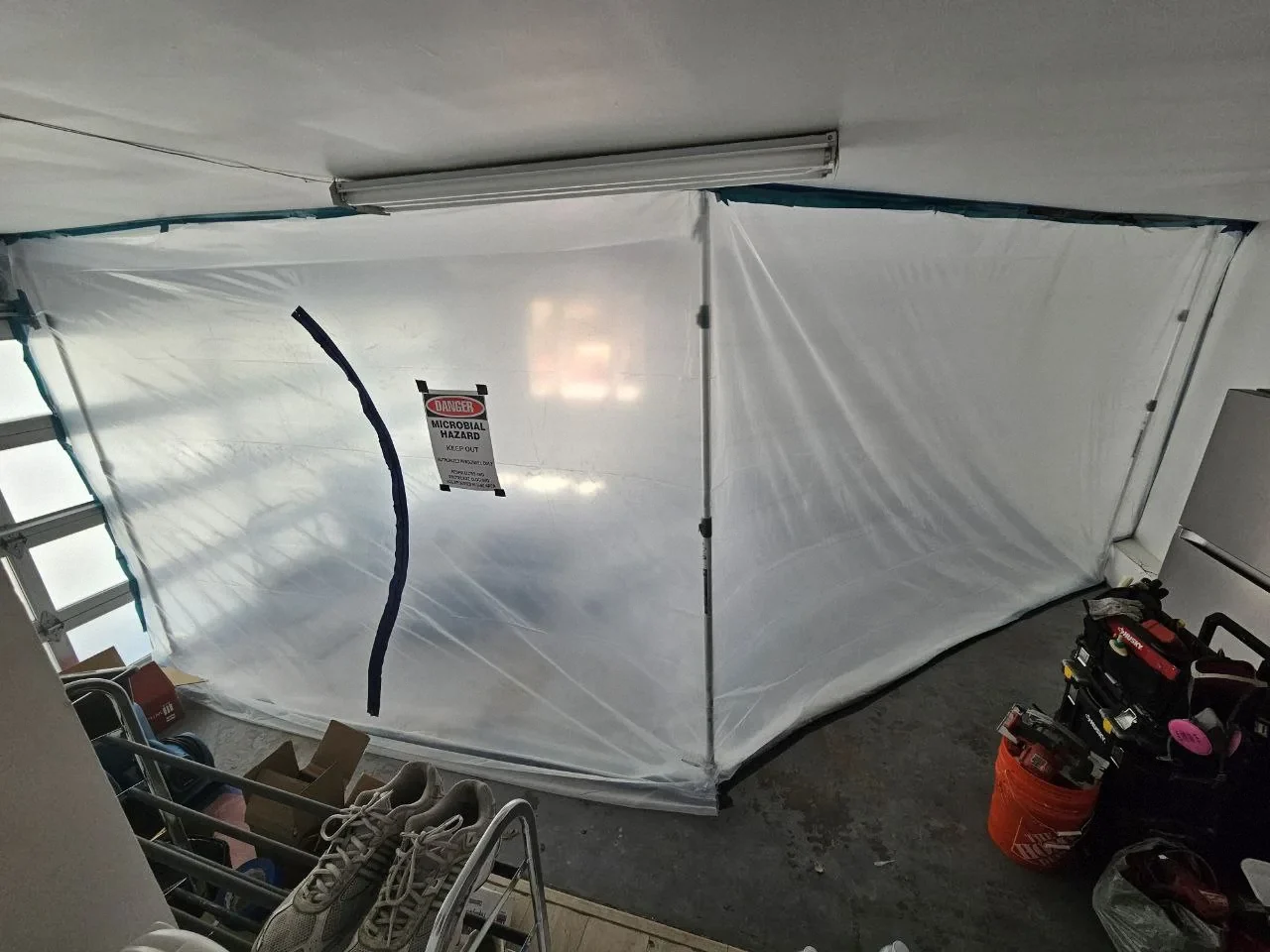
Once the source is controlled and the area is safe, assess the surfaces and belongings that came into contact with wastewater. Liquid may move beneath flooring, into a wall base or into a cabinet. Hard surfaces and porous materials do not necessarily require the same treatment. The assessment should explain what can be cleaned and what may need removal.
Plan a route for taking affected material out of the building without spreading debris through unaffected rooms. In an occupied building, discuss access to bathrooms, common corridors and essential belongings. If a material has not been examined because it is concealed or inaccessible, record that limitation instead of assuming it is unaffected.
Photographs and an inventory can help the owner or insurer when it is safe to keep the items. Ask how the team will document removal and how changes in the work will be approved. A damaged item and a contaminated structural assembly may need different decisions.
Drying after source repair
Extraction removes accessible liquid, but a hidden layer can remain wet after the surface looks dry. The cleaning and drying plan should consider the source, the material and whether an area can be reached. Moisture measurements over time can help guide decisions when interpreted alongside the physical inspection.
If a wall or floor is opened, coordinate the plumbing repair, any required inspection and restoration of finishes. An opening should not be closed solely because equipment has been removed. Confirm that the source is addressed and that the affected material is ready for the next stage.
If wastewater returns after flow has been restored, stop using the affected fixtures when safe and report the new condition. A second backup may indicate that the source has not been fully resolved or that another condition is present. Retain the timeline and repair records for the next investigation.
Questions to resolve before finishes are restored
Ask the plumber whether flow has been restored, where the obstruction was found and whether the condition of the pipe needs further examination. A line may drain after clearing while a separate structural defect remains. The answer should be based on the observed line and any inspection, not on the appearance of the water that entered the building.
Ask the restoration team which affected surfaces were accessible, what was removed and how moisture in the remaining materials will be checked. If a cabinet or floor covering remains in place, understand whether the area beneath it has been evaluated. Access limitations should be recorded so that a later contractor does not mistake an unexamined space for a completed one.
A sewage cleanup estimate should identify the affected rooms and the handling planned for contents, flooring and wall materials. Ask what would cause the scope to change after an assembly is opened. The initial visit may reveal only the accessible portion of the damage, so a clear decision process matters when additional moisture or deterioration is discovered.
For a rental, give the owner or manager a clear description of what rooms cannot be used and any work requiring access to shared space. An interruption to plumbing can affect more than the room where water appeared. Coordinate the time when fixtures may be used again with the person who repaired the line, and follow the instructions given for the actual system.
Before authorizing replacement of finishes, check the project paperwork for the responsible trade and any inspection requirement. Keep photographs, the plumber’s findings and the restoration record together. This helps the owner explain what was done if the same line needs attention later, without assuming a future backup will necessarily have the same cause.
Who coordinates the work?
An owner, manager, plumber and restoration team can each have a separate role. Before work begins, identify who can grant access, who will receive updates and who will approve a change in scope. For a multifamily property, also identify shared systems and the occupants who need to know when plumbing can be used.
Water Damage Guard is based in San Carlos and serves Sunnyvale. Call (650) 550-0619, 24/7, to discuss sewage cleanup. Describe the affected rooms, the known source and any unsafe access. The specific cleaning and drying work depends on the property assessment.
Common questions
Does a backup prove the public main is blocked?
No. The location needs investigation; a private lateral obstruction can produce a similar symptom.
Will the city always clear the lower lateral?
The city’s 2020 plan describes discretionary courtesy clearing from an accessible right-of-way cleanout. Ask about current conditions.
Does courtesy clearing guarantee a structural repair?
No. The plan describes clearing and possible structural repair separately, both with conditions.
Does replacing sewer piping need a permit?
Sunnyvale’s 2026 residential handout requires a plumbing permit for replacement in its described scope; confirm the project with the city.
When can I call Water Damage Guard?
Call (650) 550-0619, 24/7, to discuss the affected area.