First response to a backup
Sewage in a home requires limiting contact with the affected area. Keep people and pets out, avoid walking through the water, and do not handle electrical equipment that may be wet. Stop using affected plumbing if it is safe to do so and tell the owner or manager. If water presents an immediate electrical or structural danger, leave and contact emergency services.
Notice which fixtures are involved and whether wastewater rises when another fixture is used. This information helps the utility or a plumber investigate the location of a blockage. A backup in a floor drain does not by itself show whether the obstruction is in a private line or a public main. Do not assume responsibility before the source has been established.
Take photographs from a safe location and record when the backup was discovered. Tell the cleanup team if the water may contain sewage, whether the flow has stopped and whether access is restricted. The source and extent of contamination affect the handling of materials and contents.
What the city camera inspection is for
Mountain View’s Public Works handout describes a closed-circuit television inspection from the property-line cleanout to the city sewer main when required by a planning or building permit. The inspection determines the lateral’s condition for potential reuse. It is a specific permit-related process, not a rule that every sewage cleanup automatically triggers a camera inspection.
A video can show the accessible interior of the inspected pipe and help locate visible defects. It cannot explain every condition outside the pipe or guarantee the future performance of the line. Ask the city whether the inspection is required for the proposed project and ask the plumber what the recording does and does not show.
If a backup has damaged rooms, the owner may need both source repair and cleanup. Coordinate the work so the line is functional before reconstruction, and do not use the existence of a camera report as proof that the affected building materials are clean or dry.
Locate the property-line cleanout
For the city’s CCTV process, the handout requires a property-line cleanout. If one does not exist, it must be installed to city standards under an approved building permit before the inspection. The city distinguishes that preparation from the video inspection itself. An owner should ask the plumber and city how the requirement applies to the planned work.
The handout recommends cleaning the line before the camera inspection. If the camera cannot pass because of an obstruction, the inspection must be rescheduled after cleaning. That is a conditional inspection procedure; do not assume that camera access or clearing a blockage repairs a structural defect in the pipe.
Plan access before the appointment. The handout asks owners and contractors to consider the availability of electricity and water and to locate the cleanout. A clear work area allows the inspector and plumber to perform the specified inspection without searching for an inaccessible opening at the last moment.
Who attends the inspection
The city handout calls for a Wastewater Section representative and the plumbing contractor to be on site together. It says a color camera capable of recording is required and gives 650-903-6329 for scheduling the city representative. This applies to the permit-related inspection described in the handout, not every drain-cleaning visit.
The city retains the recording for its records. The handout tells owners to contact Public Works for results after the stated review period. Ask what findings require repair and which office reviews the project before scheduling reconstruction. A video inspection and a city decision about reuse are not the same as a cleanup assessment inside the building.
Separate utility work for an accessory dwelling
Mountain View’s 2024 ADU checklist calls for an excavation permit and water or sewer service applications when a new separate utility service is provided. This is a specific development situation, not a requirement that every backup or every ADU must receive a new connection. Confirm the project’s design and current requirements with the city.
If an affected property includes an accessory dwelling or several units, identify which fixtures use the line and who can authorize access. A contractor may need to examine a shared run or coordinate with another occupant. Record any service interruption and agree who will communicate when plumbing can be used again.
Assessing rooms and contents
After the source has been controlled and the area is safe, assess which surfaces and belongings were affected. Wastewater can reach under flooring, inside lower walls or into stored items. Hard surfaces and porous materials may require different handling. The decision to clean, remove or discard should take account of the material and its condition, rather than assuming that every object can be treated in the same way.
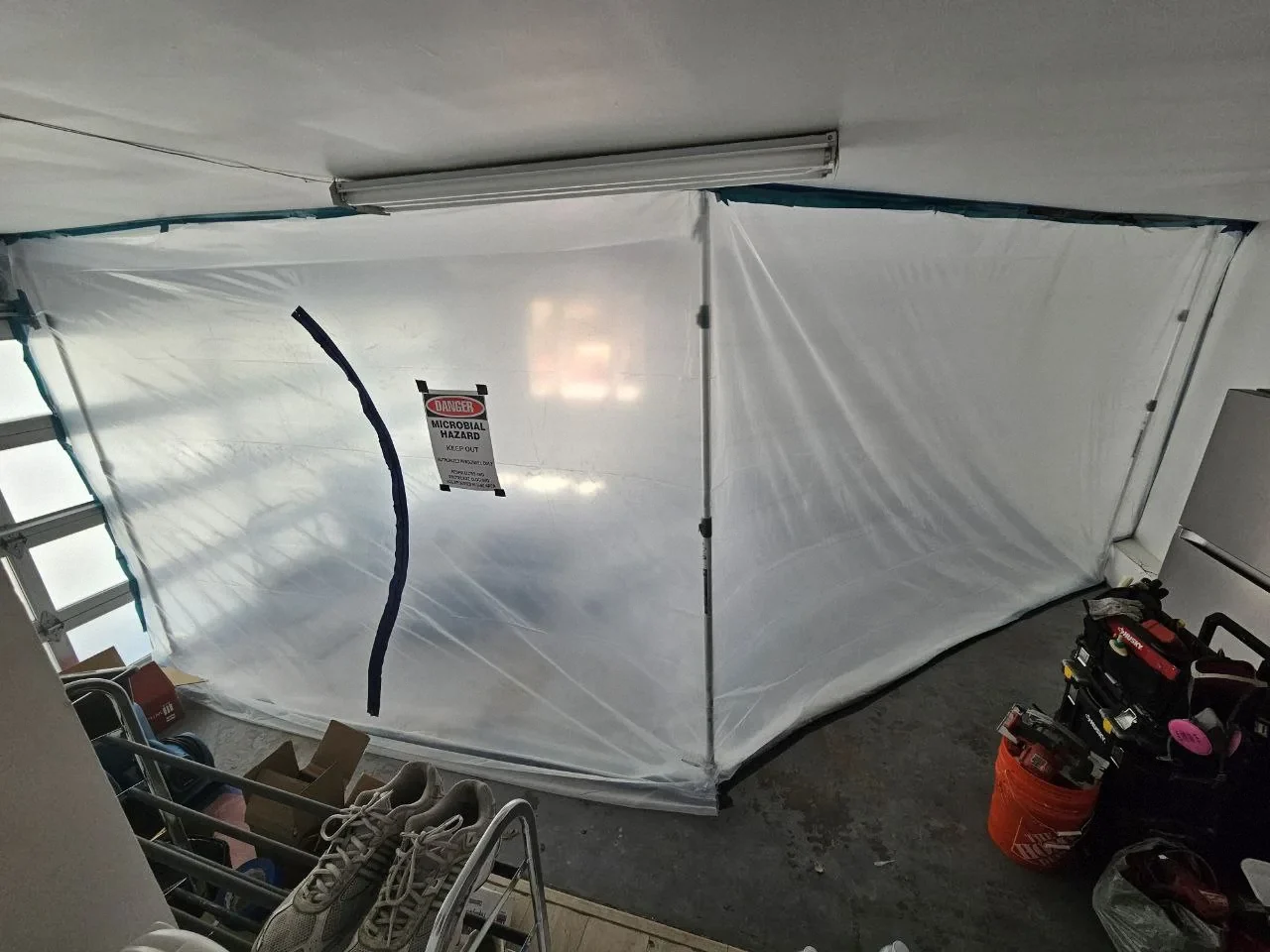
Agree on a route for moving affected material out of the building. Protect areas that were not involved and avoid carrying debris through occupied rooms unnecessarily. If a shared hallway or elevator is needed, coordinate access with the building manager. A containment and cleanup plan should identify where work is occurring and what precautions apply.
Keep an inventory and photograph the contents when it is safe. Ask the insurer or owner about documentation before disposal where possible. Do not retain an immediate hazard merely for a photograph; ask the responsible professionals how it should be handled.
Drying and rebuilding
Extraction removes visible liquid, but trapped moisture may remain in an enclosed assembly. Drying decisions depend on the source, the affected material and whether the area can be accessed and cleaned. A surface that feels dry does not establish the condition of material behind it. Measurements and inspection should be considered together.
When a wall or floor is opened, explain what was found and whether the repair scope has changed. A plumber may repair the line while another trade addresses damaged framing or finishes. Ask who is responsible for permits and inspections and whether the city needs access before the opening is closed.
After the plumbing repair, test or verify the system according to the responsible trade’s instructions before restoring finishes. If wastewater returns, stop using the affected fixtures when safe and arrange another investigation. A cleanup can address damage from the first event but cannot prevent a second backup if the source remains unresolved.
Coordinating the response
A useful work plan identifies the source investigation, temporary access restrictions, material handling, drying and reconstruction as separate stages. An owner or manager should know who is completing each stage and whom to contact when an unexpected condition appears. In an occupied property, discuss where people can safely pass and whether essential facilities remain usable.
In a commercial space, the operator may also need to arrange access for staff, deliveries and customers while affected rooms are unavailable. Identify the areas that must remain closed and the person authorized to approve changes. Avoid moving goods through the cleanup area until the responsible team has established a safe route. Keep the work record with the repair and inspection information for future reference.
Water Damage Guard is based in San Carlos and serves Mountain View. Call (650) 550-0619, 24/7, to discuss sewage cleanup and the conditions observed at the property. A property assessment is needed to determine the specific work and any additional trades.
Common questions
Does a backup prove the city main is blocked?
No. The location must be investigated; a private obstruction can produce a similar symptom.
Is a city CCTV inspection required after every backup?
No. The city handout describes an inspection when required by a planning or building permit.
What if there is no property-line cleanout?
For the city’s CCTV process, the handout calls for one to be installed under an approved building permit before inspection.
Can wet finishes be replaced immediately?
The source, affected materials and any inspection requirements need attention before an assembly is closed.
How do I contact Water Damage Guard?
Call (650) 550-0619, 24/7, and explain the affected area and whether wastewater is still entering.