Respond without entering the water
A sewage backup can bring contaminated water through a toilet, shower or floor drain. Keep children and pets away and avoid contact with affected surfaces. Stop using the fixtures connected to the problem until the cause is assessed; adding water to a blocked line can increase the overflow.
If sewage or water is near electrical equipment, leave it alone. Do not stand in water to reach a switch, breaker or appliance. Arrange for the utility or a qualified electrician to make the power supply safe. If you smell gas or suspect an immediate danger, leave and contact emergency responders from a safe place.
Call Water Damage Guard at (650) 550-0619, 24/7, to discuss the affected rooms and access conditions. Also report the sewer problem to the city utility. Describe when it began, which fixtures are affected and whether the backup has stopped. Document the condition with photographs only when it is safe to do so.
Why the obstruction needs assessment first
Palo Alto Utilities advises against using a sewer clearing machine until a lateral obstruction has been assessed. Its safety material explains that a cross bore is an unintended intersection of one utility line with another; the city’s program focuses on natural-gas lines crossing sanitary sewers. Cutting into an obstruction without knowing what it is can therefore create a separate hazard.
The city advises anyone noticing a strong gas odor or bubbles rising in a toilet to leave the premises and, from a safe distance, call 911 and Utilities at (650) 329-2579. Do not attempt to locate a gas leak inside the affected area. Follow the utility’s instructions about access and further investigation.
A backup at a single fixture does not establish whether a problem lies in a building drain, a lateral or a public main. Tell the utility and plumber what you observed and ask how they will determine the safe next step. Preserve any inspection report for the owner and insurer.
Cleanouts and new connections
For covered work in the public right of way, the city’s 2026 utility standards call for a sanitary sewer cleanout in the planting strip, or behind the sidewalk where the curb and sidewalk are integral. The standards also require lateral connections to be inspected and approved by a Utilities Inspector. These provisions concern covered work; they do not mean every existing lateral automatically requires a new cleanout or inspection.
If a repair or replacement is proposed, ask the city and contractor what approvals and inspections apply to the actual configuration. Work in a public right of way can involve a separate street-work permit. Do not assume the location of a cleanout or property line alone settles every responsibility question; confirm how the city rules apply to the address.
A camera inspection can help locate a defect, but a report should identify which length of pipe was viewed and what the image shows. Ask whether it supports a cleaning, repair or further investigation. Keep the report together with any utility communication and permit documents.
Assess the spread indoors
Wastewater can move beneath flooring, into a wall base or through gaps around a pipe. Identify which rooms were exposed and whether the water rose again after the first discovery. A visible boundary is only a starting point; accessible adjacent spaces may need inspection once the building is safe.
Discuss the materials individually. Hard, accessible surfaces may be handled differently from carpet padding, insulation or a cabinet base that cannot be cleaned and dried effectively. The source and duration of exposure matter. Ask which items are proposed for removal and how unaffected rooms will be protected.
For valuable or irreplaceable contents, identify them before they are moved and ask about a safe assessment. Keep suspect items out of clean living areas. Contact the insurer about documentation, but do not remain in a hazardous space merely to take photographs.
A lower cabinet can trap water against an adjacent wall even when the visible floor has been wiped. Ask whether the base, wall and any accessible space underneath will be checked before a replacement decision is made. If a finish must be opened, agree on the reason, the area involved and how nearby belongings will be protected. The team should explain when additional access is necessary rather than assuming the initial view shows every affected component.
Source repair, cleanup and drying
A plumber or utility may address the obstruction while the restoration team addresses the building. Make sure each party knows what the other has found. If the line is still backing up, a cleaned area can become contaminated again as soon as water is used.
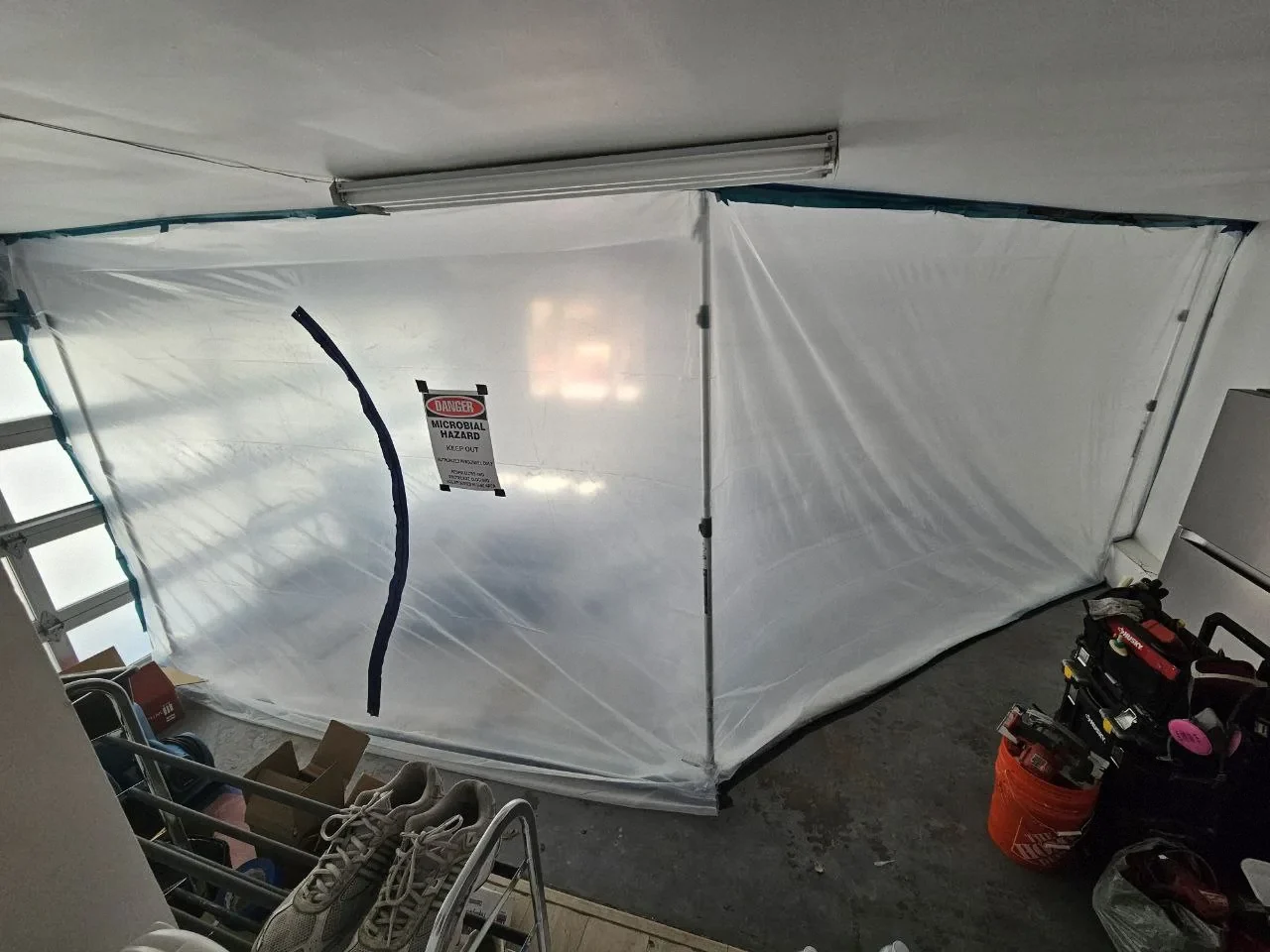
After source control and safe entry, the scope may include extraction, removal of affected materials and cleaning of treatable surfaces. The team should explain where work will occur and how it will handle discoveries behind a finish. If the condition differs from the initial assessment, review the proposed change before additional work.
Drying depends on the materials, access and safe power. Moisture measurements help track progress, but a dry-looking finish can conceal a wet layer. Ask what was checked, what remains uncertain and when a separate repair contractor can begin replacing finishes.
Shared lines and insurance records
For a rental, report the backup to the landlord or manager promptly and follow up in writing. In a condominium, involve the association if a common drain, wall or neighboring unit may be affected. Access and responsibility depend on the actual system and governing documents; the room where sewage appeared does not settle them.
Ask the insurer how the policy treats a sewer backup and what records are needed. Coverage and any limits depend on the policy and cause. Retain photographs, invoices, the utility response and the plumber’s findings. If temporary accommodation is needed, keep dates and receipts and ask the insurer or housing adviser how they should be documented.
Before a wall or floor is closed, coordinate source repair and any required inspections. The cleanup proposal should identify what it includes and who will address remaining plumbing or construction work. A final walkthrough can clarify outstanding items rather than leaving responsibility implicit.
If several contractors are involved, keep their findings separate: the utility may report on the public system, a plumber may document the lateral, and a cleanup team may record the condition of building materials. Give each party the relevant information and ask who will notify the others when the source has been corrected. This avoids treating an indoor drying record as proof that an underground obstruction has been repaired.
Where the home cannot be occupied during work, arrange a safe route for retrieving essential belongings only after the responsible professionals allow entry. Discuss pets, medication and access needs before equipment is placed. Keep a record of the dates rooms were unavailable, because the person reviewing a claim or housing question may need that chronology.
Ask whether any separate street restoration or utility inspection remains outstanding before treating the repair as complete.
Common questions
Should I use a sewer clearing machine immediately?
No. Palo Alto Utilities advises assessing the obstruction first because a utility line can cross a sewer lateral.
What is a cross bore?
The city describes it as an unintended intersection between utility lines, including a possible natural-gas line crossing a sanitary sewer.
What if I smell gas during a backup?
Leave the premises and call 911 and Palo Alto Utilities at (650) 329-2579 from a safe place, following the city’s instructions.
Does every existing lateral need a new cleanout?
The 2026 standards describe requirements for covered installations. Ask the city how they apply to the actual project rather than assuming every existing line needs replacement.
Who inspects a new lateral connection?
The city’s 2026 standards require lateral connections to be inspected and approved by a Utilities Inspector.
Sources
- Palo Alto Utilities source Checked
- Palo Alto Utilities source Checked