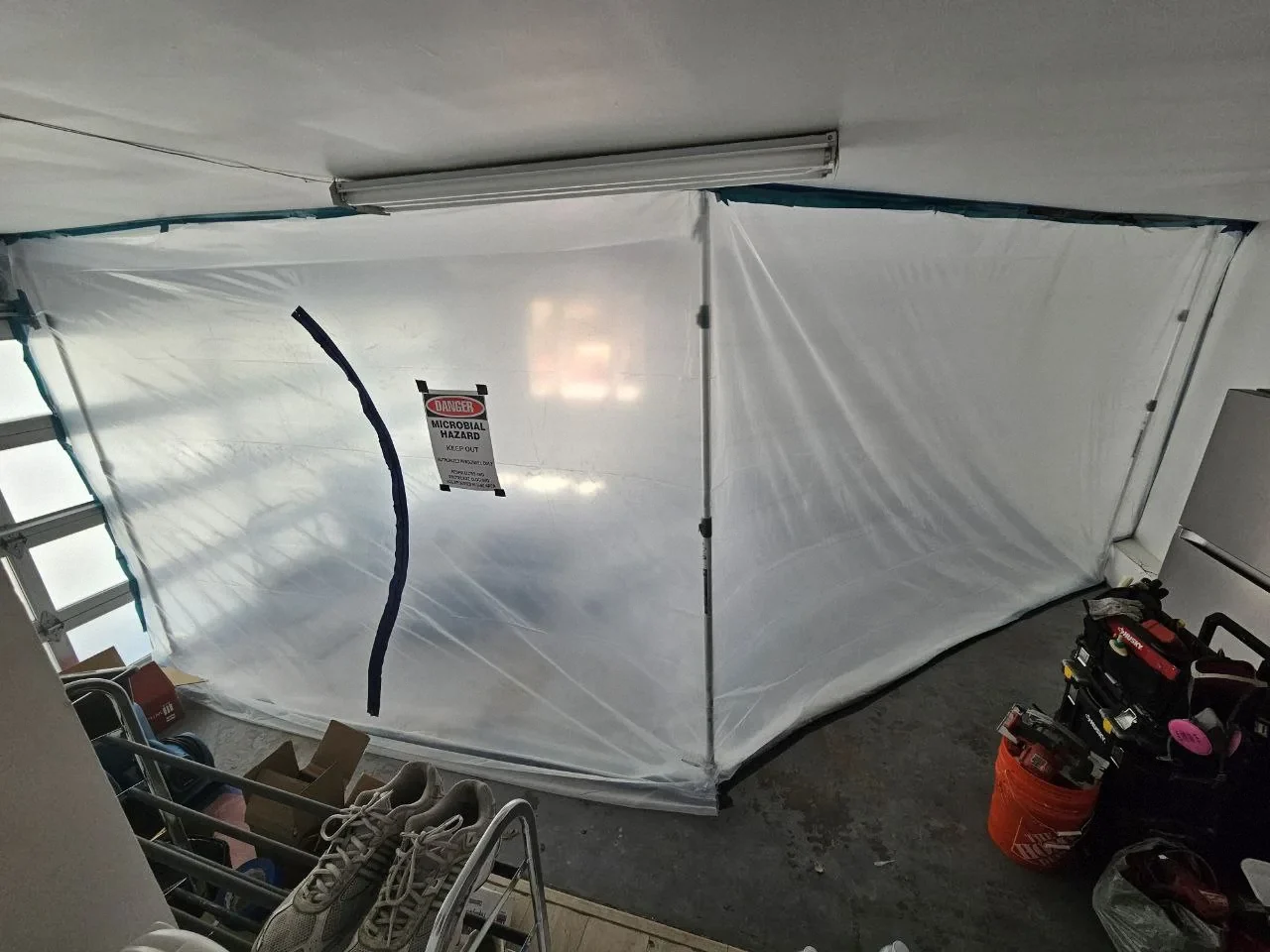
Keep wastewater from spreading
A sewer or onsite wastewater backup can contaminate floors, walls and belongings. Stop using connected toilets, sinks, showers and laundry equipment while the source is investigated. Keep people and pets away from affected rooms and avoid carrying wet items through clean areas. More water entering the system can make an active overflow worse.
If water is close to electrical equipment, do not touch the equipment or enter the water. Leave the area and arrange for a qualified person to make it safe. Call 911 for an immediate threat. Do not open a manhole, enter a tank or descend into a confined space to investigate an obstruction.
Water Damage Guard provides sewage cleanup in Los Altos Hills from San Carlos. Call (650) 550-0619, 24/7, to discuss the affected spaces, whether water is still flowing and which plumber, system professional or agency has been contacted. Cleanup can be coordinated once the site can be accessed safely.
Determine which wastewater system serves the parcel
Properties can use a public sewer connection or an onsite system. A problem in a septic tank or dispersal area calls for a different investigation from a blockage in a connected lateral. The correct system cannot be assumed from a nearby address. Locate available property records and give the appropriate professional the known history of the system.
If sewage is emerging outdoors, do not walk through the discharge or attempt to open a tank. Prevent access and report the location to the responsible authority. A qualified onsite-system professional or plumber can investigate the cause and advise on controlling the flow. A restoration team addresses contamination inside the building as a separate scope.
Keep a safe record of where water appeared and when. Note which fixtures were in use and whether the condition changes after use stops. These observations are useful to an investigator but cannot establish by themselves whether the problem is in a private pipe, a public facility or an onsite component.
Connection and permits for sewer work
Town Sewer Use Code Section 6-4.434 requires a construction permit to connect premises to the municipal sewer, and requires written authorization for work opening, altering or disturbing a public sewer. The precise requirements depend on the work and its location. A permit for a sewer connection is not the same thing as a cleanup assessment inside the building.
The code also addresses urgent emergency sewer work when the City Engineer is satisfied that it was impractical to obtain a permit before starting. In that situation the required permit must be obtained as soon as practical. This is a conditional procedure for regulated work, not permission to skip the review whenever a backup occurs.
Ask the contractor who is responsible for the permit, what work it covers and whether an additional right-of-way approval is needed. Keep the Town’s direction and the contractor’s findings with the property records. An unresolved cause should be identified as such rather than converted into an assumed pipe failure.
Valves and inspection for a lateral repair
Town Code Section 8-5.02 requires a sewer relief valve and backwater valve for new private connections to a public sewer and for replacement or repair of an existing private lateral. The valves must be accessible for maintenance and inspection. Ask the Town and the qualified plumbing contractor how the requirement applies to the actual proposed work.
For sewer installation, Section 6-4.441 says excavation must remain open until piping is tested, inspected and approved. Work concealed prematurely may have to be exposed on the City Engineer’s direction. These are requirements for applicable sewer work; they do not mean every room cleanup requires an excavation.
Coordinate the sequence with the people restoring the building. Closing a floor or backfilling a trench before the required review can delay repair. On the other hand, a permit for permanent pipe work does not remove sewage from materials already affected. The source and the interior exposure must each be addressed.
Decide what can be cleaned
The assessment should identify the path of wastewater, the materials it reached and whether water remains in concealed spaces. Contamination may extend below a floor finish or behind baseboards. A stain or odor helps identify an area to examine, but neither alone defines the full boundary of the affected material.
Porous items that cannot be adequately cleaned may need removal. Accessible surfaces can be cleaned using methods suited to the material and exposure. The work plan should explain how the affected area will be separated from clean rooms, how debris will be moved out and what protective measures are appropriate.
If old building materials need to be disturbed, determine whether hazardous-material evaluation is needed before removal. A home’s age does not prove the presence of a particular substance. Discuss uncertainties and areas that cannot be examined until access is safe or another trade has completed its work.
Drying and documentation
After contamination is addressed and the source controlled, a drying plan considers the material, moisture location and safe electrical supply. Equipment placement must fit the space and occupancy. A dry-looking surface does not establish that an enclosed assembly has reached an appropriate condition for repair.
Ask what observations or measurements will be recorded and when the space will be reviewed again. If additional hidden damage is found, request an updated explanation of the scope. Keep photographs, plumbing reports, permit information and communications together for the property owner and insurer as applicable.
For an occupied building, arrange safe access and a path for equipment. Coordinate with the person authorized to approve work and tell affected occupants what areas should remain unavailable. A cleanup team should not be expected to determine an owner’s insurance coverage or legal obligations.
Contents need their own review. Separate a damaged furnishing from clean items without spreading contamination through other rooms, and ask whether a specialist is needed for objects that cannot be cleaned on site. If an insurer is involved, discuss documentation and disposal before discarding items whenever safe and practical. Record the location and condition of each item so the decisions about contents do not become confused with the repair of the wastewater system.
Prepare for the repair handoff
Before new finishes are installed, confirm the water source is controlled, contaminated material has been addressed and applicable inspections are complete. The repair contractor needs to know which areas were opened, what remains to dry and whether a plumbing or onsite-system professional has recommended further work.
Ask for a clear division of responsibilities between cleaning, wastewater-system repair and reconstruction. These tasks may be performed by different parties. The scope should reflect the particular property and not presume that a septic system needs replacement or that an entire lateral has failed.
Call Water Damage Guard at (650) 550-0619 any time to discuss sewage cleanup in Los Altos Hills. Share the system type if known, access limitations, any official instructions and what has already been done. This helps coordinate an assessment without treating a telephone description as a final diagnosis.
Related sewage cleanup guides
These guides explain decisions about contaminated water, cleanup and estimating.
Common questions
Should I use fixtures during a backup?
Stop using connected fixtures until the flow is controlled and the source is investigated.
Does every property have a public sewer connection?
No. Identify whether the parcel uses a public connection or an onsite system before choosing the appropriate repair professional.
Does Town code require valves for a repaired private lateral?
Section 8-5.02 requires a sewer relief valve and backwater valve for repair or replacement of an existing private lateral. Confirm the scope with the Town.
Can a sewer trench be backfilled before inspection?
Town code says applicable sewer installation excavations stay open until piping is tested, inspected and approved.
Can urgent sewer work begin before a permit?
The code provides a conditional emergency procedure when the City Engineer finds advance permitting impractical; the permit must be obtained as soon as practical.